Data Center

Search documents
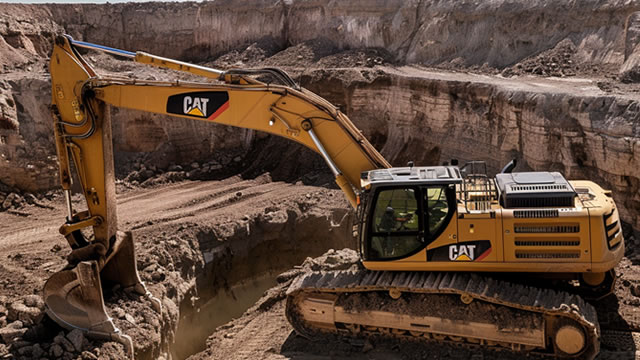
Zaman: Caterpillar is becoming an AI infrastructure supplier
Youtube· 2025-11-13 12:33
Market Overview - The government shutdown has ended, and markets are at or near record highs, with the Dow reaching a record high [1] - There is an expectation of a market pullback of 10 to 15%, which is viewed as healthy for the market as it may improve breadth and change market leadership [2] Market Leadership Transition - A shift in market leadership is anticipated, moving from AI winners to AI enablers, which are companies that provide the necessary infrastructure for AI [3][4] - Current AI winners include companies like NVIDIA, Microsoft, and Alphabet, but the focus is shifting towards those enabling AI infrastructure [4] Caterpillar's Position - Caterpillar is highlighted as a key stock, having increased by 58% this year, and is transitioning from a traditional construction equipment company to an AI infrastructure supplier [5][6] - The demand for data centers is expected to triple by 2030, and Caterpillar is involved in both building and maintaining these data centers, contributing to its recent strong earnings [6][7] Broader Investment Opportunities - For broader exposure to the industrial sector, the Spider ETF (XLI) is recommended, as it includes companies investing in the AI ecosystem [8] - There is a concern regarding concentration risk, as over 35% of the S&P 500 is comprised of a few tech companies, which may lead to a market pullback [9]


X @Bloomberg
Bloomberg· 2025-11-12 20:44
Debt investors are taking a more cautious view of the latest junk bond deal aimed at funding data center construction https://t.co/uJZz6uVk9p ...
Regal Rexnord (NYSE:RRX) FY Conference Transcript
2025-11-12 19:00
Regal Rexnord Conference Call Summary Company Overview - **Company**: Regal Rexnord - **CEO**: Louis Pinkham - **CFO**: Rob Rehard - **Focus**: Transformation over six years, improving margins and free cash flow, and building a stronger portfolio [2][3] Key Industry Segments 1. **Automation**: - Focus on robotics, including cobots, AGVs, surgical robotics, and humanoids - $30 million in humanoid-related orders booked this year with a $100 million bid pipeline [4] 2. **Aerospace**: - Business valued at approximately $350 million, includes servo motors, actuators, and seals - Partnership with Honeywell for electromechanical actuators for EVTOL aircraft [5] 3. **Data Center**: - Significant growth with a business expected to grow from $30 million to $130 million in two years - $195 million in recent data center wins and a $400 million EPOD bid pipeline [6][7] 4. **Medical**: - Products enable high-precision motion critical for robotic surgeries and lab testing devices [7] Financial Performance and Growth - **Order Growth**: - 10% orders growth reported, with backlogs up 6% in IPS, 15% in AMC, and 18% shippable in Q4 [12] - Anticipated low- to mid-single digit growth for the next year [18] - **Free Cash Flow**: - Expected to increase from $625 million to $900 million, driven by top-line growth, working capital improvements, and reduced cash interest and restructuring expenses [21] - **Gross Margins**: - Current gross margins at 38%, expected to reach 40% by 2026 [17][39] Strategic Initiatives - **Cross-Selling Opportunities**: - Only 20% of customers currently buy multiple products, with a target of $175 million in cross-sell by 2025 [16] - **R&D Investment**: - Increased from 2% to 3% of sales, focusing on technology and differentiation [17] - **Tariff Management**: - Expecting to be tariff cost neutral by mid-next year, with a focus on sourcing rare earth materials outside of China [24][25] Market Dynamics - **Challenges**: - ResiHVAC segment facing a high single-digit decline, but overall PES expected to remain flat [19][40] - Discrete automation growth slower than anticipated, with a correlation to ISM [45] - **Positive Signals**: - Backlog growth in IPS and positive trends in metals, mining, and oil and gas sectors [48] Future Outlook - **Growth Drivers**: - Continued focus on automation, aerospace, data center, and medical technology as key growth areas [8] - Anticipated recovery in factory automation and potential for significant growth in data center projects [26][27] - **AI Utilization**: - AI being leveraged for efficiency and productivity improvements, with a focus on managing supplier relationships and inventory [53][54] Conclusion - Regal Rexnord is well-positioned for growth across multiple strategic markets, with a strong focus on innovation, cross-selling, and operational efficiency. The company anticipates continued improvement in financial performance and market share expansion in the coming years.

AI darling CoreWeave drops 10% after data-center delay leads to weak full-year guidance
Yahoo Finance· 2025-11-11 22:35
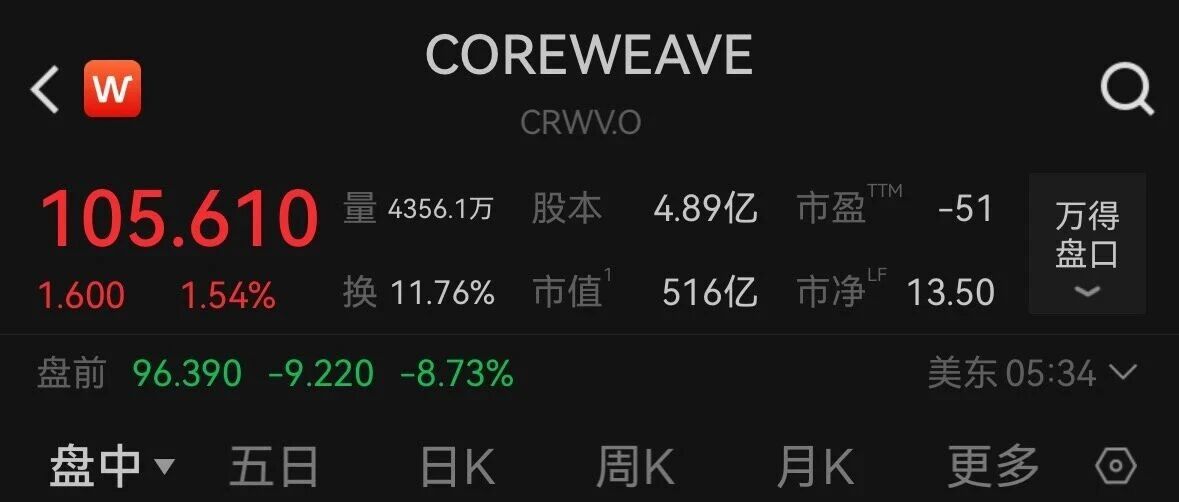
Core Points - CoreWeave stock dropped 10% on Tuesday despite reporting third-quarter earnings that exceeded Wall Street expectations with revenue of $1.36 billion compared to the anticipated $1.29 billion [1][5] - The company has revised its annual revenue forecast down to a range of $5.05 billion to $5.15 billion from a previous estimate of $5.35 billion due to temporary delays with a third-party data center developer [2] - Analysts suggest that the lowered guidance may be a temporary issue, with expectations that revenue for the current quarter could be pulled forward into the first quarter of next year, indicating continued strong demand for CoreWeave's services [3] - CEO Michael Intrator emphasized the company's strong position as a key player in AI cloud services, focusing on growth and innovation [4] - The decline in stock price may also reflect broader market sentiment regarding high valuations in the tech sector, as seen in recent drops in other tech stocks like Palantir and the Nasdaq 100 [5]
Nebius Stock Is Up Over 200% This Year, but Its $3 Billion Meta Deal Still Changes Everything
The Motley Fool· 2025-11-11 20:46
Core Viewpoint - Nebius Group reported significant revenue growth but also wider losses due to increased capital expenditures for AI infrastructure development, while securing a major deal with Meta Platforms for AI services [1][2][4][7]. Financial Performance - Revenues for the third quarter reached $146.1 million, a 355% increase year-over-year, with a year-to-date revenue increase of 437% from $56.3 million in 2024 to $302 million in 2025 [4]. - The company reported a net loss of $119.6 million, a 174% increase from last year's loss of $43.6 million, with an adjusted net loss of $100.4 million compared to $39.7 million in the same quarter last year [4]. Capital Expenditures and Infrastructure - Nebius spent $955.5 million on capital expenditures in the quarter, up from $172.1 million a year ago, and has plans to increase its data center power capacity from 220 megawatts to between 800 megawatts and 1 gigawatt by the end of 2026 [5]. - The CEO emphasized that 2025 is a foundational year for future growth, aiming for a strong position in the AI cloud market by 2026 [6]. Strategic Partnerships - The company announced a $3 billion deal with Meta Platforms to provide AI infrastructure over five years, following a previous deal with Microsoft valued between $17.4 billion and $19.4 billion [2][7]. - Both deals are expected to significantly impact Nebius' financials by 2026, aiding in data center expansion and profitability [8]. Market Outlook - Nebius anticipates an annualized run rate revenue between $7 billion and $9 billion by the end of 2026, positioning itself as a key player in the rapidly growing AI market, projected to expand from $279.22 billion in 2024 to $3.5 trillion by 2033 [7][8].

CoreWeave Tumbles on Q3 Results; Nvidia Slips After SoftBank Stake Sale | Stock Movers
Youtube· 2025-11-11 16:26
Group 1: SoftBank and NVIDIA - SoftBank sold its entire stake in NVIDIA for approximately $5.83 billion, indicating a need for capital to fund various projects [1][2] - The sale is not directly related to NVIDIA's performance but coincides with broader discussions about tech spending and returns [2][3] - This is not the first divestment by SoftBank; it previously sold shares in 2019 and began buying back in 2020, showing a fluctuating investment strategy [3] Group 2: Data Center Operators - Core, a data center operator, saw its shares decline by as much as 10% after lowering its annual revenue forecast due to delays in fulfilling customer contracts [5][6] - The company is closely partnered with NVIDIA and serves clients like OpenAI and Microsoft, highlighting its role in the growing demand for AI infrastructure [6][7] Group 3: Paramount Skydance - Paramount Skydance's shares increased by up to 5% following a report of new cost-saving measures, including a workforce reduction of 1,600 employees [8][9] - The company aims to achieve at least $3 billion in cost savings, with plans to invest $1.5 billion in Paramount Plus and expand its film slate to at least 15 movies per year starting in 2026 [9][10] - Despite forecasting $30 billion in revenue next year, Paramount Skydance is still considered subscale in the competitive media landscape [10] Group 4: Warner Brothers Discovery - Warner Brothers Discovery has rejected three bids from Paramount Skydance, which is significantly smaller in size, indicating the challenges in consolidating within the media industry [11][12]



"Strong Enough" Economy Holds Bull Thesis, "Rotation" Out of A.I. Good for Indices
Youtube· 2025-11-11 16:20
Market Overview - The market is experiencing a normal consolidation phase following a relief rally, with potential government shutdown resolution expected soon [2][3] - Economic data, including job losses estimated at 50,000 for October by Goldman Sachs, may not significantly impact market sentiment [3][4] Economic Indicators - An uptick in unemployment towards 4.5% may not disrupt the bullish outlook, supported by double-digit EPS growth over the past four quarters [4][12] - The labor market's weakening could have mixed implications for corporate margins and future EPS estimates, currently projected at 14% for 2026 [10][12] Sector Performance - There is uncertainty regarding whether the market will revert to AI tech stocks, as recent price actions indicate a shift in sentiment towards speculative tech [5][13] - Companies like Palantir and Meta have seen sell-offs post-earnings, indicating potential challenges in the tech sector [7][13] Future Catalysts - Upcoming economic data and Nvidia's performance next week are anticipated to be significant catalysts for market direction [8][9] - The market may require a rotation into other sectors to maintain a healthy uptrend, as evidenced by recent sell-offs in data center compute leaders [7][13]
coreweave 财报
小熊跑的快· 2025-11-11 10:37
Core Insights - The company reported a slight revenue beat in Q3, achieving $1.365 billion, a year-over-year increase of 131.72%, surpassing the consensus estimate of $1.286 billion [3] - The company has a significant backlog of over $55 billion in orders, indicating strong demand [3] - Adjusted net loss for the quarter was $41 million, compared to breakeven in the same period last year [3] Financial Performance - Adjusted operating profit was $217 million, with an operating profit margin of 16%, showing a continuous decline [4][5] - Interest expenses increased to $311 million from $104 million year-over-year, primarily due to increased debt for infrastructure expansion [4] - The company currently holds $3 billion in cash and cash equivalents, having raised $14 billion through debt and equity transactions to support expansion [4] Capital Expenditure Guidance - Q3 capital expenditures totaled $1.9 billion, below expectations due to delays from third-party data center developers [6] - Full-year CapEx is projected to be between $12 billion and $14 billion, revised down from a previous estimate of $20 billion to $23 billion [6] - The company anticipates that capital expenditures in 2026 will exceed those in 2025 by more than double [6] Market Position and Outlook - The significant increase in unfulfilled orders suggests robust demand in the market [7] - The company's operating profit margin is being pressured by rising interest expenses and depreciation of older chips, indicating a weaker position in the AI supply chain [7] - Continuous financing is crucial for the company to sustain its operations and growth in the AI sector [8]
X @Bloomberg
Bloomberg· 2025-11-11 00:10
Funding & Expansion - CleanSpark 计划通过发行可转换债券融资 10 亿美元,以支持其增长 [1] - CleanSpark 作为比特币矿企和数据中心运营商,寻求资金扩大规模 [1]
CleanSpark, Inc. Announces Proposed Private Offering of $1 Billion of Convertible Notes
Prnewswire· 2025-11-10 21:01
Core Viewpoint - CleanSpark, Inc. plans to offer $1 billion in convertible senior notes due 2032, subject to market conditions, to qualified institutional buyers [1][2]. Financing Details - The company may grant initial purchasers an option to buy an additional $200 million in convertible notes within 13 days of the initial issuance [2]. - Up to $400 million of the net proceeds will be used for share repurchases, with the remainder allocated for expanding power and land portfolios, developing data center infrastructure, repaying bitcoin-backed credit lines, and general corporate purposes [3]. Convertible Notes Characteristics - The convertible notes will be senior unsecured obligations, maturing on February 15, 2032, and will not bear regular interest or accrete in principal [4]. - Conversion of the notes into cash, shares, or a combination will be at the company's discretion, with specific conditions for conversion prior to August 15, 2031 [5]. Share Repurchase Plan - The company expects to repurchase shares from certain investors in privately negotiated transactions concurrent with the pricing of the convertible notes, at the closing price on the offering date [6]. Regulatory Compliance - The convertible notes and any shares issued upon conversion have not been registered under the Securities Act and will only be offered to qualified institutional buyers under Rule 144A [7].