金融科技

Search documents
报告谈平台经济:平台已成为传统金融机构有益补充
Zhong Guo Xin Wen Wang· 2025-09-24 13:07
Core Insights - The report highlights that platform economy has become a beneficial supplement to traditional financial institutions, leveraging its advantages in traffic, technology, and data [1][2] Group 1: Platform Economy Value - The core value of platform economy lies in reshaping resource allocation efficiency through digital technology, significantly reducing transaction costs and enhancing matching efficiency [1] - Platforms have transitioned numerous economic activities online, such as shopping, transportation, and dining, while also giving rise to emerging industries like digital marketing and smart logistics [1] - Platforms have created a vast ecosystem connecting millions of consumers, tens of thousands of merchants, and flexible employment groups, playing a crucial role in empowering small businesses, promoting rural development, and facilitating entrepreneurship and employment [1] Group 2: Financial Sector Impact - In the financial sector, platforms have driven a leap in digital payment development, with the usage rate among Chinese adults increasing from 49% to 89% over the past decade [1] - Platforms have introduced technological innovations in the credit field, significantly improving credit accessibility for long-tail customer groups, with the proportion of adults obtaining credit from formal financial institutions rising from 20% to 41% in the last ten years [1] Group 3: Challenges and Solutions - Despite the vitality released by the platform economy, it faces new challenges, which the report suggests can be addressed by moving away from a "zero-sum game" mindset towards building a "win-win ecosystem" [2] - In the business realm, platforms and offline stores can create a positive complementarity through online traffic generation and offline experiences [2] - The concept of "win-win" also emphasizes the importance of addressing consumer concerns such as data privacy and price discrimination, shifting the service focus from mere "accessibility" to "appropriateness" [2] - For millions of flexible workers, recognizing their value as "ecosystem partners" and addressing social security gaps is essential [2]
从赛场到市场,深度伪造图像识别技术构建金融安全防线
Guo Ji Jin Rong Bao· 2025-09-24 13:02
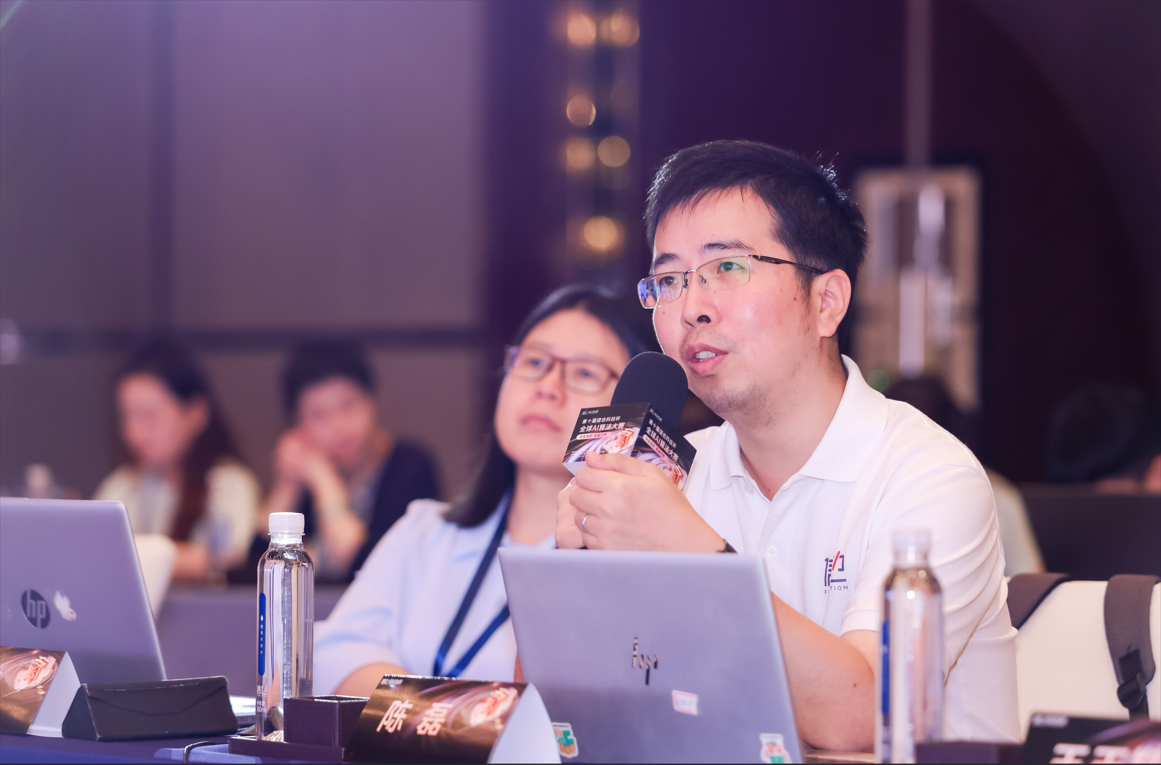
Core Insights - The rapid development of deepfake technology poses significant threats to personal privacy and financial security, with incidents of identity theft and fraud becoming increasingly common globally [1] Group 1: Event Overview - The 10th Xinyi Technology Cup Global Artificial Intelligence Algorithm Competition was held in Shanghai on September 24, focusing on developing algorithms capable of accurately identifying genuine and fake images to combat deepfake attacks across various scenarios [1] - The competition featured experts from Fudan University, Zhejiang University, and the Chinese Academy of Sciences as judges, who provided in-depth evaluations of the contestants' results based on technical approaches, training methods, and application value [1] Group 2: Competition Highlights - The champion team excelled in cross-domain recognition, maintaining high accuracy across diverse scenarios [1] - The competition encouraged participants to utilize deep learning algorithms, training and validating models on both public and exclusive private datasets, which included 100,000 facial authentication images with various regional, ethnic, lighting, and quality differences [1] - The exclusive private dataset also introduced samples generated by the latest face-swapping technology, emphasizing the algorithms' ability to handle unknown forgery methods, thereby increasing the challenge [1] Group 3: Technical Insights - Contestants demonstrated solid technical foundations and proposed innovative technical ideas, with some teams identifying that face-swapping forgeries often leave traces on high-frequency features of images [2] - By employing frequency domain analysis to capture forgery traces on high-frequency features and designing targeted processing based on statistical feature differences, teams significantly improved recognition effectiveness [2] Group 4: Industry Implications - Xinyi Technology's Vice President Chen Lei noted that the contestants' explorations have practical applications in real-world scenarios, providing new reference paths for deepfake detection [4] - He emphasized that while deepfake technology poses challenges to financial security and social trust, technological advancements also offer new protective possibilities [4] - The company aims to continuously promote innovative exploration through the competition, integrating outstanding results with business scenarios to build a future-oriented financial security defense line [4]

邀请函|国泰海通区块链应用创新与资产上链的战略机遇
国泰海通证券研究· 2025-09-24 12:25
Core Viewpoint - The global financial system is undergoing a profound restructuring driven by digital technology, with blockchain as a cornerstone, reshaping payment clearing and asset circulation models, and triggering historic changes in monetary sovereignty and cross-border financial infrastructure [2]. Group 1: Blockchain and Financial Infrastructure - The innovation wave based on blockchain is transitioning from technical experimentation to compliant market practices, with a significant opportunity for the internationalization of the Renminbi in the digital currency era [2]. - The blockchain industry is moving from underlying protocol iterations to a commercial ecosystem explosion, with the need for forward-looking assessments of large-scale implementations in securities, trade, and supply chain scenarios [2]. - The trend of Tokenization is shifting from experimental scenarios to mainstream financial infrastructure, indicating a critical evolution in the industry [2]. Group 2: Regulatory Challenges and Opportunities - There are significant challenges in mapping traditional legal frameworks to on-chain rights, highlighting the urgent need to explore more innovative regulatory pathways [2].

调研速递|金一文化接受中财招商等12家机构调研,透露收购与业务布局要点
Xin Lang Cai Jing· 2025-09-24 10:28
Core Viewpoint - The company, Beijing Jinyi Culture Development Co., Ltd., is actively engaging with institutional investors regarding its acquisition of a stake in Kaike Weishi and its business strategies in the gold and jewelry retail sector [2]. Group 1: Acquisition and Business Strategy - The company has acquired 43.18% of Kaike Weishi's shares and obtained 14.30% of voting rights, with plans to purchase the remaining shares after the performance commitment period, subject to regulatory compliance [2]. - The company aims to conduct horizontal and vertical mergers based on Kaike Weishi, focusing on digital intelligence and related fields [2]. Group 2: Kaike Weishi's Business Operations - Kaike Weishi's business primarily comes from partnerships with banks, with non-bank collaborations accounting for less than 10%. It has business relationships with 15 out of 18 state-owned and joint-stock banks [2]. - The AI solutions provided by Kaike Weishi are mainly applied in the banking sector, including products like financial advisor assistants and intelligent customer service [2]. - The payment and clearing services offered by Kaike Weishi do not require a payment license and currently serve domestic clients, with potential plans for international market expansion [2]. Group 3: Gold and Jewelry Retail Business - The company's gold and jewelry retail operations are primarily through wholly-owned brand stores, focusing on the "Yue Wang Ancient Method Gold" brand targeting the mass and mid-to-high-end markets, using a pricing strategy based on weight processing fees [2]. - Recent restructuring of the jewelry business has been initiated to enhance efficiency and focus on expanding mid-to-high-end stores in key regions [2]. Group 4: Financial Strategies and Shareholder Structure - The company has engaged in gold hedging activities as approved by the board, adopting a strategy of closing positions without opening new ones due to the sustained high prices of gold in the first half of the year [2]. - The major shareholders include the controlling shareholder and its concerted parties, while other shareholders mainly consist of financial investors introduced during restructuring, holding less than 10% of shares [2]. Group 5: Management and Future Plans - Kaike Weishi's board consists of five members, with three nominated by the company. It operates independently but requires approval from the company for significant financial and operational decisions [2]. - The company plans to follow the procedures and disclose announcements if there are any changes to its name, which originally focused on precious metal art [2].

联易融科技-W(09959)9月24日耗资约742.91万港元回购232.1万股
智通财经网· 2025-09-24 09:57
智通财经APP讯,联易融科技-W(09959)公布,2025年9月24日耗资约742.91万港元回购232.1万股股份。 ...
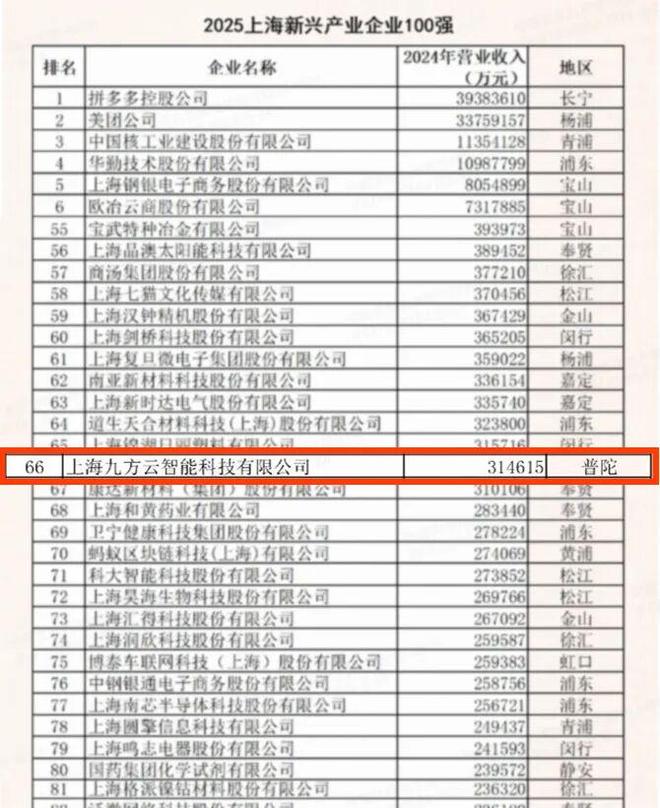
双榜题名!九方智投荣登“2025上海新兴产业企业100强”、“2025上海成长企业100强”
Di Yi Cai Jing Zi Xun· 2025-09-24 09:30
9月23日,上海市企业联合会、市企业家协会、市经济团体联合会等召开新闻发布会,正式发布2025上 海企业100强、2025上海制造业企业100强、2025上海服务业企业100强、2025上海民营企业100强、2025 上海民营制造业企业100强、2025上海民营服务业企业100强、2025上海新兴产业企业100强、2025上海 成长企业100强排行榜和2025上海百强企业发展报告、2025上海新兴产业百强企业发展报告,揭示上海 经济发展的最新情况。 "榜单已成为上海经济发展的晴雨表,反映出整体经济的景气度。"上海市企业联合会副会长兼秘书长赵 广君表示,百强榜单持续扩容,从最初的三个主要榜单逐步增至八个,内容不断丰富,企业排名随发展 动态调整,今年多家大型企业排名较去年实现提升。 新兴产业百强营收跃升,成高质量发展风向标 从"2025上海新兴产业企业100强"榜单可以发现,新兴产业百强延续了高速增长态势,营业收入总额首 次站上2万亿元台阶,达到2.2万亿元;净利润1953.7亿元,增长率达到72.47%。相比之下,2021年首次 发布的新兴产业百强榜上,企业营业收入总额不足9000亿元。 从产业结构来看,信息技 ...
中国人民银行王振营:发展黄金代币具有特殊意义
Zhong Guo Jing Ying Bao· 2025-09-24 08:44
Core Insights - The strategic value of gold tokens, as a new asset class based on blockchain technology, is significant despite being in its early development stage [1] - For China, the development of gold tokens holds special significance, leveraging the high liquidity and efficiency of the Chinese gold market to accelerate the global gathering of gold towards China, enhancing the status of Shanghai as an international financial and asset management center [1] - The construction of a new international trade settlement system centered around gold tokens, utilizing gold's super-sovereign credit, could effectively bypass the existing dollar-dominated system [1] - The integration of ancient gold with modern digital technology is seen as a revival of its prominence in the financial landscape [1]
网络空间安全(天津)论坛开幕 马上消费牵头多家金融机构发布数据安全与个人信息保护倡议
Xin Lang Zheng Quan· 2025-09-24 08:42
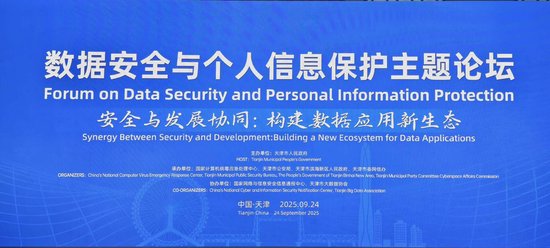
Group 1: Forum Overview - The third Cybersecurity Forum in Tianjin was held on September 23-24, focusing on "Building a Cybersecurity Community" to integrate global cybersecurity resources and address development issues in cybersecurity [1] - The forum gathered leaders from national ministries, local governments, academicians, industry leaders, and law enforcement representatives, featuring five thematic forums and concurrent events like the International Antivirus Conference [1] Group 2: Data Security Initiative - The initiative titled "Financial Institutions' Proposal for Strengthening Data Security and Personal Information Protection" was launched by the National Computer Virus Emergency Response Center in collaboration with the AIF and several financial institutions [3][4] - The proposal aims to create a balanced ecosystem for data security and personal information protection, reflecting a commitment from both government and enterprises to maintain cybersecurity [4] Group 3: Key Dimensions of the Proposal - The proposal focuses on seven core dimensions: compliance, governance, technical protection, data usage regulation, risk monitoring, industry collaboration, and attention to vulnerable groups [4] - It emphasizes that data security and personal information protection are vital for the financial industry, aiming to enhance protective capabilities under regulatory guidance [4] Group 4: Industry Collaboration and Governance - The AIF has established a collaborative mechanism with law enforcement agencies, achieving significant results in combating illegal activities and preventing telecom fraud [7][8] - The initiative marks a shift from isolated efforts to a collaborative governance model involving police, industry organizations, and technology companies [8] Group 5: Role of Leading Institutions - As the leading entity, the AIF aims to leverage the strengths of participating institutions through resource sharing and technical collaboration to implement effective governance measures [9] - The initiative is expected to enhance overall governance efficiency and establish a robust security framework for sustainable industry development [9]
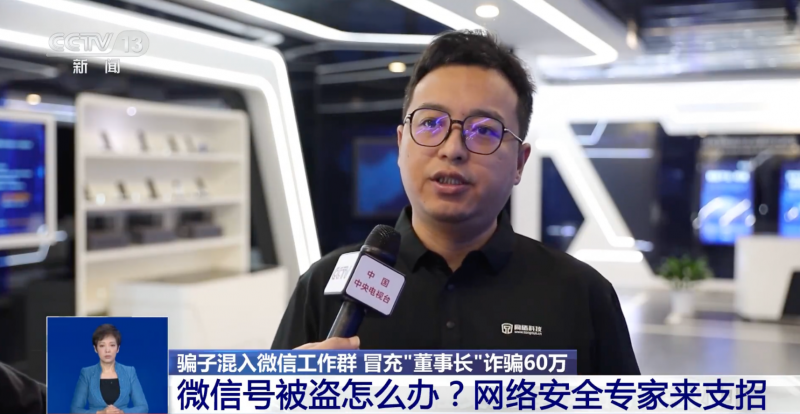
从“策略对抗”到“模型博弈”:同盾AI大模型筑牢金融安全防火墙
Cai Fu Zai Xian· 2025-09-24 07:02
Core Insights - The article highlights a significant telecom fraud case involving a financial officer who was deceived into transferring 600,000 yuan under the guise of a company chairman, emphasizing the increasing sophistication of financial risks in the digital economy era [1][3] - The rise of social engineering attacks and the misuse of emerging technologies like deepfake and AI voice synthesis are transforming traditional risk control systems, necessitating a shift from expert-driven strategies to AI-based dynamic models [3][4] Group 1: Fraud Case Analysis - A financial officer from a construction company in Changchun, Jilin, was scammed by fraudsters posing as company executives, leading to a loss of 600,000 yuan, which was later recovered through police intervention [1] - The case illustrates the high-tech and adversarial nature of financial risks in the context of widespread AI technology adoption [1][3] Group 2: Technological Response - Same as the previous point, the financial industry must enhance the application of AI and big data analytics in risk prevention and improve information sharing across institutions and industries [4][5] - Tongdun Technology has proposed a comprehensive anti-fraud solution that innovatively approaches risk identification from both the victim's and the fraudster's perspectives, utilizing AI and machine learning for high-precision detection and real-time intervention [4][5] Group 3: Implementation and Impact - The solution has been implemented in hundreds of financial institutions across the country, successfully aiding a bank in preventing a telecom fraud case involving 260 million yuan and affecting 6,000 individuals, achieving a prediction accuracy of 90% [5] - The focus is on proactive risk management, transitioning from reactive measures to a forward-looking risk control approach [5][6] Group 4: Advanced Risk Control Systems - Tongdun Technology aims to develop a smarter decision-making framework that not only identifies risks but also understands and predicts them, marking a fundamental upgrade in risk control philosophy [7][8] - The financial risk control model integrates advanced capabilities such as intelligent decision engines and knowledge construction, enabling financial institutions to effectively identify and respond to potential risks [7][8] Group 5: Future Directions - The new generation of technologies, represented by AI models, is becoming a core driving force in establishing a new paradigm for financial intelligent risk control, reflecting a profound transformation in financial security concepts and models [8]
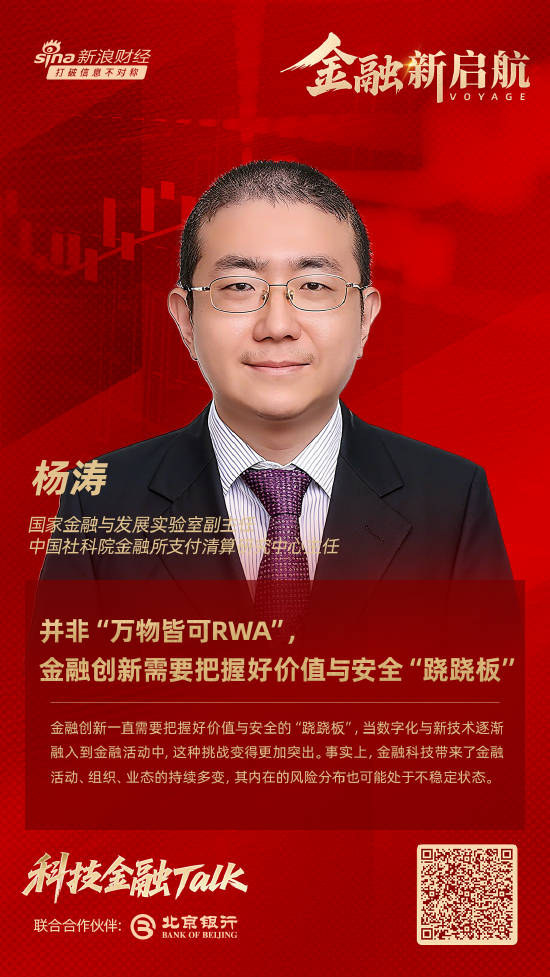
国家金融与发展实验室副主任杨涛:并非“万物皆可RWA”,金融创新需要把握好价值与安全“跷跷板”
Xin Lang Cai Jing· 2025-09-24 06:17
Core Insights - The rise of technology is profoundly reshaping the financial landscape, with the integration of technology and finance driving innovation and providing robust services to the real economy [1][2] - The discussion around Real World Asset (RWA) tokenization is gaining traction, focusing on low liquidity standardized financial assets, non-standard financial assets, and non-financial entity assets [1][5] Group 1: RWA Tokenization - RWA tokenization refers to mapping real-world assets like real estate, bonds, and art onto the blockchain, represented by a digital certificate [1] - The essence of RWA is to tokenize compliant real-world assets, allowing them to enter the Web3 space, with a focus on improving liquidity and providing new financing channels [5][6] - RWA can lower investment thresholds, making previously exclusive projects accessible to ordinary investors, thus diversifying asset allocation [6] Group 2: Regulatory Considerations - The global regulatory understanding of RWA risks is still in its early stages, necessitating a classification-based regulatory approach based on the underlying asset's attributes and market liquidity [2][10] - Regulatory frameworks should avoid limitations that stifle innovation while ensuring adequate oversight to prevent risks associated with RWA activities [10][11] - The need for a robust compliance framework, including KYC and AML, is essential for managing RWA effectively [10] Group 3: Challenges and Opportunities - While RWA tokenization offers potential benefits, it also faces challenges such as the need for clear property rights and stable asset values to ensure true on-chain value [9] - The liquidity of low-liquidity assets may not be significantly improved if underlying issues persist, indicating that not all assets are suitable for tokenization [7] - The focus should be on enhancing the stability of on-chain financial activities by providing stable underlying assets for decentralized finance (DeFi) [6]