风电

Search documents
明阳智能拟投142亿英国建厂 总资产超908亿加速海外拓展
Chang Jiang Shang Bao· 2025-10-14 00:02
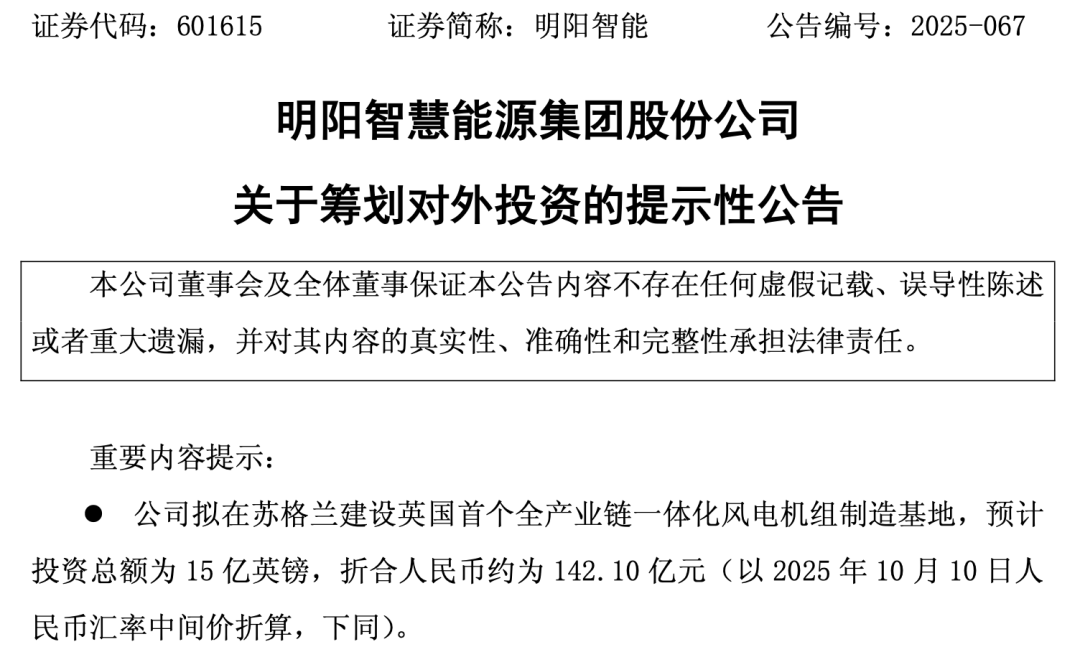
Core Viewpoint - Mingyang Smart Energy is accelerating its international expansion by investing £1.5 billion (approximately ¥14.21 billion) to establish the UK's first integrated wind turbine manufacturing base in Scotland [1][2][3] Group 1: Investment and Project Details - The investment will be used to build manufacturing facilities for offshore and floating wind turbines, with the first phase expected to produce wind turbine nacelles and blades by the end of 2028 [2] - The project will be executed in three phases, with plans to expand production lines and include manufacturing of control systems and electronic devices in subsequent phases [2] Group 2: Financial Performance and Market Strategy - Mingyang Smart Energy has faced revenue and profit declines over the past two years, with revenues of ¥281.2 billion and ¥271.6 billion in 2023 and 2024, respectively, reflecting year-on-year decreases of 8.83% and 3.43% [4] - In the first half of 2025, the company reported a revenue increase to ¥171.4 billion, a year-on-year growth of 45.33%, although net profit decreased by 7.68% to ¥6.1 billion [4] - The company has been actively expanding its international market presence, securing 1.68 GW of new overseas orders in the first half of 2025, with a total of approximately 5 GW of overseas orders on hand [4] Group 3: Asset Growth and Market Context - Mingyang Smart Energy's total assets have grown significantly, from ¥516.3 billion in 2020 to ¥908.2 billion by mid-2025, marking a 68.1% increase over the period [4] - The investment comes at a time when the UK government is accelerating its clean energy transition, aiming to double annual investments in clean energy by 2035 [3]

时代新材顺利开拓前九月签单92亿 年投逾10亿研发三大领域规模居前
Chang Jiang Shang Bao· 2025-10-13 23:53
Core Viewpoint - Times New Material (时代新材) has successfully secured significant contracts in the wind power sector, totaling approximately RMB 44.9 billion, which is expected to positively impact the company's performance in the coming years [1][2]. Group 1: Contract Details - In the third quarter of 2025, Times New Material signed contracts worth RMB 44.9 billion for wind turbine blades, with RMB 4.42 billion for offshore projects and RMB 40.48 billion for onshore projects [2]. - The total contract amount for blade sales and services signed by the company in the first three quarters of 2025 reached approximately RMB 92 billion, equivalent to the company's revenue for the first three quarters [1][3]. Group 2: Financial Performance - For the first half of 2025, Times New Material reported revenue of RMB 92.56 billion, a year-on-year increase of 6.87%, and a net profit of RMB 3.03 billion, up 36.66% [4]. - The company anticipates a historic revenue breakthrough of RMB 200 billion in 2024, with a net profit of RMB 4.45 billion, reflecting a double-digit growth rate [1][4]. Group 3: Market Position and R&D - Times New Material ranks third globally in wind turbine blade production and maintains a leading position in various sectors, including rail transportation and automotive vibration control [1][5]. - The company has invested significantly in R&D, with expenditures of RMB 10.53 billion planned for 2024, reflecting a commitment to innovation and maintaining competitive advantages [1][5]. Group 4: Client Base and Strategic Partnerships - The company serves 90% of global vehicle manufacturers and is a key supplier for major clients such as WABTEC and ALSTOM in the rail sector [6]. - Times New Material has established strategic partnerships with leading wind turbine manufacturers, enhancing its market presence and operational capabilities [3][5].

无人化风电场来了
Zhong Guo Jing Ji Wang· 2025-10-13 23:40
Core Insights - The article highlights the successful implementation of China's first unmanned wind farm, the Sanxia Energy Ningxia Tongli Third Wind Farm, which has transitioned to a fully intelligent operation model since April 2023 [1][3]. Group 1: Management Model Transformation - Traditional wind farm operations have faced challenges such as high personnel dependency, safety risks, and low operational efficiency, necessitating a shift to intelligent operations [2][3]. - The Tongli Third Wind Farm has achieved significant operational improvements, reducing inspection time from two weeks to one week through the use of drones for routine inspections [2][3]. - The new operational model integrates data collection, analysis, decision-making, and feedback into a complete closed-loop process, enhancing management efficiency [3]. Group 2: Technological Framework - The wind farm employs a "cloud-edge-end" architecture, where the "cloud" serves as the central brain for data analysis and decision-making, the "edge" manages local operations, and the "end" consists of on-site sensors and drones [5][6]. - This architecture addresses the core pain point of traditional operations by converting engineers' experiences into transferable knowledge assets, allowing for the replication of effective practices across different sites [6][8]. Group 3: Industry Standards and Future Directions - The Sanxia Energy has initiated the publication of the first industry white paper on intelligent station construction, outlining the transition needs, system architecture, core technologies, and implementation pathways for the industry [7]. - The promotion of this white paper aims to standardize the construction and application of intelligent wind farms, facilitating a shift from scale expansion to quality improvement in the renewable energy sector [7][8]. - Future wind farm management is expected to evolve from a decentralized to a centralized model, optimizing resources across multiple sites [8].

海关总署数据显示 前三季度我国货物贸易进出口同比增长4%
Zhong Guo Zheng Quan Bao· 2025-10-13 20:59
Core Insights - China's foreign trade demonstrated resilience and structural optimization in the first three quarters of the year, with total imports and exports reaching 33.61 trillion yuan, a year-on-year increase of 4% [1] Group 1: Trade Performance - In the first three quarters, exports amounted to 19.95 trillion yuan, growing by 7.1%, while imports were 13.66 trillion yuan, showing a slight decline of 0.2% [1] - The month of September saw a total trade volume of 4.04 trillion yuan, reflecting an 8% year-on-year growth [1] - The growth rates for imports and exports have been increasing quarterly, with the first quarter at 1.3%, the second at 4.5%, and the third at 6% [2] Group 2: Contribution of Key Provinces - The five major provinces (Guangdong, Jiangsu, Zhejiang, Shanghai, and Shandong) contributed over 80% to the national import and export growth, with a combined increase of 5.2% in the first three quarters [2] Group 3: Export Structure and Innovation - High-tech product exports reached 3.75 trillion yuan, up 11.9%, contributing over 30% to overall export growth [3] - Exports of mechanical and electrical products totaled 12.07 trillion yuan, increasing by 9.6% and accounting for 60.5% of total exports [3] - Notable growth was observed in exports of electronic information, high-end equipment, and instruments, with increases of 8.1%, 22.4%, and 15.2% respectively [3] - Industrial robot exports surged by 54.9%, and wind power equipment exports grew by 23.9% [3]
价值重估 景气再启基金经理纵论新能源投资策略
Shang Hai Zheng Quan Bao· 2025-10-13 18:20
Core Viewpoint - The renewable energy sector has experienced a significant rebound in 2023, with various indices showing substantial year-to-date increases, driven by improved fundamentals and strategic shifts within companies [8][9]. Group 1: Market Dynamics - The renewable energy sector has seen a nearly 40% increase in the China Securities Renewable Energy Index as of October 13, 2023, with specific indices for battery, photovoltaic, and energy storage industries rising by 63.1%, 21.1%, and 32% respectively [8]. - The "anti-involution" policy has led many renewable energy companies to enhance competitiveness through cost reduction and efficiency improvements, resulting in a dual increase in profitability and valuation [9][10]. - The lithium battery sector is expected to maintain a compound annual growth rate of 20% to 30%, supported by diverse applications beyond electric vehicles, including electric ships and energy storage [10]. Group 2: Sector Analysis - The photovoltaic industry is primarily driven by policy, with investment opportunities being more sporadic and less predictable in terms of short-term profitability [11]. - The demand for lithium batteries has shown positive changes, with structural supply shortages and price increases observed in the second half of the year, contributing to the strong performance of the lithium battery sector [11][12]. - The energy storage sector is anticipated to grow due to increasing demand from AI applications, while the wind power sector is recovering due to improved bidding data and overseas demand [11][12]. Group 3: Future Trends - Solid-state batteries are identified as a crucial future direction for the industry, with strong policy support and ongoing advancements in technology [14][15]. - The market for solid-state batteries is still in the early stages of development, but there is significant interest due to their potential for higher energy density and safety [14][15]. - Emerging applications such as robotics and autonomous driving are expected to create new demand for lithium batteries, enhancing their market potential [16].


明阳智能拟投资142.1亿元 在英国建风电机组制造基地
Mei Ri Jing Ji Xin Wen· 2025-10-13 13:55
Core Viewpoint - Mingyang Smart Energy plans to establish the UK's first integrated wind turbine manufacturing base in Scotland with a total investment of £1.5 billion, approximately ¥142.10 billion [1][2] Investment Plan - The investment will be executed in three phases: 1. The first phase involves building an advanced wind turbine nacelle and blade manufacturing plant, expected to commence production by the end of 2028 2. The second phase will expand production lines to accelerate the scale production of floating wind technology 3. The third phase will further extend to the production of control systems, electronic devices, and other key components [2] - Funding sources include self-owned funds and self-raised funds, including proceeds from the 2022 global depositary receipts issuance and future bank financing [2] Financial Position - As of mid-2025, the company's cash and cash equivalents are reported to be ¥10.579 billion [3] Strategic Partnerships - The company has engaged in extensive discussions with the UK and Scottish governments and has conducted detailed commercial negotiations with various entities, including the UK National Energy Company and the Scottish National Investment Bank [3] Market Positioning - Establishing this overseas production base is expected to help the company create a service center for offshore wind power in the UK, Europe, and other non-Asian markets, positioning it as a significant player in the global offshore wind industry [3] - The investment will introduce advanced offshore wind technology to the North Sea region, facilitating the commercialization of floating wind technology [3] International Expansion - This is not the company's first overseas wind power project; it has already signed localization cooperation agreements in Northeast Asia and has successfully passed seismic tests in Japan [5] - The company has also reached cooperation intentions for offshore wind and green hydrogen projects in Southeast Asia and has secured orders in several European countries, including Germany, the UK, and Italy [5] - Recent collaborations include a memorandum of understanding with Italian developers to establish a wind turbine component production base in Italy [5] Risks and Challenges - The investment plan is subject to uncertainties, including the need for approvals from various governmental bodies and potential risks related to international conditions, construction timelines, and investment amounts [1][4] - The company acknowledges challenges such as increased construction costs, delays, and competition in overseas markets, as well as risks associated with talent acquisition and internal management [4]
豪掷142亿元,明阳智能缘何“重仓”英国海上风电?
2 1 Shi Ji Jing Ji Bao Dao· 2025-10-13 13:18
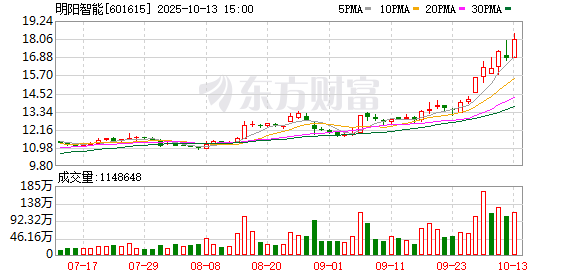
Core Viewpoint - Mingyang Smart Energy has announced its largest investment since its listing, planning to build the UK's first integrated wind turbine manufacturing base in Scotland with a total investment of £1.5 billion, approximately 14.21 billion yuan, targeting the offshore wind market in the UK [2][4]. Investment Details - The investment will be executed in three phases: 1. Construction of advanced wind turbine nacelle and blade manufacturing plants, with the first batch expected to be operational by the end of 2028 2. Expansion of production lines for large-scale production of floating wind technology 3. Further expansion into the production of control systems, electronic devices, and other key components [3][4]. - The investment plan has been discussed in depth with the UK and Scottish governments, as well as various financial institutions [3][4]. Financial Implications - This investment marks a record for Mingyang Smart Energy, raising concerns about its cash flow, given its total assets of approximately 90.8 billion yuan and cash balance of about 10.6 billion yuan as of mid-2023 [4][5]. - The company has a high asset-liability ratio of 69.93%, which is the highest in nearly three years, indicating potential financial strain from this investment [4][5]. Market Position and Strategy - Mingyang Smart Energy ranks second in global offshore wind turbine manufacturers, with a significant focus on floating wind turbines and offshore wind projects [6]. - The company aims to integrate into the UK and European energy ecosystem, exploring opportunities in smart clean energy systems and offshore wind manufacturing [7]. Market Potential - The UK offshore wind market is projected to grow significantly, with plans to increase installed capacity from 15.9 GW to between 43 GW and 50 GW by 2030 [8]. - The UK government has reiterated its commitment to deep investments in clean energy, including a fourfold increase in offshore wind capacity by 2030 [8]. Challenges and Risks - Despite the potential, the UK offshore wind market faces challenges such as policy instability and lengthy project approvals, which may affect investor confidence [8]. - The investment involves complexities related to international conditions, long construction periods, and significant amounts, making profit impacts difficult to predict [10].
远景能源ABS首秀告捷 清洁能源资产证券化迈出关键一步
Zheng Quan Ri Bao Wang· 2025-10-13 13:16
Core Viewpoint - The launch of the "Yuanjing Energy ABS" marks a significant achievement in China's green finance sector, showcasing strong performance in clean energy asset-backed securities (ABS) with a high annual cash dividend rate compared to existing public REITs products [1][2]. Group 1: Performance and Financial Metrics - The "Yuanjing Energy ABS" achieved an annual cash dividend rate that is nearly 40% higher than the average yield of currently issued public REITs in the renewable energy sector [1]. - The underlying asset, the Hebei Weixian Hengpeng Wind Power Project, reported a total electricity generation of 150 million kWh over six months, with a utilization rate of 99.1% and an RBA income utilization rate exceeding 95% [1]. - The wind farm's electricity price is above the market average, providing stable revenue and green environmental benefits to investors [1]. Group 2: Market Context and Demand - Since the initiation of the pilot program for public REITs in April 2020, only eight clean energy public REITs have been successfully listed, raising approximately 20 billion yuan, indicating a low market share compared to the overall public REITs market [2]. - The need for holding-type real estate ABS is emphasized as a strong complement to public REITs, addressing specific financing needs related to energy transition [2]. - High-energy-consuming industries are increasingly interested in investing in "Yuanjing Energy ABS" to secure long-term stable green environmental rights, which is crucial for their carbon reduction strategies [2]. Group 3: Future Developments - Yuanjing Energy plans to continue exploring standardized trading mechanisms for green infrastructure assets, aiming to meet the green electricity demands of high-energy-consuming enterprises while allowing more long-term capital to benefit from the stable returns of high-quality renewable energy development [3]. - The company is also preparing to expand the "Yuanjing Energy ABS" program, with plans to package more quality renewable energy assets into standardized products for the capital market [2].
风光储全景,阳光电源打造系统级构网技术新高地
中国能源报· 2025-10-13 11:13
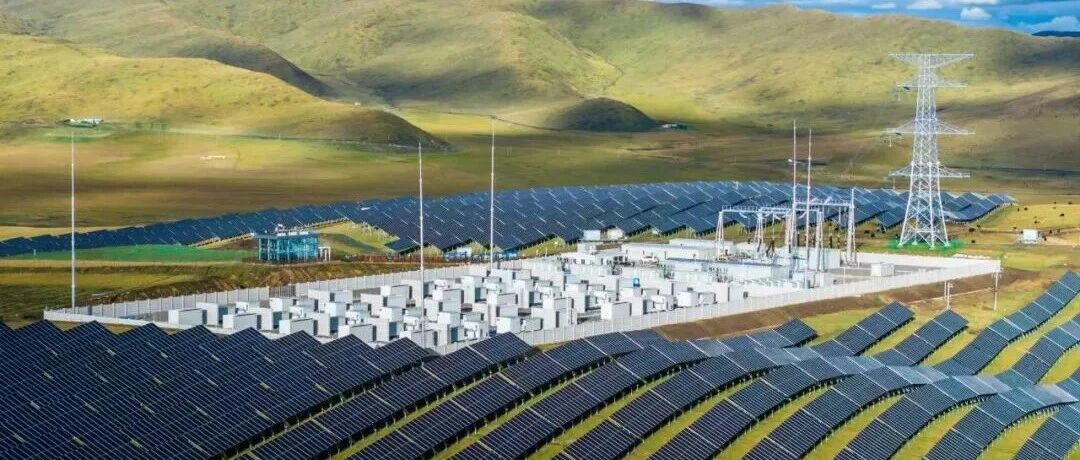
Core Viewpoint - The article highlights the advancements in networked energy storage technology by Sungrow Power Supply Co., which has been recognized as internationally leading by a committee of experts, including academicians from the Chinese Academy of Sciences and the Chinese Academy of Engineering [2][10]. Group 1: Technological Advancements - Sungrow's networked technology enhances grid flexibility, facilitates efficient integration of renewable energy, and ensures stable power system operation, making it a focal point in the global energy industry [4]. - The company has developed a multi-dimensional self-synchronizing stable source network, capable of smooth switching between strong and weak grids, and can handle a wide frequency range for oscillation suppression [5][4]. - The innovative wind-solar-storage panoramic network allows for flexible solution selection and economic power distribution, addressing self-stabilization issues in weak grids [5][4]. Group 2: Practical Applications and Global Reach - Sungrow's networked technology has been validated through various projects, including the first networked doubly-fed wind turbine in Zhangjiakou, China, and the highest-altitude photovoltaic power station in Tibet [7][8]. - The company has successfully implemented the world's largest wind-solar-storage hydrogen complementary project in Saudi Arabia and has contributed significantly to grid stability in the UK and Australia [8][7]. Group 3: Industry Context and Strategic Positioning - The article discusses the challenges faced by the solar and energy storage industries, including significant price drops leading to increased operational pressures on companies [10][11]. - Sungrow advocates for a "value over price" approach, emphasizing technological innovation to create long-term value for customers, thus setting a precedent for high-quality industry development [11][10].

投资142亿,风电巨头明阳智能拟在英国建首个全产业链基地
Guan Cha Zhe Wang· 2025-10-13 10:06
Core Viewpoint - Mingyang Smart Energy plans to invest £1.5 billion (approximately ¥142.10 billion) to establish the UK's first integrated offshore wind turbine manufacturing base in Scotland, focusing on both offshore and floating wind turbine production [1][3]. Group 1: Investment and Project Details - The project will be implemented in three phases, with the first phase involving an investment of £750 million to build an advanced manufacturing base for turbine nacelles and blades, expected to commence production by the end of 2028 [3]. - The second phase will expand facilities to support large-scale deployment of floating offshore wind technology, while the third phase aims to create an offshore wind industry ecosystem, including manufacturing of control systems and key components [3]. - The funding for this project will come from the company's own funds and self-raised capital, including funds raised from the issuance of global depositary receipts in 2022 and future bank financing [3]. Group 2: Market Context and Strategic Importance - The investment aligns with the UK government's push for clean energy transition, aiming to double annual clean energy investments by 2035 and establish the UK as a "clean energy superpower" [5]. - Wind power has become the largest single source of electricity in the UK, with its share increasing from 29% in 2023 to 30% in 2024, surpassing gas-fired power generation [5]. - The project is seen as a potential solution to the delays and challenges faced by UK wind projects due to rising costs and supply chain complexities, positioning Mingyang as a key player in the market [6]. Group 3: Geopolitical Considerations - The involvement of a Chinese company in the UK offshore wind sector has raised concerns from US officials regarding safety risks associated with Chinese equipment, which has been dismissed by the Chinese embassy in the UK [8]. - The UK government has set a target of 50 GW of offshore wind capacity by 2030, but only about 15 GW has been achieved so far, highlighting the urgent need for new manufacturing capabilities [8]. - The geopolitical dynamics surrounding this investment may introduce uncertainties, but the pressing energy transition needs in the UK necessitate a pragmatic approach to collaboration with Chinese firms [8].