
工业软件

Search documents
数学赋能产业:学界需敢“嫁” 业界要敢“娶”
Huan Qiu Wang Zi Xun· 2025-12-01 10:34
来源:科技日报 11月29日,在重庆举行的第四届数学促进经济社会发展论坛上,一个共识明确清晰:我国工业软件要突 围,必须破解数学研究与产业应用深度融合难题。 作为现代工业体系的"大脑"与"神经",工业软件的"灵魂"始终是数学。 根本出路在于构建"协同生态"。单打独斗无法形成合力。可凭借开源模式,以共建共享汇聚创新力量, 降低研发门槛,构建可持续发展的产业生态。 数学界要主动"担当",要主动服务国家战略,勇于承担重大科技任务,从实际需求中凝练和解决真问 题;产业界需尊重科学规律,"固本"强基;双方通过"共生"打破壁垒,最终构建起良性循环的创新生 态。 德国数学家高斯曾说,数学是科学的皇后。如今面向产业,一方要放下身段敢"嫁",另一方应敞开怀抱 敢"娶"——数学家需具备工程视角,真正融入产业中;产业界需有耐心,理解数学逻辑,为数学家提供 发挥才能的机会。 数学与产业的融合,绝非一蹴而就的"嫁娶",而是一个需要长期投入的系统工程。唯有夯实数学这一最 深层的基石,才能筑起我国工业软件自主可控的宏伟大厦。 当前,国产工业软件在高端市场难有突破,深层原因是对数学这一"基石"的忽视。那些看似"无用"的基 础数学探索,恰恰是 ...
IDC:2024年中国MES解决方案总市场规模达159.1亿元 年增长率为11.4%
智通财经网· 2025-12-01 05:57
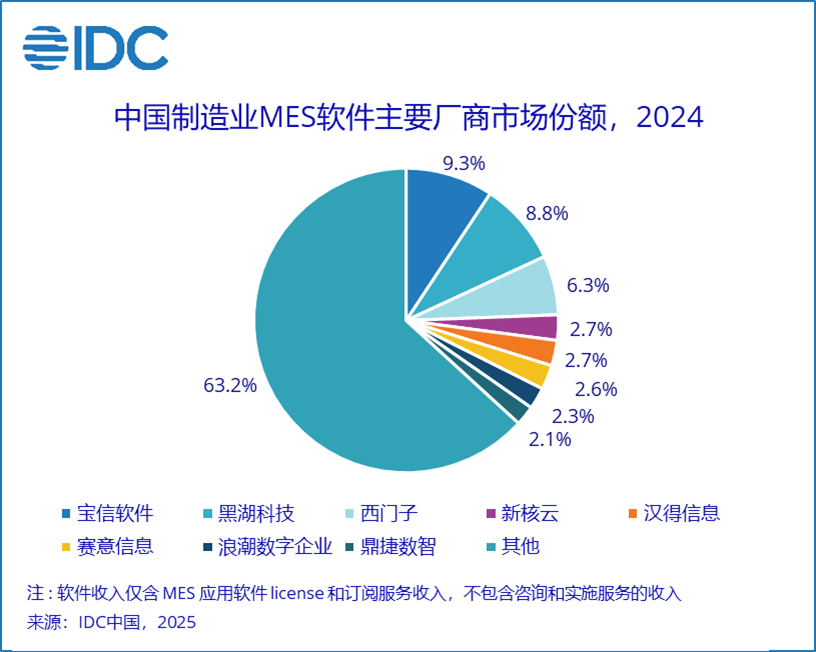
Core Insights - The report by IDC indicates that the total market size for MES solutions in China's manufacturing industry will reach 15.91 billion RMB in 2024, with a year-on-year growth rate of 11.4% [1][5] - The MES software market alone is projected to reach 6.29 billion RMB, growing at a rate of 16.3%, although this represents a slight decline in growth speed [1][5] - The competitive landscape in the MES software market is dominated by Baoxin Software, Heihuke Technology, and Siemens, with Siemens experiencing a drop in market share from 7.5% to 6.3% [1][5] Market Segmentation - The public cloud SaaS MES software market in China is expected to reach 1.005 billion RMB in 2024, accounting for 16.0% of the overall MES software market, with a year-on-year growth of 15.2% [3] - The core competitive advantage of SaaS is shifting from "low cost and rapid replication" to "multi-factory and cross-organization collaborative management," enhancing its connection to the supply chain [3] - The report highlights significant growth in specific sectors such as high-tech electronics, shipbuilding, automotive parts, and equipment manufacturing, driven by digital transformation and large-scale industrial equipment updates [5][13] Industry Trends - The report notes that AI is increasingly integrated into MES and various industrial software, moving from concept validation to large-scale implementation, which is expected to drive a new wave of growth and structural change in the MES market [13] - The competition in the MES market is intense, with many local manufacturers breaking the long-standing market structure through advancements in industry depth and product breadth [13] - The report emphasizes the importance of cash flow management, deepening AI technology integration, and focusing on industry-specific solutions as key strategies for technology service providers [13]

博时基金王萌:AI赋能叠加自主可控 看好工业软件投资机会
Shang Hai Zheng Quan Bao· 2025-11-30 18:51
Core Viewpoint - The industrial software market is experiencing increased demand, driven by AI empowerment and the push for self-sufficiency, indicating promising future development and rich investment opportunities [1]. Group 1: Industry Overview - The National Index for Industrial Software reflects the price changes of listed companies in the industrial software sector [2]. - Industrial software is categorized into four main types: R&D design software, production control software, digital management software, and embedded software, each serving distinct functions in the industrial process [2]. - The industry is benefiting from multiple favorable factors, including government policies aiming to update approximately 2 million sets of industrial software by 2027, strong internal demand for refined management, and technological innovation driving the sector [2]. Group 2: Strategic Importance - Changes in the external environment are elevating the strategic importance of industrial software, as global manufacturing shifts towards high efficiency, flexibility, and customization [3]. - Domestic software is currently in a phase of breaking into high-end products, with embedded software showing potential advantages, although it still faces challenges in competing with foreign products [3]. Group 3: Investment Opportunities - Three core investment logics are identified: the steady advancement of self-sufficiency in industrial software, the significant replacement potential for imported software, and the ongoing R&D and mergers and acquisitions driving product enhancement [4]. - AI is seen as a transformative force for domestic industrial software, potentially enabling leapfrog development and creating significant valuation premiums in the industry [4]. Group 4: AI Impact - AI models, such as DeepSeek, are accelerating industry development and lowering application barriers, facilitating rapid penetration of AI into industrial software [5]. - Companies are developing multi-layered AI product service systems, offering various AI models and tools, which present diverse investment opportunities [5]. Group 5: Market Characteristics - The National Industrial Software Index primarily consists of small and mid-cap stocks, with over 70% of stocks having a total market value below 50 billion [5]. - The index's largest sector is computers, while also covering machinery, power equipment, and communications, aligning with the technology growth characteristics of the sector [5].
博时基金王萌:AI赋能叠加自主可控,看好工业软件投资机会
Shang Hai Zheng Quan Bao· 2025-11-30 14:09
Core Insights - The industrial software market is experiencing increased demand, driven by AI empowerment and the push for self-sufficiency, indicating promising future growth and investment opportunities [1][2]. Group 1: Industry Overview - The National Index for Industrial Software reflects the price changes of listed companies in the industrial software sector [2]. - Industrial software is categorized into four main types: R&D design, production control, digital management, and embedded software, each serving distinct functions in the industrial process [2]. - The industry is benefiting from multiple favorable factors, including government policies that aim to update approximately 2 million sets of industrial software by 2027, creating clear market growth potential [2][3]. Group 2: Strategic Positioning - The global manufacturing landscape is shifting towards high efficiency, flexibility, and personalized customization, highlighting the strategic importance of industrial software [3]. - Domestic software is currently in a phase of breaking into high-end products, with embedded software showing significant market potential, although it still faces challenges in competing with foreign products [3]. Group 3: Investment Opportunities - Three core investment logics are identified: the steady advancement of self-sufficiency in industrial software, the significant replacement potential for imported software, and the ongoing R&D and acquisition efforts by manufacturers to enhance product capabilities [4]. - AI is seen as a transformative force for domestic industrial software, potentially enabling leapfrog development and creating significant valuation premiums in the industry [4][5]. Group 4: Market Characteristics - The National Industrial Software Index primarily consists of small and mid-cap stocks, with over 70% of the total market capitalization being below 50 billion yuan [6]. - The index's largest sector is computers, with substantial representation from manufacturing industries such as machinery, electrical equipment, and communications [6]. - The index aligns well with the technology growth characteristics of the Sci-Tech Innovation Board and the Growth Enterprise Market, indicating strong investment value due to high and steadily increasing R&D investments [6].
欧媒哀叹:中国什么都不想买,什么都自己造!逼得欧洲没活路了
Sou Hu Cai Jing· 2025-11-29 09:31
Core Insights - The article discusses the shift in China's role from being the "world's largest customer" to a "super developer," indicating a significant change in global trade dynamics [1][3][20] - European manufacturers are facing challenges as China increasingly focuses on self-sufficiency and domestic production, leading to a decline in imports from Europe [5][11][39] Group 1: Changes in Trade Dynamics - China is no longer a major importer of European high-end machinery, automobiles, and luxury goods, which has left European manufacturers searching for new opportunities [3][5] - The demand for traditional imports like soybeans and iron ore remains, but these do not significantly benefit European manufacturing [7][20] - The rise of local high-end brands in China poses a threat to European luxury brands, as Chinese consumers are increasingly favoring domestic options [9][39] Group 2: China's Manufacturing Strategy - China is investing heavily in high-end manufacturing sectors such as semiconductors, industrial software, and commercial aircraft, aiming for self-sufficiency [16][18][20] - The Chinese government views imports as temporary learning opportunities, with a focus on developing domestic capabilities to produce high-quality goods [18][20] - The "14th Five-Year Plan" prioritizes manufacturing, indicating a strategic shift towards enhancing domestic production capabilities [13][20] Group 3: Impact on Europe - European economies, particularly Germany, are projected to face economic growth declines due to China's strong export capabilities, with estimates suggesting a 0.3 percentage point reduction in growth annually [24][28] - The article highlights the existential crisis faced by European manufacturers, who must either reform to enhance competitiveness or resort to protectionist measures [28][32] - The contradiction in European expectations for China to stimulate global demand while also limiting its exports creates a complex challenge for the region [35][39]

武汉激活创新“根”力量,专精特新 “雁阵”托起民营经济新生态
2 1 Shi Ji Jing Ji Bao Dao· 2025-11-28 08:17
Group 1: Core Insights - The Ministry of Industry and Information Technology announced the list of newly recognized and re-evaluated national-level specialized and innovative "little giant" enterprises for 2025, highlighting several companies in Wuhan's AI, integrated circuits, and industrial robotics sectors [1] - Wuhan's systematic cultivation model, focusing on "seedling cultivation - chain innovation - ecological symbiosis," has effectively positioned specialized and innovative enterprises as a core engine for high-quality development of the private economy [1] - The city plans to deepen the cultivation system for "root enterprises" and implement the "20 measures for private economy" to foster a nurturing brand for technological and industrial innovation [1] Group 2: Policy and Support Initiatives - The "Spark Seedling Venture Capital Cultivation Plan" was launched to focus on the initial stages of technology transfer and the growth of tech enterprises, aiming to develop 100 seedling investment partners and nurture 1,000 tech innovation projects [2] - Government support has been crucial for startups facing funding pressures and market demand alignment, particularly in the semiconductor high-end equipment sector [2] Group 3: Company Case Studies - QianDa Intelligent Technology, which specializes in high-temperature gas detection electronic ceramic chips, has successfully transitioned from research to commercialization, aided by government support and local innovation ecosystems [3][4] - Wuhan QiNa New Energy Technology, established in September 2022, focuses on sodium-ion battery materials and has received angel investment and government support to accelerate technology transfer [4][5] - YiMo Technology, a company specializing in industrial software, has grown into a national-level specialized and innovative "little giant," successfully implementing 2,000 digital factories with significant market share [6][7] Group 4: Economic Impact - From January to October, the high-tech manufacturing sector, driven by private enterprises, saw a value-added growth of 15.5%, significantly outpacing the overall industrial growth rate [10] - The private economy in Wuhan has become a strong driving force for economic transformation, with a contribution of 48.4% to GDP and a total import-export volume growth of 16.7% year-on-year [12]
领航未来产业,共筑创新高地
Nan Jing Ri Bao· 2025-11-28 02:23
Core Insights - The China-France Future Industry Cooperation Forum was held in Nanjing, focusing on innovation and collaboration in future industries [1] - Major French industrial companies, including Schneider Electric and Dassault Systèmes, participated, highlighting the importance of digital transformation and 3D virtual twin technology [1][2] - Nanjing aims to accelerate the development of future industries, with a projected 20% growth in future industry business revenue by 2025 [2] Group 1: Industry Collaboration - The forum emphasized the collaboration between local high-tech companies in Nanjing and leading French firms, showcasing the potential for partnerships in aerospace, green energy, and future energy sectors [2] - Nanjing Tianyi Aerospace Electronics Technology Co., a high-tech company focused on commercial satellite technology, is set to test its satellite communication services by the end of the year [3] - The forum resulted in a three-year agreement for continued China-France future industry cooperation in Nanjing, indicating a long-term commitment to collaboration [3] Group 2: Investment and Economic Impact - Nanjing has established a strong foundation for investment, with 114 approved French investment projects and actual foreign capital usage reaching $1.16 billion [3] - The presence of a French semiconductor company launching an 8-inch silicon carbide chip production line in China demonstrates the competitive edge of Chinese manufacturing in terms of cost and technology [3] - The forum highlighted the importance of building relationships and networks in the future industry landscape, with a focus on mutual benefits and shared growth [2]
支持港股大湾区企业在深交所上市
Sou Hu Cai Jing· 2025-11-26 22:31
Core Viewpoint - Guangdong Province has released a financial support plan for enterprises to conduct industrial chain integration and mergers, aiming to resolve structural contradictions in key industries and promote high-quality development of the industrial chain [1] Group 1: Objectives and Goals - The plan aims to enhance the competitive advantage of industrial clusters in the Guangdong-Hong Kong-Macao Greater Bay Area by 2027, improving the efficiency of integration and merger services and establishing a more robust collaborative mechanism [1] - The overarching goal is to better serve the construction of Guangdong's modern industrial system and the high-quality development of the economy and society [1] Group 2: Financial Support Measures - The plan proposes a comprehensive financial support system to empower collaborative development among upstream and downstream enterprises in the industrial chain, focusing on encouraging mergers and acquisitions, enhancing competitiveness, and broadening financing channels [2] - Specific measures include supporting listed companies in utilizing various payment tools for mergers and acquisitions, establishing industry acquisition funds, and integrating mergers and asset revitalization into state-owned enterprise assessment systems [2][3] Group 3: Investment and Financing Strategies - The plan encourages the establishment of a comprehensive service platform for enterprise listings, supporting technology-driven companies to list on various stock exchanges, thereby broadening financing channels [3] - It emphasizes the creation of a full-chain investment system involving angel investment, venture capital, private equity, and acquisition funds, with a focus on key sectors such as chip manufacturing and high-end medical devices [3]
广东发布金融支持企业开展产业链整合兼并行动方案 支持港股大湾区企业在深交所上市
Zheng Quan Shi Bao· 2025-11-26 18:46
Core Viewpoint - The Guangdong Province has released a financial support plan for enterprises to engage in industrial chain integration and mergers, aiming to resolve structural contradictions in key industries and promote high-quality development of the industrial chain [1] Group 1: Objectives and Goals - The plan aims to enhance the competitive advantage of industrial clusters in the Guangdong-Hong Kong-Macao Greater Bay Area by 2027, improving the efficiency of integration and merger services and establishing a more robust collaborative mechanism [1] - The overarching goal is to support the construction of a modern industrial system in Guangdong and contribute to high-quality economic and social development [1] Group 2: Financial Support Measures - The plan emphasizes the creation of a comprehensive, multi-level financial support system to empower collaborative development among upstream and downstream enterprises in the industrial chain [1] - It proposes 12 specific measures focusing on encouraging integration and mergers, enhancing financial empowerment, and improving policy coordination and work mechanisms [1][2] Group 3: Encouragement of Mergers and Acquisitions - The plan supports listed companies in utilizing various payment tools such as shares, convertible bonds, and cash for mergers and acquisitions, aiming to attract more social capital and enhance sustainable development capabilities [2] - It encourages the establishment of industry acquisition funds by listed companies, targeting key links in the industrial chain [2] Group 4: Capital Market and Investment - The plan aims to broaden direct financing channels in the capital market and improve the fund system to support industrial chain integration [2][3] - It promotes the establishment of a provincial government investment guidance fund system and encourages social capital participation in forming a comprehensive investment system [3] Group 5: Technology and Core Competencies - The plan highlights the importance of supporting technology-driven enterprises in listing on platforms like the ChiNext and STAR Market, thereby enhancing their financing capabilities [3] - It focuses on key areas such as chip manufacturing, industrial software, and high-end medical devices to improve the self-control capabilities of critical core technologies in the industrial chain [3]
利好来了!刚刚,广东重大发布!
Sou Hu Cai Jing· 2025-11-26 11:29
Core Viewpoint - Guangdong Province has issued a plan to support industrial chain integration and mergers, emphasizing the importance of enhancing the quality of listed companies and promoting the integration of state-owned enterprises [1][2][3] Group 1: Policy Initiatives - The plan encourages the inclusion of mergers, asset revitalization, and other activities into the evaluation system for state-owned enterprises [2][3] - It promotes the use of various financing tools such as targeted placements, special convertible bonds, and merger loans by listed state-owned enterprises to facilitate industrial chain integration [1][2] - The plan supports the establishment of industrial merger funds by listed companies, focusing on key segments of the industrial chain [2][3] Group 2: Financing and Investment - The plan aims to broaden financing channels for enterprises, including support for technology companies to list on the ChiNext and Science and Technology Innovation Board [4] - It encourages the issuance of green bonds and other financial products to support enterprises in their strategic transformations and industrial upgrades [4][5] - The plan also promotes the establishment of government investment guidance funds and encourages social capital participation in various investment forms [4][5] Group 3: Focus Areas - The plan emphasizes the need to enhance the resilience and security of the industrial supply chain, particularly for state-owned enterprises [3][5] - It highlights the importance of supporting key core technology sectors such as chip manufacturing, industrial software, and high-end medical devices [5] - The plan encourages commercial banks to provide reasonable loan rates for qualified industrial chain integration projects, particularly in strategic industries [5]