智能网联汽车

Search documents
慧翰股份(301600.SZ)出资6825万元参设私募基金 专项投资一家商业航天企业
智通财经网· 2025-12-29 14:38
Core Viewpoint - The company, Huian Co., Ltd. (301600.SZ), is exploring the application of its intelligent connected vehicle technology and automotive-grade components in the satellite communication and commercial aerospace sectors through a partnership with Huafu Capital Management Co., Ltd. [1] Group 1 - The company has signed a partnership agreement with Huafu Capital to jointly invest in establishing Jiaxing Huahan Equity Investment Partnership (Limited Partnership) [1] - The company will contribute 68.25 million yuan, which accounts for 65% of the investment in the partnership [1] - The partnership will focus on investing in a commercial aerospace enterprise as a private equity fund [1]
慧翰股份(301600.SZ):拟与专业投资机构共同设立基金专项投资一家商业航天企业
Ge Long Hui· 2025-12-29 11:21
Core Viewpoint - Huihan Co., Ltd. (301600.SZ) is leveraging its expertise in intelligent connected vehicles to explore applications in the commercial aerospace sector through a partnership with Huafu Capital Management Co., Ltd. [1] Group 1: Strategic Development - The company aims to meet its strategic development needs by utilizing the investment experience and resource advantages of professional investment institutions [1] - Huihan Co. is focusing on its low-cost, high-reliability automotive-grade technology to enhance efficiency and reduce costs in the commercial aerospace industry [1] Group 2: Partnership and Investment - The company has signed a partnership agreement with Huafu Capital to establish a private equity fund named Jiaxing Huahan Equity Investment Partnership (Limited Partnership) [1] - The partnership will specifically invest in a commercial aerospace enterprise [1]
港股异动 智驾概念股早盘走高 国内首批L3级自动驾驶汽车开启规模化上路运行
Jin Rong Jie· 2025-12-29 03:20
Core Viewpoint - The smart driving concept stocks have seen a significant rise, driven by the introduction of L3-level autonomous driving vehicles in Chongqing, marking a milestone in the development of intelligent connected vehicles in China [1]. Group 1: Stock Performance - Youjia Innovation (02431) increased by 8.89%, reaching HKD 13.6 [1] - Zhejiang Shibao (01057) rose by 6.97%, trading at HKD 5.22 [1] - Tudatong (02665) saw a gain of 1.98%, priced at HKD 10.82 [1] Group 2: Industry Developments - On December 26, the first batch of 46 L3-level autonomous driving vehicles, equipped with the L3 autonomous driving system from Changan Deep Blue, was officially launched for road use in Chongqing [1] - The approved routes for these vehicles include major roads such as the inner ring expressway and Yudu Avenue in Chongqing [1] Group 3: Regulatory and Market Insights - According to Xinda Securities, the regulatory framework for intelligent connected vehicles in China is continuously improving, leading to a more standardized industry development environment [1] - Domestic brands are accelerating the research and development of smart driving technologies, with the penetration rate of L2-level and above advanced driving assistance systems increasing rapidly [1] - The market for Robotaxi is projected to reach a scale of RMB 270 billion by 2030 [1]
港股异动 | 智驾概念股早盘走高 国内首批L3级自动驾驶汽车开启规模化上路运行
智通财经网· 2025-12-29 02:03
Group 1 - The core viewpoint of the article highlights the positive market response to smart driving concept stocks, with notable increases in share prices for companies such as Youjia Innovation, Zhejiang Shibao, and Tudatong [1] - The first batch of L3-level autonomous driving vehicles, totaling 46 units, has officially commenced large-scale road operation in Chongqing, featuring vehicles equipped with L3 autonomous driving systems from Changan Deep Blue [1] - The vehicles are authorized to operate on specific routes in Chongqing, including the inner ring expressway and other major roads, indicating a significant step in the practical application of autonomous driving technology [1] Group 2 - According to Xinda Securities, the regulatory framework for intelligent connected vehicles in China is continuously improving, leading to a more standardized industry development environment [1] - Domestic brands are accelerating the research and development of smart driving technologies, with a notable increase in the penetration rate of L2-level and above advanced driving assistance systems [1] - The market size for Robotaxi is projected to reach 270 billion yuan by 2030, reflecting the growth potential in the high-level autonomous driving sector [1]
周乃翔在东营调研时强调 因地制宜发展新质生产力 加紧培育壮大新动能
Da Zhong Ri Bao· 2025-12-29 00:56
周乃翔来到山东信义汽车配件制造有限公司,实地察看新能源汽车高端制动系统研发制造项目生产 车间,希望企业紧扣新能源汽车发展趋势,加大研发投入,提升产品品质,加强市场开拓。在华泰集 团,他听取造纸产业大脑AI能力中心情况介绍,勉励企业强化党建引领,充分发挥"链主"带动作用,更 加注重科技创新、数字化转型、绿色发展,持续优化产品结构,推动造纸产业提质升级。在贵研催化剂 (东营)有限公司,他与企业负责人交流,指出要强化产业链联动,推动上下游企业协同创新、融通发 展,以过硬技术、优质产品赢得更大市场。在华东(东营)智能网联汽车试验场,他详细询问试验场运 行情况,强调要积极稳妥推进项目建设,丰富场景业态,提升服务品质,为用户提供更智能、便捷、高 效的场地服务。 调研中,周乃翔指出,要抓紧抓好岁末年初各项工作,关心困难群众生产生活,做好煤电油气生产 供应,保障粮油肉蛋奶果蔬等生活必需品供应充足、价格平稳,抓好农业生产,切实保障群众平安便捷 出行。要压紧压实安全生产责任,开展好安全生产大检查,加强各行业领域以及人员密集场所、"九小 场所"等重点场所安全治理,坚决防止各类事故发生。要加强各类矛盾纠纷排查化解,强化社会面巡防 管 ...
什么是“场景革命”?它为何能打开未来万亿市场的入口?
Sou Hu Cai Jing· 2025-12-28 15:11
Core Viewpoint - China is undergoing a "scene revolution" aimed at driving growth, reform, and governance optimization through the large-scale application of new technologies and products, as outlined in the recently approved "Implementation Opinions" by the State Council [2][3][4]. Group 1: Background and Current State - China has a solid foundation for advancing the scene revolution, with adequate scene resources, institutional environment, infrastructure, and construction experience [3][6]. - The country faces challenges such as an inadequate revenue mechanism, fragmented resources, administrative and market barriers, and a lack of transformation service systems that hinder scene cultivation and openness [3][9]. Group 2: Strategic Importance - The "14th Five-Year Plan" emphasized innovation as central to modernization, but many technological achievements remain in the pilot stage, necessitating the application of these technologies in real, scalable scenes [4][5]. - The scene revolution is crucial for transforming new demands into economic vitality and restoring market confidence by facilitating the supply-demand cycle [5][10]. Group 3: Policy Framework - The "Implementation Opinions" marks a significant national-level policy initiative to systematically deploy tasks related to scene cultivation and openness, identifying five major market areas and 22 key scenes [10][11]. - The focus is on creating new application scenes in emerging fields, upgrading traditional industries, and addressing urgent needs in various sectors such as emergency management and social governance [11][12][13][14]. Group 4: Infrastructure and Technological Support - China has made significant advancements in new infrastructure, including 5G networks and data centers, which support the widespread application of technologies like big data and artificial intelligence [7]. - The establishment of over 470,500 5G base stations and extensive fiber optic networks has positioned China as a leader in global network infrastructure [7]. Group 5: Industry and Market Opportunities - The scene revolution is expected to unlock a trillion-level market by fostering new business models and enhancing the integration of technology across various sectors [10][15]. - The healthcare sector is projected to see substantial growth, with the smart healthcare market expected to exceed 270 billion yuan by 2030, driven by digital transformation [15]. Group 6: Collaborative Ecosystem - A collaborative ecosystem involving central and local governments, state-owned enterprises, and private companies is essential for nurturing scene-driven innovation [16][19]. - The emphasis is on creating a supportive environment for all stakeholders to participate in scene cultivation and innovation, ensuring equitable access to resources and opportunities [17][18].

经开区评出10家营商环境示范园区,构建产业生态新范式
Bei Jing Ri Bao Ke Hu Duan· 2025-12-28 05:08
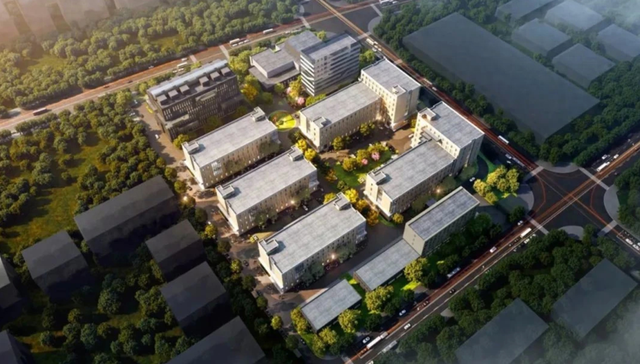
Core Insights - In 2025, five new parks were recognized as "Demonstration Parks for Business Environment" in Beijing, bringing the total to ten parks evaluated under the "Yizhuang New City Business Environment Demonstration Park Evaluation Index System" [1][2] - The evaluation system aims to transform the broad concept of "business environment" into measurable and improvable operational standards, fostering a nurturing ecosystem for enterprises [1][2] Group 1: New Demonstration Parks - The five newly recognized parks include Beijing Economic International Enterprise Avenue, Yichuang High-tech Biomedicine Park, High-tech Audiovisual Industry Park, Zhongke Jingwei Intelligent Manufacturing Industry Park, and Dazhu Industrial 4.0 Innovation Park, all noted for their excellent performance in business environment evaluation [2][4] - Yichuang High-tech Biomedicine Park has established a comprehensive professional service system covering the entire industry chain, significantly reducing R&D costs for enterprises [2][4] - Dazhu Industrial 4.0 Innovation Park embodies the "Industry 4.0" concept, housing over 70 high-tech enterprises in robotics, smart manufacturing, and biotechnology [4][5] Group 2: Continuous Improvement and Impact - The first batch of five parks has maintained their leading positions in the 2025 follow-up evaluation, demonstrating a transition from recognition to leadership [8][10] - The parks have upgraded their incubation services, resulting in a 40% increase in policy application approval rates and a stable occupancy rate of over 95% [10][11] - The recognition as demonstration parks has attracted over 50 new technology-based SMEs and additional investments exceeding 200 million yuan, with a 30% reduction in average entry time for new enterprises [10][11] Group 3: Government and Market Collaboration - The growth of demonstration parks is rooted in a carefully constructed nurturing system by the Beijing Economic Development Zone, emphasizing deep collaboration between government and market forces [12][13] - A scientific evaluation system assesses ten indicators related to park management, infrastructure, and service capabilities, providing a comprehensive "health report" for continuous improvement [12][13] - The government offers long-term support to demonstration parks, including talent recognition and priority for incubator construction, enhancing flexibility in talent competition [12][13]
经济日报:自动驾驶“准入许可”不等于大规模量产
Xin Lang Cai Jing· 2025-12-27 02:14
Core Viewpoint - The issuance of the first L3-level highway autonomous vehicle special license plates in Beijing marks a significant milestone in China's autonomous driving development, transitioning from technical validation to mass production application [1][4]. Group 1: L3-Level Autonomous Driving Overview - L3-level autonomous driving represents a critical transition from "driving assistance" to "autonomous driving," allowing the system to perform driving tasks under certain conditions without continuous driver monitoring [2]. - The first three quarters of this year saw a 21.2% year-on-year increase in new car sales with L2-level driving assistance features, achieving a penetration rate of 64% [2]. Group 2: Regulatory Framework and Testing - The Ministry of Industry and Information Technology (MIIT) has issued strict limitations on the operational scenarios, road types, urban areas, and speed limits for the two approved models, emphasizing a cautious regulatory approach [3]. - There is a distinction between "road test licenses" issued by local authorities and "product access licenses" from national departments, with the latter being significantly more challenging to obtain [3]. Group 3: Future Implications and Challenges - The successful implementation of L3-level autonomous driving requires not only technological advancements but also supportive policies, industry ecosystems, and infrastructure [4]. - The current pilot approach is characterized by "small-scale initiation and conditional implementation," indicating that mass production is not imminent despite the recent approvals [4].


忠阳车评“准入许可”不等于大规模量产
Jing Ji Ri Bao· 2025-12-27 00:18
Core Viewpoint - The issuance of the first L3-level autonomous driving vehicle license plates in Beijing marks a significant milestone in China's autonomous driving industry, transitioning from technology validation to mass production application [2][3]. Group 1: Regulatory Developments - The Ministry of Industry and Information Technology has officially granted the first L3-level conditional autonomous driving vehicle permits, allowing specific models from Changan Automobile and BAIC Group to conduct pilot tests on designated highways in Beijing and Chongqing [2][3]. - The L3-level autonomous driving is a critical transition from "driving assistance" to "autonomous driving," where the system can perform driving tasks under certain conditions without continuous driver monitoring [3]. Group 2: Market Context - In the first three quarters of the year, the sales of new passenger cars equipped with L2-level driving assistance features increased by 21.2%, achieving a penetration rate of 64% [3]. - The approval of these two autonomous driving models is seen as a recognition of technological maturity and a response to societal expectations for future smart mobility [3]. Group 3: Implementation and Limitations - The permits come with strict limitations regarding operational scenarios, road types, urban areas, and speed limits, indicating a cautious approach to the rollout of L3-level autonomous driving [4][5]. - The current pilot program does not open these vehicles to the general public but is limited to specific organizations conducting trial operations, emphasizing a careful regulatory framework to ensure safety [4][5]. Group 4: Future Outlook - The true commercialization of L3-level autonomous driving requires not only technological breakthroughs but also supportive policies, industry ecosystems, and infrastructure [5]. - The current approach of "small-scale initiation with conditional implementation" reflects the complexity and safety risks associated with autonomous driving systems, indicating that widespread adoption is still a long way off [5].

【忠阳车评】“准入许可”不等于大规模量产
Jing Ji Ri Bao· 2025-12-26 22:55
Core Viewpoint - The issuance of the first L3-level autonomous driving vehicle license plates in Beijing marks a significant milestone in China's autonomous driving industry, transitioning from technology validation to mass production applications [2][3]. Group 1: Regulatory Developments - The Ministry of Industry and Information Technology has officially granted conditional access permits for the first L3-level autonomous driving models, allowing specific electric vehicles from Changan Automobile and BAIC Group to operate on designated highways in Beijing and Chongqing [2][3]. - The L3-level autonomous driving is a critical transition from "driving assistance" to "autonomous driving," allowing the system to perform driving tasks under certain conditions without continuous driver monitoring [3]. Group 2: Market Dynamics - In the first three quarters of the year, the sales of new passenger cars equipped with L2-level driving assistance features increased by 21.2%, achieving a penetration rate of 64% [3]. - The trial implementation of L3-level autonomous driving vehicles is expected to enhance consumer experience and drive improvements in traffic management, insurance claims, liability recognition, and regulatory frameworks [3][4]. Group 3: Safety and Regulation - The permits for the two models come with strict limitations on operational scenarios, road types, urban areas, and speed limits, emphasizing a cautious regulatory approach to ensure safety [4][5]. - There is a distinction between "road test licenses" issued by local authorities and "product access permits" issued by national departments, with the latter being significantly more challenging to obtain [5]. Group 4: Future Outlook - The true commercialization of L3-level autonomous driving requires not only technological breakthroughs but also supportive policies, industry ecosystems, and infrastructure [5]. - The current pilot approach of "small-scale initiation with conditional implementation" indicates that widespread mass production of autonomous vehicles is still a long way off, despite the symbolic significance of the recent developments [5].