
房地产开发

Search documents
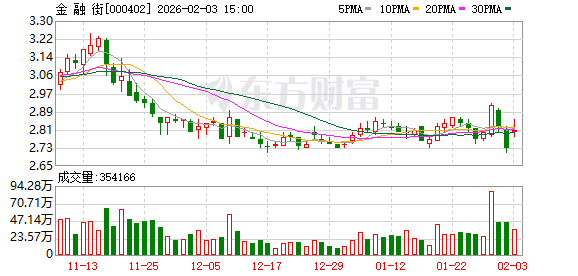
金融街:截至2026年1月底股东户数69626户
Zheng Quan Ri Bao· 2026-02-03 11:11
Group 1 - The core point of the article is that Financial Street reported a total of 69,626 shareholders as of the end of January 2026 [2]


碧桂园1月权益销售额22.1亿元
Bei Jing Shang Bao· 2026-02-03 10:49
北京商报讯(记者 李晗)2月3日,碧桂园披露1月未经审核经营简报。简报显示,1月碧桂园及其附属 公连同其合营公司和联营公司共实现归属公司股东权益的合同销售金额约22.1亿元,归属公司股东权益 的合同销售建筑面积约28万平方米。 ...

上海收储新政的创新与意义
HTSC· 2026-02-03 10:43
Investment Rating - The report maintains an "Overweight" rating for the real estate development and service sectors [7] Core Insights - The new policy in Shanghai for acquiring second-hand housing aims to address the rental needs of new citizens, young people, and graduates, potentially stabilizing housing prices and boosting industry confidence [1][4] - The policy is expected to facilitate a balance between supply and demand in the real estate market by replacing new construction with stock acquisition, thus compressing the supply cycle for affordable rental housing [3] - The report highlights the importance of targeted housing supply strategies in key districts, focusing on small units and proximity to industrial areas to meet talent housing needs [2] Summary by Sections Investment Opportunities - The report recommends investing in "three good" real estate companies with strong credit, good locations, and quality products, particularly those with quality reserves in Shanghai [5] - Specific companies highlighted include China Overseas Development, China Resources Land, and Longfor Group, among others, which are expected to benefit from the new policy and market recovery [9][10] Market Dynamics - The report notes that the new policy is not the first of its kind in China, with previous examples in cities like Zhengzhou, but it is expected to have a more significant impact in Shanghai due to its status as a core first-tier city [4] - The anticipated market stabilization is supported by a relatively market-oriented pricing mechanism for affordable rental housing, which could lead to sustainable commercial outcomes [4] Company Performance - Companies such as Greentown Service and Longfor Group are expected to maintain strong performance metrics, with projected earnings per share (EPS) growth and stable cash flow management [11][12] - The report emphasizes the operational capabilities of companies like China Resources Land and Longfor Group, which are positioned to navigate market adjustments effectively [12][13]





激活置换循环,上海三区试点收购二手房补充保租房供给
Hua Xia Shi Bao· 2026-02-03 10:41
Core Viewpoint - Shanghai is enhancing its focus on public welfare construction, aiming to complete the construction of 74,000 affordable rental housing units by 2025, reaching a cumulative total of 610,000 units [2] Group 1: Affordable Housing Initiatives - The acquisition of second-hand housing for affordable rental housing has officially started, with pilot projects in Pudong New District, Jing'an District, and Xuhui District [2][3] - The selection criteria for housing sources include matching housing types, mature supporting facilities, and convenient transportation [3][4] - The acquisition process is led by government entities, focusing on older residential areas with clear property rights and a total price not exceeding 4 million yuan [4] Group 2: Financial Support and Operational Models - Financial support for the acquisition will be provided by China Construction Bank, which will offer a comprehensive financial service plan [5] - Xuhui District will use district-level financial funds and bank loans to ensure stable funding for the acquisition of small-sized housing units [5] - Jing'an District has established a specialized working group to manage the entire acquisition process, ensuring professional operations from source identification to contract signing [4][5] Group 3: Market Impact and Trends - In January, Shanghai's second-hand housing transactions reached 22,834 units, marking a three-month streak of over 22,000 transactions, the highest in five years [6] - The second-hand housing market has shown signs of price stabilization, with a 25% year-on-year increase in transactions compared to January of the previous year [6] - The pilot acquisition initiative is expected to further stabilize the market and enhance liquidity in the second-hand housing sector [6][7] Group 4: Broader Context and Similar Initiatives - Other regions, such as Hunan Province and Haikou City, are also exploring similar policies to acquire existing housing for public welfare, indicating a trend towards "buying old to replace with new" strategies [9][10] - The approach aims to combine public welfare, market stability, and housing security, addressing the challenges of increasing second-hand housing listings in major cities [10]

新城发展:不止于开发,从平衡到引领-20260203
GUOTAI HAITONG SECURITIES· 2026-02-03 10:30
Investment Rating - The report assigns a rating of "Buy" for the company [7]. Core Insights - The company's development business drag is gradually alleviating, and the value of commercial operations is becoming more prominent, with clear future growth space and direction [1]. - The report is optimistic about the continuous revaluation of corporate value against the backdrop of REITs policy opening [1]. Financial Summary - Total revenue is projected to decline from 119,464 million RMB in 2023 to 40,927 million RMB in 2027, reflecting a decrease of 65.8% over the period [3]. - Net profit is expected to decrease from 879 million RMB in 2023 to 805 million RMB in 2027, with a significant increase of 213.3% in 2024 followed by fluctuations in subsequent years [3]. - The company's price-to-earnings (PE) ratio is forecasted to rise from 9.74 in 2023 to 18.25 in 2027, indicating a potential increase in valuation [3]. Market Data - The stock price has ranged between 1.69 and 2.71 HKD over the past 52 weeks, with a current market capitalization of 17,523 million HKD [4]. Business Strategy - The company has shifted its strategic focus from scale expansion to accelerating de-stocking and ensuring project delivery, confirming a bottom in profit margins [7]. - The commercial sector's operational capabilities are highlighted as a competitive advantage, with a focus on deep operational models and user engagement [7]. Cash Flow and Financing - The company has maintained stable cash flow generation capabilities, with monthly rental income projected at approximately 10.95 billion RMB in 2025, and a significant increase in the interest coverage ratio from 0.87 in 2020 to 4.42 in 1H25 [30][40]. - The company successfully issued various debt instruments, including a 3-year USD 300 million senior unsecured bond, indicating robust refinancing capabilities [30].
观楼|昆明南市区四代宅带动价格上涨3成,北市区第二个四代宅落地
Xin Lang Cai Jing· 2026-02-03 10:24
从"双榜"情况来看,邦泰观云、保利天珺二期加推后持续集中备案,分别销售约1.02亿元、0.3亿元,成交34套、12套,成交均价约19937元/㎡、17898元/ ㎡,套均价约301万/套、247万/套。 同为关上板块的高端改善项目,华润中心降价促销集中备案,单周销售约0.28亿元,成交均价约14535元/㎡。 (龙湖天境实拍图) 龙湖旗下则有两个项目上榜。高新板块的新规住宅项目,龙湖天境销售约0.35亿元,成交19套,成交均价约14811元/套,套均价约186万/套;度假区板块的 龙湖·山海原著,新品入市后一直去化不错,上周销售约0.23亿元,成交均价高达21938元/㎡,也是价格最高的一个项目。 大华·锦绣麓城成交14套,成交均价约11450元/㎡,套均价约125万/套;旭辉广场铂森林语成交12套,成交均价约12885元/㎡,套均价约96万/套。 上周(2026年1月26日-2月1日),昆明楼市成交量价齐涨,南市区改善型四代宅项目集中备案,带动价格上涨近三成。邦泰昆明第三个四代宅项目落地北市 区,预计明年可入市。 据克而瑞发布的最新数据显示,上周昆明主城无住宅项目取证,供应挂零;成交约5.38万㎡,环比微涨 ...

【最新政策】两部门发布《增值税预缴税款管理办法》
Sou Hu Cai Jing· 2026-02-03 10:20
Core Viewpoint - The Ministry of Finance and the State Taxation Administration have announced the implementation of the "Value-Added Tax Prepayment Management Measures," effective from January 1, 2026, which will standardize the prepayment of VAT for taxpayers across various scenarios [2][3]. Group 1: General Provisions - The management measures are formulated based on the relevant provisions of the "Implementation Regulations of the Value-Added Tax Law of the People's Republic of China" [5]. - Taxpayers (excluding individuals) must prepay VAT in accordance with the specified circumstances outlined in the regulations [6]. Group 2: Construction Services Across Administrative Regions - Taxpayers providing construction services across administrative regions must prepay VAT to the tax authority at the location where the service occurs, with a prepayment rate of 2% for general taxation and 3% for simplified taxation [8][14]. - The formula for calculating the prepayment of VAT is provided, allowing taxpayers to deduct subcontracting payments from the total taxable amount [5][10]. Group 3: Prepayment for Real Estate Sales - Real estate developers selling projects through pre-sale must prepay VAT based on the received prepayments at a rate of 3% [18][12]. - The prepayment must be made in the month following the receipt of the prepayment [13]. Group 4: Transfer or Lease of Real Estate - Taxpayers transferring or leasing real estate not located in the same administrative area must prepay VAT to the tax authority at the location of the real estate, with different prepayment rates for general and small-scale taxpayers [21][22]. - The calculation method for VAT prepayment is specified, including deductions for the original purchase price of the real estate [21][23]. Group 5: Oil and Gas Industry - Oil and gas enterprises selling services related to the production of crude oil and natural gas across provinces must prepay VAT to the local tax authority, with a prepayment rate of 5% in Xinjiang and 3% in other regions [27][28]. - The calculation method for VAT prepayment is also outlined for these enterprises [28]. Group 6: Collection Management - Small-scale taxpayers whose total price and prepayments do not reach the VAT threshold are exempt from prepayment [30]. - Taxpayers must maintain detailed records of their prepayments and related transactions, and failure to comply with prepayment deadlines may result in penalties [29][32].

新房成交环比上涨,万科债务展期获新进展:房地产行业周报(2026年第5周)
Huachuang Securities· 2026-02-03 10:20
Investment Rating - The report maintains a recommendation for the real estate sector, indicating a cautious outlook on new home sales and market dynamics [2] Core Insights - New home transactions have increased on a month-over-month basis, with Vanke's debt extension making progress [2] - The real estate index fell by 2.2%, ranking 18th among 31 sectors [9] - Significant year-over-year increases in new home and second-hand home transactions were noted, with new home sales up 591% and second-hand home sales up 1076% [23][28] Summary by Sections Industry Basic Data - The real estate sector comprises 107 listed companies with a total market capitalization of 1,227.95 billion and a circulating market value of 1,176.70 billion [2] Sales Performance - In the fifth week, the average daily transaction area for new homes in 20 cities increased by 28% month-over-month, totaling 187 million square meters, with a year-over-year increase of 591% [23][27] - The average daily transaction area for second-hand homes in 11 cities was 30.8 million square meters, showing a slight decrease of 1% month-over-month but a significant year-over-year increase of 1076% [28][31] Policy News - Local policies in Nanjing and Tianjin have been introduced to enhance housing fund utilization and increase loan limits, aiming to stimulate the real estate market [19][21] Company Dynamics - Vanke A has made progress in extending its debt, with 40% of its mid-term notes being repaid, while China Merchants Shekou anticipates a significant decline in net profit for 2025 [22][19] Investment Strategy - The report suggests focusing on three areas to find alpha in the real estate market: precision in land acquisition for developers, stable income-generating assets like leading shopping centers, and leading real estate agencies that enhance transaction efficiency [35][36]
北上深杭二手房成交集体回暖
21世纪经济报道· 2026-02-03 10:05
记者|李莎 编辑|周上祺 1月多个重点城市二手房市场悄然回暖。 中指数据显示, 1月北京、上海二手房市场维持一定热度,成交量分别达到1.5万套和2.3万 套,同比增幅均超20%;深圳二手房成交0.5万套,环比增长16%,同比增长7%;杭州二手房 成交也出现环同比明显增长的情况。 与二手房市场相比,受市场供应节奏等因素影响,重点 城市新房市场表现相对平淡。 在房价方面,中国房地产指数系统百城价格指数显示,受成都、上海、杭州等城市改善性楼盘 入市影响,1月全国百城新房价格出现环比结构性上涨特征,均价为1.71万元/平方米,环比上 涨0.18%;同期百城二手住宅均价为1.29万元/平方米,环比下降0.85%,降幅较上月收窄0.12 个百分点。 在受访专家看来,开年之后,房地产利好政策频出,释放清晰的"稳预期"信号。2月受春节假 期影响,楼市销售节奏或阶段性放缓,但春节假期之后,随着优质地块逐渐入市,部分房企促 销力度加大,市场需求有望逐步释放,核心城市"小阳春"行情依然值得期待。 (图源:ic) 1月多地二手房成交回暖 部分重点城市二手房市场正在回暖。 以北京为例,Wind数据显示, 1月北京二手房网签量为1508 ...
碧桂园2026年1月实现归属公司股东权益的合同销售金额约22.1亿元
Zhi Tong Cai Jing· 2026-02-03 09:51
碧桂园(02007)发布公告,本公司及其附属公司(本集团),连同其合营公司和联营公司于2026年1月单月 共实现归属本公司股东权益的合同销售金额约人民币22.1亿元,归属本公司股东权益的合同销售建筑面 积约28万平方米。 ...