招聘服务

Search documents
BOSS直聘-W(02076)发布一季度业绩 普通股股东应占净利润5.18亿元 同比增加111.53%
Zhi Tong Cai Jing· 2025-05-22 11:52
Core Insights - BOSS Zhipin-W (02076) reported a strong performance in Q1 2025, with total revenue of 1.923 billion RMB, a year-on-year increase of 12.88% [1] - The net profit attributable to ordinary shareholders reached 518 million RMB, reflecting a significant year-on-year growth of 111.53% [1] - The basic net profit per share was 0.59 RMB [1] User Engagement - The average monthly active users for Q1 2025 were 57.6 million, up 23.6% from 46.6 million in the same quarter of 2024 [2] - The peak monthly active users reached nearly 65 million after the Spring Festival, indicating strong brand appeal and user retention [2] Strategic Focus - The company’s CEO highlighted the effectiveness of its strategy focused on core business, technological innovation, and high-quality growth [2] - The CFO noted an adjusted operating profit margin of 36.0%, a year-on-year increase of 13 percentage points, attributed to efficient operational leverage and strong cost control [2] Customer Growth - The number of paying enterprise clients increased by 12.3% year-on-year to 6.4 million as of March 31, 2025, driven by user penetration strategies [2]
BOSS直聘-W(02076.HK)第一季度经调整净利润增加43.9% 平均月活跃用户同比增长23.6%
Ge Long Hui· 2025-05-22 11:43
Core Insights - The company reported a revenue of RMB 1,923.3 million for Q1 2025, representing a 12.9% increase compared to RMB 1,703.8 million in Q1 2024 [1] - Net profit for Q1 2025 reached RMB 512.1 million, a significant increase of 111.9% from RMB 241.7 million in the same quarter of 2024 [1] - Adjusted net profit for Q1 2025 was RMB 763.9 million, up 43.9% from RMB 530.7 million in Q1 2024 [1] User and Client Metrics - The total number of paid enterprise clients as of March 31, 2025, was 6.4 million, an increase of 12.3% from 5.7 million as of March 31, 2024 [1] - The average monthly active users for Q1 2025 were 57.6 million, which is a 23.6% increase from 46.6 million in Q1 2024 [1] Future Outlook - The company anticipates total revenue for Q2 2025 to be between RMB 2.05 billion and RMB 2.08 billion, reflecting a year-on-year increase of 6.9% to 8.5% [1] Management Commentary - The CEO expressed satisfaction with the strong start in Q1, highlighting robust revenue growth and exceeding profit expectations, validating the company's focus on core business and technological innovation [2] - The CFO noted an adjusted operating profit margin of 36.0% for Q1, a 13 percentage point increase year-on-year, attributed to efficient operational leverage and strong cost control [2] - The peak monthly active users reached nearly 65 million post-Spring Festival, demonstrating the company's growing brand appeal and user engagement [2]
BOSS直聘2025年第一季度:营收19.23亿元,同比上涨12.9%
news flash· 2025-05-22 11:02
Core Insights - BOSS Zhipin reported a revenue of 1.923 billion yuan for Q1 2025, representing a year-on-year increase of 12.9%, exceeding market expectations [1] - The company achieved a net profit of 512 million yuan during the same period [1] - As of March 31, 2025, the number of paying enterprise clients reached 6.4 million, reflecting a year-on-year growth of 12.3% [1]

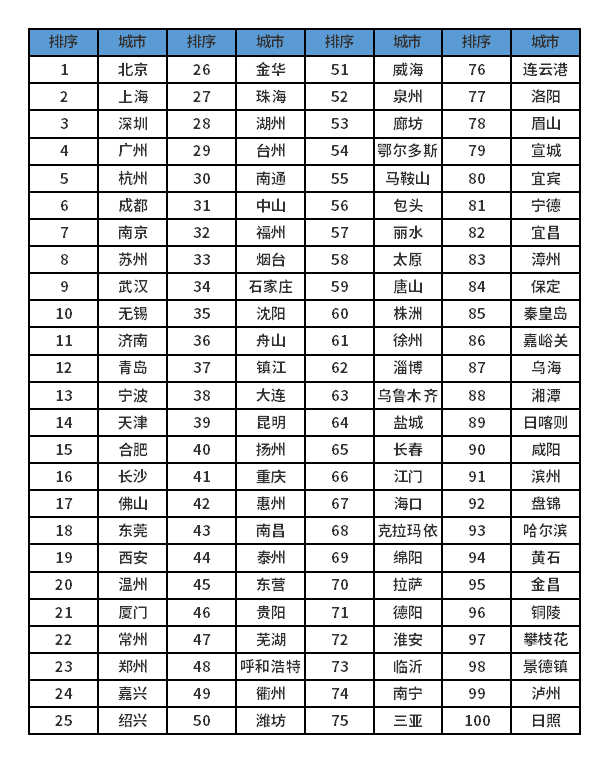
人才吸引力排名,南京全国第七
Nan Jing Ri Bao· 2025-05-16 02:07
Group 1 - The report titled "China Urban Talent Attraction Ranking: 2025" indicates that three cities in Jiangsu, namely Nanjing, Suzhou, and Wuxi, rank seventh, eighth, and tenth respectively in talent attraction [1] - Nanjing has shown a stable net inflow of talent, maintaining a net inflow ratio of 0.7% to 1% from 2020 to 2024, attributed to rapid development in high-end industries and favorable settlement policies [1] - The city has developed an innovative industrial cluster model called "2+6+6" and has established a "4+N" industrial fund cluster, enhancing its talent policies through initiatives like the "Ning Gathering Plan" and "25 Talent Policies" [1] Group 2 - The report highlights that talent continues to concentrate in eastern regions, while central, western, and northeastern areas experience a net outflow of talent, with 60% of talent flowing towards five major city clusters [2] - The ranking is based on over 349 million job-seeking data from Zhilian Recruitment, evaluating six core indicators including talent inflow ratio and disposable income per capita, reflecting the comprehensive ability of cities to attract, retain, and utilize talent [2] - The annual report has been published since 2017 and typically releases between May and August of the following year [2]
南京都市圈四城市人才吸引力进入全国前50
Nan Jing Ri Bao· 2025-05-15 02:37
Core Insights - The report "China's Urban Talent Attraction Ranking: 2025" by Zhilian Recruitment and Zeping Macro highlights the top 100 cities for talent attraction in 2024, with Nanjing, Zhenjiang, Yangzhou, and Wuhu showing significant performance [1][2] Talent Flow Trends - From 2020 to 2024, the talent net inflow ratio in the Yangtze River Delta increased from 6.4% to 7.8%, indicating a strong attraction of talent to this region compared to others [1] - Nanjing ranks 7th in the talent attraction list, maintaining a stable net inflow ratio of 0.7% to 1% during 2020-2024, driven by rapid development in high-tech industries and effective talent policies [1] City-Specific Developments - Zhenjiang improved its ranking to 37th, up 5 places from the previous year, due to the "Talent Town Prosperity" initiative launched in 2021, focusing on dual efforts in talent supply and enterprise demand [2] - Yangzhou, ranked 40th, has implemented policies aimed at becoming a youth development city, including the "Talent New Policy 15 Articles" and various recruitment events [2] - Wuhu, ranked 47th, has seen significant results from its "Ziyunying Talent Plan," providing subsidies to 269,000 individuals and attracting 10,040 university graduates in 2024, up from 33,000 in 2021 [2] Economic Impact - The proactive measures taken by these cities not only enhance their own development but also contribute to regional economic prosperity, suggesting a favorable position in the talent competition [3]
杭州人才净流入占比居于二线城市榜首
Mei Ri Shang Bao· 2025-05-14 23:31
Group 1 - The core point of the report is that Hangzhou ranks first among second-tier cities in China for talent net inflow, maintaining a net inflow rate of over 1.2% for the past five years [1][3] - The report indicates that the talent net inflow in eastern regions of China increased from 11.5% in 2020 to 14.0% in 2022, showing a continuous trend of talent concentration in these areas [2] - The talent net inflow in the Yangtze River Delta region rose from 6.4% in 2020 to 7.8% in 2024, indicating a significant attraction of talent to this urban cluster [2] Group 2 - Hangzhou's talent net inflow rate from 2020 to 2024 has been consistently positive, with figures of 1.6%, 1.6%, 1.3%, 1.2%, and 1.3% respectively, showcasing its strong talent attraction capabilities [3] - In 2024, Hangzhou's permanent resident population increased by 102,000, with a stable talent inflow rate around 3% and a decrease in talent outflow from 2.0% to 1.6% [3] - The digital economy's core industry in Hangzhou saw a year-on-year growth of 7.1% in 2024, contributing to 28.8% of the city's GDP, which is a historical high [3]
深圳,全国第三!最新中国城市人才吸引力排名出炉
Sou Hu Cai Jing· 2025-05-13 12:33
Core Insights - The report "China's Urban Talent Attraction Ranking: 2025" indicates that the Yangtze River Delta and Pearl River Delta continue to attract talent, with Shenzhen ranked third in the nation for talent attraction [1][4]. Group 1: Talent Attraction Rankings - The top ten cities in the talent attraction ranking for 2024 remain unchanged from 2023, with Beijing, Shanghai, Shenzhen, Guangzhou, Hangzhou, Chengdu, Nanjing, Suzhou, Wuhan, and Wuxi leading the list [1][2]. - The report highlights that 60% of talent flows into five major city clusters, with the Yangtze River Delta and Pearl River Delta being the primary areas of talent concentration [3]. Group 2: Talent Flow Trends - The report notes a continuous net outflow of talent from the Beijing-Tianjin-Hebei region for two consecutive years, while the Chengdu-Chongqing and Yangtze River middle reaches also experience net outflows [3]. - Graduates and individuals with master's degrees or higher are increasingly inclined to move to first- and second-tier cities, with 17.4% and 23.2% of resumes directed towards first-tier cities, respectively [3]. Group 3: Shenzhen's Talent Dynamics - Shenzhen's resident population increased by 200,000 in 2024, maintaining a net inflow of talent, with net inflow percentages from 2020 to 2024 remaining stable at around 1.2% [4][6]. - The talent inflow to Shenzhen decreased from 4.6% to 4.0% between 2020 and 2024, while outflow percentages dropped from 3.3% to 2.8%, indicating a decline in talent mobility [6]. - The primary reasons for talent inflow to Shenzhen include rapid economic growth, with a GDP of 3.7 trillion yuan in 2023, and a lower threshold for residency compared to Beijing and Shanghai, alongside a robust job market [6].

日本正在集体退休,东亚的平衡会被打破吗?
Hu Xiu· 2025-04-29 03:58
Group 1 - Japan's demographic crisis is characterized by a declining birth rate and an aging population, with the total fertility rate falling below 1.3, the lowest among industrialized Asian countries and OECD members [3][4] - The aging population has led to significant challenges for Japan's social security system, with the proportion of elderly people (65+) reaching 29.3% of the total population, and those aged 75 and above exceeding 20.76 million [9][10] - The labor force is shrinking, with a projected shortfall of 690,000 caregivers by 2040, highlighting a paradox where high employment rates coexist with severe labor shortages [11][12] Group 2 - Japan's strategic military shift is evident as the government plans to double defense spending to meet NATO standards, despite the aging population and declining labor force [15][16] - The country is adopting a "quality over quantity" approach in military capabilities, focusing on technological innovations to compensate for demographic disadvantages [17][18] - Japan's foreign policy is evolving, with increased engagement in Southeast Asia and a shift from being a passive player to actively shaping regional order through initiatives like the Quad [30][31] Group 3 - The economic implications of Japan's demographic changes are significant, with capital increasingly flowing to Southeast Asia as domestic markets shrink, creating a new economic community [34][35] - Japan's technological advancements are being leveraged to enhance its geopolitical influence, transforming demographic challenges into opportunities for strategic partnerships [40] - The interplay between aging demographics and technological innovation may redefine Japan's role in global politics, potentially leading to a more proactive stance in international relations [38][39]
科锐国际(300662):收入利润稳步增长 持续深化技术赋能
Xin Lang Cai Jing· 2025-04-29 02:43
Core Viewpoint - The company reported strong financial performance for 2024 and Q1 2025, driven by growth in flexible employment services and government subsidies, with a positive outlook for future earnings acceleration [1][2][4]. Financial Performance - In 2024, the company achieved revenue of 11.79 billion yuan, an increase of 20.55%, and a net profit attributable to shareholders of 205 million yuan, up 2.42% [1][2]. - For Q1 2025, the company reported revenue of 3.3 billion yuan, a growth of 25.13%, and a net profit of 60 million yuan, reflecting a significant increase of 42.15% [1][2]. - The company's non-recurring net profit for 2024 was 139 million yuan, up 3.6%, while Q1 2025's non-recurring net profit reached 50 million yuan, a remarkable increase of 103.24% [2]. Business Segments - Revenue from flexible employment, mid-to-high-end talent search, recruitment process outsourcing (RPO), technical services, and other businesses for 2024 was 11.14 billion, 370 million, 60 million, 60 million, and 160 million yuan respectively, with year-on-year changes of +22.4%, -11.6%, -18.3%, +44.2%, and +8.1% [2]. - The flexible employment segment saw a total of 499,000 person-times dispatched, a growth of 30.3%, with the number of outsourced employees in this segment reaching 46,000, an increase of 28.2% [3]. Technological Empowerment - The proportion of outsourced technical research and development positions reached 68.2%, an increase of 6.7 percentage points [3]. - The company's HeWa platform registered 16,000 partners, a growth of 21.8%, and managed 77,000 mid-to-high-end job postings, reflecting a 46.4% increase, with 15,000 positions delivered, a significant rise of 119.1% [3]. Profitability and Cost Control - The gross profit margin for 2024 was 6.4%, a decrease of 0.95 percentage points, with specific margins for flexible employment, mid-to-high-end talent search, and RPO at 5.5%, 26.0%, and 18.2% respectively [3]. - The company's expense ratios for sales, management, research and development, and finance were 1.4%, 2.4%, 0.4%, and 0.2%, showing slight year-on-year changes [3]. Future Outlook - The company maintains a strong recommendation rating, anticipating continued growth in the flexible employment sector and improvements in the overall recruitment market, supported by ongoing technological investments and AI integration [1][4].

刷视频找工作靠谱吗?——聚焦“直播带岗”就业新模式
Xin Hua Wang· 2025-04-13 03:04
Core Viewpoint - The rise of "live-streaming job recruitment" is transforming the job search process, making it more interactive and accessible for job seekers, particularly in blue-collar and new employment forms [2][3][10]. Group 1: Job Recruitment Trends - Live-streaming job recruitment has become a standard feature in job fairs, with platforms like Kuaishou facilitating real-time interaction between job seekers and employers [2][5]. - During the Spring recruitment period from January 15 to February 12, over 10 million users utilized Kuaishou for job searching, marking a 184% increase from the previous year, with a 572% rise in successful matches [2][3]. - The majority of job openings are concentrated in blue-collar sectors, including roles such as delivery, catering, and service jobs [3][10]. Group 2: Advantages of Live-Streaming Recruitment - The format allows for a more immersive job search experience, enabling job seekers to ask questions and receive immediate answers about job conditions, such as salary and work environment [6][7]. - The approach reduces barriers to job searching, as applicants can engage without needing to prepare resumes [6][10]. - Live-streaming recruitment has proven effective in expanding the reach of job postings, with events attracting over 100,000 viewers in just a few hours [5][10]. Group 3: Challenges and Development Needs - Despite its popularity, the live-streaming recruitment ecosystem lacks standardized practices and professional training for hosts, which can affect the quality of job matching [10][12]. - The role of live-streaming recruiters is being formalized, with the Ministry of Human Resources and Social Security recognizing "live-streaming recruiters" as a new profession, emphasizing the need for professional development [10][12]. - There is a call for collaboration among various stakeholders, including government agencies, educational institutions, and businesses, to enhance the effectiveness and credibility of live-streaming recruitment [12].