科研

Search documents
促民间投资发展“13条”发布!多位权威专家解读
Zheng Quan Shi Bao· 2025-11-11 05:09
Core Viewpoint - The State Council has issued measures to stimulate private investment, addressing key issues such as market access, fair competition, and service optimization, which will significantly impact the development of the private economy [1] Group 1: Market Access and Investment Opportunities - The measures aim to eliminate hidden barriers to private investment, encouraging participation in key sectors like railways and nuclear power, with a minimum private capital stake of over 10% for eligible projects [2] - The initiative opens up opportunities for private capital in urban infrastructure projects, reflecting a strong commitment from the state to support private enterprises in this area [2][3] Group 2: Focus on Investment and Financing - The measures emphasize addressing the core concerns of private investment, particularly in the areas of investment and financing, by enhancing support for eligible projects through central budget investments and new policy financial tools [4] - It includes provisions for improving access to financing for private enterprises, such as implementing inclusive credit policies and supporting the issuance of real estate investment trusts (REITs) [4][5][6] Group 3: Economic Impact and Development - Private capital contributes to half of fixed asset investments and over 80% of urban employment, indicating that stimulating private investment is crucial for economic growth and industrial transformation [7] - The measures are expected to enhance the role of private investment in driving economic growth and supporting structural reforms, thereby promoting sustainable economic development [7]
李润杰:长在高原上的“格桑花”
Ke Ji Ri Bao· 2025-11-11 02:02
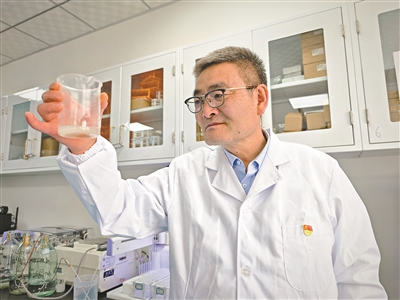
Core Insights - The article highlights the significant contributions of Li Runjie in addressing soil salinization and water quality issues in Qinghai, showcasing his dedication to improving agricultural productivity and ensuring safe drinking water for local communities [1][2][6]. Group 1: Soil Salinization and Agricultural Innovation - Li Runjie has been actively involved in combating salinization in the Qaidam Basin, where over one million acres of land have been affected, turning fertile fields into "white deserts" due to improper irrigation practices [2][3]. - He introduced the use of corrugated pipe drainage technology to manage excess groundwater, effectively preventing salt from rising to the surface and harming crops [5][6]. - The innovative "salt washing" method, which involves irrigating fields to flush out salt through drainage systems, has been widely adopted in Qinghai, revitalizing previously barren lands [5][6]. Group 2: Drinking Water Safety Initiatives - Li Runjie has been instrumental in improving drinking water safety for rural communities, where residents previously relied on contaminated rainwater and faced significant health risks from high fluoride and arsenic levels in well water [6][7]. - He developed a cost-effective multi-media filtration system for drinking water, significantly reducing the cost compared to conventional membrane technologies, making it accessible for local populations [8][9]. - The implementation of solar-powered deep wells has transformed water access for dispersed communities, addressing both water scarcity and electricity shortages [8][9]. Group 3: Ecological Research and Water Resource Management - Li Runjie is leading a major scientific initiative to assess and enhance the water conservation capabilities of the Sanjiangyuan region, which is crucial for the ecological health of the area and the water security of downstream populations [11][12]. - His team is constructing an ecological hydrology knowledge base and developing a digital twin platform to monitor and manage water resources effectively, ensuring sustainable practices in the region [12].

“有人调侃:特朗普干一辈子,对中国科研是大好事”
Guan Cha Zhe Wang· 2025-11-07 04:02
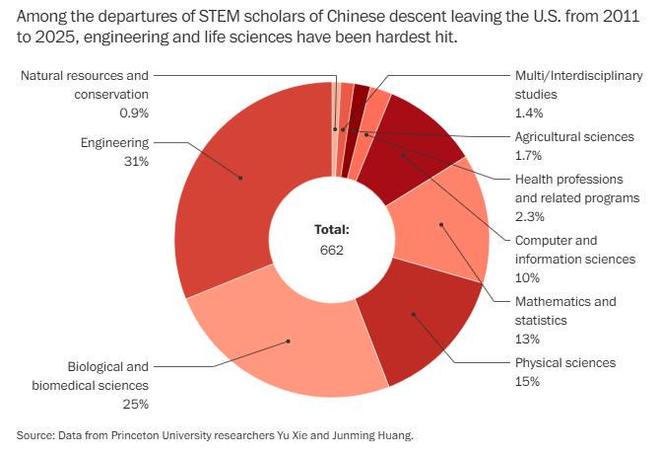
Core Insights - The article discusses the migration of scholars, particularly those with Chinese backgrounds, from the U.S. to China, driven by U.S. funding cuts and immigration restrictions under the Trump administration [1][3][4] - It highlights the significant impact this migration has on the global research ecosystem and the competitive landscape between the U.S. and China, suggesting that the next breakthroughs in fields like vaccines and artificial intelligence may emerge from China [4][5] Group 1: Migration Trends - Many scholars, especially those of Chinese descent, have moved from the U.S. to China over the past decade, with over 850 scholars leaving since 2011 [3][4] - In the first half of 2023 alone, approximately 50 Chinese-origin scholars returned to China, indicating a growing trend [3] Group 2: Funding and Research Environment - U.S. research funding cuts and increased scrutiny of Chinese scholars have facilitated China's efforts to attract top talent [4][5] - The total R&D spending in the U.S. for 2023 is reported at $956 billion, only slightly higher than China's $917 billion, showing a narrowing gap [4][5] Group 3: Shenzhen as a Research Hub - Shenzhen is identified as a key center for China's scientific ambitions, transforming from a fishing village to a tech metropolis, attracting global researchers with its advanced facilities [7] - The Shenzhen International Graduate School of Tsinghua University aims to harness this momentum, with about 80% of its faculty having overseas experience [7]
【新华社】学习贯彻党的二十届四中全会精神中央宣讲团在中国科学院宣讲
Xin Hua She· 2025-11-06 09:57
Core Points - The report emphasizes the importance of studying and implementing the spirit of the Fourth Plenary Session of the 20th Central Committee of the Communist Party of China, highlighting its significance for the modernization process during the "14th Five-Year Plan" period [1] - The report outlines the guiding ideology, major principles, main goals, strategic tasks, significant measures, and fundamental guarantees for economic and social development during the "14th Five-Year Plan" [1] Group 1 - The need to rapidly promote the learning and implementation of the plenary session's spirit, aligning thoughts and actions with the decisions of the Central Committee led by Xi Jinping [1] - The importance of strengthening party leadership and ensuring high standards in the planning and compilation of the "14th Five-Year Plan" [1] - The focus on scientific validation of key areas and careful planning of major reform initiatives to drive mission-oriented foundational research [1] Group 2 - The goal to accelerate breakthroughs in key core technologies and produce significant, original, and leading scientific achievements [1] - The aim to seize technological high ground to support the construction of a strong nation and the great rejuvenation of the nation [1] - Engagement with frontline researchers and young students to foster interaction and collaboration in scientific endeavors [1]
经济第五大省,再获一港
Mei Ri Jing Ji Xin Wen· 2025-11-06 08:16
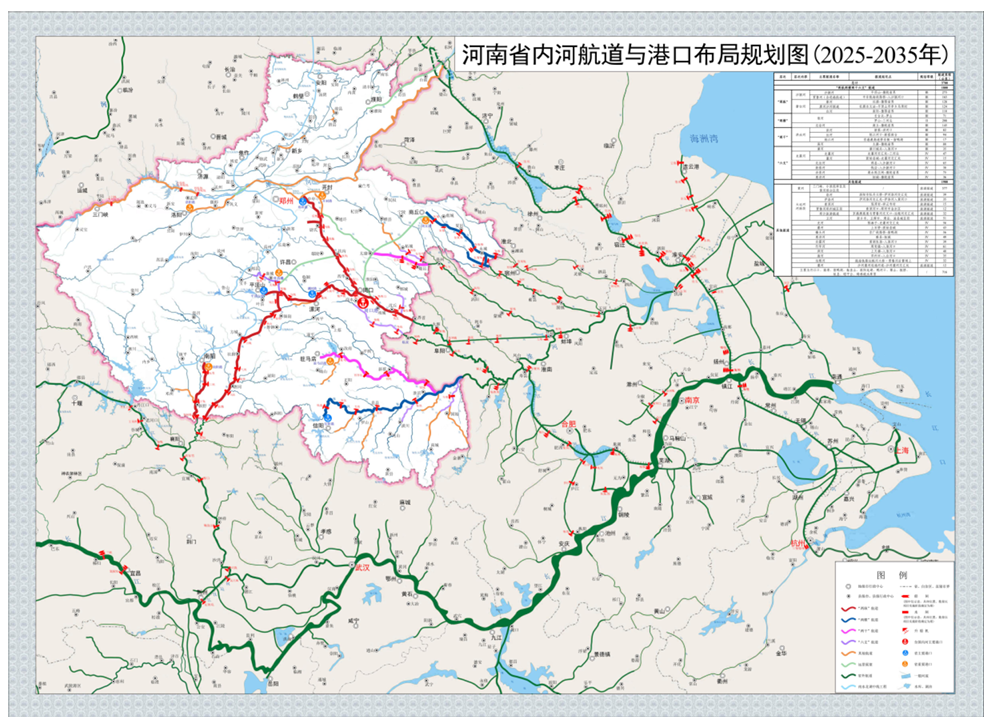
Core Viewpoint - The opening of Pingdingshan Port is a significant step for the local economy, enhancing the transportation network and supporting high-quality development in the region [1][2]. Summary by Relevant Sections Infrastructure and Capacity - Pingdingshan Port covers an area of 562.8 acres, featuring two main port areas with 11 berths capable of handling 500 tons each, and equipped with modern loading and unloading equipment [1]. - After the completion of enhancement projects, the port's comprehensive throughput capacity will reach 5.1 million tons, with an annual container throughput capacity of 20,000 TEUs [1]. Economic Impact - The port's operation allows for the full navigation of the Shahe and Shaying rivers, making Pingdingshan the fourth cargo navigation city in Henan, following Zhoukou, Xinyang, and Luohe [1]. - Water transport is highlighted for its cost-effectiveness, with a cost ratio of 5:2:1 for road, rail, and water transport, respectively [1]. Historical Context and Future Plans - Historically, Henan was a major water transport province, with significant waterways until the late 1960s, when the rise of rail and road transport diminished its importance [2]. - The "11246" project initiated in 2022 aims to boost port cargo throughput to over 100 million tons and invest 100 billion yuan over 3 to 5 years, establishing new transport corridors and modern ports [2][4]. Regional Resources and Connectivity - Pingdingshan is rich in mineral resources, with coal reserves accounting for 51% of the province and iron ore reserves at 76%, indicating a strong demand for logistics services, particularly water transport [4]. - The port's strategic location allows it to connect the western regions of Henan and neighboring provinces, enhancing economic interactions between central and eastern China [4]. Performance Metrics - In 2024, Henan achieved a port throughput of 60.85 million tons, a year-on-year increase of 29.78%, and a container throughput of 109,000 TEUs, up 20.4% [4]. - Despite these growth rates, Henan's total throughput remains lower than that of other central provinces like Hubei and Anhui, which reported significantly higher figures [4].
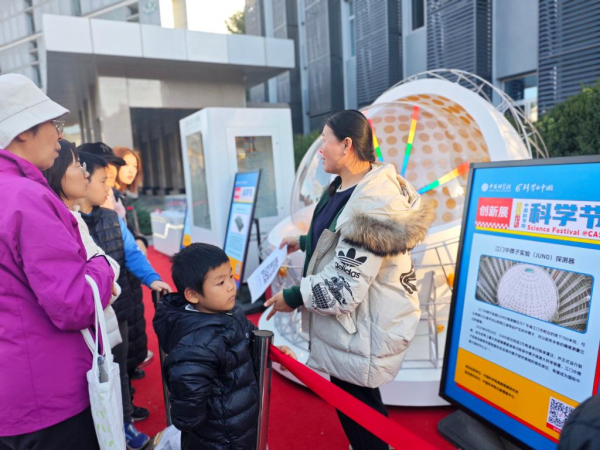
【新华社】播撒科学的种子!中国科学院第八届科学节举办
Xin Hua She· 2025-11-04 03:23
Core Points - The annual Science Festival of the Chinese Academy of Sciences (CAS) showcases various scientific innovations and engages the public, especially youth, in interactive activities [1][2][4] - The theme of this year's festival is "Hi, Science! - Curious Exploration of the Unknown, Science Connecting the Future," highlighting significant achievements in fields like neutrino experiments and quantum computing [1][2] - The festival is not limited to Beijing, with events held nationwide, emphasizing the importance of science in both urban and rural settings [2][4] Group 1 - The festival features engaging activities such as the "Creative Blind Box Show," science performances, and interactive exhibits that make science accessible and entertaining [1][2] - The event coincides with the 76th anniversary of CAS and the 70th anniversary of its academic divisions, reflecting the integration of national strategic scientific strength with the enhancement of public scientific literacy [4] - The festival serves as a platform for fostering curiosity and knowledge among children and teenagers, which is essential for driving technological self-reliance and innovation in the future [2][4]
日本向离美科技人才抛出“橄榄枝”,将接收逾百名海外研究人员
Huan Qiu Shi Bao· 2025-11-03 22:49
Core Points - The Japanese Ministry of Education, Culture, Sports, Science and Technology is promoting a system to attract outstanding overseas researchers to Japanese universities and research institutions, seizing the opportunity presented by changes in U.S. policies [1] - The U.S. government has tightened foreign student admission policies and significantly reduced research funding, leading to increased competition for global research talent, which Japan aims to leverage to strengthen its scientific and technological capabilities [1] - Japan plans to accept over 100 overseas researchers, providing financial support through universities and research institutions, with chief researchers receiving approximately 30 million yen annually, postdoctoral researchers 15 million yen, and graduate students 5 million yen, with funding periods of three years [1] - The Japanese government has requested a budget of 1.7 billion yen for the fiscal year 2026 for this initiative, with a total planned investment of 100 billion yen to attract overseas research talent [1] - Eleven universities, including the University of Tokyo and Kyoto University, have been selected for a national project supporting overseas researchers, with related salaries and subsidies starting from October this year [1] Public Reaction - Local public reactions to the Japanese government's initiative to attract overseas talent are mixed, with some citizens believing it will enhance research levels, while others question the long-term effectiveness of the investment, suggesting that foreign researchers may return to the U.S. if policies change [2]
【科技日报】以科学之名,启探索之门
Ke Ji Ri Bao· 2025-11-03 02:33
Group 1 - The core theme of the event is "Hi, Science! - Curious Exploration of the Unknown, Science Connects the Future," showcasing major technological innovations and achievements from the Chinese Academy of Sciences, aimed at stimulating public curiosity, especially among youth [3] - The event features six main sections: "Hi Theater," "Innovation Exhibition," "Creative Workshop," "Zero Distance," "Science Beauty," and "Science and Technology Gathering," designed to engage the public with various scientific experiences [1] - Attendees can interact with scientists, participate in hands-on activities, and learn about significant research outcomes such as the Jiangmen Neutrino Experiment and superconducting quantum computers [1][3] Group 2 - The "Creative Workshop" section includes demonstrations of advanced technologies like a dexterous hand that can control robots through data collection gloves, showcasing applications in research, service, and industry [2] - The "Zero Distance" section allows participants to engage directly with scientists, learning about plant specimen preparation and the role of various crops in agricultural development [3] - The event includes performances that blend science with entertainment, such as science-themed plays and talks by academicians, making science accessible and appealing to a broader audience [2]
天津城投低空经济研究院有限公司成立
Zheng Quan Ri Bao Wang· 2025-11-02 12:45
Core Viewpoint - The establishment of Tianjin Low-altitude Economy Research Institute Co., Ltd. indicates a strategic move towards developing low-altitude economy sectors, including drone manufacturing and scientific research [1] Company Summary - Tianjin Low-altitude Economy Research Institute Co., Ltd. has been established with a registered capital of 5 million yuan [1] - The company is fully owned by Tianjin Low-altitude Economy Investment Development Co., Ltd., which is a wholly-owned subsidiary of Tianjin Urban Infrastructure Construction Investment Group Co., Ltd. [1] Industry Summary - The operational scope of the new institute includes engineering and technology research and development, natural science research and development, and the manufacturing of intelligent unmanned aerial vehicles [1]
点绿成金 向美而行 “两山”理念绘就浙江新时代“富春山居图”
Zhong Guo Xin Wen Wang· 2025-11-01 10:52
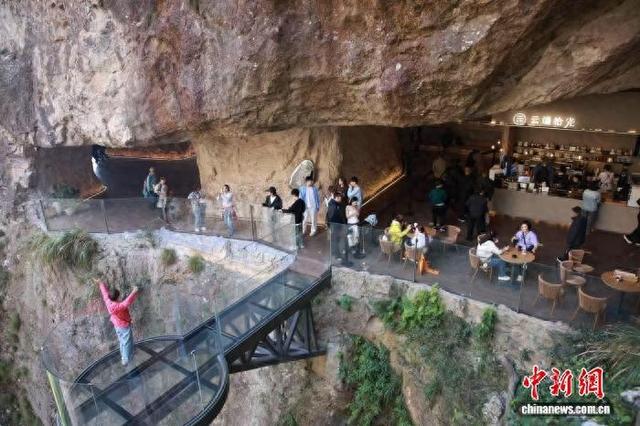
Core Viewpoint - Zhejiang province is transforming its economy by integrating ecological restoration with innovative development, leading to a model where environmental protection and economic growth coexist harmoniously [1][4][10] Group 1: Ecological Restoration and Economic Development - The transformation of abandoned mining sites into popular tourist attractions exemplifies the successful shift from an extraction-based economy to an ecological economy in Zhejiang [3][4] - The "geological + ecological + industrial" development model has been implemented, with projects like the "Waterfall Café" in Anji County expected to create 120 jobs and generate over 300,000 RMB annually for the local community [3] - The province has established 49 national ecological civilization demonstration zones and 14 "Green Water and Green Mountain is Gold Mountain and Silver Mountain" innovation practice bases since 2020, showcasing its commitment to ecological development [4][6] Group 2: Innovative Financial Mechanisms - Zhejiang has introduced the first provincial-level GEP (Gross Ecosystem Product) accounting standards in China, which standardizes the valuation of ecosystem services [7] - The province is exploring ecological product value realization mechanisms, including the development of "ecological credit loans" and the establishment of "Two Mountains Cooperatives" to facilitate carbon trading [6][9] Group 3: Green Energy and Sustainable Practices - The "Fishing and Solar Complementarity" project in Wenzhou, which combines solar power generation with aquaculture, is a key initiative aimed at reducing carbon emissions and enhancing energy independence [9] - Companies like Tongkun Group are implementing waste reduction and recycling practices, showcasing a commitment to green manufacturing and sustainable resource management [9][10] Group 4: High-Tech and Green Industry Growth - Zhejiang is fostering the growth of high-tech industries, with significant investments in sectors such as new energy, advanced equipment, and biomedicine, leading to a 15.2% year-on-year increase in high-tech industry investment [10] - The province's strategic focus on integrating ecological governance with industrial upgrading is creating new growth opportunities and enhancing overall economic resilience [10]