AI芯片

Search documents
芯原股份三季度收入新高仍亏损
Di Yi Cai Jing Zi Xun· 2025-10-10 03:17
Core Viewpoint - The rapid development of artificial intelligence (AI) has led to significant revenue growth for related chip companies, exemplified by Chipone Technology (688521.SH), which reported a substantial increase in revenue and orders, although it continues to face profitability challenges [2][3]. Company Performance - Chipone Technology expects to achieve a revenue of 1.284 billion yuan for the third quarter, marking a record high for quarterly revenue, with a quarter-on-quarter increase of 119.74% and a year-on-year growth of 78.77% [2]. - The company signed new orders worth 3.249 billion yuan in the first three quarters, exceeding its total for the entire year of 2024, with 65% of third-quarter orders related to AI computing [2][4]. - Despite the revenue surge, Chipone Technology reported a net loss of 320 million yuan in the first half of the year, a 12.3% increase in loss compared to the same period last year [2][3]. Business Segmentation - The company's one-stop chip customization business is the main growth driver, with expected revenue of 429 million yuan from chip design, a quarter-on-quarter increase of 291.76% and a year-on-year increase of 80.67% [3]. - Revenue from chip mass production is expected to reach 609 million yuan, with a quarter-on-quarter growth of 133.02% and a year-on-year growth of 158.12% [3]. - The traditional semiconductor IP licensing business is projected to generate 213 million yuan, remaining stable year-on-year, but its share of total revenue has decreased from 34% in the first half of the year to 20% [3][4]. Profitability Challenges - The company continues to face significant losses, with a net profit margin of -32.85% in the first half of the year, worsening from -30.56% in the same period last year [4][5]. - High research and development (R&D) expenses are a core issue affecting profitability, with R&D costs reaching 1.247 billion yuan in 2024, accounting for 53.7% of revenue [4][5]. - The gross margin for the one-stop chip customization business is significantly lower at 18.17%, compared to 92.73% for the traditional IP licensing business, further exacerbating profitability pressures [5]. Industry Context - The domestic AI chip industry is experiencing a surge in orders, but most companies still face profitability challenges, as seen with other firms like Moer Thread and Muxi Technology, which reported significant revenue growth but also substantial losses [6]. - The quality of orders and economies of scale are critical for overcoming profitability issues, with over 70% of current orders coming from large internet companies that impose strict performance and cost control requirements [6][7]. - The competitive landscape for domestic AI chip companies is still evolving, with no clear leader yet, and the ability to achieve large-scale production will be crucial for long-term profitability [7].


芯原股份三季度收入新高仍亏损
第一财经· 2025-10-10 03:01
Core Viewpoint - The rapid development of artificial intelligence (AI) has led to a significant surge in the performance of related chip companies, exemplified by the impressive third-quarter results of Chipone Technology (688521.SH) [3][4]. Group 1: Company Performance - Chipone Technology expects to achieve a revenue of 1.284 billion yuan for the first three quarters, marking a record high for a single quarter, with a quarter-on-quarter increase of 119.74% and a year-on-year growth of 78.77% [3][4]. - The company signed new orders worth 3.249 billion yuan in the first three quarters, exceeding the total for the entire year of 2024, with 1.593 billion yuan of new orders in the third quarter, 65% of which are related to AI computing power [3][5]. Group 2: Business Structure and Profitability - The core growth driver for Chipone is its one-stop chip customization business, which saw a revenue of 429 million yuan in chip design, a quarter-on-quarter increase of 291.76% and a year-on-year increase of 80.67% [5]. - The one-stop chip customization business is expected to account for over 80% of total revenue in the third quarter, while the traditional semiconductor IP licensing business's revenue is projected to be 213 million yuan, remaining flat year-on-year [5][7]. - Despite the revenue surge, Chipone reported a net loss of 320 million yuan in the first half of the year, worsening by 12.3% year-on-year, and the net profit margin was -32.85% [3][6]. Group 3: Industry Context - The domestic AI chip industry is experiencing a boom in orders, but most companies still face challenges in profitability. For instance, another GPU company, Moore Threads, reported a revenue of 700 million yuan in the first half of 2025 but incurred a net loss of 270 million yuan [9]. - The profitability of AI chip companies is heavily influenced by the quality of orders and economies of scale, with over 70% of current orders coming from large internet companies, which impose strict performance and cost control requirements [9][10]. - The long-term profitability of domestic AI chip companies will likely vary, with leading firms that achieve large-scale production first gaining a competitive edge [10].
寒武纪定增发行价1195元,13家机构获配股,基金占12家
Sou Hu Cai Jing· 2025-10-03 19:39
Core Viewpoint - The recent private placement by Cambrian has become a focal point in the A-share market, stirring mixed emotions among investors, with discussions about whether this marks the beginning of another tech bubble [1][3]. Company Performance - Cambrian has transitioned from years of losses to profitability in the first half of 2025, reporting a net profit of 1.038 billion yuan, with its price-to-earnings ratio dropping from nearly 5000 times to around 500 times [3]. - The company has maintained high R&D expenses, indicating a commitment to advancing its capabilities in AI models and computing chips, with the recent private placement aimed at further funding these efforts [3][6]. Market Dynamics - The pricing process for the private placement involved competitive bidding from 26 institutions, with the final issuance price set at 1195.02 yuan per share, reflecting a 110.51% bottom price ratio [3]. - The number of institutions holding Cambrian shares has increased by 92% year-on-year, reaching 1318, showcasing growing confidence and interest in the stock [5]. Investment Sentiment - The success of the private placement has provided Cambrian with nearly 4 billion yuan in funding, which will be directed towards technology and product development, although market reactions will depend on future financial reports and product advancements [6]. - There are concerns that the current tech stock rally may lead to a prolonged adjustment period, reminiscent of past market cycles where many stocks lost significant value [8][10]. Future Outlook - Cambrian's upcoming financial reports and product launches will be closely monitored by numerous institutions and retail investors, as the market questions whether the AI chip narrative can withstand reality [12]. - The ongoing competition between capital and technology in the AI chip sector remains unresolved, with Cambrian's stock movements reflecting broader hopes and concerns within the tech industry [12].


A股:9月翻篇,10月再战!
Mei Ri Jing Ji Xin Wen· 2025-09-30 08:20
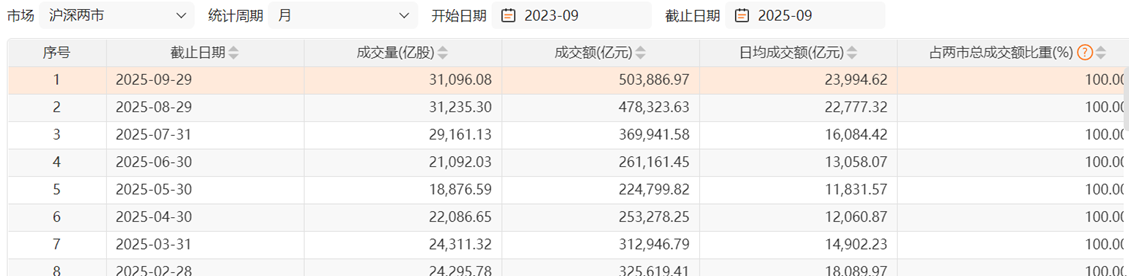
Market Overview - The A-share market has shown a strong performance in the third quarter, with the Shanghai Composite Index rising by 0.52% and the Shenzhen Component Index increasing by 0.35% as of September 30 [2] - The market has been characterized by a "technology-led, multi-point flowering" trend, with high-growth sectors such as AI, new energy, and non-ferrous metals attracting significant capital [2] Index Performance - Major indices in the A-share market experienced an upward trend, with the Shanghai Composite Index challenging the 3900-point mark and the ChiNext Index rising over 12% in September, marking a three-year high [2] - The STAR 50 Index also saw a significant increase of over 11%, reaching a near four-year high [2] Trading Volume - The trading volume in the A-share market reached 21.814 trillion yuan, with daily average trading exceeding 2 trillion yuan for two consecutive months, indicating a notable increase compared to the same period last year [2] Margin Trading - The margin trading market has remained active, with the balance of margin financing and securities lending reaching a historical high of 24,125 billion yuan by September 29 [4] - This growth reflects an increasing recognition of market trends by leveraged funds and a steady rise in investor risk appetite [4] Notable Stocks - The AI chip company Cambricon Technologies (688256) saw its stock price surge, briefly becoming the highest-priced stock in the A-share market, surpassing Kweichow Moutai [5] - Contemporary Amperex Technology Co., Ltd. (CATL) reached a historical high of 400 yuan per share in September, with its total market capitalization surpassing Kweichow Moutai for the first time [6] Dividend Distribution - A total of 820 A-share listed companies announced mid-term dividend plans, with a total distribution amounting to approximately 648.48 billion yuan, significantly higher than the previous year [7] - Traditional sectors such as finance and public utilities remain the main contributors to dividends, while emerging sectors like technology and new energy are also showing increased willingness to distribute dividends [7] Market Outlook - The A-share market is expected to enter a consolidation phase, awaiting the next policy trigger for further upward movement, particularly in light of the upcoming "14th Five-Year Plan" policies [8] - Analysts suggest that the market's future performance will depend on domestic policy developments, especially after the Federal Reserve's interest rate cuts [8]
A股公司拟跨界投资AI芯片!自曝“签8次合作协议 7次未落地”!
Zheng Quan Shi Bao Wang· 2025-09-25 00:01
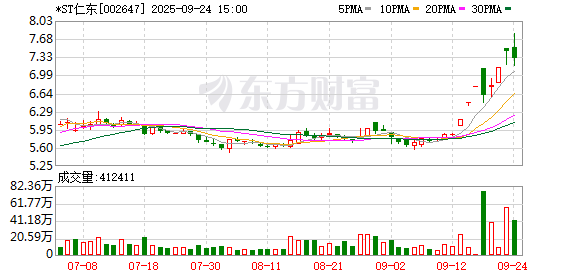
Core Viewpoint - *ST仁东 plans to make a cross-industry investment in AI chips, aiming to enhance its competitive edge and align with national strategic needs in computing power [5][6][7]. Investment Details - The company intends to invest 100 million yuan in Shenzhen Jiangyuan Technology Co., Ltd., acquiring a 4.1427% stake post-investment [5]. - Jiangyuan Technology, established in November 2022, focuses on domestic AI chip development and has achieved successful mass production of advanced chips [5]. - The pre-investment valuation of Jiangyuan Technology is 2.1 billion yuan, reflecting a valuation increase of 1714.86% [5]. Financial Performance of Jiangyuan Technology - Jiangyuan Technology reported a revenue of 12.31 million yuan and a net loss of 68.54 million yuan for the first half of 2025, indicating it has not yet achieved profitability [8]. - The pre-investment valuation for Jiangyuan's previous funding rounds was 1.5 billion yuan, with a post-investment valuation of 1.86 billion yuan in January 2025, showing a 12.90% increase [8]. Strategic Intent - The investment aligns with *ST仁东's restructuring plan, which includes diversifying its business beyond third-party payment services to explore growth opportunities in sectors aligned with national policy [6]. - The company recognizes the growing demand for AI chips as essential infrastructure for the AI industry, particularly with the increasing need for computational power in AI applications [7]. Historical Context - Over the past decade, *ST仁东 has signed approximately eight strategic cooperation agreements, of which seven have not been executed, highlighting potential execution risks in its investment strategy [8][9].

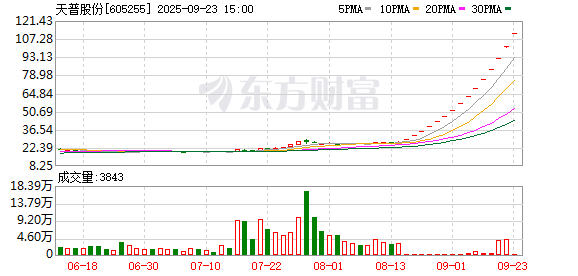
天普股份15连板后再度停牌:收购资金全额到位 暂停异常账户交易后股票换手率3倍提升
Zheng Quan Shi Bao Wang· 2025-09-23 15:13
Core Viewpoint - Tianpu Co., Ltd. (605255) announced a stock suspension for verification due to a significant price increase of 317.72% over 15 consecutive trading days, indicating a serious deviation from the company's fundamentals [2] Group 1: Acquisition and Financial Details - The acquisition involves a total payment of 2.123 billion yuan, with all funds confirmed to be in place as of September 17, 2025, and sourced entirely from self-owned capital [3] - The core acquirer, Zhonghao Xinying, has had most of its contingent liabilities from previous agreements waived, with only 11.27% of the obligations remaining unwaived [4] - Zhonghao Xinying's potential repurchase obligations amount to approximately 1.731 billion yuan, with significant portions already deemed invalid or under preliminary agreement for waiver [4] Group 2: Market Reactions and Trading Activity - Following regulatory measures, Tianpu's stock turnover rate increased threefold, reflecting market digestion of regulatory information and investor confidence in the new controlling shareholder's capabilities in the AI chip sector [6][5] - The stock's turnover rate reached 3.21% on September 22, significantly higher than the average of 1.07% over the previous five trading days [6] Group 3: Corporate Governance and Future Plans - Tianpu has clarified that there are no plans for asset injections or major business changes by Zhonghao Xinying in the next 12 months, and no asset sales or mergers are planned [7] - Commitments have been made to avoid share pledges for 36 months, which helps mitigate risks associated with control changes [8] Group 4: Regulatory Environment and Future Uncertainties - The control change process still faces uncertainties, including the need for compliance confirmation from the Shanghai Stock Exchange and potential risks related to share distribution [9] - The company has undergone scrutiny regarding insider trading, with findings indicating that prior stock transactions by insiders did not constitute insider trading [9]

含“科”量提升,资本市场加速助力科技创新
Sou Hu Cai Jing· 2025-09-22 13:11
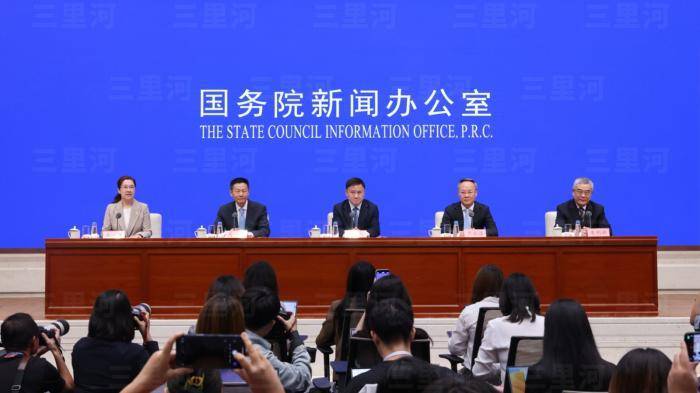
Group 1 - The market capitalization of the technology sector in A-shares has surpassed 25%, significantly higher than the combined market capitalization of the banking, non-bank financial, and real estate sectors [1][3] - The number of technology companies among the top 50 by market capitalization has increased from 18 at the end of the 13th Five-Year Plan to 24, nearly half of the total [3] - Over 90% of newly listed companies in recent years are technology firms or firms with high technological content, indicating a significant increase in the capital market's focus on technology [3] Group 2 - The launch of the Sci-Tech Innovation Board in 2019 has created a fast track for hard tech companies, supported by continuous policy initiatives such as the "16 Articles for Sci-Tech Innovation" and "8 Articles for the Sci-Tech Innovation Board" [3][5] - The deepening of the registration system reform has significantly improved the efficiency of the listing process, allowing unprofitable companies with strong core technologies and sufficient patent reserves to access the capital market [3][5] - The total market capitalization of A-shares exceeded 100 trillion yuan for the first time in August, marking a new milestone [4] Group 3 - The regulatory framework for the capital market has been solidified over the past five years, with a total of 10.6 trillion yuan distributed through dividends and buybacks, an increase of over 80% compared to the 13th Five-Year Plan [5] - The number of administrative penalties for financial fraud, market manipulation, and insider trading has increased, with 2,214 cases resulting in fines totaling 41.4 billion yuan, reflecting a 58% and 30% increase respectively compared to the previous period [5] - The overall R&D investment in China is projected to exceed 3.6 trillion yuan in 2024, a 48% increase from 2020, with the total number of R&D personnel ranking first in the world [5][6]
A股不再是5年前的A股了
Zhong Guo Xin Wen Wang· 2025-09-22 13:07
Group 1 - The core viewpoint highlights a significant shift in the A-share market, where technology companies now dominate the rankings, with the technology sector accounting for over 25% of the market capitalization, surpassing the combined market share of banking, non-bank financials, and real estate [1][3] - By the end of the 13th Five-Year Plan, only 18 of the top 50 companies were in the technology sector, but this number has increased to 24, indicating a strong presence of tech firms in the market [3] - Over 90% of newly listed companies in recent years are technology firms or have high technological content, reflecting a growing emphasis on technology in the capital market [3] Group 2 - The launch of the Sci-Tech Innovation Board in 2019 has provided a fast track for hard tech companies, supported by continuous policy initiatives such as the "16 Articles on Sci-Tech Innovation" and "8 Articles on the Sci-Tech Innovation Board" [3] - The deepening of the registration system reform has significantly improved the efficiency of listings, allowing unprofitable tech companies to go public if they possess strong core technologies and sufficient patent reserves [3][6] - In August, the total market capitalization of the A-share market surpassed 100 trillion yuan for the first time, marking a new milestone [4] Group 3 - The regulatory framework for the capital market has been solidified over the past five years, with a comprehensive system established to support stable development [6] - Companies have distributed a total of 10.6 trillion yuan in dividends and buybacks, representing an increase of over 80% compared to the 13th Five-Year Plan [6] - The number of administrative penalties for financial fraud, market manipulation, and insider trading has increased, with 2,214 cases resulting in fines totaling 41.4 billion yuan, reflecting a 58% and 30% increase respectively compared to the previous period [6] Group 4 - During the 14th Five-Year Plan, the capital market has achieved both quantitative growth and qualitative improvement, transitioning from a finance and real estate-dominated market to one led by technology companies [7] - China's overall innovation capability has significantly strengthened, with R&D investment expected to exceed 3.6 trillion yuan in 2024, a 48% increase from 2020 [7] - The number of high-tech enterprises has surpassed 500,000, an increase of 83% since 2020, indicating a robust growth in innovation-driven companies [7]
特朗普再次延长TikTok禁令,中美达成基本框架共识;AI独角兽遭到好莱坞三大影视巨头联合起诉丨Going Global
创业邦· 2025-09-22 10:41
Core Viewpoint - The article highlights significant developments in the global expansion of Chinese companies, focusing on their strategies, investments, and innovations in various sectors, particularly in e-commerce, technology, and automotive industries [2]. Group 1: Major Events - SHEIN launched the "SHEIN Xcelerator" brand incubation and support program to assist emerging and established brands, including Chinese designers, in global expansion [5]. - TikTok Shop introduced new postal control rules to combat "postal fraud" and ensure compliance among merchants [7][8]. - Xiaomi announced a recall of 116,887 units of its SU7 standard electric vehicles due to safety concerns related to its L2 highway navigation feature [10][11]. - Temu reported a 50% year-on-year increase in global GMV, reaching $35 billion, and is shifting to a "overseas warehouse + local delivery" model to adapt to new tax policies [6]. Group 2: Company Developments - Xiaomi's automotive division is actively recalling vehicles and enhancing software to address safety issues, showcasing its commitment to customer safety [11]. - Temu is focusing on localizing operations in Europe, signing contracts with over 7,000 local suppliers to improve delivery times and reduce customs risks [6]. - SHEIN's new program aims to enhance brand visibility and influence globally, benefiting the entire supply chain [5]. - Didi's subsidiary 99 announced a $2 billion investment in Brazil to expand its food delivery service, aiming to cover 15 cities by the end of the year [25]. Group 3: Technology and Innovation - Alibaba's self-developed AI chip was showcased, with specifications comparable to Nvidia's H20 chip, indicating advancements in AI technology [21][22]. - Meta launched the Ray-Ban smart glasses priced at $499, featuring a built-in display for various functionalities [41][42]. - Nvidia announced a $5 billion investment in Intel, aiming to collaborate on chip development for data centers and personal computers [36][37]. Group 4: Investment and Financing - AI chip startup Groq completed a $750 million funding round, achieving a post-money valuation of $6.9 billion, indicating strong investor interest in AI technologies [45]. - Figure, an AI robotics company, raised over $1 billion in Series C funding, reflecting the growing demand for AI-driven solutions [47].

大爆发!巨头年内狂飙五倍,一个月暴增近5000亿!总市值升至全A第九!巴菲特清仓比亚迪!什么信号?
雪球· 2025-09-22 07:58
Core Viewpoint - The A-share market shows a collective rise in major indices, with significant gains in the consumer electronics and semiconductor sectors, indicating a strong market sentiment driven by AI and consumer demand [1][3][10]. Group 1: Market Performance - The three major A-share indices rose collectively, with the Shanghai Composite Index up 0.22%, Shenzhen Component Index up 0.67%, and ChiNext Index up 0.55% [1]. - The total trading volume in the two markets was 2.12 trillion yuan, a decrease of 200 billion yuan compared to the previous day, with over 3,100 stocks declining [1]. - Industrial Fulian's stock price surged by 6.66%, reaching a historical high and a market capitalization exceeding 1.4 trillion yuan, marking a fivefold increase since April 9 [1]. Group 2: Consumer Electronics Sector - Luxshare Precision's stock hit the daily limit, with a maximum order amount exceeding 4.6 billion yuan, reflecting strong performance in the consumer electronics sector [3]. - Apple-related stocks saw a collective rise, with several companies, including Hongfu Han and Fuliwang, hitting their daily limits or rising over 10% [3]. - OpenAI has partnered with Luxshare Precision to develop a consumer-grade device, indicating a growing trend of AI integration in consumer electronics [5]. Group 3: AI Chip Sector - The AI chip sector is experiencing heightened activity, with companies like Zhongke Shuguang and Haiguang Information reaching historical highs [7]. - The upcoming IPO of Moore Threads on the Sci-Tech Innovation Board is expected to raise 8 billion yuan, aimed at advancing domestic GPU technology and reducing reliance on foreign chips [9]. - The semiconductor and consumer electronics sectors are entering a new growth phase, with projected revenue growth of 19.2% and net profit growth of 29% for 467 electronic companies in the first half of 2025 [10]. Group 4: Investment Signals - Berkshire Hathaway has completely divested its stake in BYD, a move that may signal a shift in investment strategy and prompts investors to reassess their positions [12][16]. - The sale of BYD shares, which yielded a 38-fold return for Berkshire, highlights the importance of strategic exits in investment management [15].