
啤酒

Search documents
ESG分析师全球化竞争:中国出海企业的生存法则与战略重构
Sou Hu Cai Jing· 2025-08-06 02:57
Core Insights - The article discusses how ESG (Environmental, Social, and Governance) standards are reshaping international trade rules, presenting both challenges and opportunities for Chinese enterprises in the context of global supply chain restructuring [1] Group 1: Global ESG Rule Restructuring - The EU's "trinity" regulatory framework (CSRD, CBAM, CSDDD) is creating a global demonstration effect, requiring over 50,000 multinational companies to disclose 16 ESG indicators starting in 2024, impacting around 100,000 Chinese export enterprises [2] - In 2023, global ESG bond issuance surpassed $1.2 trillion, with green loan spreads 50-150 basis points lower than ordinary loans, indicating a structural shift in capital flows towards ESG-compliant entities [3] - In the electric vehicle sector, Tesla's supply chain ESG certification now includes 68 new criteria, pushing suppliers to achieve carbon neutrality by 2030, while BYD's carbon management platform enhances its competitiveness for a €15 billion order from Volkswagen [5] Group 2: Chinese Enterprises' ESG Strategies - Midea Group invested ¥560 million to build an ESG digital platform, allowing for granular energy consumption data analysis, which significantly improved its response time for carbon footprint verification in global tenders [7] - Anta Sports implemented a "3×3" ESG strategy matrix across different regions, enabling it to secure a spot as an official supplier for the 2024 Paris Olympics [9] - Qingdao Beer utilized lifecycle assessment (LCA) to reduce carbon emissions by 18% through lightweight glass bottles, which helped secure a €1.2 billion procurement order from AB InBev [9] Group 3: ESG Strategic Upgrades - Longi Green Energy transformed desertification management into carbon assets, generating ¥820 million in environmental revenue in 2023, attracting a $1.2 billion strategic investment from BlackRock [10] - Huawei established an ESG risk radar system covering 193 countries, using AI to monitor 238 risk dimensions, which helped avert potential losses exceeding $200 million during a labor strike in Bangladesh [10] - The China National Textile and Apparel Council led the development of the "Textile Industry Water Efficiency Leader Standard," adopted by 47 international brands, giving Chinese suppliers a 15%-20% pricing advantage in negotiations [10]

百威集团全球CEO:啤酒消费渠道有新行情,百威中国要调整执行,需要有合适的人才,还会继续投资
3 6 Ke· 2025-08-06 02:23
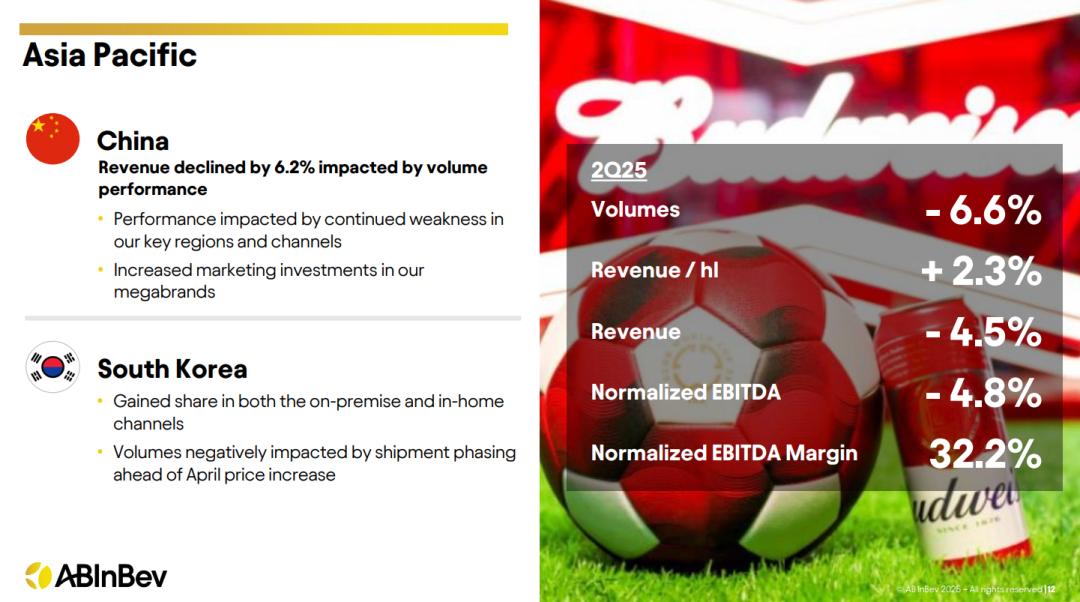
Core Insights - The CEO of Budweiser Group, Michel Doukeris, stated that the company's performance in the Chinese and Brazilian markets for Q2 was below expectations, primarily due to a decline in the on-premise channel [1][5][7] - Budweiser's sales in China decreased by 7.4% in Q2, with revenue down by 6.4%, although revenue per hectoliter increased by 1.1% due to a positive brand mix [5][10] - The overall beer market in China is experiencing a slowdown, with Budweiser's performance lagging behind the industry average, but the company remains optimistic about future recovery [7][10] Company Performance - Budweiser Group's total volumes decreased by 1.9% in Q2, while revenue increased by 3% and EBITDA grew by 6.5% [10][19] - The underlying EPS increased by 8.7% in USD terms, and revenue per hectoliter rose by 4.9% [10][19] - Despite selling fewer beers, Budweiser's revenue and profits have grown, indicating effective cost management and pricing strategies [9][10] Strategic Adjustments - Budweiser is focusing on rebalancing its on-premise and off-premise channel strategies in China, with an emphasis on enhancing capabilities in the off-premise channel [12][14] - The company is investing in lower-priced products to better align with off-premise consumer demand, shifting from a high-end focus [17][19] - Budweiser is collaborating with wholesalers to improve the sales team's capabilities and expand distribution in underdeveloped regions [19] Market Outlook - The non-on-premise channel currently accounts for about 50% of Budweiser's business in China, which is below the industry average of 60%, indicating significant growth potential [17] - The company anticipates that the impact of current market challenges will diminish over time, leading to a more positive sales trend in the industry [7][10] - Budweiser's management believes that the ongoing investments in the off-premise channel will yield substantial returns as the market evolves [14][19]


“红枣第一股”好想你开始卖啤酒,能否靠这一“口”翻身?
Mei Ri Jing Ji Xin Wen· 2025-08-05 13:26
Core Viewpoint - The company "Hao Xiang Ni" is diversifying into the craft beer market, launching new flavors such as red date and green tea, amid ongoing financial struggles and a three-year streak of losses [1][2][3] Company Summary - Hao Xiang Ni has introduced a series of new craft beers, including flavors like red date, green tea, jasmine tea, and peach blossom, priced around 20 yuan per bottle [2] - The company has reported net losses of 189 million yuan, 51.89 million yuan, and 71.96 million yuan for the years 2022 to 2024, with an expected loss of 15 to 25 million yuan for the first half of this year [2][3] - The company is seeking to develop a second growth curve due to the aging customer base and stagnant sales of its core red date products [3] Industry Summary - The new craft beer segment is rapidly gaining popularity, with various brands, including snack companies and supermarkets, entering the market [5] - The craft beer market in China is projected to reach a consumption volume of 230,000 kiloliters by 2025, with a compound annual growth rate of 17% and a market size potentially reaching 130 billion yuan [6] - Despite the growth potential, the craft beer industry is becoming increasingly competitive, leading to lower profit margins and a crowded market landscape [7]

青岛啤酒交易所登陆1903MIX极地海洋公园店解锁沉浸式啤酒消费新体验
Xin Lang Cai Jing· 2025-08-05 12:04
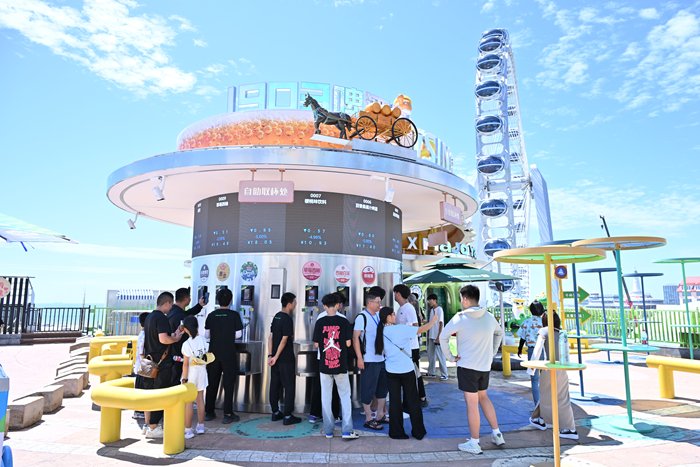
从啤酒交易所的创新互动到周末啤酒节的社交狂欢,再到新鲜饮品与美食的多元呈现,TSINGTAO 1903正以"啤酒+体验"的跨界思维,让百年啤酒文化在年轻群体中焕发新活力。 来源:推广 转自:推广 文 | 周涛 当啤酒文化遇上创新消费场景,青岛正书写着属于自己的 "微醺图鉴"。近日,凭借 "酒价随行就市" 火出圈的青岛啤酒交易所正式登陆 1903MIX 极地海洋公园店,将金融交易的趣味与啤酒 在1903MIX极地海洋公园店的啤酒交易所区域,智能屏幕上实时跳动的价格曲线格外吸睛。从经典生啤的醇厚麦香到果味精酿的清新酸甜,15余种啤酒风味组成"酒市大盘",价格随消费者的实 版 啤酒交易所的热度持续发酵,也让TSINGTAO 1903青岛啤酒吧的"周末啤酒节"成为年轻人的社交新据点。每逢周末,这里便化身欢乐竞技场,各类趣味赛事轮番上演。王牌速饮赛上,参赛者比 在饮品与美食的呈现上,TSINGTAO 1903始终坚守"新鲜"与"创意"。鲜爽生啤是绝对主角,从工厂直送的原浆、纯生等品类,通过冷链确保新鲜度,每一口都带着麦芽的鲜活香气。搭配的生鲜 ...
广州产业投资控股集团有限公司2025年面向专业投资者公开发行科技创新公司债券(第一期)(品种二)获“AAAsti”评级
Sou Hu Cai Jing· 2025-08-05 09:27
Group 1 - The core viewpoint of the news is that Guangzhou Industrial Investment Holding Group Co., Ltd. has received an "AAAsti" rating for its 2025 technology innovation corporate bond issuance, indicating strong support from shareholders and robust operational capabilities [1] - The company has a diversified business model, including key sectors such as electricity, energy logistics, natural gas, beer, environmental protection, and capital market operations [2] - In 2024, the company achieved a total operating revenue of 66 billion yuan, reflecting a year-on-year increase of 3.44% [2] Group 2 - The company is a state-owned asset management entity established in September 1989, representing the Guangzhou Municipal Government in investment and capital operations [2] - The company has strong financial leverage and good financial flexibility, although it faces challenges from fluctuating coal and electricity prices and rising debt levels [1]
百威亚太(01876.HK)非即饮破局,高端布局成效可期
Xin Lang Cai Jing· 2025-08-05 09:07
Core Viewpoint - Budweiser APAC is shifting its strategic focus towards non-drink channels, demonstrating operational resilience and long-term growth potential despite market challenges in the first half of 2025 [1] Financial Performance - In the first half of 2025, Budweiser APAC reported revenue of $3.136 billion, a decrease of 5.6% year-on-year, but achieved a 0.5% year-on-year increase in revenue per hectoliter due to diversified brand matrix and refined revenue management in the eastern region [1] - As of the end of the first half of 2025, the company had a net cash reserve of $2.4 billion, indicating a robust asset-liability structure [1] Strategic Focus - The company aims to enhance its market share in non-drink channels, leveraging its distribution network to expand the presence of high-end and super high-end products [2] - Budweiser APAC's CEO emphasized the importance of focusing on controllable factors, including continued investment in flagship brands and accelerating the expansion of non-drink channels [1][3] Market Trends - The non-drink channel is steadily increasing its share of overall sales and revenue, contributing to an improvement in EBITDA profit margins [1] - The non-drink channel currently accounts for approximately 60% of the total industry scale in the Chinese market, with significant growth potential as consumer disposable income rises [1] Regional Performance - Budweiser APAC's operations in India are experiencing strong growth, with double-digit increases in sales and revenue for high-end and super high-end product lines [3] - The company's performance in South Korea is outperforming industry averages in both drink and non-drink channels, benefiting from effective revenue management measures [3] Collaboration and Innovation - The company is actively developing new primary and secondary distributors to expand its sales network and is collaborating with distributors to invest in expanding the non-drink sales team [2] - Budweiser APAC is focusing on product innovation and packaging design to enhance consumer drinking experiences [3]
中国市场拖累明显 百威亚太上半年净利润缩水24.4%
Xi Niu Cai Jing· 2025-08-05 08:00
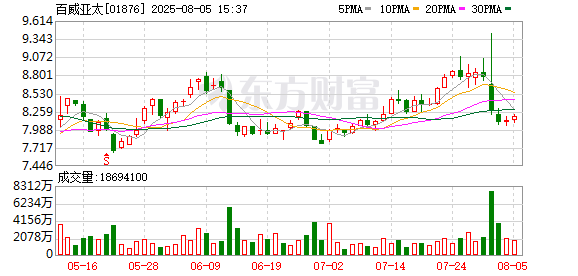
Core Insights - Budweiser APAC reported a disappointing half-year performance with a 5.6% year-on-year revenue decline to $3.136 billion and a significant 24.4% drop in net profit to $409 million [3] - The Chinese market was the primary factor dragging down performance, with sales decreasing by 8.2% and revenue falling by 9.5%, underperforming the industry average [3] - The company attributed the poor performance in China to regional layout and channel structure issues, heavily relying on coastal regions like Guangdong and Fujian, where dining and nightlife consumption slowed in Q2 [3] Company Strategy - Budweiser APAC is accelerating its transition to non-drinking channels, which currently account for only 50% of its Chinese business, below the industry average of 60% [3] - The company is also pushing a premiumization strategy, although short-term challenges in the drinking channel are expected to persist [3] - New CEO Cheng Yanjun emphasized continued investment in flagship brands, cost structure optimization, and expanding the digital platform BEES to enhance business efficiency [4] Market Context - The overall Chinese beer industry is undergoing structural adjustments, with intensified competition in the premium segment and a shift in consumption scenarios from traditional nightlife and dining to home and online [4] - Competitors like Heineken are gaining momentum in the high-end market through partnerships, leaving Budweiser in a relatively passive position [4] - The stock price of Budweiser APAC fell nearly 6% on the day of the earnings report, with a cumulative decline of over 40% for the year [4]
新帅首考挂科,百威中国啤酒销量降超8%
Guo Ji Jin Rong Bao· 2025-08-05 07:36
Core Viewpoint - Budweiser APAC, the largest beer company in the Asia-Pacific region, is facing significant challenges with declining revenue, profit, and sales, particularly in the Chinese market, which has historically been a key growth driver for the company [1][2]. Financial Performance - In the first half of the year, Budweiser APAC reported total revenue of $3.136 billion, a year-on-year decline of 5.6% [1]. - Shareholder profit decreased to $409 million, down 24.4% year-on-year [1]. - Total beer sales reached 4.363 billion liters, reflecting a 6.1% decline compared to the previous year [1]. Market Challenges - The decline in revenue, profit, and sales is closely linked to poor performance in the Chinese market, where beer sales fell by 8.2% and net income decreased by 9.5% [2]. - Revenue per hundred liters dropped by 1.4%, indicating a challenging market environment [2]. - The company has faced pressure from both domestic market weaknesses and the rise of local competitors like China Resources Beer and Tsingtao Brewery, which are seeking to capture higher-end market segments [2]. Historical Context - Budweiser APAC's sales in China have been on a downward trend, with a compound annual growth rate of -2.6% from 2018 to 2024, which is below the national average growth rate for large-scale beer production [2]. - Last year, the company experienced a significant decline in performance in China, with sales dropping by 11.8% and revenue falling by 13%, resulting in a market share decrease of 149 basis points [2]. Strategic Actions - In response to the declining performance, the company has implemented three key strategies: layoffs, price increases, and changes in leadership [2]. - The workforce in China was reduced from 21,181 to 18,401 employees, a decrease of 2,780 staff members [3]. - Despite reports of price increases for certain products, the financial data for the first half of this year indicates a simultaneous decline in both volume and price [3]. Leadership Changes - In February, Budweiser APAC announced the resignation of CEO Jan Craps after a seven-year tenure, with Cheng Yanjun taking over in April [4]. - Cheng, the first Chinese CEO of Budweiser APAC, is seen as having the critical task of reversing the company's fortunes in the Chinese market [5]. - However, the performance under the new leadership has not met expectations, particularly during the peak sales season in the second quarter [6].
中信证券:三季度酒企的业绩有望回暖 继续看好配置头部名酒企业
智通财经网· 2025-08-05 01:04
Group 1: Industry Overview - The liquor industry has faced continuous demand pressure this year, but the decline in sales, wholesale prices, and financial performance has narrowed in Q2, indicating a potential bottoming phase for the industry [1] - Major liquor companies are adjusting revenue and profit growth rates, and if demand stabilizes, the industry may see an upward turning point in its economic cycle [1] - The overall stock price of the liquor sector has decreased by 6.5% from January 1 to August 1, 2025, underperforming the CSI 300 index by 9.6 percentage points [1] Group 2: Key Insights on Baijiu - Moutai is actively exploring new business development models at the bottom of the current cycle, seeking distributors with stronger demand exploration capabilities [2] - The company is considering establishing a sales platform and managing Moutai collection venues, indicating a strategic adjustment in its distribution network to better tap into new consumer segments [2] Group 3: Beer Market Analysis - In the first half of 2025, the production of major beer companies in China totaled 19.044 million kiloliters, a slight decrease of 0.3% year-on-year [3] - The beer market is expected to maintain stable performance in Q3, although some impact from alcohol-related policies is anticipated [3] - The average price per ton of beer is expected to remain stable with a slight increase due to changes in channel structure and consumer segmentation [4]

中信证券:白酒行业正在快速筑底
Mei Ri Jing Ji Xin Wen· 2025-08-05 00:49
Group 1 - The liquor industry is rapidly bottoming out, with leading companies likely to seize the current period to quickly adjust channel structures and enhance market development capabilities [1] - If consumer sentiment gradually improves, leading liquor companies that have made proactive adjustments and upgrades to their channels are expected to enjoy more development opportunities [1] - The beer industry is projected to maintain a steady growth trend in sales in the second half of the year, despite the impact of alcohol restrictions, due to a lower base [1] Group 2 - Considering the industry's tonnage, the expected revenue growth rate for the industry is projected to be in the range of 2%-5%, with overall profit margins remaining stable year-on-year [1]