
美妆

Search documents
营收首破百亿元!美妆企业珀莱雅欲补研发短板
Qi Lu Wan Bao· 2025-04-25 07:50
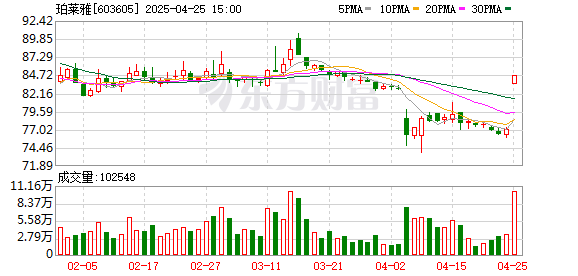
4月24日晚,美妆企业珀莱雅发布2024年全年业绩,收入达107.78亿元;净利润达15.52亿元,同比增长 30%。珀莱雅成为美妆行业第一个营收破百亿元的企业。 财报显示,珀莱雅的销售费用依然在增长,甚至达到其上市以来的新高。值得关注的是,在发布全年业 绩前,珀莱雅公布了多项研发动作,或为补齐研发短板。 转自:中国商报 研发投入费用较低 根据财报,珀莱雅的销售费用达到51.61亿元,同比增长29.93%,占营业收入的比例为47.88%。珀莱雅 表示,销售费用增加的主要原因是形象宣传推广费同比增加。 与几乎占据营收"半壁江山"的销售费用相比,研发投入费用较低。自2017年珀莱雅上市至2024年,珀莱 雅的研发费用分别为0.41亿元、0.51亿元、0.75亿元、0.72亿元、0.77亿元、1.28亿元、1.74亿元、2.1亿 元。可以看出,珀莱雅的研发投入虽然有所增加,但是整体仍较低。 在发布2024年年度业绩报告前,珀莱雅宣布组建由四位行业专家领衔的全球研发团队,该团队将统筹杭 州、上海及欧洲三大研发中心,重点布局抗衰老、皮肤健康等领域的核心技术研发。在该消息宣布当 日,珀莱雅股价波动区间为78.01元至79 ...

珀莱雅发布2024年可持续发展报告:践行ESG理念,驱动高质量发展
Zheng Quan Shi Bao Wang· 2025-04-25 07:44
绿色美妆:构建低碳闭环,引领行业转型 2024年,珀莱雅从可持续产品与消费、循环经济、降低运营环境影响三方面发力,打造从生产端到消费 端的低碳闭环,将绿色转型推向新高度。 在产品可持续升级上,公司对珀莱雅双抗焕亮精华液(双抗精华3.0)的评估显示,其综合可持续等级 达到"四星"。该产品淘汰了对环境有负面影响的成分,采用合欢树皮提取物替代,不仅增强了抗糖、抗 氧功效,还采用替换装设计,外瓶分离便于PP塑料内瓶回收,报告期内减少塑料使用70.64吨。未来, 公司还计划对更多产品进行可持续等级评估。 在绿色包装革新方面,公司通过简化生产工艺、优化结构与装配、提升材料使用等方式,增强包装的可 持续属性。2024年,包装材料中可持续包装比例较2021年提升33.72%,明星单品赋能鲜颜淡纹紧致霜 (3.0版)等5款产品推出环保替换装,全年累计减少塑料使用300吨、金属铝157千克,相当于减少 938.23吨二氧化碳当量排放。 近日,美妆行业龙头企业珀莱雅(603605.SH)正式发布《2024年度可持续发展报告》,这已是其连续 第五年发布此类报告。围绕"美美相生,共向未来"的可持续发展理念,珀莱雅以详实数据与丰富案例, ...

贝泰妮:2024营收韧性增长至57.4亿元 子品牌高增对冲周期压力
news flash· 2025-04-24 15:24
智通财经4月24日电,功效护肤第一股贝泰妮(300957.SZ)持续韧性增长,2024年营业收入57.4亿元,子 品牌薇诺娜宝贝延续高增态势、高端线新秀瑷科缦逆势突围录得65.59%大增。稳核心、强新秀策略与 稳居国货美妆研发投入之最的产品壁垒加注,持续筑强长期价值链向上。 贝泰妮:2024营收韧性增长至57.4亿元 子品牌高增对冲周期压力 ...
补贴政策力度历年之最!第六届上海“五五购物节”即将启动
Guo Ji Jin Rong Bao· 2025-04-24 07:02
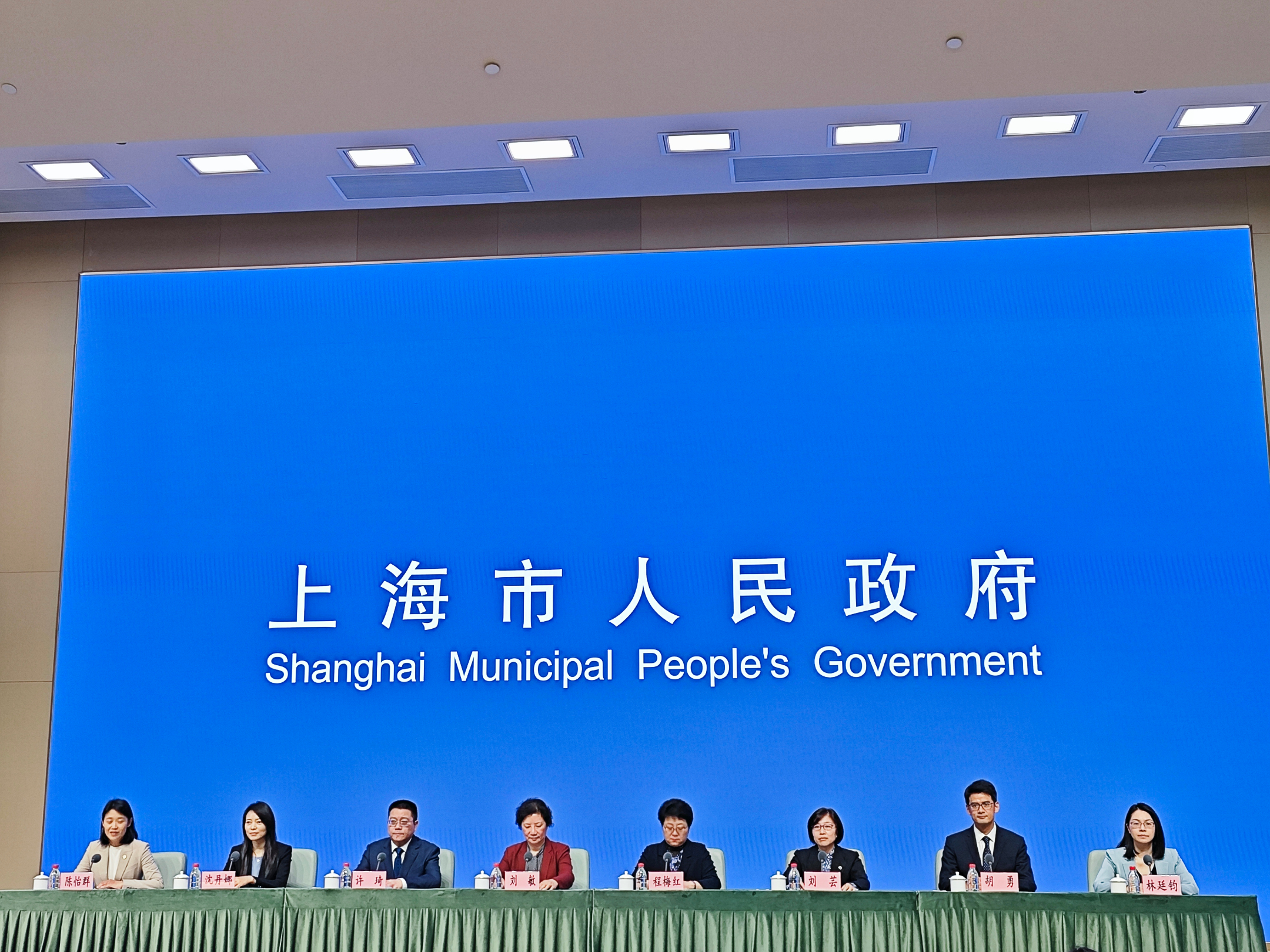
Core Viewpoint - The 2023 Shanghai "May 5 Shopping Festival" is the largest in terms of consumer subsidy policies in six years, with extensive coverage across various sectors, aimed at stimulating consumption and supporting economic growth [1][8]. Group 1: Event Overview - The sixth edition of the "May 5 Shopping Festival" runs from late April to the end of June, emphasizing a dual approach of "policy + activities" to drive quality consumption and create demand [4]. - The festival aims to be a significant event for promoting consumption, stabilizing growth, and enhancing confidence, contributing to Shanghai's goal of becoming an international consumption center [4]. Group 2: Key Features - The festival features three main characteristics: extensive market mobilization, integrated discounts, and a fusion of consumption scenarios [5]. - Over a thousand enterprises and thousands of brands will participate, with more than 1,000 unique activities planned to create a vibrant consumption atmosphere [5]. - Multiple subsidies and discounts will be offered across products and services, both online and offline, leveraging existing policies for various sectors [5]. Group 3: Activity Framework - The festival will focus on four major consumption areas: service consumption, bulk consumption, inbound consumption, and new consumption, structured around the "1+15+16+X" activity framework [6]. - Key activities include the "Business Circle Boutique Promotion Festival" and 15 major IP events, with participation from 16 districts, featuring both online and offline activities [6]. Group 4: Subsidy Details - This year's festival has the most extensive subsidy policies, covering a wide range of products, including 12 categories of energy-efficient appliances and various digital products [8]. - For automotive trade-ins, the subsidy for eligible vehicles has increased, with a focus on supporting the replacement of older vehicles [8]. - Discounts on premium categories will be available through consumption vouchers, with potential savings of up to 45% [8]. Group 5: Consumer Engagement - The "Le Shanghai" service consumption vouchers will continue to be issued, focusing on sectors like dining, tourism, and entertainment to enhance service consumption [9]. - Efforts to improve the shopping experience for inbound tourists include optimizing the tax refund process and expanding the range of eligible products [9].
敷尔佳哈尔滨+上海双研发中心,如何联动赋能新品
Zhong Guo Chan Ye Jing Ji Xin Xi Wang· 2025-04-24 01:55
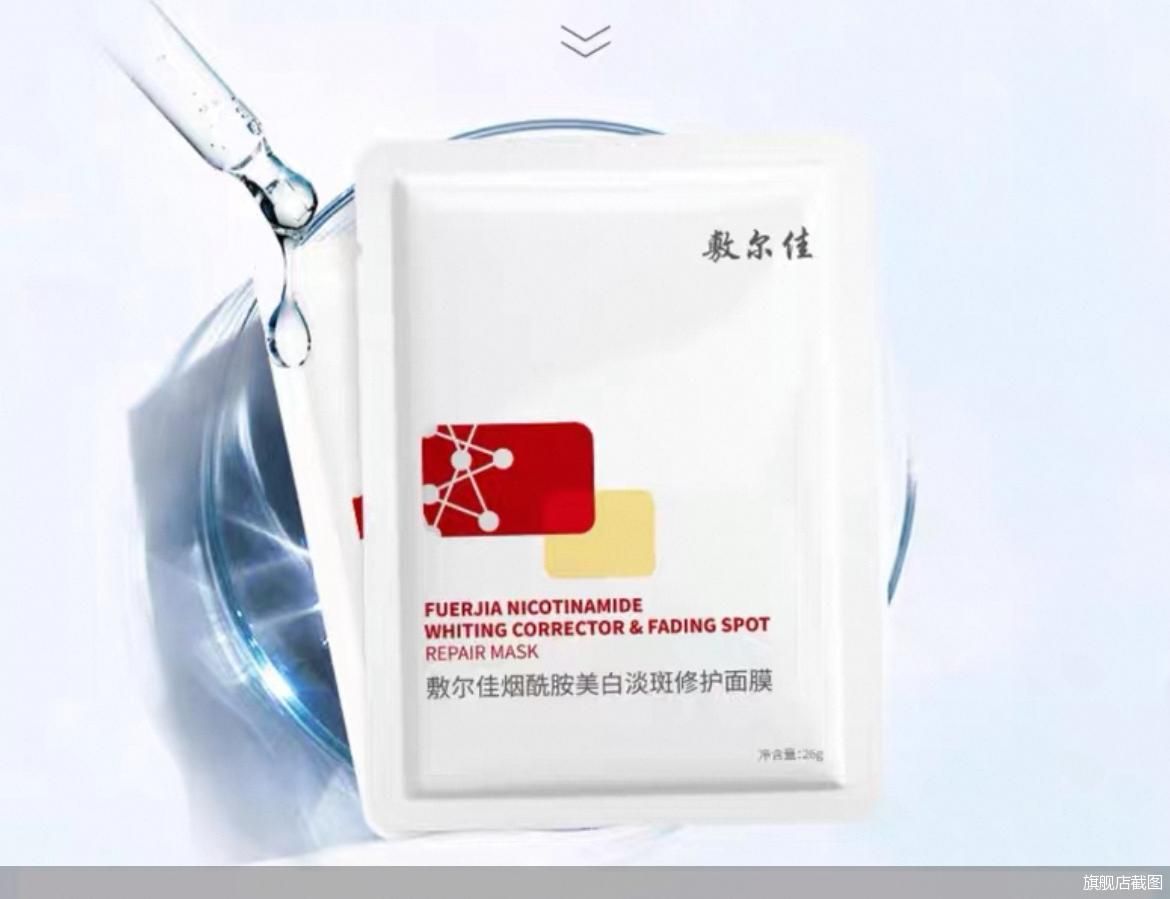
Core Insights - The recent successful launch of Fulejia's new products, including the Brightening Mask and Sodium Hyaluronate Repair Liquid, highlights the brand's strong capabilities in scientific research and innovation [1] - The collaboration between Fulejia's two R&D centers in Harbin and Shanghai is crucial for product iteration speed and market competitiveness, creating a comprehensive innovation system that covers raw material development, formula design, and efficacy verification [1][2] Group 1: R&D Centers - The Harbin R&D center focuses on medical device technology and has established a leadership position in the medical dressing market through advanced research such as supramolecular co-crystal technology and recombinant collagen [1][2] - The Shanghai R&D center, set to be operational in 2024, aims to meet the efficacy upgrade demands in the cosmetics market and integrates global resources with an international perspective [1][2] Group 2: Innovation and Collaboration - The synergy between the two centers is enhanced through the integration of supramolecular technology and academic-industry networks, leading to innovative solutions for industry challenges such as the stability of natural ingredients and low transdermal absorption rates [2] - The collaboration has resulted in the development of patented raw materials like supramolecular white peony seed oil and supramolecular grape seed oil, addressing consumer needs for safe and effective skincare solutions [2] Group 3: Production and Market Impact - The intelligent upgrade of production facilities amplifies the collaborative effects of the R&D centers, with automated production lines and smart traceability systems ensuring product traceability from raw material origin to experimental data [2] - This integrated "research-production-sales" model significantly enhances the efficiency of new product development, with over ten new products launched in August of the previous year, receiving positive market feedback [2] Group 4: Industry Implications - Fulejia's dual R&D center model is reshaping the innovation logic in the Chinese beauty industry, establishing a competitive barrier that is difficult to replicate and providing a transformative example driven by research value [3] - The combination of solid research from Harbin and cutting-edge insights from Shanghai demonstrates that breaking regional boundaries and activating innovation resonance is essential for sustaining China's beauty narrative in the global technology competition [3]
敷尔佳,正在消散的“医美面膜”神话
Bei Jing Shang Bao· 2025-04-23 13:01
Core Viewpoint - The company Fulejia continues to experience a decline in net profit for the second consecutive year, with a reported decrease of 11.77% in 2024, attributed primarily to increased marketing expenses and a competitive business environment [1][3][4]. Financial Performance - In 2024, Fulejia achieved operating revenue of 2.017 billion yuan, a year-on-year increase of 4.32%, while the net profit attributable to shareholders was 661 million yuan, reflecting a decrease of 11.77% [3]. - The company reported a net profit decline of 11.56% in 2023, despite a revenue growth of 9.29% during the same period [3]. - Marketing expenses have significantly increased, with 2024 sales expenses reaching 748 million yuan, up 40.53% from 2023, which had sales expenses of 532 million yuan, an increase of 36.44% [3]. Market Environment - The competitive landscape is characterized by reliance on traffic operations and price competition, leading to increased costs and reduced profit margins [4]. - Fulejia's financial report indicates a significant dependence on promotional events and influencer marketing, which, while effective for short-term sales, contribute to rising operational costs over time [4]. Historical Context - Founded in 2015, Fulejia quickly rose to prominence in the beauty industry, particularly in the medical dressing sector, with a substantial portion of its revenue derived from medical products [5][6]. - The company experienced rapid revenue growth from 374 million yuan in 2018 to 1.342 billion yuan in 2019, and further to 1.585 billion yuan in 2020 [6]. Research and Development - Fulejia's R&D expenses have seen significant growth, with 2023 expenditures reaching 32.84 million yuan, but the growth rate slowed to 6.04% in 2024 [9]. - The proportion of R&D expenses relative to total revenue remains low, at less than 2% in 2024, compared to over 5% for competitors like Huaxi Biology [9]. Future Outlook - The company plans to continue its dual-line R&D strategy focusing on both medical devices and cosmetics, aiming to enhance brand image and market share through refined operations and product quality [9]. - Industry experts suggest that Fulejia needs to differentiate itself and explore new avenues, such as beauty devices, to maintain its competitive edge as its initial advantages diminish [10].
AI技术普及,或将导致第五消费时代提前到来
创业家· 2025-04-23 10:01
慢(slow)、小(small)、软(soft)、社交(sociable)、可持续的(sustainable)。 首先是, 慢(Slow) 。 现在这个社会是快节奏的,工作是快节奏的、时尚是快时尚的、餐是快餐,所以有人提倡慢 餐。 什么是慢餐?我们要吃当地产的,并且自己去烹饪、去吃。 其次,是 小(small) 。 第五消费时代正在加速到来,这是因为科技的变化,比如说AI的盛行。 这是 被誉为 "日本消费社会研究第一人"的三浦展 ,在《孤独社会》一书中提到的。 那么,什么是第五消费时代? 第五消费时代的关键词,可以用"5个S"来表述: 过去30年,全球建了很多大型购物中心、商超,通过大的硬件设施在其中进行消费,这样的模 式盛行于全球。 但是未来会怎样?未来人们越来越不喜欢大盒子式的消费场所,而是街边各种有特色的小店, 慢悠悠地去逛、去吃,这样的方式可能更加适合未来人的价值观。 如今因为AI技术,无人化逐渐盛行,特别是在疫情当中,大家一星期可能和别人说不上一句 话。所以,新冠也使很多人认识到了和别人交流有多么重要,和别人的沟通和交流是另外一个 "S"(Sociable) 就是社交。 还有一个就是全球注重 可持续 ...
谁在看好毛戈平?
36氪未来消费· 2025-04-22 02:48
一个非典型"高端"美妆的生存法则。 作者 | 贺哲馨 编辑 | 乔芊 "不是我今天做一个低端品牌,想着市场变好了,做高端品牌能赚更多钱,就也变成做高端品牌。" 4月1日,毛戈平在交流会上这样回答投资者的关于品牌定位的疑问。去年年底,毛戈平顶着"国货高端第一股"登陆香港,前不久发布了收入盈利大增的 首份财报后,最终收盘113港元,也创下上市以来股价的最高点,比上市首日大涨了117%。 不过,一路上扬的股价也为这只消费牛股惹来不少争议。 有资深财经观察人士向36氪表示,部分投资者对毛戈平的质疑包括:"公司个体的高增长与美 妆市场平价当道的现状有脱节,其次是我们会怀疑毛戈平本身的高端市场定位是不是能立得住。" 因此,本文试图探讨两个问题: 毛戈平所言的"高端"定位究竟该如何理解,它重要吗?以及,疯狂的股价上涨背后, 市场到底在为何买单? 但毛戈平显然不属于此列。 一是它主攻的底妆品类价格高,但相较于护肤品类溢价空间更小,价格上限低; 二是与珀莱雅主打线上渠道不同,毛戈平一 直重点布局百货,这是一个没那么快看到成绩的渠道。 百货以中高收入人群为目标,对价格敏感度低,但渠道会收取较高的扣点(25%-40%为主),部分高 ...
Evercore ISI:中国美妆进口3月双位数下滑!在线销售却逆势增长10%,免税店成关键变量?
智通财经网· 2025-04-22 02:02
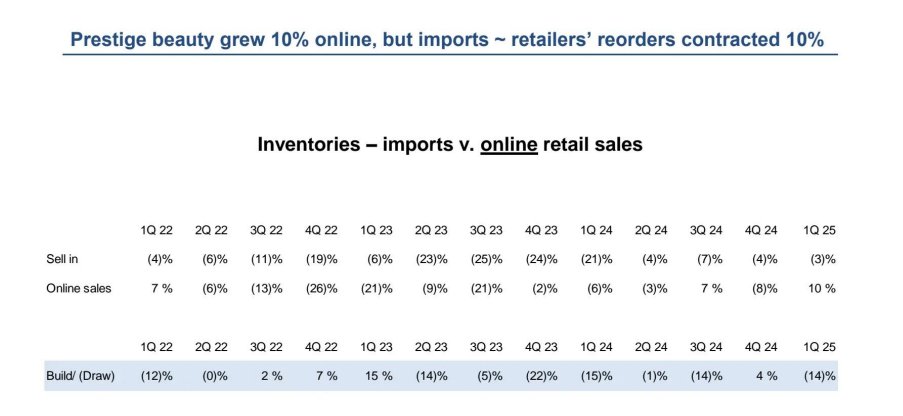
Core Insights - The report from Evercore ISI indicates a 3% year-on-year decline in China's beauty product imports in March, while online retail sales grew by 10%, suggesting a potential market bottoming out [1][2][5] - The sales in Korean duty-free shops are projected to reach $10 billion in 2024, which is 2.5 times that of Hainan, but recent subsidy cuts have led to a 22% drop in sales for January and February, resulting in some store closures in Seoul [1][6][7] - The decline in beauty product imports serves as a reference for retailers' reordering of high-end beauty products, with a notable double-digit decrease in reorders from Hainan duty-free shops [1][2][6] Industry Trends - Online sales and import data indicate that the inventory levels in China's beauty market, including Hainan duty-free shops, are balanced [5][6] - The beauty ecosystem in China is interconnected with the Korean market, where duty-free sales are supported by subsidies aimed at attracting customers [6] - The overall beauty market in mainland China is estimated to be $25.1 billion in 2024, with online sales accounting for 48% and offline sales for 52%, both showing slight declines [6] Company Impact - The turbulence in the Korean market is significant for companies like Estée Lauder, which derives 8% of its sales from Korea and 26% from China, including Hainan [7] - The recent performance of LVMH also reflects the broader market trends, with a reported decline in organic sales for the third quarter of fiscal year 2025 [7]

欧莱雅:一季度财报逆势增长3.5% 中国大陆美妆市场正缓慢复苏
Jing Ji Guan Cha Bao· 2025-04-21 13:07
Core Viewpoint - L'Oréal reported a 3.5% year-on-year sales growth in Q1 2025, driven by an IT transformation project and a gradual recovery in the Chinese beauty market, outperforming the global beauty market [1] Group 1: Financial Performance - L'Oréal's Q1 sales reached €11.73 billion, with a consolidated growth of over 4.4% [1] - The North Asia region saw a sales increase of 6.9% year-on-year, with a consolidated growth of 8.4% [1] - The luxury cosmetics division, skin science beauty division, and professional hair products division continued to outperform the market, while the mass cosmetics division's growth was slightly below the market average [1][2] Group 2: Market Strategy - L'Oréal is actively participating in the China International Consumer Products Expo for the fifth consecutive year to strengthen its position in the travel retail market [2] - The company is undergoing a strategic transformation in its travel retail business to adapt to changing market conditions and consumer demands [2] - L'Oréal plans to invest in innovative retail experiences and sustainable growth solutions in collaboration with Hainan [2] Group 3: Future Initiatives - The "Beauty Stimulus Plan" for 2025 emphasizes investment in R&D and supply chain improvements, including the establishment of smart operation centers [3] - L'Oréal aims to enhance brand positioning and personalization to meet evolving consumer expectations, focusing on the unique identity of each brand [3][4] - The company plans to expand its presence in third- and fourth-tier cities and transform offline sales points into experiential locations [5]
