脑机接口

Search documents
七部门发布重磅文件 政策和技术“双轮驱动” 脑机接口产业发展突破有了“施工图”
Shang Hai Zheng Quan Bao· 2025-08-07 18:28
Core Viewpoint - The recent joint release of the "Implementation Opinions on Promoting the Innovation and Development of the Brain-Computer Interface Industry" by seven government departments outlines a comprehensive plan for the development of the brain-computer interface (BCI) industry, emphasizing the acceleration of research and development for implantable devices and the establishment of a robust industrial ecosystem by 2030 [1][2]. Group 1: Development Goals - By 2027, breakthroughs in key BCI technologies are expected, with the establishment of advanced technical, industrial, and standard systems, achieving international advanced levels in electrode, chip, and complete product performance [2] - The BCI industry aims to cultivate 2 to 3 globally influential leading enterprises and a number of specialized small and medium-sized enterprises by 2030, enhancing its international competitiveness [2] Group 2: Product Innovation - The focus is on accelerating the development of implantable devices, including high-density neural recording sensors and ultra-low power implantable chips, to improve control precision and response speed [3] - Non-implantable devices are also targeted for mass production and iteration, with innovations in various product forms such as adhesive, ear, and head-mounted interfaces [3] Group 3: Policy Support and Financial Investment - The opinions call for enhanced policy support for BCI technology research and application demonstrations, with significant investments from national funds to drive capital into the industry [4] - Recent measures include the establishment of pricing for invasive BCI procedures, such as a placement fee of 6,580 yuan and a removal fee of 3,150 yuan, which are expected to stimulate market growth [4] Group 4: Clinical Advancements - China has successfully conducted its first prospective clinical trial of an implantable BCI, marking a significant milestone as the second country globally to enter this phase after the United States [4]
中国七部门部署脑机接口产业创新发展
Zhong Guo Xin Wen Wang· 2025-08-07 16:38
中新社北京8月7日电(记者刘育英)中国工业和信息化部、国家发改委等七部门近日联合印发《关于推动 脑机接口产业创新发展的实施意见》(下称《意见》),以提升脑机接口产业创新能力为主攻方向,以生 命科学与信息科学协同发展为驱动,以开拓应用场景为牵引,以打造高性能整机产品为抓手,加快培育 形成未来产业新赛道。 脑机接口通过在脑与机器之间建立信息通道,实现生物智能与机器智能的协同交互,是生命科学和信息 科学融合发展的前沿技术。 当前,脑机接口创新成果持续涌现,产业加速壮大,正孕育颠覆性突破,已成为科技创新和产业创新深 度融合的重要领域。 据工信部官方公众号7日消息,《意见》提出,到2027年,中国脑机接口关键技术取得突破,初步建立 先进的技术体系、产业体系和标准体系。脑机接口产品加快应用,产业规模不断壮大,打造2至3个产业 发展集聚区,开拓一批新场景、新模式、新业态。 到2030年,脑机接口产业创新能力显著提升,形成安全可靠的产业体系,构建具有国际竞争力的产业生 态,综合实力迈入世界前列。 围绕发展目标,《意见》部署加强基础软硬件攻关、打造高性能产品、推动技术成果应用、壮大创新主 体、提升产业支撑能力5大重点任务和核心 ...
七部门:发展壮大脑机接口领域领军企业
Bei Jing Shang Bao· 2025-08-07 15:39
Core Viewpoint - The Chinese government has issued an implementation plan to promote the innovation and development of the brain-computer interface (BCI) industry, aiming to establish a reliable industrial system by 2030, with significant growth expected in the market size and technological capabilities [1][7]. Group 1: Development Goals - By 2027, breakthroughs in key BCI technologies are expected, establishing an advanced technical, industrial, and standard system, with products reaching international advanced levels in various applications [3][4]. - By 2030, the BCI industry is projected to significantly enhance its innovation capabilities, nurturing globally influential leading enterprises and a competitive industrial ecosystem [3][6]. Group 2: Key Tasks - The implementation plan outlines five key tasks, including strengthening foundational hardware and software, developing high-performance products, promoting the application of technological achievements, expanding innovative entities, and enhancing industrial support capabilities [3][5]. - Three major projects are highlighted: core hardware and software strengthening, high-quality product development, and application expansion [3][5]. Group 3: Technological Innovations - Innovations in brain signal sensing components are emphasized, focusing on developing implantable electrodes for various brain regions and enhancing material stability and reliability [4][5]. - The plan also calls for the development of high-channel, high-speed brain signal acquisition chips and ultra-low-power communication chips to improve signal processing and transmission capabilities [4][5]. Group 4: Market Potential - The global BCI medical application market is projected to reach $40 billion by 2030 and $145 billion by 2040, indicating substantial growth potential [7]. - The Chinese BCI market is expected to grow from 3.2 billion yuan in 2024 to 5.58 billion yuan by 2027, with a growth rate of 20% [7]. Group 5: Policy Support - Since 2025, various regions have issued policies to accelerate BCI innovation, aiming to establish industrial development clusters and promote the commercialization of BCI products in multiple sectors [7].


北交所定期报告20250807:七部门力推脑机接口产业,我国外贸韧性持续显现
Soochow Securities· 2025-08-07 15:12
Group 1: Economic Performance - In 2024, China's "three new" economy (new industries, new business formats, new models) contributed 242,908 billion yuan, growing by 6.7% year-on-year, surpassing GDP growth by 2.5 percentage points[13] - The share of the "three new" economy in GDP reached 18.01%, an increase of 0.43 percentage points from the previous year[13] - In the first seven months of 2025, private enterprises' import and export volume was 14.68 trillion yuan, up 7.4% year-on-year, accounting for 57.1% of total foreign trade, a rise of 2.1 percentage points[14] Group 2: Market Trends - As of August 7, 2025, the average market capitalization of the 269 companies listed on the North Exchange was 3.185 billion yuan, with a trading volume of 27.25 billion yuan, an increase of 1.782 billion yuan from the previous trading day[21] - On August 7, 2025, the North Exchange index remained unchanged, while the A-share index rose by 0.16%, and the ChiNext index fell by 0.68%[20] - The top three gainers on the North Exchange were BeiYikang, BenLang New Materials, and AweiTe, with increases of 17.75%, 15.59%, and 11.45% respectively[22] Group 3: Policy and Industry Developments - Seven departments, including the Ministry of Industry and Information Technology, issued guidelines to promote the brain-computer interface industry, aiming to cultivate leading enterprises and support innovation[15] - The 11th batch of national drug centralized procurement has been initiated, involving 55 varieties, with a focus on accurate reporting of demand by medical institutions[18] - Shanghai plans to launch a comprehensive renovation project for urban villages in 2026, aiming for high-quality urban development[19]
晚报 | 8月8日主题前瞻
Xuan Gu Bao· 2025-08-07 14:35
点评:报道指出,人形机器人通用感知系统的推出,不仅为人形机器人提供了强大的环境感知能力,更解决了传感器布局、数据标注和多模态融合等关键挑 战,奠定了通用感知模块标准化的技术基础。未来,团队计划进一步扩展数据集、优化时序融合策略,并探索在更多人形机器人平台上的应用。随着技术的 不断成熟,人形机器人有望在家庭服务、工业协作、户外救援等多个领域发挥重要作用,为人类生活带来更多便利。 3、脑机 | 工信部等七部门印发《关于推动脑机接口产业创新发展的实施意见》,其中指出,壮大创新主体,培育优势企业。发展壮大脑机接口领域领军企 业,支持组建产业创新联合体,牵头承担国家科技重大专项等任务。促进脑机接口中小企业创新供给,加快培育科技和创新型中小企业、高新技术企业、专 精特新中小企业、专精特新"小巨人"企业、制造业单项冠军企业以及瞪羚企业、独角兽企业等,实施启航企业培育工程,完善企业梯度培育体系。推动大中 小企业融通创新,鼓励领军企业开放算法框架、公共数据和共性技术,为企业共同成长营造良好环境。到2027年,脑机接口关键技术取得突破,初步建立先 进的技术体系、产业体系和标准体系。 明日主题前瞻 1、机器人 | 2025世界机器 ...

脑机接口 大利好!
Shang Hai Zheng Quan Bao· 2025-08-07 14:33
Core Viewpoint - The joint release of the "Implementation Opinions on Promoting the Innovative Development of Brain-Machine Interface Industry" aims to accelerate the research and development of implantable devices and enhance the application of brain-machine interfaces across various sectors, including industrial manufacturing and healthcare [1][2]. Group 1: Development Goals - By 2027, breakthroughs in key technologies related to brain-machine interfaces are expected, establishing an advanced technical, industrial, and standard system [2]. - The industry is projected to grow significantly, with the creation of 2 to 3 industrial development clusters and the emergence of new scenarios, models, and business formats [2]. - By 2030, the innovation capability of the brain-machine interface industry is anticipated to be significantly enhanced, fostering 2 to 3 globally influential leading enterprises and a number of specialized small and medium-sized enterprises [2]. Group 2: Product Development - The focus is on accelerating the R&D of implantable devices, including high-density neural recording sensors and ultra-low power implantable chips, to improve control precision and response speed [2][3]. - Non-invasive devices are also being promoted, with innovations in product forms such as adhesive, ear, and head-mounted devices, aiming for lightweight, high-speed, and low-power characteristics [3]. - Development of auxiliary devices is encouraged, integrating brain signals with other physiological signals to enhance interaction control and perception assessment accuracy [3]. Group 3: Policy Support and Market Impact - The opinions emphasize strengthening technological breakthroughs and application demonstrations, with increased investment from national funds to support the industry [4]. - Specific pricing for invasive brain-machine interface procedures has been established, with insertion fees set at 6,580 yuan and removal fees at 3,150 yuan, which is expected to stimulate market growth [4]. - The successful initiation of clinical trials for implantable brain-machine interfaces in China marks a significant milestone, positioning the country as the second globally to enter this phase after the United States [4]. Group 4: Industry Collaboration - The development of brain science is highlighted as a typical case of interdisciplinary collaboration, requiring cooperation among technology developers, clinical institutions, capital, and government [5]. - Startups in this field are advised to balance short-term survival needs with long-term innovation goals to avoid compromising core technology development due to market pressures [5].
利好!七部门重磅发文,事关脑机接口
21世纪经济报道· 2025-08-07 12:52
Core Viewpoint - The article discusses the implementation opinions issued by seven Chinese government departments aimed at promoting the innovation and development of the brain-computer interface (BCI) industry, with specific targets set for 2027 and 2030 regarding technological breakthroughs, industry scale, and the establishment of a competitive ecosystem [1][3]. Summary by Sections Key Tasks - The implementation opinions outline five key tasks: strengthening basic hardware and software research, creating high-performance products, promoting the application of technological achievements, expanding innovation entities, and enhancing industrial support capabilities [1][3]. Key Projects - Three major projects are highlighted: core hardware and software foundational projects, high-quality complete machine projects, and application expansion projects [1]. Hardware and Software Development - The focus is on innovating brain signal sensing components, developing implantable electrodes for various brain regions, and enhancing the stability and reliability of materials used [2]. High-Performance Product Development - There is an emphasis on accelerating the development of implantable devices and promoting the mass production of non-implantable devices, with innovations in product forms such as adhesive, ear, and head-mounted devices [2]. Application of Technological Achievements - The implementation opinions stress the importance of promoting industrial innovation results, enhancing testing and pilot capabilities, and accelerating applications in medical health, particularly for neurodegenerative and mental disorders [3]. Market Potential - The global market for BCI medical applications is projected to reach $40 billion by 2030 and $145 billion by 2040, indicating significant growth potential [3]. In China, the BCI market is expected to grow from 3.2 billion yuan in 2024 to 5.58 billion yuan by 2027, with a growth rate of 20% [4]. Policy Initiatives - Since 2025, various regions in China have released policies to seize opportunities in the BCI sector, including plans to establish demonstration zones for BCI industry development by 2030 [4].

利好来了!刚刚,重磅发布!
券商中国· 2025-08-07 12:11
Core Viewpoint - The article highlights the significant policy support for the brain-computer interface (BCI) industry, with a focus on the implementation opinions released by multiple government departments aimed at fostering innovation and development in this sector by 2027 [1][2]. Summary by Sections Policy Implementation - On August 7, a joint implementation opinion was released by several government bodies, outlining 17 specific measures to promote the innovation and development of the BCI industry [2]. - The opinion sets a target for breakthroughs in key BCI technologies by 2027, establishing advanced technical, industrial, and standard systems [4]. Technological Development Goals - By 2027, the performance of electrodes, chips, and complete products is expected to reach international advanced levels, with applications in industrial manufacturing, healthcare, and consumer life accelerating [4]. - By 2030, the BCI industry is anticipated to significantly enhance its innovation capabilities, nurturing 2 to 3 globally influential leading enterprises and a number of specialized small and medium-sized enterprises [4]. Product Innovation - The implementation opinion emphasizes the need for high-performance products, including breakthroughs in implantable devices and the development of new product forms such as adhesive, ear, and clip-on devices [4][5]. - There is a focus on developing high-channel, high-speed brain signal acquisition chips and auxiliary devices that integrate multiple physiological signals to improve interaction control and perception assessment accuracy [5]. Industry Growth and Support - The opinion encourages the growth of leading enterprises in the BCI field and the formation of industry innovation consortia, supporting the cultivation of technology-driven small and medium enterprises [5]. - The BCI industry is expected to receive substantial support from the government, with new pricing mechanisms for medical devices related to BCI technology being established [7]. Market Potential - The global BCI market is projected to reach approximately $7 billion by 2030, with a compound annual growth rate (CAGR) of 16.4% from 2025 to 2030 [8]. - The domestic BCI market is expected to grow significantly, with a market size of 1.73 billion yuan in 2023, reflecting an increase of over 5% compared to 2020 [8]. - By 2040, the Chinese BCI market is forecasted to exceed 120 billion yuan, with an annual growth rate of 26% [8].





行业点评报告:七部门政策激活脑机接口产业
ZHESHANG SECURITIES· 2025-08-07 12:10
Investment Rating - The industry investment rating is "Positive" (maintained) [3][6] Core Insights - Recent policies from seven departments in China are aimed at stimulating the brain-computer interface (BCI) industry, encouraging commercialization through local incentives and medical insurance integration [2][4] - The overall goal is to achieve breakthroughs in key technologies by 2027, establish advanced technical, industrial, and standard systems, and significantly enhance innovation capabilities by 2030, fostering globally influential leading enterprises [4] - The report suggests actively monitoring companies within the BCI industry chain, including both upstream hardware/software and downstream medical solution providers [2][4] Summary by Sections Investment Suggestions - Companies to watch in the upstream hardware/software sector include: Entropy Technology, iFlytek, Yanshan Technology, Zhongke Information, Dongfang Zhongke, Yingqu Technology, Nanjing Panda, Lihe Science and Technology, BYD Electronics [2] - In the downstream medical solutions sector, notable companies are: Aipeng Medical, Xiangyu Medical, Chengyitong, Ruimaite, Weisi Medical, Innovation Medical, Sanbo Neuroscience [2] Policy and Development Goals - By 2027, the BCI industry aims to achieve key technological breakthroughs, with products reaching international advanced levels and expanding applications in industrial manufacturing, healthcare, and consumer life [4] - By 2030, the goal is to cultivate 2 to 3 globally influential leading enterprises and a number of specialized small and medium-sized enterprises, establishing a competitive industrial ecosystem [4] Technical Advancements - Focus on enhancing brain signal sensing capabilities through innovative materials and processes, developing high-performance, low-power brain-machine chips, and integrating AI into decoding processes [4] - Accelerate the development of high-performance products, including both implantable and non-implantable devices, to improve control precision and response speed [4]
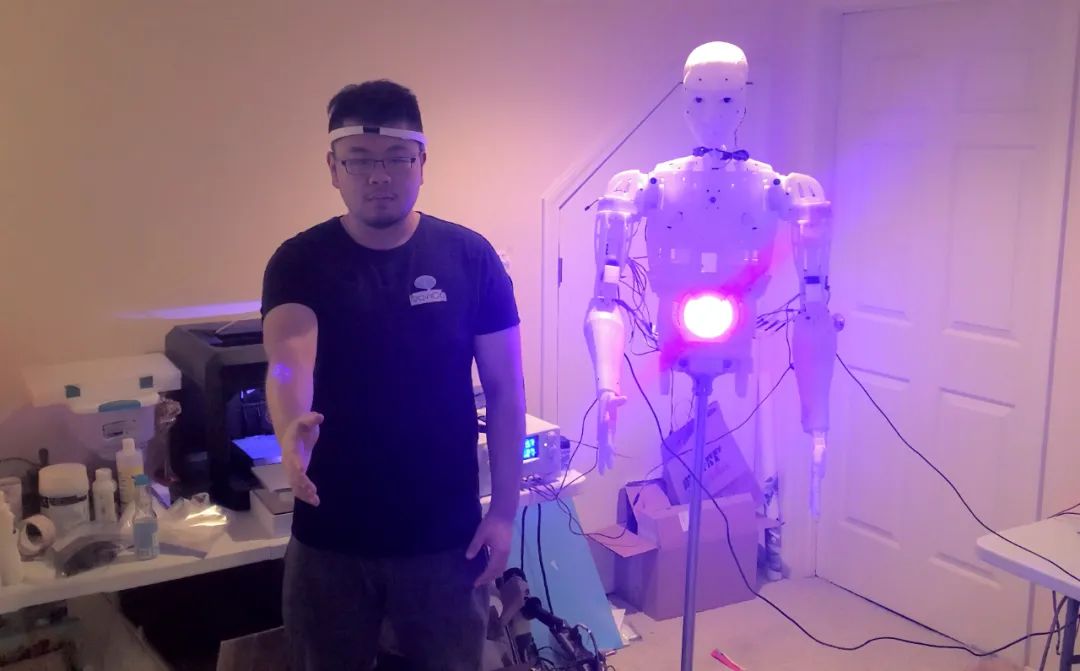
当中国极客们不再仰望硅谷:本土科技偶像的时代来了 | 深网
Jin Shi Shu Ju· 2025-08-07 12:06
Core Insights - The article highlights the rise of Chinese tech entrepreneurs, particularly focusing on Han Bicheng of BrainCo and Liang Wenfeng of DeepSeek, who are redefining the narrative of technological innovation in China, moving from reliance on Silicon Valley to establishing local heroes [3][5][22] - The narrative emphasizes the shift in confidence among young engineers and entrepreneurs in China, showcasing their ability to create impactful technologies that can change the world [5][22] Company Insights - BrainCo, founded by Han Bicheng, focuses on non-invasive brain-computer interface technology, positioning itself alongside Elon Musk's Neuralink, which is pursuing invasive methods [8][21] - DeepSeek, led by Liang Wenfeng, has gained significant attention for its AI technology, which has been described as a "national-level achievement" and has disrupted the global tech landscape [5][22] - Both companies are part of a broader trend of Chinese tech firms gaining recognition for their innovative approaches, with BrainCo developing products like the BrainCo smart bionic hand that assists disabled individuals [21][18] Industry Trends - The article discusses the changing landscape of the tech industry in China, where local companies are now seen as capable of achieving foundational breakthroughs rather than just incremental improvements [8][21] - The narrative also touches on the increasing competition in the brain-computer interface sector, with both BrainCo and Neuralink being the largest players in terms of research investment and fundraising [20][21] - The emergence of new technologies from China, such as DeepSeek's AI models, is reshaping the global tech competition, challenging established players like OpenAI and altering the dynamics of knowledge and information equity [22]