
保险

Search documents
美股收盘涨跌不一:纳指涨近1%,标普创收盘新高
Feng Huang Wang Cai Jing· 2026-01-27 23:01
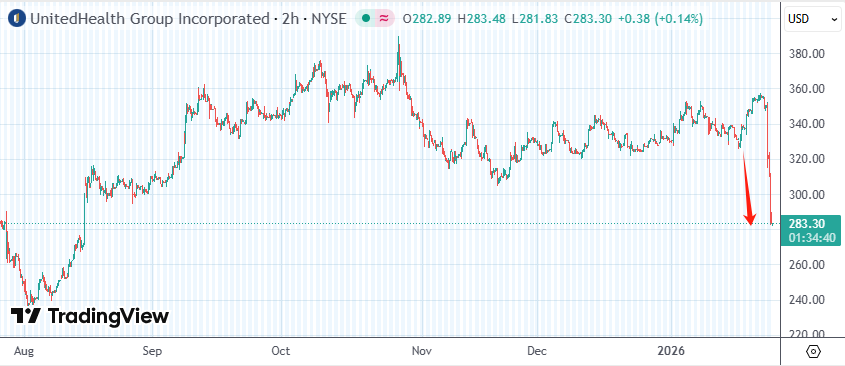
凤凰网财经讯 1月28日,美股三大指数涨跌不一,道指跌0.83%,纳指涨0.91%,标普500指数涨0.41%并 创收盘新高。 热门中概股涨跌互现,纳斯达克中国金龙指数收涨0.48%,虎牙涨超19%,爱奇艺、哔哩哔哩涨超3%, 小鹏汽车、理想汽车跌超1%。 科技股普涨,英特尔涨超3%,亚马逊涨超2%。医疗保险股普跌,标普1500管理型医疗指数下跌18%, 创下自1997年以来的最大跌幅;联合健康跌超19%,CVS跌超14%。 美股存储概念股上涨,美光科技涨超5%,闪迪涨超2%,西部数据涨超4%,希捷科技涨超3%。希捷科 技第二财季营收28.3亿美元,同比增长22%,分析师预期27.5亿美元;第二财季调整后每股收益3.11美 元,去年同期2.03美元,预期2.83美元;预计第三季度营收28-30亿美元,分析师预期为27.8亿美元。 隔夜要闻 周二(1月27日)纽约时段,美元指数一度跌至95.51创2022年2月份的最低水平,本月累计跌幅扩大至 超2.2%。与此同时,英镑和欧元双双触及四年新高,欧元兑美元日内一度升至1.2081,英镑兑美元最高 时报1.3869,均为2021年下半年以来的最高水平。 光通信鼻祖康 ...
美政府拟收紧医保钱,联合健康30年来首次预警营收下滑
Feng Huang Wang· 2026-01-27 22:54
Group 1 - Major healthcare stocks, including UnitedHealth, experienced significant declines, with UnitedHealth dropping 19% and hitting a new low since August 2022 [1] - UnitedHealth announced that its revenue is expected to decline for the first time in at least 30 years, projecting a 2% decrease to $439 billion for the year [3] - The proposed changes to Medicare Advantage payment rates for 2027 shocked insurance companies, with expected growth reduced to an average of 0.09%, compared to previous analyst expectations of 4% to 6% [3] Group 2 - The political environment for insurance companies is becoming increasingly challenging, with inflation remaining high and Medicare rate adjustments lagging behind inflation trends [4] - UnitedHealth is under criminal investigation by the U.S. Department of Justice regarding its Medicare billing practices [4]


智通ADR统计 | 1月28日
智通财经网· 2026-01-27 22:45
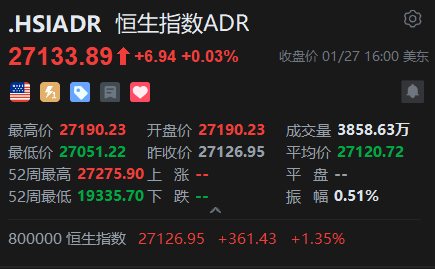
| .HSIADR 恒生指数ADR | | --- | | 27133.89 ↑ +6.94 +0.03% - 收盘价 01/27 16:00 美东 | | ■ 可 可 可 中 可 中 | | 最高价 27190.23 开盘价 27190.23 成交量 3858.63万 | | 最低价 27051.22 昨收价 27126.95 平均价 27120.72 | | 52周最高 27275.90上 涨 -- 平 智 -- | | 52周最低 19335.70 下 跌 -- 振 幅 0.51% | | 800000 恒生指数 27126.95 +361.43 +1.35% | 智通财经APP获悉,周二,美股三大指数涨跌不一。恒生指数ADR上涨,按比例计算,收报27133.89点,较香港收市升6.94点或0.03%。 大型蓝筹股涨跌不一,汇丰控股收报138.036港元,较香港收市涨2.63%;腾讯控股收报608.989港元,较香港收市涨0.33%。 | 序号 | 名称 | 港股代码 | 最新价 | 涨跌额 | 涨跌幅 | ADR代码 | ADR换算价(HKD) | 较港股升跌 较活 | | --- | --- | - ...
宠物险不应只是情感消费品
Jing Ji Ri Bao· 2026-01-27 22:21
Core Insights - The pet insurance market has rapidly gained popularity, transitioning from a niche product to a standard option for many pet-owning families, driven by increasing pet ownership and rising veterinary costs [1][2] - Despite the growing demand, the industry faces challenges related to complex claims processes, unclear policy terms, and rising premiums, leading to consumer dissatisfaction [2][3] Group 1: Market Dynamics - Pet insurance serves as a financial tool to mitigate two main risks: medical expenses due to illness or accidents and liability for damages caused to third parties [1] - The increasing number of pet owners, heightened risk awareness among younger demographics, and escalating veterinary costs are key factors driving market demand [1] Group 2: Industry Challenges - The pet insurance sector exhibits common issues associated with internet sales, such as simplified purchasing processes but complicated claims, leading to a gap between consumer expectations and actual payouts [2] - The lack of standardized diagnostic and pricing practices in the veterinary industry complicates risk management for insurance companies, resulting in a reliance on defensive pricing strategies [2] Group 3: Recommendations for Improvement - The industry needs to clarify rules regarding coverage, waiting periods, and claims processes to create a more predictable market environment and reduce consumer misunderstandings [3] - Insurance companies should balance growth with risk management and service quality, utilizing technology to enhance pet identification and health records while improving transparency in sales [3] Group 4: Consumer Guidance - Consumers should approach pet insurance with a rational mindset, understanding that it is not a one-size-fits-all solution and should consider factors like pet age, health, and personal financial capacity before purchasing [3] - The long-term value of pet insurance should extend beyond mere reimbursement of medical bills, aiming to foster trust between pet healthcare, insurance services, and consumers [3]
亚马逊市值一夜增超4600亿元 联合健康跌超19%!金银大涨!事关降息 美联储官员发声!美元“跳水” 啥情况?
Mei Ri Jing Ji Xin Wen· 2026-01-27 22:20
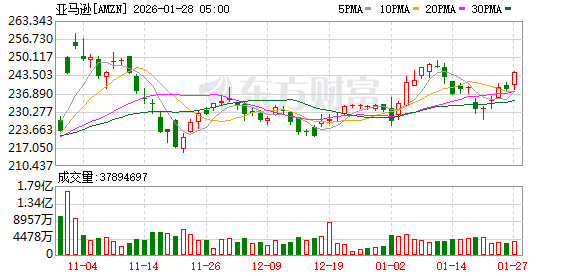
Market Performance - On January 27, U.S. stock indices showed mixed results, with the Dow Jones down 0.83%, the Nasdaq up 0.91%, and the S&P 500 up 0.41% [2] - Technology stocks generally rose, with Intel increasing over 3% [2] - Amazon's stock rose by 2.63%, adding approximately $66.9 billion (about 465.3 billion RMB) to its market capitalization [2] - The S&P 1500 Managed Care Index fell by 18%, marking its largest decline since 1997 [2] Company-Specific Developments - UnitedHealth Group's stock dropped over 19% as the company projected a revenue decline for 2026, marking its first annual revenue contraction in over 30 years [2] - Micron Technology's stock surged over 5% after announcing a $24 billion investment in Singapore over the next decade to build a new NAND flash memory plant [2] - Concerns are rising regarding the prolonged supply tightness in storage chips due to the accelerating AI wave [2] Sector Trends - The semiconductor sector is experiencing unprecedented price increases driven by high demand for memory chips, fueled by significant investments in data center infrastructure [2] - The healthcare insurance sector is facing challenges, particularly highlighted by UnitedHealth's revenue forecast, which is impacting investor confidence [2] Commodity Market - Silver prices rose over 8%, reaching $112.14 per ounce [3] - International oil prices increased, with light crude oil futures up by $1.76 to $62.39 per barrel (a 2.9% increase) and Brent crude oil futures up by $1.98 to $67.57 per barrel (a 3.02% increase) [6]

布局未来增长极 险资加速投资 “养老+科创”赛道
Zhong Guo Zheng Quan Bao· 2026-01-27 21:00
从中国人寿寿险公司的另一则公告来看,该公司拟出资40亿元,参与设立"汇智长三角(上海)私募基金 合伙企业(有限合伙)",合伙企业全体合伙人认缴出资总额50.515亿元。合伙企业将以人工智能引导科技 创新、产业升级为主线,与上海市和浦东新区市区两级开展合作,以参股型私募股权投资方式,重点投 向人工智能技术和相关应用,以及生物医药等科技创新产业(300832)。 ● 本报记者吴杨 近日,中国人寿(601628)寿险公司发布公告称,计划出资近125亿元参与两项投资计划,分别投向养 老产业与长三角地区科创产业。这一举措并非个例,其背后折射出险资加速布局股权投资、向多元化配 置转型的趋势。在利率下行与会计准则切换的背景下,多家头部险企持续发挥长期资本优势,将资金投 向养老、科创等作为未来增长动力所在的新兴产业,展现出行业主动寻求收益与风险平衡的清晰配置逻 辑与共同趋势。 双线落子 中国人寿寿险公司的两笔投资,一笔直指养老产业,另一笔瞄准长三角地区科创产业,它们规模巨大, 而且在战略方向上具有鲜明的时代特征。 根据公告,中国人寿寿险公司拟出资约84.92亿元,与关联方共同设立"北京国寿养老产业股权投资基金 二期(有限合伙 ...

“毛孩子”医保走进直播间 难解宠物主保障之惑
Zhong Guo Zheng Quan Bao· 2026-01-27 20:57
Core Insights - The pet insurance market is experiencing significant growth, with annual premiums increasing by over 100%, positioning it as "the first policy for young people" [1][4] - Despite the growth, there are frequent disputes regarding claims, with consumers expressing frustration over the difficulty of obtaining payouts [1][3] Group 1: Market Dynamics - The pet insurance sector is seeing strong promotional efforts, such as "first month free" and high payout ratios, appealing to young pet owners [1] - Companies like ZhongAn Online are expanding their pet insurance offerings, reporting a 129.5% year-on-year increase in total premiums and serving over 6 million pet owners, with 80% of policyholders under 40 years old [4] - The overall pet consumption market in urban China has surpassed 300 billion yuan, driving demand for risk transfer solutions in pet insurance [4] Group 2: Product Offerings - The pet insurance series includes various tiers, with monthly premiums ranging from 22.42 yuan for basic dog coverage to 74.5 yuan for premium options, and coverage limits increasing with premium levels [2] - A "30-day free trial" is offered, consisting of a short-term insurance and a one-year commercial medical insurance, which incentivizes new customers [2] Group 3: Consumer Sentiment - Consumer feedback on pet insurance is polarized, with some reporting positive experiences and timely payouts, while others face significant claim disputes [3] - Complaints have exceeded 600, primarily concerning denied claims and lower-than-expected payout amounts [3] Group 4: Industry Challenges - The insurance industry faces challenges related to claim processing, with issues such as changing designated hospitals leading to reduced trust among consumers [3] - Some insurers are cautious about the pet insurance market due to its high-risk nature and low penetration rate within the overall property and casualty insurance sector [4]
险资探索服务硬科技新模式
Zhong Guo Zheng Quan Bao· 2026-01-27 20:57
● 本报记者 薛瑾 步入2026年,保险资金积极探索服务科创企业的新思路、新方法,加大对前沿领域与新兴产业的支持力 度,展现出加快向"耐心资本+创新保单"双轮驱动模式演进的态势。 业内人士表示,在资金端,险资不断丰富"工具箱",通过股、债、基、另类等工具,为集成电路、人工 智能、生物医药等赛道注入"耐心资本",构建起全周期投融资支持体系。在产品端,科技保险持续迭 代,正在重新定义在培育新质生产力过程中的价值,保障链条从研发拓展至产业化全流程,针对人形机 器人、商业航天、低空经济、生成式AI等前沿场景,提供定制化"创新保单",延展共保体机制,为企业 创新提供关键的风险"减震器"。 投新投未来 当前,在政策引导下,险资通过"直接+间接"方式覆盖科创企业投资,形成了包括股、债、基、另类等 工具在内的多元化投资布局,(下转A02版) (上接A01版)覆盖了人工智能、半导体、高端制造、新材料、新能源等诸多领域。业内人士表示,通 过多元工具矩阵,险资基本构建起从种子期、初创期、成长期到成熟期的全周期投融资支持体系。 头部险资机构已率先在投资新质生产力方面进行了全方位深度布局。 "不能再用旧瓶装新酒。"新华资产相关负责人表 ...
阳光人寿多维赋能 绘就乡村振兴共富新图景
Xin Lang Cai Jing· 2026-01-27 20:00
教育帮扶上,公司通过"阳光之星爱心基金"援建河北海兴县博爱小学,捐赠20万元更新教学设备及2万 元文体用品。未来,阳光人寿将持续创新帮扶模式,为全面推进乡村振兴、实现共同富裕贡献更多力 量。 ■彭溪 经济信息 保险保障方面,公司承接多省市大病保险、工伤经办等政府项目,覆盖1100余万人,对孤儿、低保对象 等重点群体优化报销政策。在定点帮扶地区,为内蒙古等地村民定制专属医疗及意外险保障,累计赔付 超160万元。产业与基建领域,公司聚焦特色药材种植等产业,搭建消费帮扶桥梁,2025年采购乡村特 色农产品60.32万元。 2025年,阳光人寿坚守社会责任,发挥主业优势与资源整合能力,从多维度精准发力,为乡村振兴注入 金融暖流。 ...
险资加速布局私募股权基金
Zheng Quan Ri Bao Zhi Sheng· 2026-01-27 16:42
Core Insights - China Life Insurance has announced plans to invest in a pension industry equity investment fund and a private equity fund in the Yangtze River Delta, with a total commitment of nearly 12.5 billion yuan [1][2] Group 1: Investment Announcements - The pension industry equity investment fund will be established in partnership with Guoshou Qiyuan (Beijing) Pension Industry Investment Management Co., with a total commitment of 8.5 billion yuan, where China Life will contribute approximately 8.4915 billion yuan [2] - The Yangtze River Delta private equity fund aims to focus on AI-driven technology innovation and industrial upgrades, with a total commitment of 5.0515 billion yuan, where China Life will contribute 4 billion yuan [2] Group 2: Factors Driving Investment - Two main factors are driving the increase in private equity investments by large state-owned insurance companies: the need for long-term capital investment and the flexibility of private fund management companies in talent acquisition and governance [3] - The macroeconomic environment of declining interest rates has led to lower yields on fixed-income assets, prompting insurance companies to increase equity allocations for higher returns [5] Group 3: Market Trends - Since 2025, insurance institutions have significantly increased their contributions to private equity funds, with a total of 109.756 billion yuan, marking a 55.85% increase compared to the previous year [4] - Life insurance companies have been the largest contributors, with investments reaching 88.529 billion yuan, a year-on-year increase of 57.05% [4] Group 4: Future Outlook - The trend of increasing equity asset allocation by insurance capital is expected to continue, with diversification in investment sectors and asset classes [6] - The investment strategy will likely evolve to include a mix of public and private markets, with a growing emphasis on non-standard equity assets such as private equity and infrastructure REITs [6]