脑机接口

Search documents
揭秘涨停丨热门股回应未被立案调查,封单资金近3亿元!
Zheng Quan Shi Bao Wang· 2025-08-07 11:10
Group 1: Market Overview - 22 stocks had a closing order amount exceeding 1 billion yuan, with Tianyu Shuke leading at 2.95 billion yuan [2] - The top three stocks by closing order volume were Jihua Group, Tianyu Shuke, and Jishi Media, with volumes of 418,600 hands, 396,600 hands, and 323,700 hands respectively [2] - Stocks with consecutive limit-up days included *ST Dongjing and *ST Yushun with 5 consecutive days, while Beiwai Technology, Furi Electronics, and Guoji Precision achieved 4 consecutive days [2] Group 2: Company Performance - Tianyu Shuke is expected to achieve a net profit attributable to shareholders of 18 million to 26 million yuan in the first half of the year, marking a turnaround from losses [2] - The company reported growth in data traffic business and implemented cost-reduction measures positively impacting performance [2] - Ningbo Yunsheng anticipates a net profit of 90 million to 135 million yuan for the first half of 2025, representing a year-on-year growth of 133.55% to 250.33% [3] Group 3: Industry Insights - The rare earth permanent magnet sector saw stocks like Zhenghai Magnetic Materials and Ningbo Yunsheng hitting the limit-up [3] - The semiconductor sector had stocks such as Fumanwei and Dongxin Co. also reaching limit-up, with Fumanwei confirming normal shipments of 5G RF chips [4][5] - The brain-computer interface sector is indirectly engaged by companies like Jihua Group and Innovation Medical through partnerships, although they do not directly develop the technology [6] Group 4: Investment Trends - The top net buying stocks on the Dragon and Tiger list included Shuo Beid, Dongxin Peace, and Lide Man, with net buying amounts of 533 million yuan, 245 million yuan, and 214 million yuan respectively [7] - Institutional net buying was led by Dongfang Precision and Dawi Co., with amounts of 161 million yuan and 57.87 million yuan respectively [7]






推动脑机接口产业创新发展,七部门发布重磅文件
2 1 Shi Ji Jing Ji Bao Dao· 2025-08-07 10:47
Core Viewpoint - The implementation opinions issued by seven departments aim to promote the innovation and development of the brain-computer interface (BCI) industry, targeting significant technological breakthroughs by 2027 and establishing a competitive global industry ecosystem by 2030 [1][3]. Summary by Relevant Sections Key Tasks - The implementation opinions outline five key tasks: strengthening foundational hardware and software, creating high-performance products, promoting the application of technological achievements, expanding innovative entities, and enhancing industrial support capabilities [1][2]. Key Projects - Three major projects are highlighted: core hardware and software foundational projects, high-quality complete machine projects, and application expansion projects [1][2]. Technological Development - Emphasis is placed on innovating brain signal sensing components, developing various types of implantable electrodes, and enhancing the stability and reliability of materials [2]. - The development of high-performance products includes accelerating breakthroughs in implantable devices and promoting the mass production of non-implantable devices with innovative forms such as adhesive, ear, and head-mounted interfaces [2]. Application Expansion - The implementation opinions stress the importance of promoting industrial innovation results and enhancing testing and pilot capabilities, particularly in medical health applications targeting neurodegenerative and mental disorders [3]. - The BCI technology aims to establish an information channel between the brain and machines, facilitating the integration of biological and machine intelligence [3]. Market Potential - The global market for BCI medical applications is projected to reach $40 billion by 2030 and $145 billion by 2040, indicating significant growth potential [3]. - In China, the BCI market is expected to grow from 3.2 billion yuan in 2024 to 5.58 billion yuan by 2027, with a growth rate of 20% [4]. Policy Support - Since 2025, various regions have released policies to seize global BCI development opportunities, including plans to establish demonstration zones for BCI industry development by 2030 [4].
沪指年内新高!
第一财经· 2025-08-07 10:47
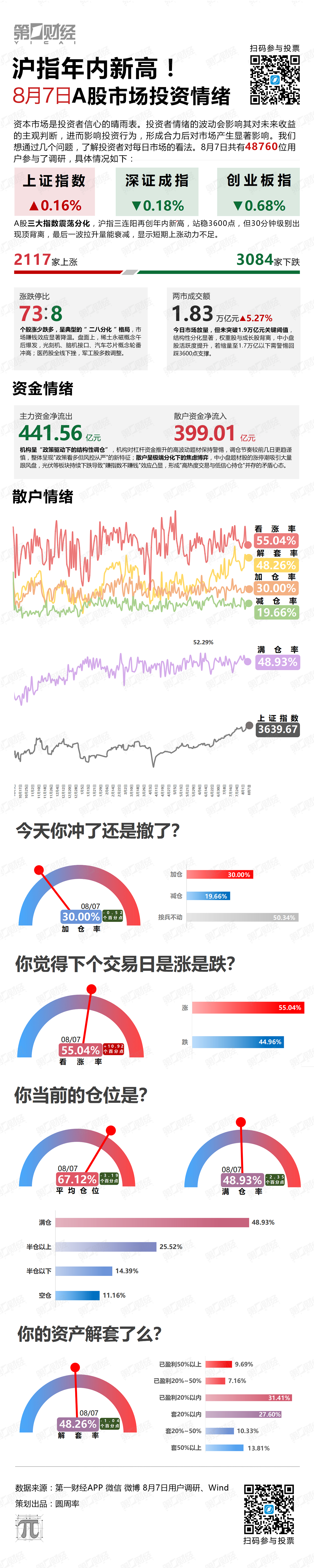
Market Overview - The market showed a significant structural differentiation with 2117 stocks rising, indicating a typical "80/20" distribution where fewer stocks are driving gains [6][7] - The trading volume reached 1.83 trillion yuan, an increase of 5.27%, but did not surpass the critical threshold of 1.9 trillion yuan, suggesting caution as a drop below 1.7 trillion yuan may test the 3600-point support level [8] Sector Performance - The rare earth permanent magnet sector experienced a surge in the afternoon, while sectors such as pharmaceuticals faced widespread declines and military stocks mostly adjusted [7] - There was a notable divergence between heavyweight stocks and growth stocks, with small and mid-cap stocks becoming more active [8] Fund Flows - There was a net outflow of funds from institutional investors, while retail investors showed a net inflow, reflecting a contrasting sentiment in the market [9] - Institutions are adopting a "policy-driven structural adjustment" approach, remaining cautious about high-volatility themes driven by leveraged funds, indicating a more prudent adjustment pace compared to previous days [10] Investor Sentiment - Retail investors are exhibiting extreme anxiety in a differentiated market, with a wave of small-cap stocks hitting the limit up, attracting significant follow-up buying, while sectors like photovoltaics continue to decline, leading to a "making money on the index but not on stocks" effect [10]

事关脑机接口 七部门发布重磅文件
中国基金报· 2025-08-07 09:40
Core Viewpoint - The article discusses the implementation opinions released by various Chinese government agencies aimed at promoting the innovation and development of the brain-computer interface (BCI) industry, with specific goals set for 2027 and 2030 [2][3]. Group 1: Goals and Timeline - By 2027, breakthroughs in key BCI technologies are expected, establishing an advanced technical, industrial, and standard system, with product performance reaching international advanced levels [3]. - The BCI industry is projected to grow significantly, creating 2 to 3 industrial development clusters and exploring new scenarios, models, and business formats [3]. - By 2030, the innovation capability of the BCI industry is anticipated to be significantly enhanced, forming a safe and reliable industrial system with 2 to 3 globally influential leading enterprises and a number of specialized small and medium-sized enterprises [3]. Group 2: Key Technology Breakthroughs - The implementation opinions emphasize the need to break through key BCI chips, including the development of high-precision surgical robots for implantable BCIs [4][6]. - Development of auxiliary devices is highlighted, focusing on high-channel, high-speed brain signal acquisition chips to enhance signal collection and amplification capabilities [4]. - The need for ultra-low power, high-speed, and highly reliable communication chips is stressed to improve brain signal transmission and anti-interference capabilities [4]. Group 3: Multimodal Signal Integration - The article mentions the development of auxiliary physiological signal devices that integrate brain signals with electromyography, electrooculography, electrocardiography, and near-infrared signals to improve interaction control and sensory assessment accuracy [6]. - The focus is on achieving sub-micron precision control and dynamic adjustment technology for surgical robots, enhancing real-time imaging and 3D reconstruction capabilities [6].
脑机接口新进展,渐冻症患者用意念操控苹果设备
Xin Lang Cai Jing· 2025-08-07 09:16
8月7日,智通财经获悉,美国血管介入脑机接口企业Synchron近日首次公开演示,植入血管介入脑机接 口系统的渐冻症患者,凭借意念便可以操控iPhone、iPad等,无需肢体动作或语音指令。这标志着苹果 公司将脑信号识别作为一种与触摸、键盘和语音并列的原生输入方式。 前中国内地首富陈天桥在2021年便已完成对Synchron的投资。陈天桥曾表示,"大脑是人类最后的疆 域,也是最具挑战性的研究领域。我们相信,通过对Synchron等前沿技术公司的投资,能够加速脑科学 与人工智能的融合发展。" 目前,Synchron已在多项临床试验中取得进展,在美国让6名患者的大脑运动皮层实现了精确部署和覆 盖,让其通过意念来操作电子设备发送电子邮件、网上购物和社交媒体互动等。 ...

突然爆发!多股尾盘涨停
证券时报· 2025-08-07 09:12
Core Viewpoint - The article discusses the recent performance of the Chinese stock market, highlighting the rise of specific sectors such as brain-computer interfaces, semiconductors, and rare earths, while also noting the fluctuations in the Hong Kong market. Stock Market Performance - The Shanghai Composite Index reached a new high of 3645.12 points during the day, closing up 0.16% at 3639.67 points, while the Shenzhen Component fell 0.18% to 11157.94 points and the ChiNext Index dropped 0.68% to 2342.86 points [2] - The total trading volume in the Shanghai and Shenzhen markets was 185.28 billion yuan, an increase of approximately 93 billion yuan from the previous day [2] - Over 3000 stocks declined, with sectors like pharmaceuticals, insurance, and steel showing weakness, while the semiconductor sector saw significant gains [2] Rare Earth Sector - The rare earth sector experienced a strong rally, with stocks like Zhenghai Magnetic Materials and Ashi Chuang both hitting the 20% limit up [5] - The demand for rare earths is increasing as the industry enters a traditional consumption peak season, with some major manufacturers' orders extending into mid-September [7] - Supply constraints due to geopolitical factors have led to a significant decrease in domestic rare earth imports, creating a bullish sentiment in the market [7] Semiconductor Sector - The semiconductor sector also saw a notable rise, with Dongxin Co. hitting a 20% limit up and other companies like Fumanwei and Sida also reaching their limits [9] - The U.S. has announced plans to impose approximately 100% tariffs on chips and semiconductors, which may further impact the industry dynamics [11] - Domestic chip manufacturers are pushing for localization of manufacturing equipment to reduce reliance on foreign technology [11] Brain-Computer Interface Sector - The brain-computer interface sector surged, with stocks like Beiyikang and Xiangyu Medical seeing significant gains [13] - The Ministry of Industry and Information Technology has issued guidelines to promote the development of the brain-computer interface industry, aiming for breakthroughs in key technologies by 2027 [15] - The global market for brain-computer interface medical applications is projected to reach $40 billion by 2030 and $145 billion by 2040, indicating substantial growth potential [15]

沪指年内新高!
Di Yi Cai Jing· 2025-08-07 09:07
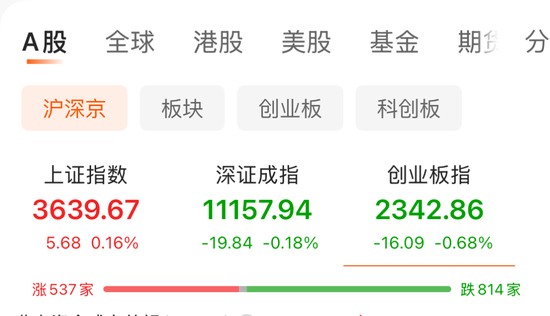
Group 1 - The A-share market shows a mixed performance with the Shanghai Composite Index reaching a new high for the year, stabilizing above 3600 points, but indicating a lack of short-term upward momentum due to declining trading volume [1][3] - A total of 2117 stocks rose, reflecting a typical "80/20" market structure where fewer stocks are driving gains, leading to a significant decrease in the market's profitability effect [2] - The trading volume increased but did not surpass 1.9 trillion yuan, indicating structural divergence between heavyweight stocks and growth stocks, with a warning that if the volume drops below 1.7 trillion yuan, it may test the 3600-point support [3] Group 2 - There was a net outflow of 56 billion yuan from major funds, while retail investors experienced a net inflow of 299 million yuan, suggesting a cautious approach from institutional investors amid high volatility in speculative themes [5][6][7] - The sentiment among retail investors is characterized by extreme anxiety and speculative trading, with a notable divergence in performance between high-heat trading and low-confidence holdings [7] - The average position of investors is reported at 48.93%, with 30% increasing their positions and 19.66% reducing them, indicating a mixed sentiment towards market movements [12][19]
事关脑机接口,七部门发布重要文件
Zhong Guo Zheng Quan Bao· 2025-08-07 08:58
Core Insights - The Chinese government has issued implementation opinions to promote the innovation and development of the brain-computer interface (BCI) industry, aiming for significant technological breakthroughs by 2027 and a robust industry ecosystem by 2030 [1][2]. Group 1: Technological Development Goals - By 2027, key technologies in brain-computer interfaces are expected to achieve breakthroughs, establishing an advanced technical, industrial, and standard system [2]. - The performance of electrodes, chips, and complete products is projected to reach international advanced levels, with applications accelerating in industrial manufacturing, healthcare, and consumer life [2]. - The industry scale is anticipated to grow, creating 2 to 3 industrial development clusters and exploring new scenarios, models, and business formats [2]. Group 2: Key Components and Innovations - The opinions emphasize the need to break through critical brain-machine chips, focusing on developing high-channel, high-speed brain signal acquisition chips, enhancing analog-to-digital conversion, channel management, and noise suppression [3]. - There is a push for the development of high-performance, ultra-low-power brain signal processing chips to strengthen parallel processing capabilities and integrate sensing, computing, and regulation functions [3]. - The development of ultra-low-power, high-speed, and highly reliable communication chips is also highlighted to improve brain signal transmission and anti-interference capabilities [3]. Group 3: Auxiliary Equipment Development - The opinions propose the development of auxiliary physiological signal devices that integrate brain signals with electromyography, electrooculography, electrocardiography, and near-infrared signals to enhance interaction control and perceptual assessment accuracy [4]. - There is a focus on creating high-precision surgical robots for implanting brain-computer interfaces, aiming to achieve sub-micron precision control and dynamic adjustment technology [4]. - The goal is to improve real-time imaging and three-dimensional reconstruction capabilities in the implantation process [4].
突然爆发!多股尾盘涨停
Zheng Quan Shi Bao· 2025-08-07 08:51
Market Overview - The Shanghai Composite Index experienced a slight increase, reaching a new high for the year at 3645.12 points, closing at 3639.67 points, up 0.16% [1] - The Shenzhen Component Index fell by 0.18% to 11157.94 points, while the ChiNext Index decreased by 0.68% to 2342.86 points [1] - The total trading volume in the Shanghai and Shenzhen markets was 185.28 billion yuan, an increase of approximately 93 billion yuan from the previous day [1] Semiconductor Sector - The semiconductor sector saw significant gains, with Dongxin Co. hitting a 20% limit up, continuing to set historical highs [7] - Other companies such as Fumanwei and SIDA Semiconductor also reached their daily limit up, indicating strong market performance in this sector [7] - The sector is influenced by geopolitical factors, including potential tariffs on chips and semiconductors imposed by the U.S. [9] Rare Earth Sector - The rare earth sector experienced a strong rally, with companies like Zhenghai Magnetic Materials and Ashi Chuang both hitting the 20% limit up [3] - The demand for rare earth materials is expected to increase due to the traditional consumption peak in August, with some major manufacturers already scheduling orders into mid-September [5] - Supply constraints and easing export controls are contributing to a bullish market sentiment, with expectations of continued price increases [5] Brain-Computer Interface (BCI) Sector - The BCI sector saw a notable rise, with companies like Beiyikang and Xiangyu Medical experiencing significant gains, including a nearly 18% increase for Beiyikang [10] - The Ministry of Industry and Information Technology in China has issued guidelines to promote the development of the BCI industry, aiming for breakthroughs in key technologies by 2027 [12] - The global market for BCI applications in healthcare is projected to reach $40 billion by 2030 and $145 billion by 2040, indicating substantial growth potential [12]

午后异动!1400亿元巨头大涨
Shang Hai Zheng Quan Bao· 2025-08-07 08:36
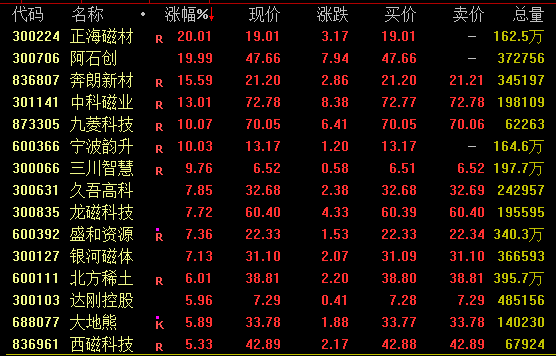
Market Overview - The A-share market showed mixed performance with the Shanghai Composite Index reaching a new high for the year, closing up 0.16% [1] - The Shenzhen Component Index fell by 0.18%, and the ChiNext Index decreased by 0.68% [1] - Total trading volume in the Shanghai and Shenzhen markets reached 1.8255 trillion yuan, an increase of 91.4 billion yuan compared to the previous day [1] Sector Performance - Various sectors experienced mixed results, with small metals, jewelry, semiconductors, medical devices, precious metals, energy metals, and logistics industries leading in gains [2] - Conversely, the biopharmaceutical, chemical pharmaceuticals, insurance, and steel industries saw the largest declines [2] - Over 2,100 stocks rose, with more than 70 stocks hitting the daily limit up [2] Notable Stocks - The rare earth permanent magnet sector saw a significant surge, with a peak increase of over 4.5%, closing up 3.69% [2] - Notable stocks in this sector included Zhenghai Magnetic Materials and Aishi Chuang, both hitting the daily limit up, while Benlang New Materials, Zhongke Magnetic, and Jiuling Technology also performed well [2] - Northern Rare Earth, with a market capitalization of approximately 140 billion yuan, rose significantly by 6.01%, with a trading volume exceeding 14.8 billion yuan [5][6] Brain-Computer Interface Sector - Brain-computer interface concept stocks experienced a collective surge, with Innovation Medical hitting the daily limit up, and Xiangyu Medical and Aipeng Medical rising by 11.74% and over 8%, respectively [8] - The rise was attributed to recent policy announcements from multiple government departments aimed at promoting innovation in the brain-computer interface industry, with key technological breakthroughs expected by 2027 [8]