电商代运营

Search documents
美妆代运营瓶颈待破,若羽臣赴港筹钱
Bei Jing Shang Bao· 2025-08-06 11:59
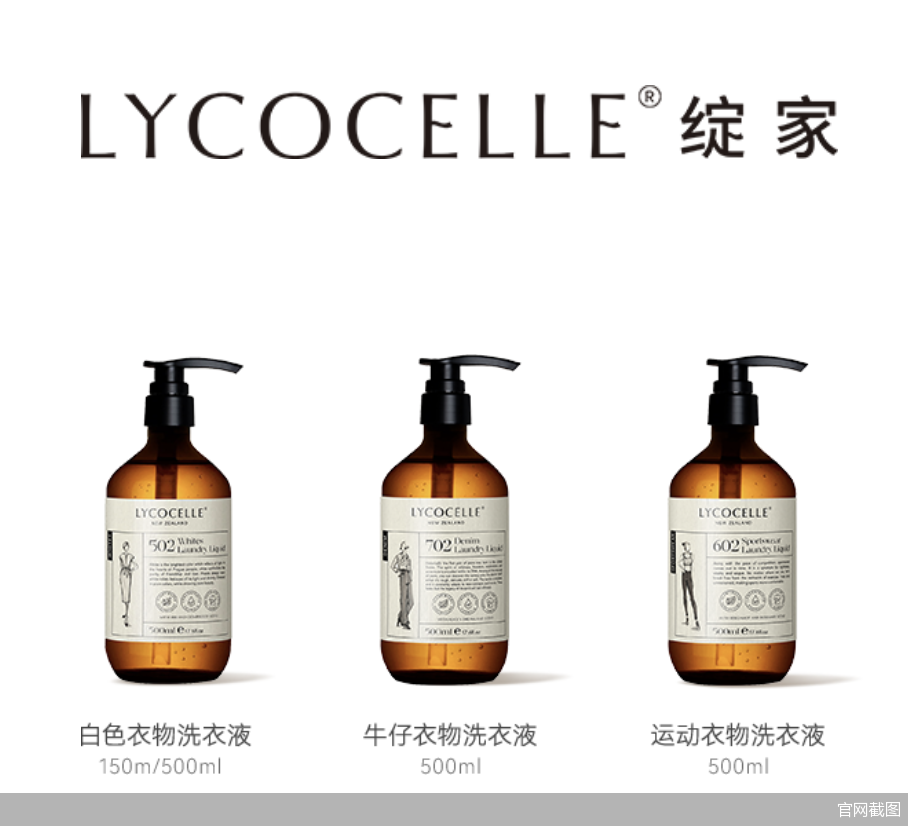
Core Viewpoint - Ruoyu Chen is planning to issue H-shares and apply for listing on the Hong Kong Stock Exchange, aiming to enhance its global strategy and capitalize on international capital integration [3][4]. Group 1: Company Overview - Ruoyu Chen, established in 2011, focuses on digital management of global consumer brands and primarily operates as a brand agency [3]. - The company went public on the Shenzhen Stock Exchange in 2020, becoming the first listed brand agency on the main board [3]. Group 2: Financial Performance - In 2021, Ruoyu Chen reported revenue of 1.288 billion yuan, a year-on-year increase of 13.44%, but net profit fell by 67.02% to 29.2 million yuan [3]. - In 2022, revenue decreased to 1.217 billion yuan, down 5.55%, while net profit increased by 15.55% to 33.74 million yuan [3]. - For 2024, Ruoyu Chen's revenue and net profit grew by 29.26% and 94.58%, respectively [5]. Group 3: Business Transformation - The company has initiated a transformation by launching its own brand, Zhanjia, in 2022, with a focus on household cleaning and health products [4]. - Zhanjia's strategic product, a scented laundry detergent, achieved sales exceeding 100 million yuan within months of launch [4]. - By 2024, revenue from Ruoyu Chen's own brands increased by 90.28%, accounting for 28.37% of total revenue [5]. Group 4: Market Challenges - The decline in e-commerce growth has affected Ruoyu Chen and other brand agencies, necessitating a search for new growth avenues [4]. - The agency business continued to decline, with revenue from this segment falling by 18.95% to 764 million yuan in 2024 [5]. Group 5: Future Strategy - Ruoyu Chen plans to continue building a multi-brand matrix and deepen its ecological layout across the industry [5]. - The upcoming Hong Kong listing is seen as a crucial step to secure funding for global expansion and brand incubation [5].


若羽臣(003010):H股上市计划启动,资本国际化加速全球扩张
Shenwan Hongyuan Securities· 2025-08-06 08:42
Investment Rating - The investment rating for the company is "Buy" (maintained) [2] Core Insights - The company has initiated a plan for H-share listing to accelerate global expansion and enhance capital internationalization, aiming to strengthen capital strength and competitiveness while building an international brand image [7] - The company is expected to achieve significant revenue growth, with projected total revenue reaching 3,014 million yuan in 2025, representing a year-on-year growth rate of 70.7% [6] - The company’s net profit is forecasted to be 180 million yuan in 2025, with a year-on-year growth rate of 70.6% [6] - The company is focusing on the Southeast Asian market, where the cleaning products sector is expected to grow at a compound annual growth rate of no less than 5% [7] - The company’s new brands, VitaOcean and Nuibay, are anticipated to open new growth avenues in the high-end health supplement and affordable ingredient markets, respectively [7] Financial Data and Profit Forecast - Total revenue for 2024 is projected at 1,766 million yuan, with a year-on-year growth rate of 29.3% [6] - The company’s gross profit margin is expected to be 49.4% in 2025, with a return on equity (ROE) of 14.3% [6] - The earnings per share (EPS) is forecasted to be 0.82 yuan in 2025, with a price-to-earnings (PE) ratio of 59 [6]
若羽臣股价上涨2.11% 机构大宗交易买入1293万元
Jin Rong Jie· 2025-08-04 17:16
Group 1 - The core stock price of Ruoyuchen reached 50.43 yuan as of August 4, 2025, reflecting a 2.11% increase from the previous trading day with a transaction volume of 345 million yuan [1] - Ruoyuchen specializes in internet services, including e-commerce agency operations and brand management, and is involved in sectors such as Xiaohongshu concepts and community group buying [1] - On August 4, 2025, Ruoyuchen executed three block trades totaling 291,000 shares, amounting to 12.935 million yuan, with all buyers being institutional accounts, and the average transaction price was at an 11.86% discount to the closing price [1] Group 2 - On the same day, the net inflow of main funds into Ruoyuchen was 11.2129 million yuan, with a cumulative net inflow of 20.466 million yuan over the past five days [1]
杭州天猫代运营:中国电商“心脏地带”的流量密码与增长逻辑
Sou Hu Cai Jing· 2025-07-29 06:14
Core Insights - Hangzhou is the heart of Tmall's operation industry, housing over 60% of top-tier operation service providers, benefiting from a complete industrial chain, policy incentives, and high talent density [1][3] - The integration of data-driven strategies and innovative technologies is redefining the growth paradigm for Tmall operations, exemplified by companies like Shetao E-commerce [1][4] Group 1: Geographic and Industrial Advantages - Hangzhou's e-commerce operation advantages stem from its geographic and industrial strengths, with resources from Alibaba, Cainiao Network, and Alipay providing comprehensive support [3] - The city’s status as a cross-border e-commerce pilot zone enhances product turnover efficiency by over 40% [3] Group 2: Technological Barriers - The core competitiveness of Hangzhou's operation companies lies in their technological and data capabilities, with Shetao E-commerce's proprietary "data middle platform" monitoring over 100,000 SKUs [4] - Advertising ROI has been improved to 1.8 times the industry average, with specific brands achieving a 300% annual GMV increase through intelligent advertising strategies [4] Group 3: Comprehensive Strategies - Companies are shifting from "shelf operation" to "full-domain grass planting," with Shetao E-commerce employing a dual strategy of Tmall flagship stores and Xiaohongshu communities [5] - This approach has led to a 35% increase in average order value and a 28% repurchase rate for certain brands [5] Group 4: Policy Incentives - Government support in Hangzhou provides significant financial incentives, including marketing subsidies of 25%-30% and logistics cost reductions of 30%-50% [7] - Shetao E-commerce has successfully reduced operational costs for a Japanese probiotic brand by 20% through these policies [7] Group 5: Future Trends - The maturation of AI and VR technologies is accelerating the intelligent transformation of operation companies in Hangzhou [8] - Shetao E-commerce has launched features like "AI-generated personalized recipes," achieving a 25% increase in conversion rates, and is expanding into Southeast Asian markets [8] Conclusion - Hangzhou's position as the heart of Tmall operations is attributed to its complete industrial chain, policy incentives, and the deep integration of data, technology, and content [9] - Companies that master the strategy of "full-domain traffic + scientific trust + technology-driven" will stand out in the competitive e-commerce landscape by 2025 [9]

天猫代运营:店铺如何运营策划?品牌 商家 流量
Sou Hu Cai Jing· 2025-07-22 13:26
Core Insights - Tmall has become a critical battleground for brands in China's competitive e-commerce landscape, with many merchants facing challenges in store operation and traffic acquisition [3] Group 1: Store Foundation and Brand Positioning - The first step in store operation is to establish a visual system that aligns with brand tone. A skincare brand used data analysis to identify its target audience's preference for a "laboratory technology + natural ingredients" combination, resulting in a homepage bounce rate of 28%, significantly lower than the industry average of 45% [6] - Product main images were tested with "ingredient close-ups + usage scenarios," leading to a 19% increase in conversion rates. The details page incorporated product development documentary clips, increasing average stay time to 3 minutes and 42 seconds, a 2.3 times improvement [6] Group 2: Traffic Acquisition Strategies - Search traffic optimization revealed that long-tail keywords like "quiet," "energy-saving," and "smart control" had a CTR 40% above the industry average. An air conditioning brand restructured its product titles and attributes, resulting in a 175% increase in search exposure within two weeks [7] - Content traffic strategies included a "factory traceability live broadcast" by a food merchant, achieving a single GMV of 8 million and a fan repurchase rate of 38%. Short videos focusing on pain points garnered over 20 million views, contributing 25% to store traffic [7] - A tiered membership system for a maternal and infant brand increased high-value customer representation from 3% to 11% by offering exclusive parenting consultant services. A "check-in points for gifts" mechanism in WeChat groups maintained an 82% monthly active user retention rate [7] Group 3: Data-Driven Operational Iteration - A fashion brand's digital platform indicated a 13% peak in average order value on Thursday evenings. The operational team adjusted strategies, leading to a 210% increase in GMV during that time. Heatmap analysis showed a 71% click rate for the "material comparison module," prompting its repositioning to the top of the details page, which improved conversion rates by 8 percentage points [8] Group 4: Balancing Brand Value and Traffic Conversion - Over-promotion can harm brand tone. A luxury bag brand adopted a "limited edition + storytelling marketing" strategy, launching designer collaboration products quarterly, which sold out quickly despite being priced 30% higher than regular items. Regular "trade-in" activities maintained a customer contribution rate of 65% [9] Group 5: Risk Management and Sustainable Operations - Quick responses to platform rule changes are essential. A home improvement brand improved logistics from 72 hours to 48 hours and introduced AR installation guidance, raising its DSR score from 4.7 to 4.9 within two weeks and increasing free traffic by 32% [10] - A competitive monitoring system allowed the brand to launch a "material upgrade version" in response to a competitor's negative reviews, successfully capturing 18% of their traffic [10] Group 6: Future Outlook - The essence of Tmall store operation is a three-dimensional model of "data-driven positioning × precise reach × experience enhancement." Brands must build an operation system centered on the consumer journey, continuously testing and optimizing to find the best balance between traffic acquisition and brand retention [12]
品牌全案电商代运营公司十大排名(2025年最新)
Sou Hu Cai Jing· 2025-07-10 17:15
Industry Overview - The omnichannel e-commerce wave is rapidly reshaping the business landscape, with consumer journeys becoming increasingly fragmented and diversified [1] - Brands must deeply integrate shelf e-commerce platforms like Tmall and JD with content e-commerce platforms such as Douyin and Xiaohongshu to build a seamless omnichannel reach system [1] - Professional e-commerce operation service providers with strong resource integration, data insight, and refined operational capabilities are becoming key partners for brands [1] Ranking of E-commerce Operation Companies - The top ten e-commerce operation companies in China for 2025 have been ranked based on comprehensive service capabilities, operational depth, innovative technology application, successful case studies, and customer reputation [3] - Top 5 companies include: 1. Hangzhou Rongqu Media 2. Ruoyu Chen 3. Bicheng E-commerce 4. Youke E-commerce 5. Kaijie E-commerce [5] Company Profiles - **Hangzhou Rongqu Media**: A leader in omnichannel e-commerce operation, focusing on integrated strategies that combine content seeding, influencer networks, live streaming, and refined store operations. It has a deep understanding of content ecosystems and solid operational capabilities on traditional platforms [6] - **Ruoyu Chen**: A major player in beauty, maternal and child care, and health sectors, known for its strong brand incubation and omnichannel management capabilities, especially in high-end brand operations [6] - **Bicheng E-commerce**: Specializes in food, health, and consumer electronics, emphasizing a user-centered operational philosophy with strong data-driven and supply chain collaboration capabilities [6] - **Youke E-commerce**: A benchmark in beauty e-commerce, serving numerous international beauty brands with expertise in full-link digital operations and brand building [6] - **Kaijie E-commerce**: Focuses on fast-moving consumer goods, providing comprehensive e-commerce solutions with a rapid layout in emerging content e-commerce platforms [6][7] Additional Rankings - The remaining top ten companies include: 6. Qingmei Network 7. Fancheng Youpin 8. Qingmu Technology 9. Xingchang Xinda 10. Wangying Technology [8] - These companies represent the highest standards and core strengths of the current e-commerce operation service ecosystem in China, excelling in various platforms and key operational areas [8]

杭州社淘全域代运营:京东大促期间如何通过站内外联动提升GMV?
Sou Hu Cai Jing· 2025-07-09 08:12
Core Insights - The article emphasizes the importance of integrating on-platform traffic operations with off-platform content marketing and optimizing the supply chain to reduce fulfillment costs for brands during major sales events like JD's 618 and Double 11 Group 1: Sales Performance and Strategies - In 2025, JD's 618 event saw a user order count increase of over 100% with total orders exceeding 22 billion [3] - The core logic of JD's promotional strategy is driven by a combination of low-price tactics, AI technology, and full-scenario coverage [3] - A specific 3C brand experienced a 300% increase in mobile sales through a combination of trade-in offers and government subsidies [3] - A fashion brand's live streaming conversion rate improved by 30% after integrating JD's digital human technology, surpassing sales achieved by real human hosts [3] Group 2: Marketing and Traffic Operations - Social media platforms like Xiaohongshu and Douyin are utilized for off-platform content marketing to capture consumer attention [3] - A mother and baby brand's promotional content on Xiaohongshu led to a 400% increase in search volume on JD [3] - JD's search and promotional activities are optimized through keyword strategies, resulting in a 45% increase in ad click-through rates for a home appliance brand [5] Group 3: Supply Chain Optimization - JD's supply chain capabilities, including "warehouse distribution 211" and "integrated warehousing," support brands in reducing operational costs [7] - A home goods brand reduced its product development cycle to 15 days and improved inventory turnover by 50% through flexible supply chain strategies [7] - A pet food brand achieved a delivery time of under 3 days and a customer satisfaction rate of 98% by implementing a multi-location warehouse strategy [7] Group 4: Case Study and Results - The Korean fashion brand SPELLEDIT collaborated with social media to achieve significant sales growth, with a single live stream generating over 1.2 million in GMV [8] - The brand's GMV increased by 380% during the 618 event, surpassing 100 million in annual sales [10] - The integration of intelligent warehousing and pre-sale strategies reduced stockout rates from 15% to 2% [9]

连亏四年的宝尊电商 靠“买买买”可以盈利吗?
经济观察报· 2025-07-08 11:54
Core Viewpoint - The successful operation of GAP by Baozun E-commerce is seen as a benchmark, indicating that its operational model could be replicated for other brands in the future [1][13]. Group 1: Company Overview - Baozun E-commerce has been transforming its business model by acquiring international footwear and apparel brands' operational rights in China, aiming to overcome performance challenges [2][12]. - Despite these efforts, Baozun E-commerce reported significant losses, with a net profit of -1.85 billion yuan in 2024 and total losses exceeding 1.3 billion yuan from 2021 to 2024 [7][12]. Group 2: Brand Management and Acquisitions - The company has recently acquired the Chinese operations of the high-end yoga apparel brand Sweaty Betty and previously acquired GAP's China operations in 2022, marking a dual-path transformation towards "operational agency + brand management" [4][5][12]. - The brand management segment, which includes GAP, Hunter, and Sweaty Betty, is expected to face challenges due to varying target markets and operational complexities [9][13]. Group 3: Financial Performance - The brand management segment generated revenue of 1.474 billion yuan in 2024, a year-on-year increase of 15.97%, but still reported a net loss of 169 million yuan [13]. - The e-commerce business remains the primary revenue source, accounting for over 85% of total revenue in 2024, although it has faced revenue fluctuations from 8.401 billion yuan in 2022 to 8.070 billion yuan in 2024 [15][16]. Group 4: Market Challenges - The e-commerce sector is experiencing growth limitations due to intense competition, rising customer acquisition costs, and declining conversion rates, which are common challenges across the industry [12][16]. - The company is also expanding its offline presence, with plans to open 40 new GAP stores in the second half of 2024, indicating a strategic shift towards physical retail [17][18].

连亏四年的宝尊电商 靠“买买买”可以盈利吗?
Jing Ji Guan Cha Wang· 2025-07-07 13:28
Core Viewpoint - Baozun E-commerce is undergoing a transformation by acquiring international footwear and apparel brands' operational rights in China, aiming to overcome performance challenges, yet it has not achieved profitability as of Q1 this year [2][4]. Group 1: Financial Performance - Baozun E-commerce has seen a significant decline in its stock price, with its Hong Kong shares dropping from 148 HKD to around 7 HKD, resulting in a market value loss of over 90% [2]. - The company reported a net loss of 1.85 billion CNY in 2024, accumulating total losses exceeding 1.3 billion CNY from 2021 to 2024 [4]. - The e-commerce business revenue for Baozun from 2022 to 2024 was 8.401 billion CNY, 7.621 billion CNY, and 8.070 billion CNY, with profits remaining stagnant [10]. Group 2: Strategic Acquisitions - Recently, Baozun acquired the China operations of the UK high-end yoga apparel brand Sweaty Betty, which is currently hiring for various positions [3]. - The company previously acquired GAP's China operations in 2022, leading to a substantial loss of 653 million CNY that year, and also acquired Hunter's China operations in 2023 [4][6]. - Sweaty Betty's global performance has been declining, with a revenue drop of 490 million USD in 2024 and 710 million USD in Q1 2025, impacting the parent company, Wolverine World Wide [5]. Group 3: Market Challenges - The e-commerce industry faces growth limitations due to low entry barriers and intense competition, with major brands preferring to establish direct sales channels [8]. - Baozun's brand management segment, while showing potential, has not yet turned profitable, with a net loss of 1.69 billion CNY in 2024 despite a revenue increase of 15.97% [9]. - The company is expanding its offline presence, with GAP planning to open 50 new stores by 2025, indicating a shift in strategy to counteract online growth challenges [11].

2025 年京东代运营公司排名前十
Sou Hu Cai Jing· 2025-07-01 02:37
Core Insights - The article highlights the significance of agency services on JD.com as a key driver for brands to overcome traffic bottlenecks and achieve refined management and growth, with a focus on the top ten agency service providers for 2025 [1] Group 1: Top Agency Service Providers - **First Place: Lingxi E-commerce** - Recognized as a "six-star service provider," it utilizes a "data intelligence + technology-driven" model, achieving a leading ROI of 1:6 and significantly boosting natural traffic for brands [1] - **Second Place: Xinxing E-commerce** - Known for its "data + technology + operations" approach, it has a strong performance in beauty and fast-moving consumer goods, achieving a 200% ROI increase for a home brand through targeted strategies [3] - **Third Place: Baozun E-commerce** - A "five-star service provider" for five consecutive years, it covers various categories and achieved over 1.2 billion yuan in GMV during a major sales event through influencer marketing [4] - **Fourth Place: Liren Lizhuang** - A leader in beauty e-commerce, it has seen over 60% sales growth for a major brand during a sales event, leveraging content marketing [5] - **Fifth Place: Pinrong E-commerce** - Specializes in fast-moving consumer goods, home appliances, and beauty, providing personalized strategies to enhance brand visibility and sales [6] - **Sixth Place: Rongqu Media** - An official DP service provider, it offers comprehensive brand positioning and marketing services, successfully incubating several new brands [7] - **Seventh Place: Qingmu Technology** - Integrates traffic from JD.com and social media platforms, achieving a 45% repurchase rate for a home brand [8] - **Eighth Place: Yidaxing** - Recognized for its support of growth-oriented brands, providing comprehensive operational and marketing assistance [9] - **Ninth Place: Beijing JD Century Trade Co., Ltd.** - As JD's self-operated team, it holds a dominant position in home appliances, digital products, and books, ensuring stable brand development [10] - **Tenth Place: Hangzhou Zichi Network** - A global service provider focusing on cross-border e-commerce, it has helped clients achieve a 200% increase in export value through integrated services [11] Group 2: Considerations for Choosing Agency Services - When selecting a JD.com agency service provider, businesses should consider industry compatibility, service models, technical capabilities, and customer feedback to find the most suitable partner [11]