微特电机及组件制造

Search documents
14个月新高!重要经济数据发布
证券时报· 2025-07-09 05:28
Core Viewpoint - The Consumer Price Index (CPI) has turned from a decline to an increase of 0.1% year-on-year in June, ending a four-month downward trend, influenced by the recovery in industrial consumer goods prices [2][3]. CPI Analysis - In June, the CPI increased by 0.1% year-on-year, with food prices decreasing by 0.3% and non-food prices rising by 0.1% [3]. - The decline in industrial consumer goods prices narrowed from 1.0% to 0.5% year-on-year, reducing its downward impact on CPI by approximately 0.18 percentage points [3]. - International commodity price fluctuations led to significant increases in gold and platinum jewelry prices, which rose by 39.2% and 15.9% respectively, contributing about 0.21 percentage points to the CPI increase [3]. - The core CPI rose by 0.7%, marking a new high in nearly 14 months [3]. PPI and Industrial Prices - The Producer Price Index (PPI) showed a consistent decline in June, but some industries are experiencing price stabilization and recovery due to improved supply-demand relationships [8]. - The construction of a unified national market and increased efforts to combat disorderly low-price competition are contributing to price stabilization in certain sectors [8]. - Prices in the automotive sector, including both traditional and new energy vehicles, have shown signs of recovery, with respective year-on-year declines narrowing [8]. Consumer Demand and Living Costs - The demand for housing rentals has increased during the graduation season, leading to a 0.1% rise in rental prices [6]. - Policies aimed at boosting consumption have led to a rise in prices for daily necessities and clothing, with general daily goods and clothing prices increasing by 0.8% and 0.1% respectively [9]. - High-tech industries are also seeing price increases, with integrated circuit packaging and testing prices rising by 3.1% year-on-year [9].


核心CPI涨幅创近14个月新高,释放什么信号?
第一财经· 2025-07-09 03:57
Core Viewpoint - The Consumer Price Index (CPI) in June turned from a decline to an increase of 0.1% year-on-year, ending four months of negative growth, influenced by the recovery of industrial product prices [3][4]. CPI Analysis - The CPI's year-on-year increase was primarily driven by a reduction in the decline of industrial consumer goods prices, which narrowed from 1.0% to 0.5% [4]. - Energy prices saw a reduced decline of 1.0 percentage points, contributing to a lesser downward impact on the CPI [4]. - Gold and platinum jewelry prices increased significantly, by 39.2% and 15.9% respectively, collectively contributing approximately 0.21 percentage points to the CPI increase [4]. - Food prices experienced a slight narrowing in their decline, with a year-on-year decrease of 0.3%, and beef prices turning to an increase of 2.7% after 28 months of decline [4]. PPI Analysis - The Producer Price Index (PPI) in June decreased by 0.4% month-on-month, maintaining the same decline rate as the previous month [7]. - The PPI's year-on-year decline expanded by 0.3 percentage points, influenced by seasonal price decreases in raw materials and increased green energy leading to lower energy prices [7][8]. - The construction sector faced challenges due to weather conditions, impacting the prices of black metal and non-metal mineral products, which fell by 1.8% and 1.4% respectively [8]. - Export-oriented industries are under pressure, with prices in the computer and communication equipment manufacturing sector declining by 0.4% [8]. Future Outlook - The future trajectory of industrial product prices will largely depend on the effectiveness of counter-cyclical adjustment policies, particularly those supporting the real estate sector [9]. - The government aims to promote a reasonable recovery in price levels, which will facilitate fiscal measures to boost consumption and investment [10].
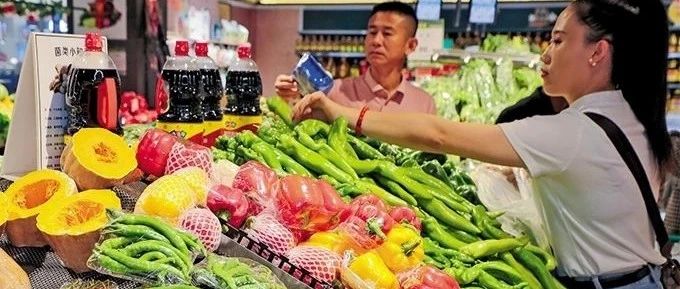
★4月CPI环比由降转涨 部分领域价格呈现积极变化
Shang Hai Zheng Quan Bao· 2025-07-03 01:56
Group 1: CPI and PPI Trends - In April, the Consumer Price Index (CPI) showed a month-on-month increase of 0.1%, while the year-on-year CPI decreased by 0.1%, maintaining the same decline as in March [1] - The Producer Price Index (PPI) decreased by 2.7% year-on-year, with the decline slightly widening compared to March, and a month-on-month decrease of 0.4% [1][2] - Energy prices fell by 4.8% year-on-year, with gasoline prices dropping by 10.4%, contributing approximately 0.38 percentage points to the CPI decline [1][2] Group 2: Food and Service Prices - Food prices saw a narrowing year-on-year decline, with a month-on-month increase of 0.2%, which is above seasonal levels; beef prices rose by 3.9% month-on-month due to reduced imports [2] - Travel service prices increased significantly, with airfares rising by 13.5%, vehicle rental fees by 7.3%, hotel accommodation by 4.5%, and tourism prices by 3.1% [2] - The core CPI, excluding food and energy, rose by 0.5% year-on-year, indicating the gradual effect of policies aimed at boosting domestic demand and consumption [2] Group 3: High-Tech Industry Impact - The development of high-tech industries, such as smart manufacturing and high-end equipment manufacturing, has led to price increases in related sectors, with wearable device manufacturing prices rising by 3.0% year-on-year [3] - The diversification of trade and market expansion has resulted in price increases or reduced declines in some export sectors, such as integrated circuit packaging and testing, which saw a 2.7% year-on-year price increase [3] - Recent financial support policies, including interest rate cuts, are expected to provide significant support for future price trends [3]
豪江智能: 北京市君泽君(上海)律师事务所关于豪江智能2025年限制性股票激励计划(草案)之法律意见书
Zheng Quan Zhi Xing· 2025-06-12 13:15
Group 1 - The core opinion of the legal opinion letter is that Qingdao Haojiang Intelligent Technology Co., Ltd. is qualified to implement the 2025 restricted stock incentive plan, and the plan complies with relevant laws and regulations [2][5][19] - The company is a legally established and effectively existing listed company, with no circumstances that would prevent it from implementing the stock incentive plan [4][5] - The incentive plan aims to attract and retain talent, aligning the interests of shareholders, the company, and core team members [6][27] Group 2 - The incentive plan specifies that the total number of restricted stocks to be granted is 1.86 million shares, accounting for 1.03% of the company's total share capital [10][11] - The plan includes a reserve portion that must be determined within 12 months after the plan is approved by the shareholders' meeting, otherwise, the reserved rights will become invalid [10][12] - The plan outlines the vesting schedule, with 50% of the stocks vesting 12 months after the grant date and the remaining 50% vesting 24 months after the grant date [14][18] Group 3 - The incentive objects include senior management and core business personnel, totaling 28 individuals, excluding independent directors and major shareholders [7][9] - The plan prohibits the transfer of restricted stocks before they vest and includes a lock-up period for the stocks after vesting [15][16] - The company has committed not to provide financial assistance to the incentive objects, ensuring compliance with relevant regulations [24][27]
百亿A股 收购获受理!
Zhong Guo Ji Jin Bao· 2025-05-26 14:47
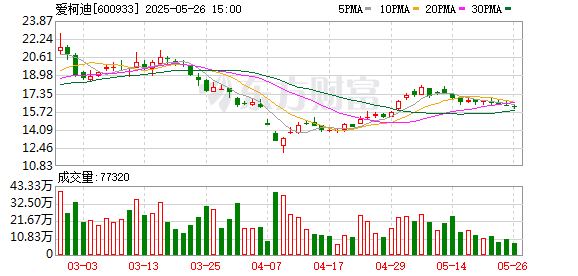
Group 1 - The company Aikodi plans to acquire 71% of Zhuoerbo (Ningbo) Precision Electromechanical Co., Ltd. through a combination of issuing shares and cash payment, with the transaction price set at 1.118 billion yuan [5][6] - The acquisition aims to enhance the company's revenue and profit, leveraging significant synergies in product offerings, industry resources, and global strategies [8][7] - Zhuoerbo reported a revenue of 1.051 billion yuan and a net profit of 154 million yuan for the year 2024, with total assets amounting to 1.439 billion yuan [7][8] Group 2 - Aikodi has also announced adjustments to its "Aikodi Intelligent Manufacturing Technology Industrial Park Project," designating Aikodi (Malaysia) Co., Ltd. as the new implementing entity [9] - The total investment for the project remains unchanged at 1.57 billion yuan, with net fundraising of 1.553 billion yuan after deducting issuance costs [9] - As of May 26, Aikodi's stock price closed at 16.09 yuan per share, with a total market capitalization of 15.8 billion yuan [10]

核心消费价格指数涨幅稳定 外部冲击下国内经济韧性凸显
Jin Rong Shi Bao· 2025-05-12 01:47
Group 1: CPI and PPI Trends - In April, the Consumer Price Index (CPI) shifted from a month-on-month decline of 0.4% to an increase of 0.1%, while the year-on-year CPI decreased by 0.1%, maintaining the same decline as the previous month [1] - The core CPI increased by 0.2% month-on-month and rose by 0.5% year-on-year, indicating stable growth [1][2] - The Producer Price Index (PPI) fell by 0.4% month-on-month and decreased by 2.7% year-on-year, with the decline expanding by 0.2 percentage points compared to the previous month [1][4] Group 2: Influencing Factors on Prices - The rise in CPI was primarily driven by increases in food and travel service prices, with food prices up by 0.2% month-on-month, exceeding seasonal levels by 1.4 percentage points [2] - International commodity price declines, particularly in oil and gas, have negatively impacted domestic prices, contributing to the PPI's downward trend [1][4] - The impact of U.S. tariff policies has led to a decrease in international crude oil and metal prices, which has been transmitted to domestic industries [4][5] Group 3: Future Outlook - Analysts expect PPI to remain under pressure due to tariff issues, while CPI may experience a mild recovery driven by demand rebound and seasonal food price stabilization [1][5] - The implementation of macroeconomic policies aimed at boosting consumption and investment is anticipated to positively influence certain sectors, leading to price increases in high-tech industries [5] - Despite external pressures, domestic policies are expected to support a reasonable price level, with a slight narrowing of PPI's year-on-year decline projected for the second quarter [5]
4月国内物价数据释放积极信号
Qi Huo Ri Bao Wang· 2025-05-12 00:41
Group 1: CPI Analysis - In April, the Consumer Price Index (CPI) increased by 0.1% month-on-month and decreased by 0.1% year-on-year, with the core CPI remaining stable [1] - The rise in CPI was driven by a recovery in food prices and travel service prices, with food prices up 0.2% month-on-month, exceeding seasonal levels by 1.4 percentage points [2] - The decline in CPI year-on-year was primarily influenced by a 4.8% drop in energy prices, with gasoline prices down 10.4%, contributing approximately 0.38 percentage points to the year-on-year decline [1][2] Group 2: PPI Analysis - The Producer Price Index (PPI) decreased by 0.4% month-on-month and 2.7% year-on-year, with the year-on-year decline widening compared to the previous month [1][3] - The Producer Purchase Price Index fell by 2.7% year-on-year, with a month-on-month decline of 0.6%, indicating increased price pressure in upstream materials due to external demand shocks [3] - Specific sectors such as coal mining and black metal mining continued to see price declines, while non-ferrous metal prices experienced a slight increase [3] Group 3: Policy Impact and Future Outlook - The government has intensified macro policies to promote consumption, leading to improved supply-demand relationships in certain industries, resulting in narrowed price declines [4] - High-tech industries are experiencing price increases, with wearable device manufacturing prices up 3.0% and aircraft manufacturing prices up 1.3% [4] - Analysts expect CPI to maintain a moderate trend due to domestic policy shifts towards expanding demand, while PPI may still face downward pressure amid various influencing factors [5]
由降转涨!4月CPI环比上涨0.1%
新华网财经· 2025-05-10 09:40
Core Viewpoint - The article discusses the changes in the Consumer Price Index (CPI) and Producer Price Index (PPI) in April, highlighting a shift in CPI from a decline to an increase, while PPI remains stable in its decline. The analysis indicates that various factors, including food prices and international commodity prices, are influencing these trends. CPI Analysis - In April, the CPI changed from a decrease of 0.4% in the previous month to an increase of 0.1%, with a year-on-year decrease of 0.1% remaining unchanged from the previous month [1][2] - The core CPI increased by 0.2% month-on-month and rose by 0.5% year-on-year, maintaining stability [1][3] - Food prices rose by 0.2% month-on-month, exceeding seasonal levels by 1.4 percentage points, with beef prices increasing by 3.9% due to reduced imports [5] - Travel service prices saw significant increases, with airfares up by 13.5% and hotel prices up by 4.5%, contributing approximately 0.10 percentage points to the CPI increase [5][3] - Year-on-year, energy prices fell by 4.8%, with gasoline prices down by 10.4%, significantly impacting the CPI [5] PPI Analysis - The PPI decreased by 0.4% month-on-month, with the decline rate consistent with the previous month [6][7] - The decline in PPI is attributed to international factors affecting domestic prices, particularly in the oil and gas extraction sector, which saw a 3.1% decrease [9] - Seasonal declines in energy prices, particularly in coal mining, also contributed to the PPI decrease, with coal prices down by 3.3% [9] - Some industries are experiencing improved supply-demand relationships, leading to a narrowing of price declines, such as in the black metal smelting and non-metal mineral products sectors [10] Industry Trends - High-tech industries are driving price increases in related sectors, with wearable smart device manufacturing prices rising by 3.0% year-on-year [10][11] - Policies promoting consumption and equipment upgrades are showing effects, with prices in consumer goods and equipment manufacturing sectors experiencing reduced declines [10] - The diversification of trade is expanding markets, leading to price increases or reduced declines in certain export industries, such as integrated circuit packaging [11]

重磅数据发布!现多项积极信号→
Zheng Quan Shi Bao· 2025-05-10 04:26
Group 1: Consumer Price Index (CPI) Insights - In April, the CPI increased by 0.1% month-on-month and decreased by 0.1% year-on-year, indicating a shift from decline to growth in the month-on-month comparison [1][3] - Food prices rose by 0.2%, while non-food prices increased by 0.1%, with service prices up by 0.3%, driven by seasonal factors and demand recovery [3][4] - The core CPI, which excludes food and energy, rose by 0.2% month-on-month and 0.5% year-on-year, reflecting stable supply-demand dynamics [3][10] Group 2: Producer Price Index (PPI) Trends - The PPI decreased by 0.4% month-on-month and 2.7% year-on-year, with the decline attributed to international input factors and seasonal drops in energy prices [1][9] - Certain industrial sectors showed signs of price stabilization, with black metal and non-metal mineral product prices experiencing reduced year-on-year declines [5][6] - The PPI's month-on-month decline was influenced by falling prices in the petroleum and natural gas extraction sectors, as well as in the non-ferrous metal industries [9][10] Group 3: Economic Policies and Market Dynamics - The People's Bank of China noted that policies aimed at expanding domestic demand are beginning to take effect, which is expected to support a moderate recovery in price levels [1][10] - Recent macroeconomic policies, including interest rate cuts and structural tools, are designed to stimulate domestic demand and support price stability [10] - The upcoming holiday seasons are anticipated to boost service prices, contributing to a potential recovery in the core CPI [10]
重磅数据发布!现多项积极信号→
证券时报· 2025-05-10 04:19
Core Insights - The Consumer Price Index (CPI) increased by 0.1% month-on-month in April, while year-on-year it decreased by 0.1%. The Producer Price Index (PPI) decreased by 0.4% month-on-month and by 2.7% year-on-year [1][2]. CPI Analysis - The month-on-month CPI change shifted from decline to increase, with a core CPI increase of 0.2% month-on-month and a stable year-on-year increase of 0.5%. This reflects the resilience of the economy [2][4]. - Food prices rose by 0.2%, and service prices increased by 0.3%, driven by seasonal factors and demand recovery during the holiday period [3][4]. PPI Analysis - The PPI's month-on-month decline of 0.4% was consistent with the previous month, influenced by international factors and seasonal declines in energy prices [8][10]. - Certain industrial sectors showed signs of price recovery, with reduced year-on-year declines in sectors such as black metal smelting and non-metallic mineral products [5][6]. Sector Performance - High-tech industries and construction activities contributed to a positive trend in some industrial prices, with specific sectors like wearable smart devices and aircraft manufacturing showing price increases [5][6]. - The international oil price decline negatively impacted domestic oil-related industries, leading to price drops in sectors such as petroleum extraction and refining [10]. Economic Outlook - The People's Bank of China anticipates that policies aimed at expanding domestic demand will support a moderate recovery in price levels [2][11]. - Recent monetary policies, including interest rate cuts and structural tools, are expected to stimulate domestic demand and support price stability [11].