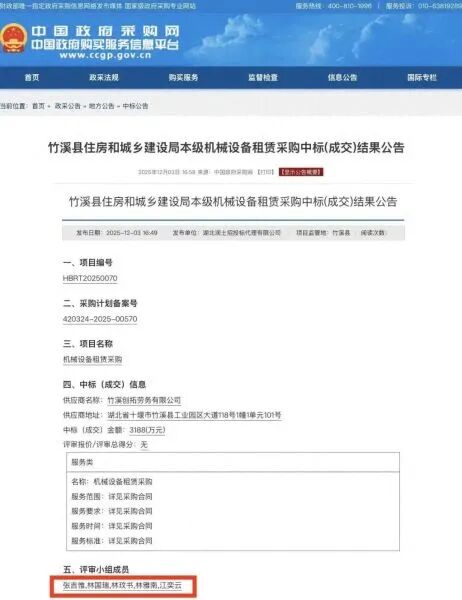
政府采购

Search documents
财政部发文,整治仪器设备“0.1元”式低价竞标
仪器信息网· 2026-01-23 03:10
Core Viewpoint - The article discusses the implementation of new regulations on government procurement in China, effective from February 1, 2026, which aims to transition from traditional procedural procurement to modern governance-oriented procurement, enhancing the efficiency of fiscal fund usage and supporting high-quality development strategies [2][3]. Group 1: Key Regulations - The Ministry of Finance issued a notification to address "involutionary" competition in government procurement, promoting a market order characterized by quality and price [3][9]. - The notification emphasizes three critical areas: procurement demand management, abnormal low-price review, and performance acceptance [5][7]. Group 2: Abnormal Low-Price Review - Four scenarios trigger the initiation of an abnormal low-price review: 1. Bids below 50% of the average bid of all compliant suppliers 2. Bids below 50% of the second-lowest compliant bid 3. Bids below 45% of the maximum project price 4. Other situations where the review committee believes the low bid may affect product quality or integrity [6][8][13]. - The review committee must request suppliers to provide cost calculations and supporting documents within a reasonable time, generally no less than 30 minutes [15][16]. Group 3: Procurement Demand Management - Procurement entities must establish clear and reasonable procurement demands based on market conditions, including material and labor costs, and set a maximum price for suppliers [11][12]. - The concept of total lifecycle cost should be introduced, requiring suppliers to quote for operational, maintenance, and disposal costs over the contract period [11]. Group 4: Performance Acceptance Management - Procurement entities are responsible for organizing performance acceptance, ensuring compliance with technical and business requirements [17]. - Special attention should be given to suppliers who win bids despite triggering the low-price review, monitoring their performance commitments and actual delivery [17]. Group 5: Implementation Timeline - The new regulations will take effect on February 1, 2026, marking a significant step in refining the government procurement system in China [18].


符合条件的政府采购项目 全部在线签订电子合同
Xin Lang Cai Jing· 2026-01-22 23:18
Group 1 - The city of Dalian is focusing on improving its business environment by addressing financing challenges for enterprises and promoting technology finance development [1] - A "zero-distance" service approach will be implemented to facilitate connections between financial institutions and enterprises, including a dynamic financing demand project list [1] - A "joint diagnosis" mechanism will be established, involving financial advisors to assist enterprises in credit repair, collateral determination, and optimizing financing solutions [1] Group 2 - The Dalian Municipal Finance Bureau is advancing digital upgrades in the business environment, particularly in government procurement [2] - Starting in 2026, online signing of electronic contracts for government procurement projects will be promoted to enhance efficiency and compliance [2] - A pilot program has been initiated with selected government units to test the electronic contract system, with plans for city-wide implementation by April 2026 [2]
政府采购“反内卷”定新规矩,企业投标从低价零和博弈将转向多方共赢
Mei Ri Jing Ji Xin Wen· 2026-01-22 13:02
Group 1 - The Ministry of Finance has issued a notification to address "involution" in government procurement by introducing specific quantitative indicators for abnormal low-price bids [1] - If a supplier's bid is below 50% of the average bid from all suppliers, 50% of the second-lowest bid, or 45% of the maximum project price, an abnormal low-price review process will be initiated [1] - The review process requires suppliers to justify their bids with detailed cost calculations and supporting documentation, or their bids will be deemed invalid [1] Group 2 - The new standards shift the competitive landscape from a two-player game focused solely on price to a multi-player game where companies must consider the average and second-lowest bids [2] - This change encourages companies to price closer to the actual market value, moving away from the "involution" of low pricing, allowing for better profit margins for all winning bidders [2] - The notification also incorporates a "whole life cycle cost concept," requiring suppliers to include costs related to operation, maintenance, and disposal in their bids [2][3] Group 3 - The introduction of the whole life cycle cost concept transforms the bidding process into a long-term repeated game, where companies face legal consequences for non-compliance, affecting their future bidding opportunities [3] - A successful bidding history will enhance a company's reputation, leading to more favorable outcomes in future procurements [3] - The notification aligns with recent reforms in the pharmaceutical sector, emphasizing reasonable pricing over the lowest bid, benefiting patients, companies, and healthcare systems [3]

关注反内卷政策推进
Hua Tai Qi Huo· 2026-01-22 05:11
Report Summary 1. Industry Investment Rating - Not mentioned in the provided content. 2. Core Viewpoints - The government has taken measures to address "involution" in different industries. For example, the Ministry of Finance issued a notice to solve the problem of abnormally low prices in government procurement, and the People's Bank of China plans to promote the high - quality development of the modern payment system [1][2] 3. Summary by Directory 3.1. Meso - level Event Overview Production Industry - The Ministry of Finance issued a notice to address "involution" in government procurement. Purchasers should form scientific procurement requirements and set reasonable maximum prices [1]. Service Industry - The Chinese Foreign Ministry responded to a question about potential Sino - US trade negotiations, emphasizing the need to implement the consensus of the two heads of state. The People's Bank of China plans to promote the high - quality development of the modern payment system, including accelerating the construction of the RMB cross - border payment system and strengthening supervision [2]. 3.2. Industry Overview Upstream - Black: Iron ore prices slightly declined. - Agriculture: Egg and pork prices continued to rise. - Non - ferrous: Copper prices slightly declined [2]. Midstream - Chemical: The operating rates of PX and urea remained high. - Energy: The coal consumption of power plants was at a low level [3]. Downstream - Real Estate: The sales of commercial housing in second - tier cities increased seasonally. - Services: The number of domestic flight schedules decreased [4]. 3.3. Key Industry Price Indicators | Industry | Indicator | Value on 1/21 | YoY | | --- | --- | --- | --- | | Agriculture | Corn spot price | 2264.3 yuan/ton | + 0.19% | | | Egg spot price | 7.9 yuan/kg | + 3.70% | | | Palm oil spot price | 8724.0 yuan/ton | + 1.09% | | | Cotton spot price | 15837.7 yuan/ton | - 0.62% | | | Average pork wholesale price | 18.5 yuan/kg | + 1.70% | | Non - ferrous Metals | Copper spot price | 100221.7 yuan/ton | - 3.75% | | | Zinc spot price | 24188.0 yuan/ton | - 1.31% | | | Aluminum spot price | 23721.7 yuan/ton | - 3.86% | | | Nickel spot price | 145100.0 yuan/ton | - 3.08% | | Ferrous Metals | Rebar spot price | 3204.7 yuan/ton | - 1.24% | | | Iron ore spot price | 807.6 yuan/ton | - 3.89% | | | Wire rod spot price | 3437.5 yuan/ton | - 1.72% | | | Glass spot price | 12.9 yuan/square meter | - 0.23% | | Non - metals | Natural rubber spot price | 15533.3 yuan/ton | - 1.32% | | | China Plastic City price index | 775.2 | + 0.14% | | Energy | WTI crude oil spot price | 60.4 dollars/barrel | - 0.94% | | | Brent crude oil spot price | 64.9 dollars/barrel | - 0.84% | | | Liquefied natural gas spot price | 3522.0 yuan/ton | - 1.29% | | | Coal price | 806.0 yuan/ton | + 0.62% | | Chemical | PTA spot price | 5044.9 yuan/ton | - 0.96% | | | Polyethylene spot price | 6725.0 yuan/ton | + 2.39% | | | Urea spot price | 1752.5 yuan/ton | + 0.29% | | | Soda ash spot price | 1202.9 yuan/ton | - 0.94% | | Real Estate | National cement price index | 133.7 | - 0.92% | | | Building materials composite index | 114.8 points | - 0.77% | | | National concrete price index | 90.2 points | - 0.17% | [37]
1元中标百万项目成历史,财政部整治政府采购异常低价中标
Di Yi Cai Jing· 2026-01-22 01:40
四种情形要启动异常低价投标(响应)审查程序 政府采购中,一些投标人靠明显低于成本的异常低价中标时有发生,这不仅影响公平,加剧"内卷式"竞 争,可能还影响相关项目质量,最终损害公共利益。为此财政部出新招。 近日,财政部发布《关于推动解决政府采购异常低价问题的通知》(下称《通知》),为整治政府采购 领域"内卷式"竞争,从加强政府采购需求管理、异常低价审查和履约验收管理三个层面,来推动解决政 府采购异常低价问题。该《通知》自2026年2月1日施行。 近些年一些政府采购项目低价中标情况时有发生,引起社会广泛关注。比如,一些医院生化免疫流水线 采购项目预算金额几百万元,但有的投标人以1元或1000元的异常低价中标。 一家主营智能安防业务的企业家告诉第一财经,自己公司在政府采购项目中,时常遇到一些同行以明显 低于成本价的价格来投标。这些企业低价中标后,往往让采购人增项补充采购金额、偷工减料等方式, 来实现盈利。而这种低价中标行为显然有违公平,但企业有时又无可奈何。 上述《通知》对这类异常低价中标情形,祭出一大杀器,正是强化政府采购异常低价审查。 《通知》明确了政府采购评审委员会应当启动异常低价投标(响应)审查程序的四种情 ...
深圳龙华探索政府采购全过程监管新模式,变“事后纠偏”为“全程护航”
Sou Hu Cai Jing· 2025-12-24 10:41
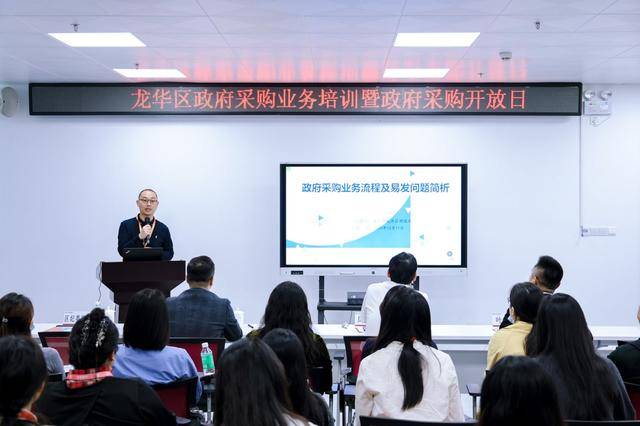
图片说明:今年12月,龙华区财政局联合深圳交易集团龙华分公司,举办政府采购业务培训暨政府采购 开放日活动。 (受访单位供图) 为防患于未然,龙华区对1000万元以上的项目建立"提前介入"机制。提前审核招标文件,对采购人及代 理机构反映的可能存在问题提前介入,做到"质疑情况提前研判、异常情况提前响应、易发问题提前检 查"。12月24日,记者从龙华区获悉,该机制建立以来,龙华区财政局共提前介入重大项目42个,定期 抽查项目299个,共发现标书设置存在问题60余个,建议修改完善标书56份,向采购人、采购代理机构 发出《提醒函》及《整改通知书》23份,及时有效地避免质疑投诉纠纷。 在评标环节,龙华区出台专门工作规程,并为评审专家、采购代理机构、投标供应商编制"负面清单"。 同时,通过市区联合检查,对评标专家行为及评审现场明察暗访,严控"暗箱操作"风险。 深圳商报·读创客户端首席记者 王海荣 在深圳市龙华区,一套覆盖政府采购"标前、标中、标后"全生命周期的监管新模式,正从源头上破除壁 垒,让企业真切感受到公平竞争的市场温度。 "以前最怕遇到倾向性条款,投了也是白投。现在龙华的采购文件更规范、更透明,我们中小企业参与 的 ...
投标后等待结果的时间太长,影响企业的工作计划,该如何应对?
Sou Hu Cai Jing· 2025-12-22 11:43
投标后漫长的等待期确实会打乱企业的节奏,消耗宝贵的资源。要有效应对这一挑战,关键在于将被动 等待转变为主动管理,通过内外兼修的系统性策略,提升预测能力、优化内部流程,从而在不确定性中 把握主动权。 理解法定周期与主动跟进 政府采购项目有着法定的时间框架。例如,采购人应当在收到评标报告后5个工作日内确定中标人,之 后还需在2个工作日内公告结果并发出中标通知书。这意味着从评标结束到正式公告,理论上存在大约7 个工作日左右的"静默期"。主动跟进并非频繁催促,而是有策略地关注关键节点。您可以适时与采购代 理机构保持礼貌沟通,了解项目进展是否顺利,例如是否已进入采购人确认阶段。同时,密切关注官方 指定的政府采购信息发布媒体,这是获取最准确、最权威结果的唯一渠道。 优化内部运营与流程再造 关注政策创新与效率提升趋势 当前,各级政府和公共资源交易中心正在积极推动流程优化,以提升采购效率。例如,部分地区通过推 行交易文件标准化模板、优化信息发布流程等措施,致力于将项目整体周期显著压缩。针对投标企业众 多、评审工作量大的项目,一些地方创新性地采用了 "隔夜评审"机制,将开标与评标分离,既保证了 评审质量,也避免了因评审专家疲劳 ...
一省“动手”解决异常低价仪器采购问题(含官方解读)
仪器信息网· 2025-12-15 03:55
Core Viewpoint - The article discusses the recent measures taken by the Jiangxi Provincial Finance Department to address the issue of abnormally low bids in government procurement, aiming to shift the focus from price to quality and value in procurement processes [2][3][5]. Group 1: Background and Rationale - The occurrence of abnormally low bids in government procurement has led to increased project performance risks, compromised product quality, and instability in service supply [5]. - The need to curb and combat low-bid behaviors is highlighted as a pressing task to regulate the procurement market and promote high-quality development [6]. - The article references a national directive from the Ministry of Finance aimed at addressing this issue, which has informed the local measures [6]. Group 2: Key Measures - The notification outlines six main sections, focusing on enhancing procurement demand management, clarifying abnormal low-price situations, and strengthening process control [7]. - It emphasizes the importance of establishing a scientific and clear procurement demand based on actual needs and market conditions, including setting reasonable maximum prices [8]. - The introduction of a full lifecycle cost concept for projects involving significant operational maintenance and consumables is encouraged to prevent unfair competition through low initial bids [8]. Group 3: Abnormal Low-Price Situations - Specific criteria for triggering an abnormal low-price review process are defined, including bids that are 50% below the average of compliant bids or 45% below the maximum price [9]. - The evaluation committee is tasked with initiating reviews when bids are deemed excessively low, potentially affecting quality or contractual integrity [9]. Group 4: Digital Empowerment and Monitoring - The establishment of a digital warning mechanism through the Jiangxi Public Resource Smart Trading Platform is outlined, which will provide real-time alerts during the evaluation and confirmation stages [10]. - This system aims to enhance the identification of low-price risks and facilitate timely reviews by procurement units [10]. Group 5: Compliance and Accountability - The notification mandates that evaluation committees and procurement units must adhere to legal and regulatory standards when handling abnormal low-price warnings [11]. - Suppliers must provide cost justification during evaluations, and failure to do so will result in disqualification of their bids [11]. - The procurement units are responsible for verifying the existence of abnormal low-price issues before announcing results, ensuring accountability throughout the process [12]. Group 6: Implementation and Responsibilities - The notification specifies that procurement entities must take primary responsibility for setting procurement demands and ensuring compliance with contract terms [13]. - Supervisory bodies are tasked with guiding and managing the resolution of abnormal low-price issues, while financial departments are responsible for oversight [13]. - Legal accountability is established for evaluation committees that fail to conduct proper reviews, ensuring a closed-loop responsibility system [13].

湖北竹溪一些政府采购项目涉嫌造假,有关部门正在调查
Zhong Guo Qing Nian Bao· 2025-12-10 06:39
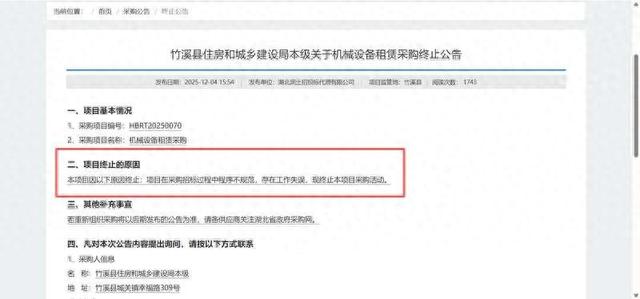
Core Points - A government procurement scandal has emerged in Zhuxi County, Hubei Province, involving multiple government departments and dozens of evaluation experts whose names match those from an online name database, with total project bid amounts exceeding 1 billion yuan [2][10] - An investigation has been initiated by the local disciplinary inspection and supervision commission, focusing on the procurement processes of various government departments [2][8] - The procurement agency, Hubei Runtu Bidding Agency Co., Ltd., has been implicated, with allegations of using fictitious evaluation experts in multiple projects [3][10] Group 1: Investigation and Findings - The investigation was prompted by the discovery of five evaluation experts whose names were identical to the first five names listed in an online name database, linked to a project worth 31.88 million yuan [3][10] - The local finance bureau confirmed that the names of evaluation experts in the involved projects were indeed fabricated [6][10] - A total of 57 bid result announcements from Runtu Company were reviewed, revealing that many evaluation experts' names were likely copied from the online name database [10][11] Group 2: Legal and Regulatory Issues - The actions of the involved parties violate the Government Procurement Law, which mandates that evaluation experts must be randomly selected from a government-established expert pool [6][13] - The procurement process has been criticized for lacking transparency and fairness, with allegations of not forming proper evaluation committees and missing evaluation processes [13][14] - Legal experts highlighted that the number of evaluation committee members was insufficient for projects exceeding 10 million yuan, which should have at least seven members [14][15] Group 3: Responses from Authorities - Local government departments are cooperating with the investigation, and the results will be publicly disclosed [8][15] - The investigation is examining all aspects of the procurement process, including the procurement agency and winning suppliers [8][12] - The local government has acknowledged the need for stricter adherence to procurement laws and regulations to prevent future occurrences [15]
政府采购评审名单照搬“人名大全”?官方通报
Xin Jing Bao· 2025-12-04 09:56
Core Viewpoint - The Bamboo County Housing and Urban-Rural Development Bureau has terminated the bidding process for a mechanical equipment leasing project due to concerns raised about the integrity of the evaluation process, which involved members sharing names with a publicly available name list, leading to allegations of misconduct [1][3][5]. Group 1: Government Procurement Issues - The bidding process for the mechanical equipment leasing project was halted following media reports highlighting irregularities in the evaluation committee's member names, which matched the first five names from a widely circulated name list [3][5]. - The incident has raised serious questions about the authenticity of the evaluation process, the qualifications of the experts involved, and the legitimacy of the procurement outcomes [6][8]. Group 2: Public Reaction and Accountability - Public scrutiny has intensified, with calls for a thorough investigation into the procurement process to ensure accountability and maintain public trust in government operations [2][6]. - The situation has been characterized as a significant public incident that undermines both market fairness and government credibility, necessitating clear and responsible answers from the authorities [5][8].