
数据中心电源

Search documents
FICC日报:中国9月通胀温和回暖,美联储降息预期升温-20251016
Hua Tai Qi Huo· 2025-10-16 03:26
Report Industry Investment Rating No specific investment rating for the industry is provided in the report. Core Viewpoints - China's inflation moderately rebounded in September, and the market's expectation of the Fed's interest rate cut has increased [1]. - Amid rising China-US tariff frictions, there are risks of tariff escalation before the South Korea APEC Summit from October 28th to November 1st [2]. - The US government shutdown has entered its third week, and the market has underestimated the severity of the situation. The Fed is expected to cut interest rates [3]. - For commodities, focus on sectors such as gold and non-ferrous metals. Consider going long on industrial products and precious metals at low prices [4][5]. Summary by Related Catalogs Market Analysis - In August, China faced increased economic pressure with weak industrial, investment, and consumption data, along with rising external tariff pressure. The government has proposed policies to stabilize growth, with new policy - based financial instruments totaling 500 billion yuan [1]. - In September, China's exports and imports in US dollars both exceeded expectations. M2 and M1 growth rates changed, and the M1 - M2 gap narrowed. Newly added social financing decreased, mainly due to slower government bond financing. The growth of RMB loans was affected by weak short - term consumer loans [1]. - In September, China's CPI decreased by 0.3% year - on - year, and the core CPI returned to 1% for the first time in 19 months. The decline in PPI narrowed to 2.3%, higher than market expectations. There is still room for incremental policies in the fourth quarter to support prices [1]. - On October 15th, the A - share market strengthened, with the Shanghai Composite Index above 3900 points and over 4300 stocks rising. Robot concept stocks were strong [1]. Tariff Situation - China - US tariff frictions have escalated. The US has taken measures such as adding Chinese companies to the entity list and imposing tariffs on multiple products. China has responded with export controls and other counter - measures. There are risks of tariff escalation before the South Korea APEC Summit [2]. US Government Shutdown - The US government shutdown has entered its third week. Trump has threatened to fire federal employees, and economic data release has been affected. The Fed is expected to cut interest rates, with a 96.7% probability of a 25 - BP cut in October [3]. Commodity Market - For the black sector, downstream demand expectations are weak. The non - ferrous sector is supported by global easing expectations with long - term supply constraints. The energy sector has a relatively loose supply in the medium term, with OPEC+ planning to increase production [4]. - In the chemical sector, there is "anti - involution" space for products like methanol, PVC, caustic soda, and urea. Agricultural products are driven by tariffs and inflation expectations but need fundamental signals and are affected by China - US negotiations [4]. - Precious metals, especially gold, are expected to strengthen due to the US government shutdown and central bank purchases. On October 15th, spot gold exceeded $4200 per ounce, up nearly 1.4% [4]. Strategy - For commodities and stock index futures, it is recommended to go long on industrial products and precious metals at low prices [5]. Key News - China's M2, M1, and M0 money supply growth rates in September changed compared to the previous values. The social financing scale and new RMB loans from January to September increased [7]. - The US government shutdown continues, and the White House plans to continue layoffs while ensuring pay for the military and law enforcement [7]. - Fed Chairman Powell hinted at a possible end to balance - sheet reduction, and the market expects interest rate cuts. The US Treasury Secretary plans to submit Fed chairman candidates after Thanksgiving [7]. - Argentina's stock index fell, and the US said it would stop financial support if President Milei loses the election. Spot gold prices rose [7].
龙虎榜复盘 | 电源变压器受各路资金热捧,机器人反弹
Xuan Gu Bao· 2025-10-15 10:16
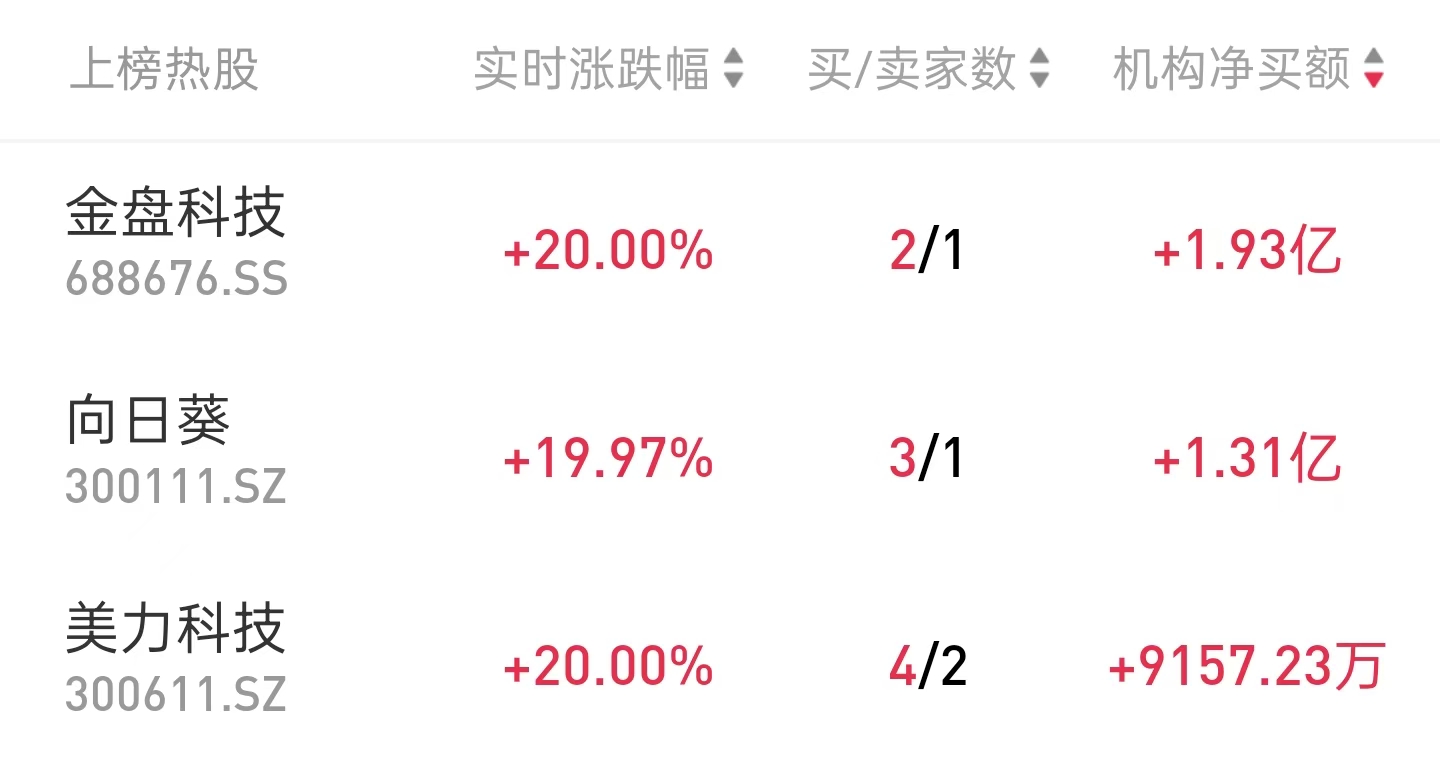
Core Insights - The article highlights the performance of stocks on the institutional leaderboard, with 32 stocks listed, 16 bought, and 16 sold by institutions. The top three stocks with the highest institutional purchases are Jinpan Technology (1.93 billion), Sunflower (1.31 billion), and Meili Technology (915.7 million) [1][2]. Group 1: Stock Performance - Jinpan Technology (688676.SS) saw a price increase of 20.00% with 2 buyers and 1 seller [2]. - Sunflower (300111.SZ) experienced a price increase of 19.97% with 3 buyers and 1 seller [2]. - Meili Technology (300611.SZ) also had a price increase of 20.00% with 4 buyers and 2 sellers [2]. Group 2: Industry Trends - Nvidia's recent release of the "800VDC Architecture White Paper" has drawn attention to the high-voltage direct current (HVDC) sector, emphasizing the importance of medium-voltage rectifiers (MV Rectifiers) for deploying 800VDC systems [2]. - The white paper outlines three evolution directions for the 800VDC technology: transitional solutions using external AC/DC racks, hybrid power solutions for 800VDC output, and ultimate solutions utilizing medium-voltage rectifiers or solid-state transformers (SST) [2]. Group 3: Data Center Power Supply - The development direction for data center power supply is identified as UPS → HVDC → Panama Power → SST direct current architecture, with the Panama Power concept proposed by Delta in collaboration with Alibaba, offering higher efficiency and lower investment [3]. - Solid-State Transformers (SST) utilize power electronics for high-frequency power conversion, providing advantages such as high efficiency and space optimization [3]. Group 4: Company Updates - A company reported a revenue of 407 million for its data center power supply business in the first half of the year, marking a year-on-year growth of 60.6%. Their third-generation HVDC product matrix meets the high power density needs of intelligent computing centers, serving major clients like Alibaba, Tencent, and Kuaishou [5]. - Another company, known for its power supply business, is involved in data center construction and operation [5].




上证指数重回3900点 “科技叙事”仍具韧性
Zhong Guo Jing Ying Bao· 2025-10-15 09:55
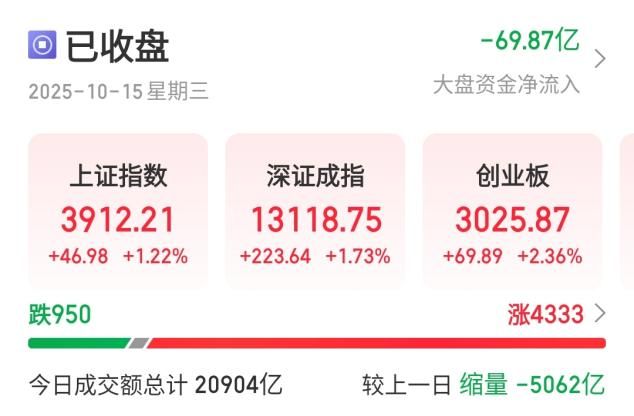
Market Performance - The A-share market showed a rebound, with the Shanghai Composite Index returning to 3900 points, closing up 1.22% at 3912.21 points [1] - The Shenzhen Component Index increased by 1.73%, closing at 13118.75 points, while the ChiNext Index rose by 2.36%, closing at 3025.87 points [1][2] Trading Volume and Sector Performance - The total trading volume in the Shanghai and Shenzhen markets reached 20,729 billion, a decrease of 5,034 billion compared to the previous trading day [2] - Various sectors and concept stocks experienced active trading, with a notable resilience in the "technology narrative" [2] - Several robotics concept stocks hit the daily limit, and the pharmaceutical sector maintained strong performance throughout the day [2] Sector Gains and Losses - The automotive, electric grid equipment, and pharmaceutical sectors led in gains, while the port shipping and photolithography sectors were among the biggest losers [2]
每日收评沪指涨超1%重返3900点,两市成交额萎缩超5000亿,机器人概念股午后异军突起
Sou Hu Cai Jing· 2025-10-15 08:55
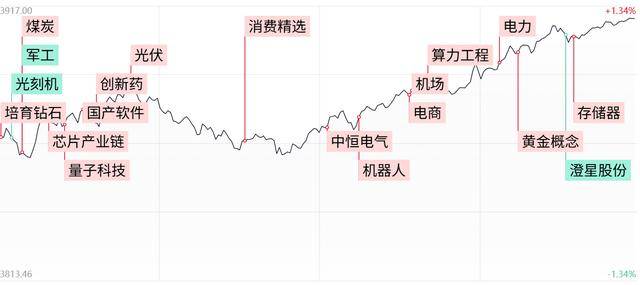
Market Overview - The market showed signs of recovery with the Shanghai Composite Index rising over 1% to reclaim the 3900-point level, while the ChiNext Index increased by over 2% [1][7] - The total trading volume in the Shanghai and Shenzhen markets was 2.07 trillion, a decrease of 503.4 billion from the previous trading day [1] Sector Performance - The robotics sector experienced a significant rebound, with stocks like Sanhua Intelligent Control and Wuzhou New Spring hitting the daily limit [2][5] - The aviation and shipping sectors also saw gains, with Huaxia Airlines reaching the daily limit [1] - The pharmaceutical sector remained strong throughout the day, with stocks such as Angli Kang and others hitting the daily limit [1][3] - Data center power supply concepts were active, with stocks like Sifang Co. and Jingquan Hua achieving notable gains [2] Key Events and Developments - The Shanghai Municipal Economic and Information Commission released a development plan for the intelligent terminal industry, emphasizing support for humanoid robot product development and manufacturing [2] - NVIDIA announced the technical specifications for its new MGX generation open architecture server, which is expected to influence the overseas computing power chain positively [3] - The European Society for Medical Oncology (ESMO) annual meeting is set to take place from October 17 to 21, 2025, in Berlin, which is anticipated to boost interest in innovative drug assets [3][6] Individual Stock Highlights - Sanhua Intelligent Control saw a significant price increase amid rumors of a large order from Tesla for its Optimus linear actuators [2] - Other technology stocks, including Shenghong Technology and Lixun Precision, also experienced rebounds, with some gaining over 5% [5] - The market saw a mixed performance in stocks with consecutive limit-up trades, indicating a potential lack of sustained momentum in high-flying sectors [5][8] Future Market Outlook - The market's recovery is noted, but trading volume has decreased significantly, indicating a cautious sentiment among investors [8] - The continuation of the rebound in technology stocks, particularly in the robotics and data center sectors, will depend on the availability of sufficient capital to alleviate selling pressure [8]
10月15日连板股分析:连板股晋级率不足一成 午后机器人板块爆发
Xin Lang Cai Jing· 2025-10-15 07:54
Group 1 - The core viewpoint of the article highlights the underperformance of consecutive limit-up stocks, with a promotion rate of less than 10% for these stocks [1] - A total of 65 stocks reached the daily limit, with only 7 consecutive limit-up stocks, and only 1 stock achieved three consecutive limit-ups [1] - The overall market saw over 4,300 stocks rise, with more than 100 stocks hitting the daily limit or increasing over 10%, indicating a broader market strength despite the weak performance of consecutive limit-up stocks [1] Group 2 - The robotics sector experienced a significant surge in the afternoon, with over 20 stocks hitting the daily limit or increasing by more than 10%, including companies like Heshun Electric and Meili Technology [1] - The data center power supply concept became active again, with stocks like Jingquanhua and Sifang Co. showing strong performance, and Goldman Sachs revised its forecast for global data center electricity demand in 2030, projecting a substantial increase of 175% compared to 2023 [1]
沪指,重返3900点
财联社· 2025-10-15 07:25
Market Overview - The A-share market rebounded today, with the Shanghai Composite Index rising over 1% to reclaim the 3900-point level, while the ChiNext Index surged over 2% [1] - The total trading volume in the Shanghai and Shenzhen markets reached 2.07 trillion, a decrease of 503.4 billion compared to the previous trading day [1] Sector Performance - The robotics sector saw significant activity in the afternoon, with stocks like Wuzhou New Spring and Sanhua Intelligent Control hitting the daily limit [1] - The airport and shipping sector experienced fluctuations, with Huaxia Airlines reaching the daily limit [1] - The pharmaceutical sector remained strong throughout the day, with multiple stocks such as Anglikang also hitting the daily limit [1] - The data center power supply concept showed active performance, with Sifang Co. and Jingquanhua achieving two consecutive limits in four days [1] - Conversely, the port and shipping stocks collectively declined, with Nanjing Port and Lianyungang experiencing significant drops [1][2] Index Performance - By the end of the trading session, the Shanghai Composite Index rose by 1.22%, the Shenzhen Component Index increased by 1.73%, and the ChiNext Index climbed by 2.36% [3] - Specific closing figures include: Shanghai Composite Index at 3912.21, Shenzhen Component Index at 13118.75, and ChiNext Index at 3025.87 [4]

A股收评 | 三大利好提振!指数缩量反弹、沪指重回3900点、创指收涨逾2%
智通财经网· 2025-10-15 07:22
Market Overview - A-shares experienced a volume-reduced rebound, with the Shanghai Composite Index returning to 3900 points, and over 4300 stocks closing in the green. The total trading volume was 2.07 trillion yuan, a decrease of 503.4 billion yuan compared to the previous trading day. The Shanghai Composite Index rose by 1.22%, the Shenzhen Component Index by 1.73%, and the ChiNext Index by 2.36% [1][2]. Positive Market Drivers - Three major positive factors for the A-share market were identified: 1. High-level officials emphasized the need for stronger counter-cyclical adjustments and effective use of policy resources to stimulate domestic demand and enhance the domestic circulation [2]. 2. The central bank conducted a 600 billion yuan reverse repurchase operation, indicating a focus on maintaining ample market liquidity amid external volatility. A new round of reserve requirement ratio cuts is anticipated in the fourth quarter [2]. 3. Federal Reserve Chairman Jerome Powell suggested that balance sheet reduction may end in the coming months, with market expectations for a potential interest rate cut during the upcoming Fed meeting [2]. Sector Performance - **Innovation Drug Sector**: The pharmaceutical sector saw a collective rebound, led by innovative drugs, with several stocks hitting the daily limit. Catalysts included an upcoming European oncology conference and strong performance expectations for innovative drugs [4]. - **Consumer Sector**: The consumer sector showed strength, particularly in beauty, retail, and food and beverage, with notable stocks achieving consecutive gains. The emphasis on expanding domestic demand was a key driver [5]. - **Domestic Software Sector**: The domestic software and software development sectors gained traction, with several stocks reaching the daily limit. The focus on self-sufficiency in key software amid global tech competition was highlighted [6]. Analyst Insights - **Oriental Securities**: The firm noted that while external frictions are rising, overall risks remain manageable. They recommend focusing on relatively low-positioned sectors such as pharmaceuticals, software, new energy, and the internet for potential gains [3][7]. - **Zheshang Securities**: The firm observed a shift in market focus towards large financials and cyclical stocks, suggesting a strategic long-term bullish outlook despite external shocks [8]. - **Huatai Securities**: The firm indicated that market concerns persist, with potential volatility due to ongoing tariff uncertainties. They expect the market to adjust through oscillation as it digests pressure [9].
券商晨会精华:光伏抢装驱动产业链量利齐升,看好“反内卷”稳步推进
Xin Lang Cai Jing· 2025-09-24 00:36
Group 1 - The market experienced a rebound after a dip, with the ChiNext index rising by 0.21% while the Shanghai Composite Index fell by 0.18% [1] - The total trading volume in the Shanghai and Shenzhen markets reached 2.49 trillion, an increase of 372.9 billion compared to the previous trading day [1] - Sectors such as port shipping and banking saw significant gains, while tourism, Huawei, and small metals faced declines [1] Group 2 - Huatai Securities predicts that the photovoltaic industry will see a significant increase in net profit year-on-year by the first half of 2025, driven by demand in the new energy vehicle supply chain and stable pricing [1] - The report emphasizes the importance of independent energy storage and emerging market sectors, suggesting a focus on domestic storage and new market opportunities [1] - Wind power performance is expected to continue improving, with a positive outlook on the wind turbine and offshore wind sectors [1] Group 3 - CICC highlights that the SST (Solid State Transformer) technology is expected to become the optimal solution for future AIDC (Artificial Intelligence Data Center) power supply architecture, with significant cost reduction potential [2] - Major global AIDC players like Eaton and Delta have early reserves in SST solutions, while domestic companies are also making strides in this technology [2] - Companies with deep understanding of power electronics and experience in data center projects are likely to stand out in the SST market [2] Group 4 - Galaxy Securities suggests that the negative sentiment regarding the airport sector's duty-free agreement renegotiation has largely been priced in [3] - The recovery of international passenger traffic is expected to be a key focus for the airport sector, supported by macroeconomic policies driving domestic consumption [3] - While the duty-free commission rates may not return to pre-pandemic levels, the entry of luxury brands is anticipated to create new growth opportunities [3]
“源”启新章,直流迭代 - 数据中心电源深度
2025-09-17 14:59
Summary of Key Points from the Conference Call Industry Overview - The data center power supply is transitioning from AC UPS architecture to High Voltage Direct Current (HVDC) and Solid State Transformers (SST) to meet increasing computing density demands, improve conversion efficiency, and reduce footprint [1][4] - The domestic UPS market remains dominant, but HVDC solutions are being actively adopted by internet operators [1][4] - The overseas market has a pressing demand for HVDC due to rapid increases in computing density, which significantly enhances overall efficiency by improving conversion rates and saving cabinet space [1][6] Core Insights and Arguments - Domestic enterprises are making rapid progress in SST applications, with pilot projects in the "East Data West Computing" initiative [1][5] - Major companies like Tencent and Alibaba are adopting HVDC combined with direct power supply from the grid, collaborating with firms like Zhongheng and Delta for higher integration [1][5] - The main advantages of transitioning to HVDC include reduced AC conversion stages, improved conversion efficiency, lower operational costs, space savings, and better integration of renewable energy sources [1][11] - The data center DC power market is expected to experience rapid growth from 2026 to 2028, with a compound annual growth rate (CAGR) exceeding 30% [1][12] Current Market Landscape - The current domestic and overseas data center power supply primarily uses AC UPS architecture, which is mature and dominated by companies like Eaton, Huawei, and Kehua [3][13] - The HVDC and SST markets are still in their infancy, with domestic companies like Zhongheng and Zhongda actively engaged in R&D [3][13][14] - The transition to HVDC will drive upgrades in power supply components, such as low-voltage electrical devices evolving into DC circuit breakers [3][16] Key Developments by Major Companies - Nvidia plans to launch an 800V architecture by 2027, which will utilize a large module to convert 10kV AC to 800V DC, enhancing efficiency for high-power data centers [8][10] - Google is adopting a ±400V power supply scheme and plans to transition to SST, while Meta is using a similar architecture in its HBRV4 framework [9][10] - Microsoft has proposed two power supply solutions: a ±400V CLL edge cabinet solution and a future integrated SST solution [10] Future Trends and Opportunities - The shift towards HVDC is expected to disrupt the existing UPS supply chain, allowing domestic companies to gain a foothold in the market [17] - Key components benefiting from HVDC transition include low-voltage electrical devices and relays, which will see upgrades to higher voltage standards [18] - The integration of green electricity and the push for carbon neutrality are driving the adoption of HVDC systems, presenting significant opportunities for domestic enterprises [16][17] Conclusion - The data center power supply market is on the brink of transformation, with HVDC and SST technologies poised to redefine efficiency and operational capabilities. The expected growth in the DC power market and the strategic moves by major tech companies indicate a robust future for this sector, particularly for domestic players who can leverage their R&D advantages [12][17]
“源” 启新章,直流迭代 - 数据中心电源深度
2025-09-03 14:46
Summary of Data Center Power Supply Trends Industry Overview - The data center power supply is transitioning from traditional AC UPS systems to high voltage direct current (HVDC) and solid-state transformer (SST) solutions, aimed at improving efficiency and accommodating renewable energy integration. Currently, AC power supply remains mainstream, but HVDC is a clear trend [1][2][4]. Key Points and Arguments - **Efficiency Improvements**: HVDC architecture reduces AC-DC conversion stages, lowering energy loss and enhancing overall conversion efficiency. It also saves cabinet space, making it more suitable for integrating renewable energy sources like photovoltaics [1][6]. - **Adoption by Major Companies**: Overseas data centers are rapidly adopting HVDC solutions, while domestic companies like Alibaba and Tencent are using 240V/336V DC systems. Domestic firms are actively developing HVDC and SST technologies to meet market demand [1][2][7]. - **Market Growth Projections**: The data center power supply market is expected to grow rapidly, particularly in high-computing scenarios where HVDC demand is clear. The penetration rate of HVDC solutions is anticipated to continue increasing, significantly expanding market space [1][8]. - **Technological Advancements**: The future of data center power supply is focused on HVDC and SST applications. Companies like Google and Microsoft are already proposing SST-based future solutions, indicating a shift towards HVDC [4][11]. - **Component Demand Increase**: The development of data center power systems will drive demand for components such as circuit breakers, relays, and fuses. Domestic companies are likely to benefit from the HVDC trend, enhancing product pricing and market space [2][11][12]. Additional Important Insights - **Domestic vs. Overseas Market Dynamics**: While overseas data centers are rapidly upgrading their power supply systems, domestic companies are catching up. The domestic market primarily uses low-voltage DC systems, but there is a growing trend towards HVDC and SST technologies [7][10]. - **Competitive Landscape**: The UPS supply chain, previously dominated by foreign and Taiwanese companies, is undergoing transformation. Domestic companies are closing the technological gap and leveraging their innovation and responsiveness to enter overseas supply chains [10][13]. - **Focus Areas for Future Development**: In addition to the overall power supply system, attention should be given to key components like circuit breakers and the "source-network-load-storage" segment, which are crucial for future development [14]. This summary encapsulates the key trends and insights regarding the evolution of data center power supply systems, highlighting the shift towards HVDC and SST technologies and the implications for market dynamics and competitive positioning.