
智能门锁

Search documents
《进化的力量》刘润2025年度演讲六大核心迁徙体系精炼(附演讲全文)
首席商业评论· 2025-10-26 04:34
Core Viewpoint - The article emphasizes the necessity for businesses and individuals to undergo "migration" in response to the systemic "drought" in ecological niches, which is characterized by the end of growth opportunities and increased competition. This migration involves abandoning old advantages and moving towards new demands, capabilities, markets, organizations, and technological orders [4][5][6]. Group 1: Overall Framework - The speech is structured into eight major parts, focusing on six critical migrations that determine whether a business can survive and grow: category migration, value migration, model migration, overseas migration, intelligent migration, and demographic migration [4][6]. - The overarching theme is that in an environment of "ecological drought," businesses must strategically migrate to survive and rebuild growth [4][5]. Group 2: Major Migrations 1. Category Migration - Category rigidity arises from excessive optimization of old demands and slow responses to new demands. Innovation requires redefining problems rather than merely improving existing solutions [6][8]. - A methodology for category migration includes stopping current practices, redefining the problem, and addressing new demands [6][8]. 2. Value Migration - The consumption landscape is shifting towards a "value reordering" era, where consumers exhibit frugality in some categories while being generous in others, indicating a shift from pure price sensitivity to emotional and meaningful consumption [8][9]. 3. Model Migration - As product life cycles end, core capabilities can still migrate and create new value. The key to successful migration lies in capability assessment, market scanning, and model validation [10][11]. 4. Overseas Migration - In increasingly crowded domestic markets, "going overseas" serves as a systematic migration strategy, offering new market opportunities and validating capabilities on a global stage [15][16]. 5. Intelligent Migration - AI and smart technologies are not merely tools but cognitive extensions that redefine human-machine collaboration, altering efficiency and business models [16][17]. 6. Demographic Migration - Changes in population dynamics, such as declining birth rates and aging populations, serve as long-term demand reshapers, impacting various industries [18][19]. Group 3: Practical Recommendations - Companies should conduct capability assessments, identify three unique capabilities, and explore new applications for these capabilities in adjacent industries [19][20]. - Businesses are encouraged to view overseas expansion as a means to amplify capabilities rather than a short-term revenue fix [20][21]. - The article suggests designing emotional touchpoints and small satisfactions to enhance customer loyalty and word-of-mouth [21][22]. Group 4: Conclusion and Action Items - The conclusion stresses that when ecological conditions are harsh, migration is preferable to mere competition. The six core migrations are essential for businesses to survive and grow [22][23]. - Immediate actionable items for companies include conducting a "river crossing meeting" to reassess priorities, performing capability inventories, and experimenting with both functional and emotional product lines [25][26].

行业领先全场景安装!海尔给“老铁门”装好了智能锁
Quan Jing Wang· 2025-10-24 10:51
Core Insights - The smart lock market in China is experiencing rapid growth, with projected sales reaching 8.97 million units in the first half of 2025, reflecting a year-on-year increase of 6.8% [1] Installation and Service Challenges - The installation and service aspects of smart locks face significant challenges, including compatibility issues with door types, potential damage during old lock removal, and functionality problems post-installation [1] - Haier Smart Lock has gained user recognition for its professional and worry-free all-scenario installation service, addressing common installation difficulties [1] Case Study - A user, Ms. Fang, successfully installed a smart lock on her old iron door through Haier's team, overcoming challenges related to the door's narrow structure and old components [1] Comprehensive Installation Service - Haier Smart Lock offers a full-process installation service that includes old lock removal, modification, installation, and testing, ensuring a reliable and professional approach to various door types [1] - The company is also leading the development of industry service standards through the establishment of the "Smart Lock Installation and After-Sales Service Requirements" [1] Product Features - Haier's Jinwuwei series smart locks feature financial-grade AI biometric recognition technology for enhanced security and convenience [1] - The smart locks are designed to integrate with other smart home devices, facilitating a seamless smart living experience [1]


“白牌”横行、定价标准缺失,智能门锁市场“乱象”如何破解?
Xin Jing Bao· 2025-09-30 11:33
Core Insights - The smart lock industry is experiencing rapid growth but faces challenges such as market saturation with low-quality products, inconsistent pricing, and safety concerns [1][4][6] Group 1: Industry Challenges - The smart lock market is characterized by a lack of unified pricing standards, leading to significant price discrepancies ranging from hundreds to thousands of yuan [4][6] - The proliferation of "white label" products, which often lack brand recognition and quality assurance, contributes to market confusion and safety risks [5][6] - There is a notable gap between consumer knowledge and the actual quality of smart locks, with many consumers unaware of critical components like chips and motors [2][3] Group 2: Consumer Concerns - Consumers express concerns about safety, repair rates, and the overall reliability of smart locks, which affects their purchasing decisions [6][7] - The installation and after-sales service for smart locks are reportedly declining, which could hinder market growth [6][7] - Many consumers are hesitant to purchase smart locks due to the perceived lack of significant functional differences among various brands and the high costs associated with repairs [6][7] Group 3: Recommendations for Improvement - Industry experts suggest that manufacturers should enhance brand building and focus on quality to combat price wars and the influx of low-quality products [4][5] - There is a call for improved consumer education regarding what constitutes a quality smart lock and its essential features [5][6] - Companies are encouraged to invest in R&D, improve training for industry workers, and establish robust after-sales service systems to regain consumer trust [7]
王力安防颠覆行业定义 四大行业首创技术重新解锁“无感智能”新品类
Sou Hu Wang· 2025-09-12 09:05
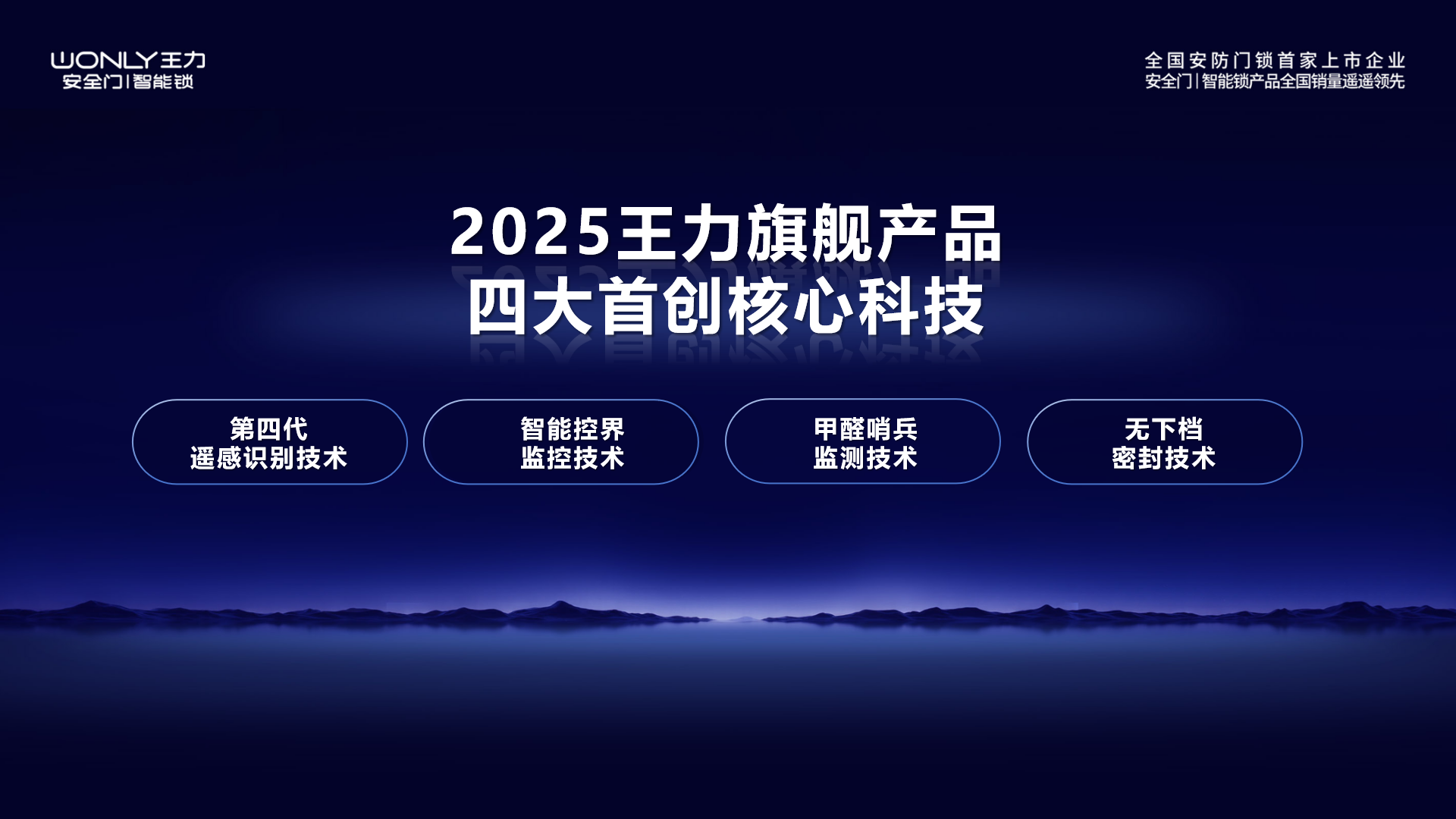
Core Viewpoint - Wangli Security has launched four industry-first technologies at its global product launch event, addressing technical shortcomings and user needs in the smart lock industry, thereby establishing significant technological barriers in safety, intelligence, health, and privacy protection [1] Group 1: Industry Challenges - The smart lock industry faces a trust crisis as many products fail to meet user safety needs, with 17.1% of online electronic locks found to be of substandard quality, primarily due to inadequate anti-theft features [3] - Consumer complaints regarding smart locks have exceeded 10,000, highlighting issues such as product quality, frequent malfunctions, and recognition errors, indicating a disconnect between technological advancements and actual user experiences [3][4] Group 2: Innovative Technologies - The fourth-generation remote sensing recognition technology allows for contactless unlocking while providing predictive capabilities, accurately identifying users within a 3-6 meter range and enabling automatic door opening [5] - The intelligent boundary control monitoring technology captures suspicious individuals within a 1-meter range while respecting privacy by only recording lower body parts of neighbors beyond 2.5 meters, balancing security and privacy [8] - The formal introduction of the formaldehyde sentinel monitoring technology integrates high-precision sensors with smart locks to monitor indoor air quality, providing alerts and enabling automatic air purification when harmful levels are detected [11] - The no-threshold sealing technology eliminates entry barriers for families with children and the elderly, offering multiple protective features while enhancing home comfort through a silent sealing experience [12] Group 3: Market Position and Recognition - Wangli Security has been recognized for its technological innovations, receiving a certificate from Shangpu Consulting Group for leading national sales in smart door products, reflecting both market acceptance and user satisfaction [12]

王力旗舰系列产品全球发布会盛大启幕
Huan Qiu Wang· 2025-09-11 05:16
Core Insights - The 2025 Wangli flagship product global launch event showcased innovative technologies in the smart lock industry, including the fourth-generation remote sensing recognition and smart control monitoring [1][2] - Wangli Group's chairman highlighted the company's growth and commitment to user-centered innovation, positioning itself as a leader in the smart home sector [1][2] - The newly launched products, including the X70 robot anti-theft door and S80 remote sensing smart lock, aim to address long-standing user pain points and enhance home security [1][3][4] Product Innovations - The fourth-generation remote sensing recognition technology allows for a seamless unlocking experience from 3-6 meters, significantly reducing false triggers and enhancing user convenience [2][3] - The X70 robot anti-theft door integrates multiple innovative technologies, providing a comprehensive security solution and setting a new standard in the industry [3] - The S80 remote sensing smart lock features AI voice functionality and a dual-screen design, making it user-friendly for all ages while ensuring robust security monitoring [4][5] Market Positioning - Wangli aims to lead the smart home market by continuously innovating and integrating advanced technologies into its products, focusing on user needs and safety [1][2] - The company emphasizes the importance of humanized design in smart home products, moving beyond mere functionality to enhance user experience [2][3] - Wangli's commitment to addressing health concerns, such as formaldehyde monitoring, reflects its dedication to improving overall home safety and well-being [2][3]
政策红利遇上品质升级 王力安防以旧换新引领智能门锁新趋势
Sou Hu Cai Jing· 2025-08-26 09:46
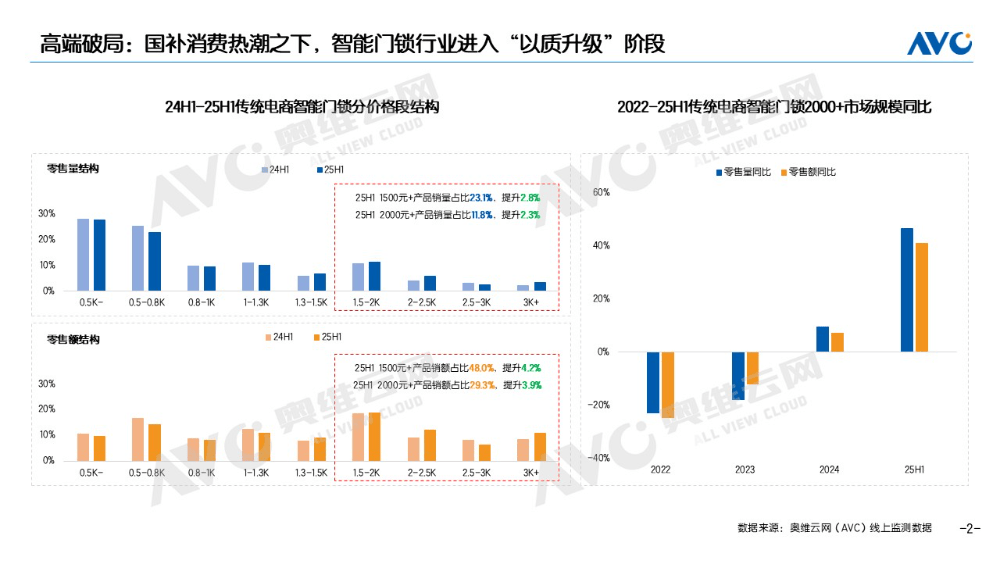
Group 1 - The Chinese smart lock industry is undergoing significant structural changes driven by policy incentives and consumer upgrades, reshaping the value system of smart lock products and promoting the development of home security systems [1] - The "old-for-new" policy has evolved from a mere subsidy measure to a key driver of industry development, with retail sales of smart locks reaching 9.07 million units in the first half of the year, a year-on-year increase of 1.2% [2] - The high-end market for smart locks, priced at 1500 yuan and above, accounted for 23.1% of total retail sales, reflecting a 2.8 percentage point increase from the previous year, while the retail volume and revenue in the 2000 yuan and above segment grew by over 40% [2][5] Group 2 - The subsidy policy has shifted industry competition from a "price war" to a "value war," with leading brands increasing R&D and marketing investments in high-end products and enhancing market share through value-added services [5] - Consumer preferences are shifting towards quality and technology, with over 60% of users willing to pay a premium of 500 yuan or more for AI smart locks, indicating a strong recognition of the "technology as a service" concept [6] - The "old-for-new" initiative has particularly resonated with families looking to upgrade their security, with many consumers recognizing the need for modern solutions through professional assessments [15] Group 3 - Leading companies like Wangli Security are integrating advanced technologies into their products, such as remote sensing unlocking and automatic locking features, enhancing user experience and safety [8][11] - Wangli's promotional activities, including significant discounts on high-end smart locks, have effectively driven sales growth and penetrated the grassroots market [11] - The ongoing transformation of the smart lock industry is expected to create a safer, smarter, and more interconnected home security ecosystem, driven by the dual forces of policy incentives and quality consumption upgrades [16]
黑科技+本土化 中国智能锁企逆风挺进北美市场
Zheng Quan Shi Bao· 2025-08-24 22:21
Core Viewpoint - The article highlights the successful entry of a Chinese smart lock company, LOKKER, into the North American market, emphasizing the importance of adapting technology to local needs for global brand establishment [1][2]. Group 1: Market Entry and Strategy - LOKKER launched a smart lock product on Amazon in March, achieving the fastest sales growth in its category by the end of July [2]. - The company targets the high-end smart lock market priced above $200, leveraging China's advantages in hardware manufacturing and cost control to maintain profitability even under a 100% tariff [2]. - LOKKER's entry into North America is seen as a significant step in its international expansion, with plans to further penetrate European and Japanese markets [2][3]. Group 2: Product Development and Innovation - The company has restructured its product for the North American market, incorporating features like panoramic video monitoring and vein recognition technology to meet local security needs [2]. - LOKKER aims to address the challenges of fingerprint recognition for elderly and children, enhancing user experience with advanced technology [2]. Group 3: Market Challenges and Opportunities - LOKKER faces intense competition from established local brands in North America, which dominate offline sales and have strong brand influence [3]. - The target demographic for high-end smart locks is primarily individuals over 40, who may be less inclined to adopt new technology, presenting a challenge for market penetration [3]. - Despite low penetration rates of smart locks in the region, LOKKER sees this as an opportunity, particularly in the long-term rental market, where it plans to implement customized smart lock systems [3]. Group 4: Leadership and Organizational Strategy - The founder of LOKKER emphasizes the necessity for company leaders to engage directly in overseas markets to ensure proper understanding and strategy implementation [4]. - The company recognizes that successful international expansion requires a reorganization of capabilities across all teams, ensuring that everyone understands the local market [5]. - LOKKER's approach reflects a shift from competing on price to focusing on value creation, leveraging China's strengths in hardware manufacturing to compete effectively in North America [5].
黑科技+本土化中国智能锁企逆风挺进北美市场
Zheng Quan Shi Bao· 2025-08-24 19:09
Core Viewpoint - The article highlights the successful entry of a Chinese smart lock company, LOKKER, into the North American market, leveraging its technological advantages and local market understanding to compete in the high-end smart lock segment [1][2]. Group 1: Market Entry and Strategy - LOKKER launched a smart lock product on Amazon in March, achieving the fastest sales growth in its category by the end of July [2]. - The company targets the high-end smart lock market priced above $200, confident in maintaining profitability even with a potential 100% tariff due to its cost control advantages [2]. - LOKKER's entry into North America is seen as a significant step in its international expansion, with plans to further penetrate European and Japanese markets [2][3]. Group 2: Product Development and Innovation - The company has restructured its product for the North American market, incorporating features like panoramic video monitoring and vein recognition technology to meet local security needs [2]. - LOKKER aims to enhance its product offerings by integrating artificial intelligence into its smart locks [2][5]. Group 3: Market Challenges and Opportunities - LOKKER faces intense competition from established local brands in North America, which dominate offline sales and have strong brand influence [3]. - The target demographic for high-end smart locks is primarily individuals over 40, who may be less inclined to adopt new technology, presenting a challenge for market penetration [3]. - Despite low penetration rates of smart locks in the region, LOKKER sees this as an opportunity, particularly in the long-term rental market, where it plans to implement customized smart lock systems [3][4]. Group 4: Leadership and Organizational Strategy - The founder emphasizes the importance of leadership presence in overseas markets, advocating for direct involvement in understanding local market dynamics [4]. - The company believes that successful international expansion requires a restructured organizational capability, with a focus on team collaboration and local market understanding [5]. - LOKKER's approach reflects a shift from competing on price to emphasizing value, leveraging China's manufacturing strengths in hardware to compete effectively in the North American market [5].
小米汽车轮轴比争议未平,智能门锁误开再引质疑
Sou Hu Cai Jing· 2025-08-14 01:57
Group 1 - Xiaomi has made significant strides in the electric vehicle sector under the leadership of Lei Jun, but has recently faced controversies regarding its automotive and smart lock businesses [2][10] - The controversy surrounding the "wheel-axle ratio" has highlighted discrepancies between marketing language and industry standards, with criticism directed at Xiaomi's promotional tactics [4][3] - Customers have reported issues with the requirement to pay the remaining balance for vehicles before delivery, leading to dissatisfaction and concerns about Xiaomi's delivery management capabilities [5][7] Group 2 - Despite the controversies, Xiaomi's automotive sales figures are impressive, with significant pre-orders for models like the SU7 and YU7, indicating strong market demand [10][11] - Xiaomi is actively expanding into the African market, with recent personnel changes aimed at enhancing its presence and operations in the region [12][13] - The company is facing challenges in production capacity and delivery timelines, with reports of long wait times for new orders, raising questions about its operational efficiency [11][12]

华为发布AI推理创新技术UCM;小米门锁误识外卖员;哪吒汽车失信被执行人
Guan Cha Zhe Wang· 2025-08-13 00:48
Group 1 - Huawei officially launched the AI inference innovation technology UCM, which is a KV Cache-centered inference acceleration suite designed to enhance throughput and reduce latency in AI applications [1] - Perplexity, an AI startup, has made a $34.5 billion acquisition offer to Google Chrome [1] Group 2 - Elon Musk accused Apple of favoring OpenAI in its App Store, claiming it constitutes clear antitrust violations, while OpenAI's CEO Sam Altman responded by calling for an investigation into Musk's claims [2] Group 3 - Micron announced it will halt the development of mobile NAND products globally due to poor market performance, while continuing to support other NAND solutions [3] - Momenta's self-developed autonomous driving chip has been activated and is undergoing testing, with performance comparable to Nvidia's Orin-X and Qualcomm's 8650 [3] - Neta Auto's associated company was listed as a dishonest executor by a court due to failure to comply with asset reporting regulations [3] Group 4 - Former Honor CEO Zhao Ming denied rumors of joining Zhijie Auto, stating he is unaware of such claims [4] Group 5 - A Xiaomi smart lock mistakenly recognized a delivery person's face, leading to unauthorized access, prompting customer service to arrange for repairs [5] - Xiaomi's founder Lei Jun initiated a naming vote for the Xiaomi YU7 standard version, emphasizing its strong specifications and seeking public opinion on renaming it to Pro or Max [6][7] Group 6 - Romaishi has resumed hiring after a month-long suspension, looking for positions in gift channel sales and industrial design [7] Group 7 - The global smart glasses market saw a 110% year-on-year increase in shipments in the first half of 2025, driven by strong demand for Ray-Ban Meta smart glasses and new entrants like Xiaomi [8] Group 8 - Key players in the dry lithium battery separator industry reached a consensus to address "involution" competition, agreeing on price discipline, capacity management, and enhanced industry collaboration [8]