
有色加工

Search documents
如何理解8月利润走强?:工业企业效益数据点评(25.08)
Shenwan Hongyuan Securities· 2025-09-27 11:17
Group 1: Profit and Revenue Insights - In August, industrial enterprises' profit increased significantly, with a year-on-year rise of 21.9% to 20.4%[4] - The profit margin improvement was primarily driven by a rise in operating profit margin, which increased by 20.2% to 17.5%[4] - Cumulative revenue for industrial enterprises showed a year-on-year growth of 2.3%, consistent with the previous value[6] Group 2: Cost and Inventory Analysis - The cost rate for industrial enterprises remained high at 85.6%, reflecting a year-on-year increase of 9.3% to -3.4% in profit contribution from costs[23] - Actual inventory growth slightly rebounded, with a year-on-year increase of 0.3% to 7.2%[46] - The accounts receivable ratio rose to 14.6%, indicating a prolonged collection period[30] Group 3: Sector Performance - The beverage and alcohol sector saw a dramatic profit increase of 234.8% to 226.8%, contributing 7.8% to overall industrial profit growth[15] - Chemical fiber and non-metallic products also experienced significant revenue growth, with increases of 22.2% and 7.4% respectively[41] - State-owned and joint-stock enterprises reported substantial profit growth, with increases of 53.1% and 30.9% respectively[44]
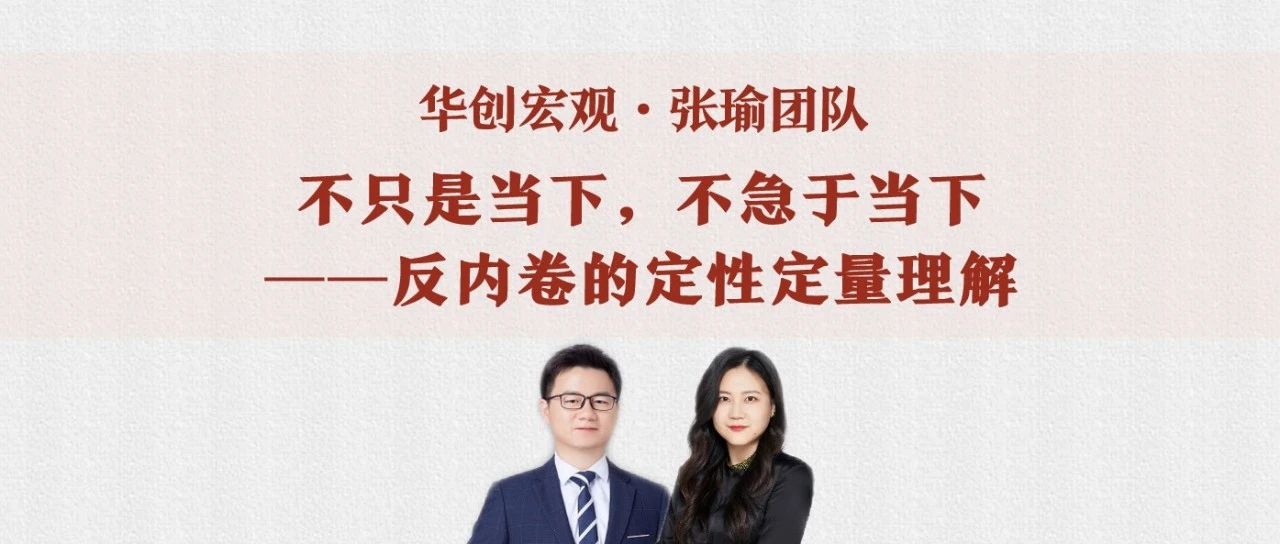
不只是当下,不急于当下——反内卷的定性定量理解
一瑜中的· 2025-08-06 16:04
Core Viewpoint - The article focuses on the concept of "anti-involution" across various industries, emphasizing that the framework is still being refined and may require further input from industry associations and relevant departments [2][3]. Group 1: Historical Context of Anti-Involution - The first positioning of anti-involution is to serve high-quality development and enhance industrial competitiveness, integrating the strategy of expanding domestic demand with supply-side structural reforms [5][11]. - The second positioning is to support the construction of a unified national market, facilitating domestic circulation, with various measures already implemented to promote this goal [6][13]. Group 2: Future Outlook on Anti-Involution - The article outlines three reasons why the current anti-involution efforts are not urgent: differing goal orientations compared to previous supply-side reforms, varying employment constraints, and differing micro-profit pressures [7][17][18]. - Multiple sectors may be involved in anti-involution efforts, including new energy vehicles, photovoltaic, lithium batteries, electronics, chemicals, and civil aviation [22]. - The implementation of anti-involution is expected to occur in three phases: 1. Phase one focuses on regulating corporate and government behavior to maintain fair market competition [26][28]. 2. Phase two involves market-based methods such as mergers and acquisitions to eliminate ineffective production capacity [30]. 3. Phase three may introduce more explicit "hard targets" to resolve supply-demand conflicts if previous phases do not yield results [32][33]. Group 3: Mechanisms for Implementing Anti-Involution - The article discusses the need for corporate behavior regulation, highlighting relevant laws and regulations aimed at promoting product quality and fair competition [35][36]. - Government behavior must also be regulated, with various policies in place to ensure fair competition and prevent local protectionism [38][39]. - Supply-side measures will focus on enhancing standards to force the exit of outdated production capacity, with specific deadlines set for compliance in various industries [40].

A股午后突变,万亿巨头跳水
Zheng Quan Shi Bao· 2025-07-30 09:32
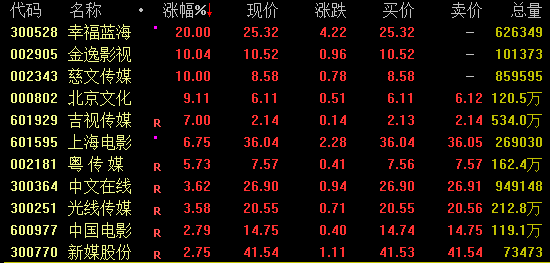
Market Overview - The Shanghai Composite Index reached a new high for the year before experiencing a decline, closing up 0.17% at 3615.72 points, while the Shenzhen Component Index fell 0.77% to 11203.03 points, and the ChiNext Index dropped 1.62% to 2367.68 points [1] - The total trading volume in the Shanghai and Shenzhen markets was approximately 187.13 billion yuan, an increase of over 40 billion yuan compared to the previous day [1] Sector Performance - The brokerage sector declined, with Zhongyin Securities hitting the daily limit down [1] - The non-ferrous metals sector also faced losses, with China Tungsten High-Tech hitting the daily limit down and Shenghe Resources dropping over 8% [1] - The tourism sector saw gains, with Tibet Tourism achieving an 8-day consecutive rise, and companies like Caesar Travel and Tianfu Culture also hitting the daily limit up [1] - The film and media sector experienced a significant rise, with companies like Happiness Blue Sea hitting the daily limit up, and a cumulative increase of over 110% in five trading days [1][4][8] Film Industry Insights - As of July 30, the total box office for the summer season (June-August) surpassed 5.7 billion yuan, with the film "Nanjing Photo Studio" performing exceptionally well, grossing over 700 million yuan in just six days [5] - Analysts predict that the summer box office will see significant recovery due to the release of several major films, providing a positive signal for the film industry [5] Baby and Childcare Sector - The baby and childcare sector saw a surge, with companies like Zhujiang Co., Taimao, and Beiyinmei hitting the daily limit up [7][10] - The Ministry of Finance announced a budget of approximately 90 billion yuan for the implementation of a childcare subsidy program, which is expected to benefit over 20 million families annually [10] Electric Vehicle Sector - The electric vehicle sector faced a downturn, with companies like Li Auto dropping nearly 13%, and CATL falling nearly 8% [12] - A recent meeting by the Ministry of Industry and Information Technology emphasized the need for stricter regulations in the electric vehicle industry, including price monitoring and product quality checks [12]

“反内卷”前夜,各行业经营效益如何了?
2025-07-30 02:32
Summary of Conference Call Records Industry Overview - The conference call discusses the performance of industrial enterprises in the first half of 2025, highlighting the impact of trade wars and price wars on various sectors [1][2][3]. Key Points and Arguments - **Profit Growth Trends**: In the first half of 2025, industrial enterprises experienced a profit growth improvement in the first quarter, but a decline was noted in May and June due to the introduction of equal tariffs and price wars. June showed a slight improvement in profit growth, but it remained weak overall [2][3]. - **Impact of Trade Wars**: The trade war has led to a pattern where midstream raw materials and downstream industrial products saw initial revenue and profit growth, followed by a decline. This trend aligns with the timing of export rush and tariff policies [3][4]. - **"Revenue without Profit" Phenomenon**: The downstream consumer goods sector exhibited a "revenue without profit" characteristic, where revenue remained stable but profits declined due to price wars [4][5]. - **Sector Performance**: In June 2025, midstream dye processing, non-ferrous processing, and downstream sectors like instrumentation and automotive manufacturing showed improvements in both revenue and profit growth. However, the communication electronics manufacturing sector faced continuous profit decline despite revenue growth, likely due to price competition and tariff costs [5][6]. - **Inventory Cycle Trends**: The inventory cycle in the first half of 2025 showed a trend of initial replenishment followed by destocking, reflecting unstable business expectations. Midstream raw materials began destocking in the second quarter, while downstream industrial and consumer goods sectors continued to destock, indicating a lack of replenishment motivation [6][7]. - **High Inventory Turnover**: Industrial enterprises faced high product turnover days and extended accounts receivable collection periods, indicating weak replenishment intentions due to unstable demand [8]. Additional Important Insights - **Future Policy Expectations**: Anticipation of upcoming political meetings and ongoing US-China negotiations may influence future policies. There is a possibility of focusing on domestic demand policies in the latter half of the year, especially if fundamental pressures begin to emerge [9][10]. - **Export and Consumption Outlook**: The overall export orders are expected to face pressure in the second half of the year, particularly in the latter part of the third quarter, necessitating attention to domestic demand policies to address potential challenges [10].