
机器人技术

Search documents
劳动者自己当代言人,北京十大劳务品牌盯准“北京特色”
Bei Jing Ri Bao Ke Hu Duan· 2025-09-24 05:14
Core Viewpoint - The emergence of labor brands with regional characteristics across China, including Beijing's own labor brands, supports employment stability and rural revitalization efforts [1] Group 1: Labor Brands in Beijing - Beijing has developed its own labor brands, including "Huairou Baoshan Dajie," "Miyun Cultural Doctor," and "Beijing Weixin Companion Medical Caregivers," showcasing local characteristics and providing comprehensive career development support for migrant workers [1] - The ongoing third national labor brand image spokesperson recruitment and display event highlights ten labor brands from Beijing, emphasizing the unique charm of these brands through the personal experiences of dedicated workers rather than celebrities [1] Group 2: Weixin Companion Medical Caregivers - The Weixin Companion Medical Caregivers brand has standardized training for over 4,000 caregivers across 70 hospitals in Beijing, primarily serving elderly patients [5] - The demand for medical caregivers is significant due to Beijing's rich medical resources and the growing elderly population, which is projected to exceed 5.14 million by the end of 2024 [5] - The training program for caregivers includes systematic learning of essential skills, ensuring high-quality service delivery [6] Group 3: Zhichong Craftsmen - The "Beijing Zhichong Craftsmen" brand focuses on training skilled personnel for the robotics industry, addressing the shortage of high-skilled talent in China's rapidly growing industrial robot market [9] - The brand has trained over 7,000 individuals, achieving a 98% employment rate, and emphasizes a comprehensive service model that includes job demand, skills training, and employment services [10] Group 4: Zhi Yuan Craftsmen - The "Zhi Yuan Craftsmen" brand, led by Wu Shouyuan, specializes in training talent for the new energy vehicle sector through an innovative VR fault simulation system [12] - The school adopts an "order-based training" model, collaborating with major automotive companies to tailor training programs that directly lead to employment [14] - The school has successfully placed 5,000 individuals in jobs, maintaining a high employment rate of 98% [14] Group 5: Expert Analysis on Labor Brand Development - Beijing's labor brand development is characterized by a focus on labor input, addressing the high demand for skilled labor in sectors like medical care and domestic services [15] - The integration of high-end skills and advanced standards is a core feature, as seen in the Zhichong Craftsmen brand, which promotes Beijing's technological standards nationwide [15] - The labor brands also reflect Beijing's historical and cultural uniqueness, with some brands deeply rooted in the city's heritage [15]


印媒:印度应与中国携手向前
Huan Qiu Wang Zi Xun· 2025-09-15 23:10
Group 1 - China's electricity generation capacity is 2.5 times that of the United States, with plans to add an amount equivalent to Germany's total generation capacity each year [1] - China is leading in clean energy production, with a significant position in the global battery supply chain due to low commercial electricity prices and strong manufacturing capabilities [1] - In the electric vehicle sector, China dominates, accounting for nearly two-thirds of global electric vehicle sales in 2024, with six out of the ten best-selling electric vehicle brands being Chinese [1] Group 2 - India’s growth strategy relies on large-scale energy production, a vast domestic market, and opportunities for acquiring cutting-edge technology, all of which China currently leads [2] - India should focus on developing its solar energy and storage industries, closely linked to China's supply chain, and collaborate with Chinese capital for local production [2] - The development of artificial intelligence in India will thrive where computing costs are low, data is abundant, and regulatory support is present, aligning with China's strategy of using clean energy to power open-source AI [2] Group 3 - India's long-standing strategy has been characterized by "multilateral alliances," but it should now make clearer choices to collaborate with China in areas that advance its own goals [3]
杭州六小龙融资近20亿,群核科技两度IPO失效,宇树强脑竞速上市
Jin Rong Jie· 2025-08-14 23:15
Group 1: Core Insights - The "Hangzhou Six Little Dragons" are emerging as a focal point in the capital market, showcasing strong capabilities in cutting-edge technologies such as artificial intelligence, robotics, and brain-computer interfaces [1] - Qunhe Technology, the first among the "Hangzhou Six Little Dragons" to pursue an IPO, submitted its prospectus to the Hong Kong Stock Exchange on February 14, but it automatically lapsed on August 14 due to not completing the listing process within the six-month validity period [3] - Despite impressive gross margins of 72.7%, 76.8%, and 80.4% for 2022, 2023, and the first three quarters of 2024 respectively, Qunhe Technology remains in a loss-making position with adjusted net losses of 338 million, 242 million, and 93.61 million yuan [3] Group 2: Investment Trends - Investment institutions are increasingly focused on the "Hangzhou Six Little Dragons," with Qiangna Technology reportedly negotiating an IPO pre-financing of approximately 100 million USD at a valuation exceeding 1.3 billion USD [5] - Yushutech has initiated its A-share IPO process, signing a counseling agreement with CITIC Securities on July 7, with plans for a comprehensive evaluation of listing conditions by October [4] - The influx of venture capital not only provides essential funding for these companies but also brings valuable industry resources and management experience, reflecting the growth potential of the Hangzhou tech industry [5] Group 3: Government Support - Government-guided funds play a crucial role in nurturing tech enterprises, with many newly established funds having a duration of over 10 years, some even extending to 20 years, which supports a more patient capital approach [6] - The Shenzhen Futian guiding fund has set a benchmark by extending the duration of its managed sub-funds by 2 years, demonstrating a commitment to long-term investment strategies [6]


2021版“散户暴打空头”重演?这是美股最被做空的小微盘名单
Hua Er Jie Jian Wen· 2025-07-23 01:06
Group 1 - The current market is experiencing a resurgence of retail investor enthusiasm reminiscent of 2021, with a focus on "Meme stocks" and a significant increase in options trading [1][5] - Retail investors are targeting small-cap stocks with high short interest, aiming to replicate the previous success of forcing short sellers to cover their positions [4][8] - The proportion of call options in the market has surged to 70%, the highest level since the "Meme stock" phenomenon began in 2021, indicating a rise in speculative sentiment [5][8] Group 2 - Small-cap stocks with market capitalizations between $10 million and $1.5 billion and short interest exceeding 25% are becoming the new targets for retail investors [4][6] - Notable high short interest stocks include BEELINE HOLDINGS with 166.77% short interest and a market cap of $18 million, and NEOVOLTA with 81.22% short interest and a market cap of $160.4 million [4][7] - Analysts highlight that many of these companies have poor fundamentals, but high short interest provides ample fuel for potential short squeezes, creating a self-reinforcing cycle of price increases [6][9]

分析了102个VLA模型、26个数据集和12个仿真平台
自动驾驶之心· 2025-07-22 02:18
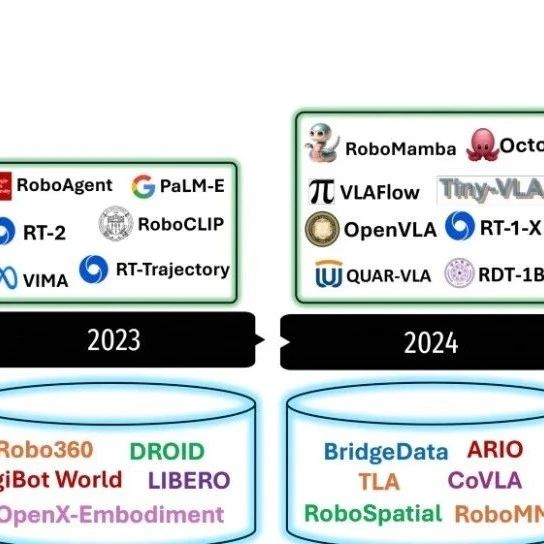
Core Viewpoint - The article discusses the transformative breakthrough of Visual-Language-Action (VLA) models in robotics, emphasizing their integration of visual perception, natural language understanding, and embodied control within a unified learning framework. It highlights the development and evaluation of 102 VLA models, 26 foundational datasets, and 12 simulation platforms, identifying current challenges and future directions for enhancing robotic autonomy and adaptability [3][4][6]. Group 1: VLA Models and Framework - VLA models represent a new frontier in robotic intelligence, enabling robots to perceive visual environments, understand natural language commands, and execute meaningful actions, bridging the semantic gap between various modalities [7][9]. - The architecture of VLA models integrates visual, language, and proprioceptive encoders into a diffusion backbone network to generate control commands, facilitating end-to-end processing of multimodal inputs [11][12]. - The development of effective VLA models relies on large-scale, diverse multimodal datasets and realistic simulation platforms, which are crucial for training models to robustly understand language instructions and perceive visual environments [5][30]. Group 2: Datasets and Evaluation - The article outlines the evolution of VLA datasets, noting that early datasets focused on discrete decision-making in constrained environments, while recent datasets incorporate richer sensory streams and longer task durations, addressing the need for complex multimodal control challenges [21][22][29]. - A comprehensive benchmarking strategy is proposed to evaluate datasets based on task complexity and modality richness, highlighting the need for new datasets that integrate high task difficulty with extensive multimodal inputs [24][28]. - The analysis reveals a gap in current VLA benchmarks, particularly in combining long-duration, multi-skill control with diverse multimodal integration, indicating a promising direction for future dataset development [29][43]. Group 3: Simulation Tools - Simulation environments are critical for VLA research, enabling the generation of large-scale, repeatable, and richly annotated data that surpasses physical world limitations [30][31]. - Various advanced simulation platforms, such as AI2-THOR and NVIDIA Isaac Sim, provide high-fidelity physical effects and customizable multimodal sensors, essential for developing robust VLA models [32][33]. - The integration of simulation tools with VLA datasets accelerates the collaborative development of control algorithms and benchmark datasets, ensuring advancements in multimodal perception are effectively evaluated before deployment in real robotic platforms [30][33]. Group 4: Applications and Challenges - VLA models are categorized into six broad application areas, including manipulation and task generalization, autonomous mobility, human assistance, and interaction, showcasing their versatility across various robotic tasks [34][35]. - The article identifies key challenges in VLA model architecture, such as tokenization and vocabulary alignment, modality fusion, and cross-entity generalization, which need to be addressed to enhance model performance and adaptability [39][40][41]. - Data challenges are also highlighted, including task diversity, modality imbalance, annotation quality, and the trade-off between realism and scale in datasets, which hinder the development of robust general-purpose VLA models [42][43].
利亚德(300296) - 2025年7月4日投资者关系活动记录表
2025-07-07 01:08
Group 1: AI and Spatial Computing Business - The company focuses on AI and spatial computing, leveraging global leading optical motion capture technology for product development and sales, applicable in various fields such as film, robotics, healthcare, sports, and industrial simulation [1] - In 2024, the company entered the embodied intelligence sector, emphasizing "data, services, algorithms, and hardware" as core capabilities, and established a joint laboratory with industry partners [2] Group 2: Data and Service Capabilities - The company has a rich accumulation of motion data and can continuously generate new data based on motion capture technology, creating high-quality, high-precision robot motion datasets [2] - Services have expanded from hardware provision to include data collection, robot training services, and simulation training, tailored to customer needs [2] Group 3: Investor Questions and Responses - The company offers comprehensive solutions, including hardware, software, and data services, based on varying customer requirements [3] - A high-quality motion database is available, allowing robot manufacturers to extract data directly, with ongoing data collection based on specific needs [3] - The amount of data required for training robots varies; for example, training a robot to run may require around 100 effective data points, while more complex actions necessitate more data [4] Group 4: Data Processing and Technology - Data collected from motion capture must be cleaned to eliminate noise and distortion before being optimized for robot use [5] - The company employs various technical routes, including optical, inertial, and hybrid systems, with optical technology currently deemed the most precise for robot training [5]

镁伽科技冲刺港交所:国内收入最大的自主智能体供应商,在手订单15亿元
IPO早知道· 2025-06-26 00:39
Core Viewpoint - Magnesium Technology Co., Ltd. is positioned as a leading provider of autonomous intelligent agents in China, focusing on enhancing productivity and innovation in smart laboratories and intelligent manufacturing through proprietary robotic and AI technologies [2][3]. Group 1: Company Overview - Established in 2016, Magnesium Technology has expanded its business from life sciences to various sectors including consumer integrated circuits, food service, new energy, and agriculture [2]. - The company aims to facilitate intelligent transformation for enterprises by allowing human resources to focus on high-value tasks [2]. Group 2: Market Position and Growth - As of June 21, 2025, Magnesium Technology ranks first among domestic autonomous intelligent agent suppliers in China, with the broadest application coverage in robotic solutions [3]. - The global market for autonomous intelligent robotics technology is projected to grow from approximately 31.8 billion in 2020 to about 114.3 billion by 2024, with a compound annual growth rate (CAGR) of 37.7% [5]. Group 3: Technological Innovations - Magnesium Technology has developed several industry-first technologies, including the Labillion and LibraX operating systems, and the Megalaxy Lab for intelligent life sciences [4]. - The company has introduced the Auflo AI-driven liquid handling workstation and the CellVue high-content imaging analysis system, achieving high pixel resolution [4]. Group 4: Financial Performance - Revenue for Magnesium Technology is projected to grow from 455 million in 2022 to 930 million in 2024, reflecting a CAGR of 43.0% [5]. - The gross profit margins for the same period are reported at 28.1%, 23.9%, and 29.0% respectively [6]. Group 5: Client Base and Retention - As of December 31, 2024, Magnesium Technology has served over 880 clients, including major companies like Agilent Technologies and WuXi AppTec, with a customer retention rate of 74% and a revenue retention rate of 115% for new clients acquired in 2022 [5]. Group 6: Future Plans - The funds raised from the IPO will primarily be allocated for technology and product development, capacity expansion, sales network growth, strategic partnerships, and general corporate purposes [6].

新股消息 | 镁伽科技递表港交所 收入位居中国国内自主智能体供应商首位
智通财经网· 2025-06-25 22:58
Core Viewpoint - Megatech is a leading provider of autonomous intelligent agents in China's robotics technology application sector, focusing on enhancing productivity and driving innovation in smart laboratories and intelligent manufacturing scenarios [5][6]. Company Overview - Megatech has submitted a listing application to the Hong Kong Stock Exchange, with Morgan Stanley, Huatai International, Deutsche Bank, and Jianyin International as joint sponsors [1]. - The company specializes in autonomous intelligent agents that can independently complete complex tasks, allowing human resources to focus on high-value work in laboratory and manufacturing settings [5]. - Megatech's autonomous intelligent agents are designed to adapt to the demands of modern AI-driven environments, providing a competitive edge in handling vast amounts of real-time data [5]. Market Potential - The global market for autonomous intelligent robotics technology is projected to grow from approximately RMB 31.8 billion in 2020 to about RMB 114.3 billion by 2024, with a compound annual growth rate (CAGR) of 37.7%, and is expected to reach around RMB 383.7 billion by 2030 [6]. - There is significant potential for market penetration, particularly in smart laboratories and intelligent manufacturing applications, where the use of autonomous intelligent agents is still in its infancy [6]. Competitive Position - Megatech ranks first among domestic suppliers of autonomous intelligent agents in China based on revenue generated from smart laboratory scenarios in 2024 [8]. - The company has successfully deployed its autonomous intelligent agents with leading clients in the life sciences and industrial manufacturing sectors, showcasing its ability to scale and configure solutions across various applications [8]. Financial Performance - Megatech reported revenues of approximately RMB 455 million, RMB 663 million, and RMB 930 million for the years 2022, 2023, and 2024, respectively, while incurring losses of approximately RMB 759 million, RMB 741 million, and RMB 780 million during the same periods [9][10]. - As of June 21, 2025, the company's order backlog has significantly increased to RMB 1.5 billion, indicating strong customer demand and expanding market opportunities [9].

全球媒体聚焦|全球经济未来的“竞技场”上 中国拥有强大的塑造能力
Sou Hu Cai Jing· 2025-06-24 12:50
Group 1 - The article highlights China's extraordinary economic transformation over the past two decades, which has lifted millions out of poverty and established a prosperous middle-income group, positioning China as a global economic powerhouse [1] - McKinsey Global Institute defines "arena" as vibrant, high-growth industries that reshape the global economy through significant innovation, competition, and value creation, analyzing 12 sectors that experienced super-scale growth from 2005 to 2020, including e-commerce, biomedicine, electric vehicles, and internet consumption [1][2] - Chinese companies have successfully entered global markets in sectors like electric vehicles, personal computers, and e-commerce, driven by a large domestic market, a strong manufacturing base, supportive national policies, and an encouraging entrepreneurial environment [1] Group 2 - The research anticipates that future arenas could generate $29 trillion to $48 trillion in revenue and $2 trillion to $6 trillion in profit by 2040, with China already achieving success in several of these areas [2] - Chinese companies are major players in e-commerce and AI services, leveraging innovations in data analytics and supply chain efficiency to compete globally, with established firms integrating generative AI into personalized education, short video creation, and enterprise software [2] - Progress in electric vehicles, battery technology, and robotics positions China well for future growth, indicating a solid foundation for economic value creation and innovation [2][4] Group 3 - China's economic development has relied on its ability to seize opportunities in high-growth sectors, and it is well-prepared to thrive as the world transitions to new transformative industries [4] - The article notes that China faces a complex global environment characterized by changing geopolitical dynamics, evolving trade relations, and intensified competition in technology and innovation [4] - The next chapter of China's economic story is poised to be written, with significant and exciting opportunities ahead [4]

普京呼吁合作伙伴共同构建全球发展新模式
news flash· 2025-06-21 05:03
Core Viewpoint - President Putin emphasized the need for a new global development model that considers the interests of all countries to ensure sustainable development for global South nations [1] Group 1: Global Development Model - Putin called for cooperation among partners to contribute to the construction of a new global development model aimed at ensuring prosperity and stable development for all nations [1] - He highlighted the significant increase in the share of BRICS countries in the world economy as evidence of the flourishing development of global South nations [1] Group 2: Focus Areas and Principles - The BRICS countries are committed to a "people-centered" approach in various development fields, focusing on major projects that improve living conditions, particularly in nuclear energy, aviation, new materials, information technology, robotics, and artificial intelligence [1] - An open and fair global development platform is needed, integrating investment mechanisms, technical standards, financial and logistical services, trading tools, and other solutions [1] - The cooperation among BRICS countries is a crucial element of this development platform, based on principles of consensus, equality, mutual respect for interests, and openness to all nations [1]