小微盘股

Search documents
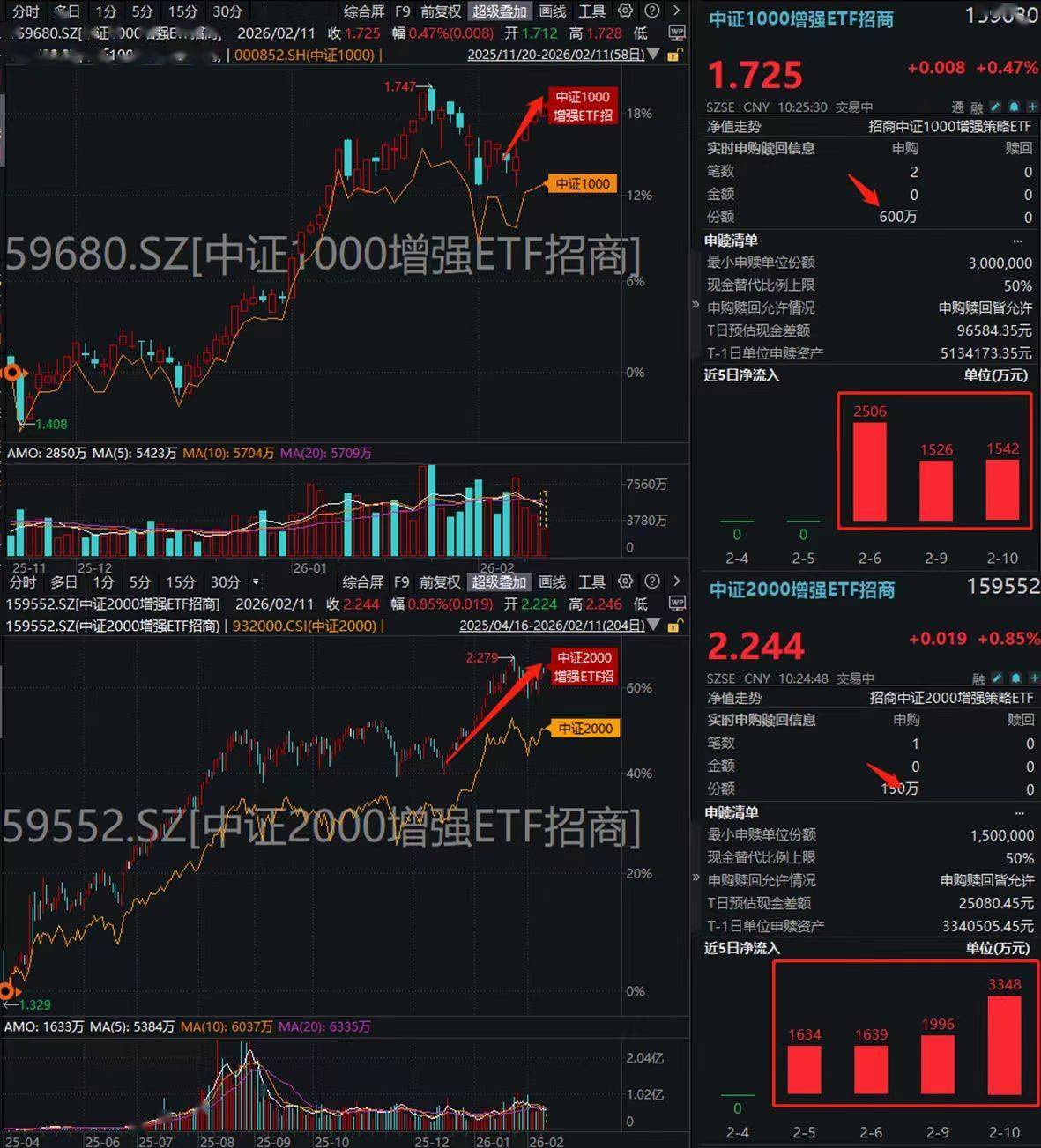
快新高了!小盘延续强势,中证1000增强ETF招商(159680)、中证2000增强ETF招商(159552)获主力连续增持!
Sou Hu Cai Jing· 2026-02-11 03:01
Core Viewpoint - The recent rally in small-cap stocks is driven by multiple factors, including improved market risk appetite, technical rebound demands, and positive policy expectations for small and medium enterprises [3]. Group 1: Market Performance - Small-cap stocks, represented by the CSI 2000 Enhanced ETF (159552) and CSI 1000 Enhanced ETF (159680), have shown strong performance, with increases of 0.85% and 0.52% respectively, nearing historical highs [1]. - The overall market sentiment has improved, with a stabilization in large-cap stocks and a rebound in previously underperforming technology sectors, leading to reduced risk aversion [3]. Group 2: Technical and Valuation Factors - A strong technical rebound is observed as many small-cap stocks have reached historically low valuation levels after significant corrections, creating a robust potential for price recovery [3]. - The easing of market liquidity pressures has allowed quality small-cap companies, previously undervalued due to liquidity issues, to experience valuation recovery [3]. Group 3: Policy Expectations - There is a growing market expectation for supportive policies aimed at the development of small and medium-sized enterprises, particularly those classified as "specialized, refined, and innovative," which bolsters investor confidence for long-term holdings in small-cap stocks [3]. Group 4: Investment Strategy - Enhanced tools like the CSI 1000 and CSI 2000 Enhanced ETFs offer investors efficient and controllable options to participate in the small-cap market, aiming for returns that exceed benchmarks [4]. - Investors are advised to approach small-cap stocks with caution, recognizing their high volatility compared to large-cap blue chips, and consider them as satellite allocations within a controlled overall position [4].

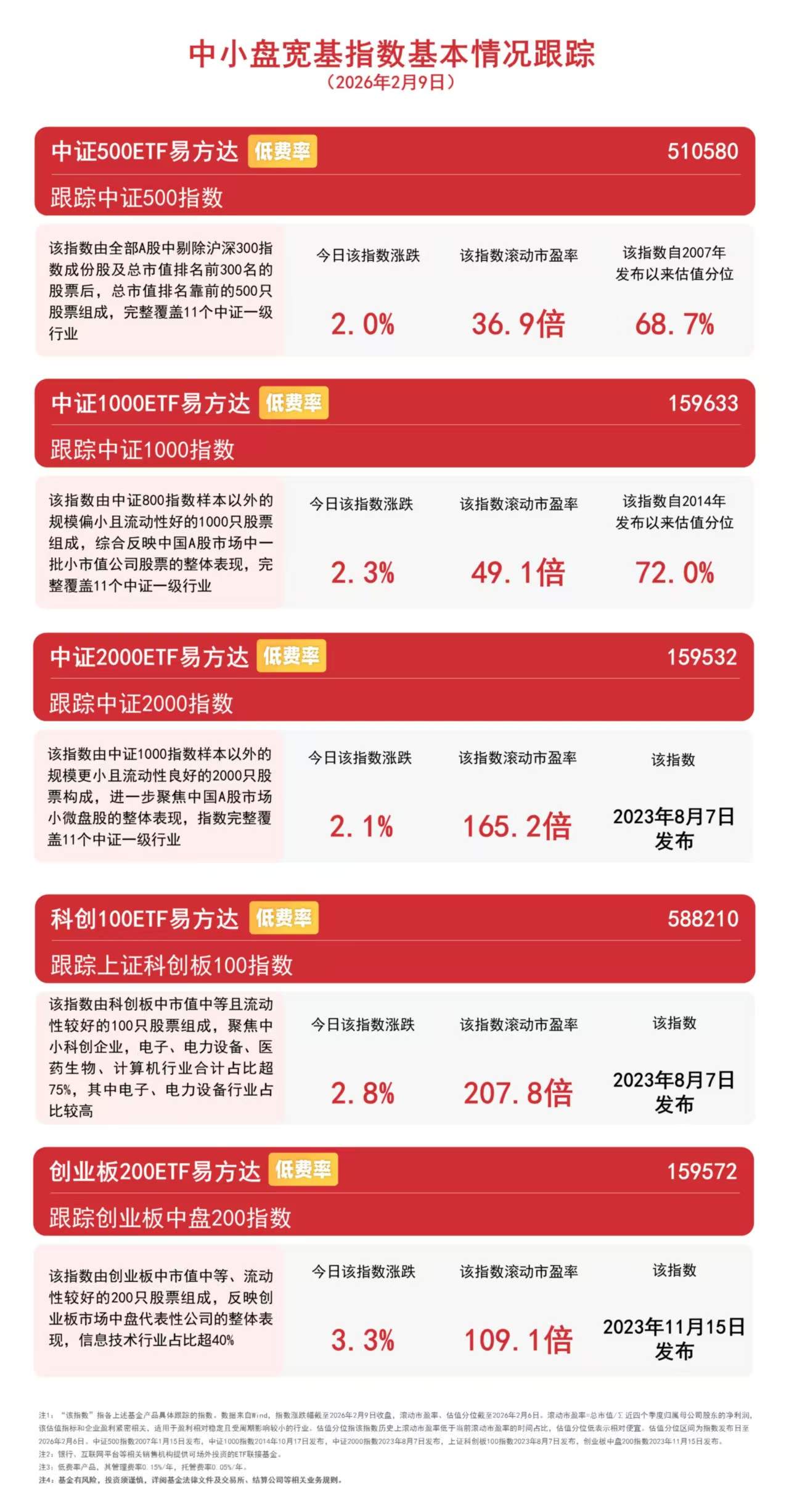
中小盘成长股再度活跃,中证2000指数涨超2%,关注中证2000ETF易方达(159532)等产品投资价值
Mei Ri Jing Ji Xin Wen· 2026-02-09 12:40
Group 1 - The article discusses various ETFs managed by E Fund, including the 中证500ETF, 中证1000ETF, 中证2000ETF, and 科创100ETF, highlighting their low fee rates and market coverage [2] - The 中证500ETF tracks the 中证500 index, which consists of 500 stocks with high total market capitalization, covering 11 primary industries, with a current rolling P/E ratio of 36.9 and a daily change of 2.0% [2] - The 中证1000ETF follows the 中证1000 index, composed of 1000 smaller, liquid stocks outside the 中证800 index, reflecting the performance of small-cap companies in the A-share market, with a rolling P/E ratio of 49.1 and a daily change of 2.3% [2] - The 中证2000ETF tracks the 中证2000 index, which includes 2000 even smaller and liquid stocks, focusing on the performance of micro-cap stocks in the A-share market, with a rolling P/E ratio of 165.2 and a daily change of 2.1% [2] - The 科创100ETF is composed of 200 medium-sized, liquid stocks from the ChiNext board, with over 40% representation from the information technology sector, showing a rolling P/E ratio of 109.1 and a daily change of 3.3% [4]
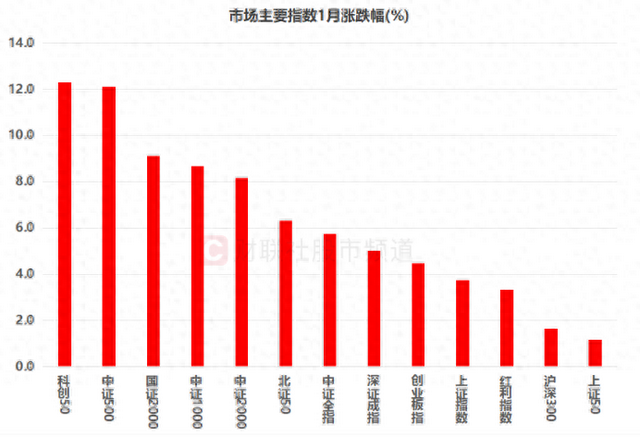
开年首月A股盘点:个股平均上涨7.8%,科创、中盘成关键点,红利资产跑输市场
Xin Lang Cai Jing· 2026-01-30 09:28
Market Overview - The A-share market closed with an overall increase in January 2026, with major indices recording gains, particularly the Sci-Tech Innovation 50 Index leading the market [1] - Excluding new stocks, the average increase for individual stocks was nearly 7.8%, with a median increase of approximately 4.9% [1] Index Performance - There was a notable divergence in performance between large-cap and small-cap stocks, with small-cap indices like the Guozheng 2000 and CSI 2000 rising by 9.13% and 8.16% respectively, while large-cap indices such as the SSE 50 and CSI 300 had gains of less than 2% [3] - Among the 12 stocks with a market capitalization exceeding 1 trillion yuan, three-quarters experienced declines, with a median drop of 4.6% [3] Individual Stock Performance - Major banks such as Industrial and Commercial Bank of China, Agricultural Bank of China, and China Construction Bank saw declines of 8.58%, 12.50%, and 6.03% respectively [4] - Conversely, China Life Insurance recorded a gain of 9.27%, while Kweichow Moutai increased by 1.73% [4] Market Capitalization Analysis - In the small-cap segment, 78.7% of stocks with a market capitalization below 5 billion yuan increased, with an average gain of 7.8% and a median gain of nearly 5.8% [5] - Mid-cap stocks, particularly those with market capitalizations between 50 billion and 100 billion yuan, performed actively with an average increase of nearly 9% [5] ETF Trends - The performance of dividend-related ETFs showed divergence, with the low-volatility dividend ETF from Huatai-PB increasing by 8.00%, while the dividend ETF from Wanji recorded a decrease of 14.88% [7] Historical Trends - Historically, the Shanghai Composite Index has shown an 80% increase rate in February over the past decade, with an average gain of 2.1% [8] - In the past ten years, 30 out of 31 sectors in the Shenwan first-level classification recorded gains in February, with the banking sector slightly declining by about 0.3% [10]
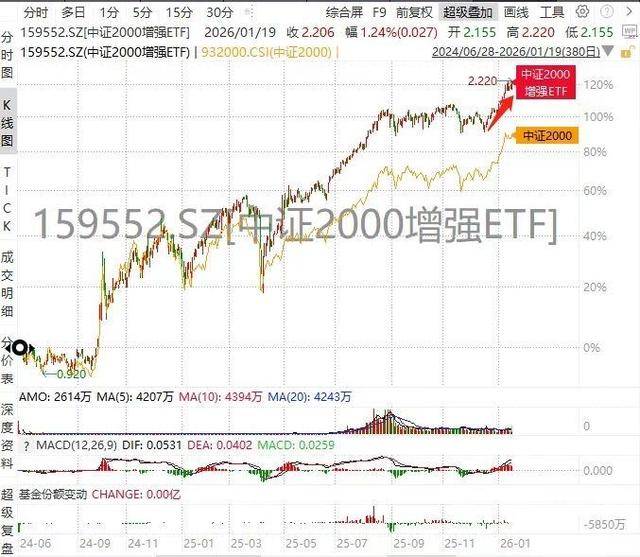
年内第8次历史新高!中证2000增强ETF(159552)放量大涨1.24%,“慢牛”预期深入人心
Sou Hu Cai Jing· 2026-01-19 04:17
Group 1 - The core viewpoint of the articles indicates that regulatory policies are focused on stability, leading to a "slow bull" market expectation among investors [1] - There is a noticeable shift in funding from pure sentiment-driven speculation to institutional trend sectors [1] - The monetary policy remains moderately loose, with ample liquidity benefiting small and micro-cap stocks that are sensitive to funding [1] Group 2 - In the early stages of economic recovery, small-cap stocks demonstrate higher earnings elasticity, with the small and medium growth style index showing greater recovery strength and elasticity [1] - The CSI 2000 Enhanced ETF employs an enhanced strategy to pursue excess returns based on index tracking, utilizing multi-factor stock selection models and refined dynamic rebalancing for active management [1] - On January 19, the two markets showed a rebound, with the CSI 2000 Enhanced ETF (159552) increasing by 1.24%, marking its eighth new high of the year [2]
汇安基金柳预才:宏观宽松预期和产业政策双轮驱动,小微盘或机会可期
Jiang Nan Shi Bao· 2026-01-13 07:09
Group 1 - The micro-cap stock sector is showing signs of recovery in early 2026, with certain equity funds focused on this area, such as the Hui'an Multi-Strategy Mixed Fund, reaching new net asset value highs [1] - As of January 12, 2026, the Hui'an Multi-Strategy Mixed A Fund (005109) achieved a net asset value of 2.2072 yuan, marking a record since its inception [1] - The fund primarily invests in small and micro-cap stocks in the technology sector, focusing on industries such as semiconductors, machinery, high-end manufacturing, and pharmaceuticals [1] Group 2 - The top ten holdings of the Hui'an Multi-Strategy Mixed Fund as of Q3 2025 include five stocks from the ChiNext and STAR Market, with an average market capitalization around 2 billion yuan, reflecting a "technology innovation + market cap downshift" characteristic [2] - The fund's holdings are diversified, with a concentration ratio of less than 10% as of Q3 2025, covering various sub-sectors including automation equipment, rail transit equipment, power grid equipment, medical devices, and industrial metals [2] - The fund manager believes that the macroeconomic environment and supportive industrial policies will benefit micro-cap stocks, with signals of stable growth from fiscal policies and a strong yuan attracting foreign capital [2] Group 3 - The analysis indicates that the high proportion of individual investors and speculative funds in the A-share market, along with the increasing size of quantitative funds, enhances the liquidity premium of micro-cap stocks [3] - The manager anticipates sustained trading momentum and trend-driven markets, suggesting that micro-cap stocks will not be absent from performance in a liquidity-rich macro environment [3] - Investors looking to capitalize on micro-cap opportunities should be aware of liquidity risks and potential delisting risks, and consider funds like the Hui'an Multi-Strategy Mixed Fund for a more cost-effective investment approach [3]
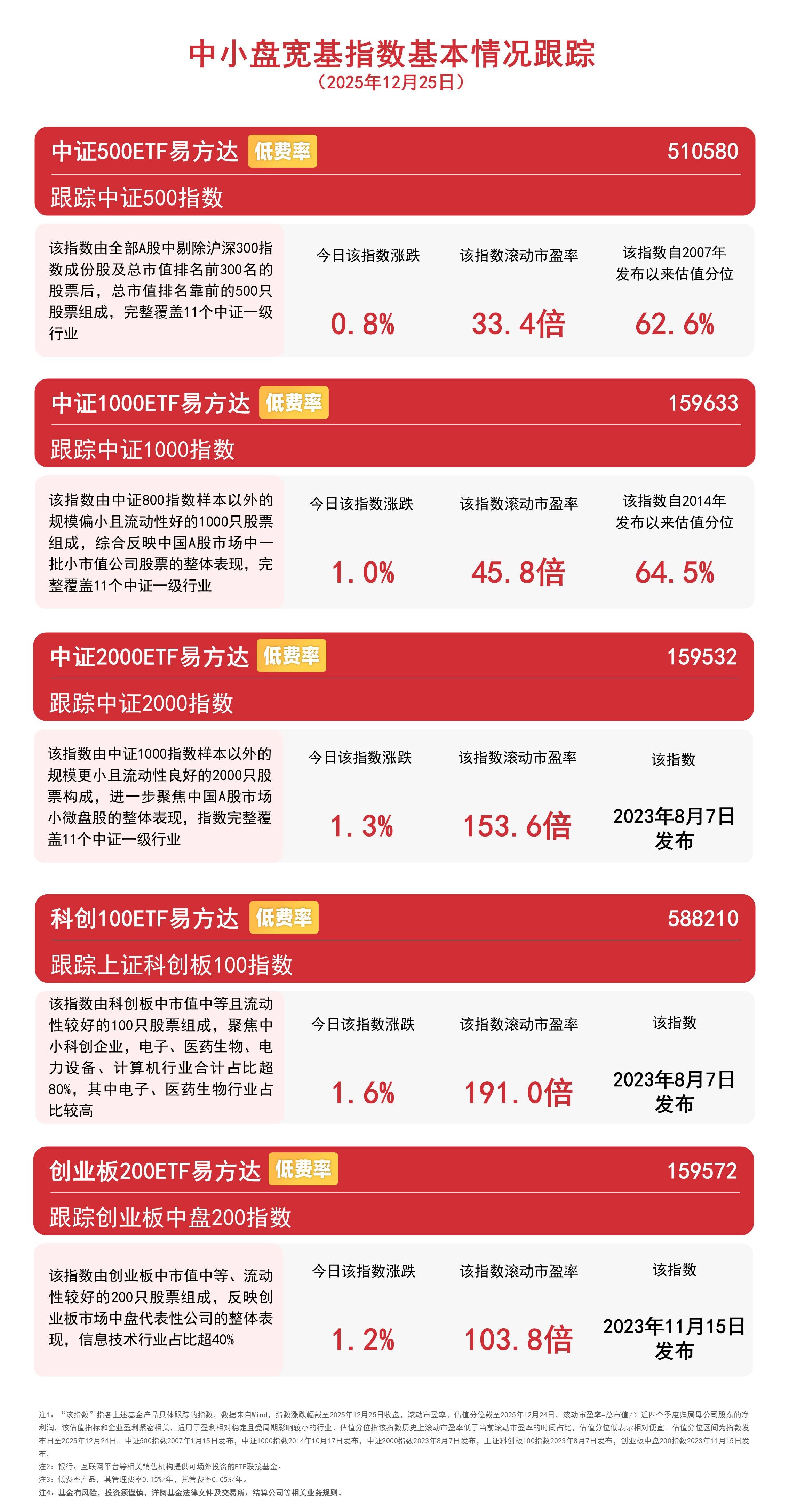
中小盘风格表现活跃,持续关注中证2000ETF易方达(159532)、创业板200ETF易方达(159572)投资价值
Sou Hu Cai Jing· 2025-12-25 11:25
Group 1 - The article discusses the performance of small-cap stocks in the Chinese A-share market, specifically through the lens of the CSI 2000 ETF, which tracks the CSI 2000 Index composed of 2000 smaller, liquid stocks outside the CSI 1000 Index [4] - The CSI 2000 Index provides comprehensive coverage of 11 primary sectors in the Chinese market, focusing on the overall performance of small and micro-cap stocks [4] - The article also highlights the performance of the Sci-Tech 100 ETF, which tracks the Shanghai Stock Exchange Sci-Tech 100 Index, consisting of 100 medium-sized, liquid stocks from the Sci-Tech board, with over 80% of its composition in the electronics, biopharmaceutical, and power equipment sectors [4]

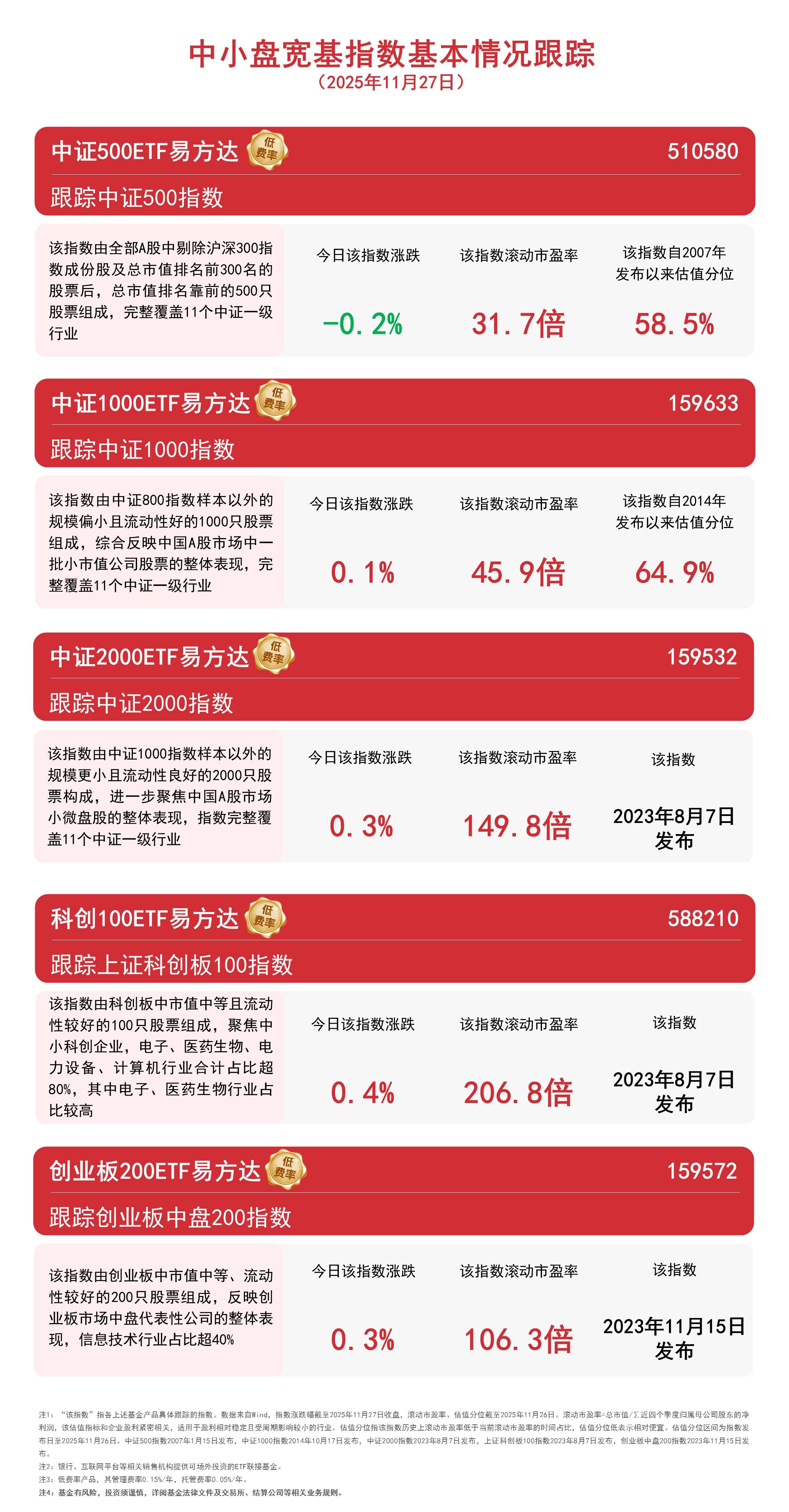
中证2000指数收涨0.3%,关注中证2000ETF易方达(159532)等投资价值
Sou Hu Cai Jing· 2025-11-27 11:54
Group 1 - The core viewpoint indicates that the current liquidity easing environment is beneficial for the performance of small and micro-cap stocks, with the CSI 2000 Index being a key target for capturing the benefits of technological transformation and industrial upgrades [1] - The CSI 2000 Index has shown good long-term annualized returns and Sharpe ratios, suggesting its growth potential may continue to be released under the backdrop of the explosion in AI, green energy sectors, and increased policy support [1] Group 2 - The CSI 2000 Index consists of 2000 stocks that are smaller in scale and have good liquidity, focusing on the overall performance of small and micro-cap stocks in the Chinese A-share market [6] - The index comprehensively covers 11 first-level industries in the CSI, reflecting the performance of a range of small-cap companies [4][6]
兴华基金黄生鹏:权益资产性价比提升 当前小微盘股具有较好的安全边际
Zhong Zheng Wang· 2025-11-25 13:00
Core Viewpoint - The equity market's confidence has gradually improved throughout the year, characterized by distinct structural trends in different phases, including AI-led trends, innovative drug sectors, and the recent strength in low-volatility dividend assets [1] Market Trends - The market has experienced significant sector rotation, with notable phases including AI dominance at the beginning of the year, innovative pharmaceuticals after April, and technology growth led by semiconductors and AI in August and September [1] - Following October, low-volatility dividend assets have shown a phase of strength, indicating a shift in investor focus [1] Investment Insights - With the decline in risk-free rates, the cost of capital has decreased, enhancing the attractiveness of equity assets and increasing investor risk appetite [1] - The effectiveness of market pricing is improving, yet small-cap stocks remain under-researched, presenting more opportunities for value discovery [1] - Current market liquidity favors small and micro-cap stocks, providing numerous trading opportunities [1] - The valuation structure indicates that small and micro-cap stocks, primarily assessed by price-to-book (PB) ratios, still offer a good margin of safety compared to large-cap stocks, making them appealing from a defensive standpoint [1]
多只基金连创新高,板块轮动剧烈,这类指数却高位徘徊
Zheng Quan Shi Bao· 2025-11-13 10:36
Core Viewpoint - The performance of small and micro-cap stocks remains strong amid market fluctuations, driven by liquidity and value recovery, with several funds achieving historical net asset value highs [1][2][4]. Group 1: Market Performance - The CSI 2000 and National 2000 indices, representing small-cap stocks, have been hovering at high levels, with the CSI 2000 index closing at 3141 points as of November 12, nearing a ten-year high [2]. - Funds focusing on small and micro-cap stocks, such as Nuon Fund and CITIC Prudential, have shown strong performance in Q4, with respective gains of 9.34%, 6.24%, and 8.99% [2]. - The average market capitalization of the top holdings in these funds is typically in the tens of millions, significantly lower than large-cap stocks [2]. Group 2: Liquidity and Investment Strategy - The current market liquidity is considered a fundamental reason for the strong performance of small and micro-cap stocks, as these stocks are more sensitive to capital flows [4]. - Fund managers suggest that investors are increasingly favoring high-elasticity stocks, with small micro-cap stocks often exhibiting greater price volatility [3][5]. - The liquidity environment is expected to remain supportive for small-cap styles, with a decrease in market leverage levels contributing to a more stable risk profile [4]. Group 3: Risks and Considerations - Despite the strong performance, there are concerns regarding the liquidity of small and micro-cap stocks, which can lead to difficulties in trading and price volatility [6][7]. - Fund managers caution that the crowded nature of small-cap stocks may lead to wider bid-ask spreads and challenges in liquidating positions during market corrections [6][7]. - The low trading activity and insufficient depth in buy-sell orders for micro-cap stocks necessitate careful liquidity management during trading [7].
多只基金连创新高!板块轮动剧烈,这类指数却高位徘徊
证券时报· 2025-11-13 09:37
Core Viewpoint - The article highlights the strong performance of small and micro-cap stocks in the current market, driven by liquidity easing and value recovery of certain stocks, while also noting the risks associated with trading liquidity and market adjustments [1][3][4]. Group 1: Market Performance - The CSI 2000 and Guozheng 2000 indices, representing small-cap stocks, have remained at high levels, with the CSI 2000 index closing at 3141 points as of November 12, nearing a ten-year high [3]. - Several funds focusing on small and micro-cap stocks, such as Nuon Fund and CITIC Prudential, have seen their net values reach historical highs, with quarterly gains of 9.34%, 6.24%, 1.41%, and 8.99% respectively [3]. Group 2: Liquidity Factors - The article emphasizes that the current strong performance of micro-cap stocks is primarily due to abundant liquidity, which allows for greater price volatility in these stocks [6][7]. - The easing liquidity environment not only attracts funds to micro-cap stocks but also alleviates financing constraints for small enterprises, improving profit expectations [7]. Group 3: Investment Strategies - Investors are increasingly favoring high-elasticity stocks, with micro-cap stocks often showing stronger potential for price recovery after market adjustments [4][9]. - The article suggests that in a market where large-cap stocks are over-traded, funds may shift towards undervalued micro-cap stocks, seeking opportunities for marginal improvements [9]. Group 4: Risks and Cautions - Despite the positive outlook, there are concerns regarding the trading activity and liquidity of micro-cap stocks, which may lead to difficulties in executing trades and widening bid-ask spreads during market corrections [1][10]. - The low liquidity characteristic of micro-cap stocks poses challenges for large-scale operations and necessitates careful liquidity management during trading [10].