水果种植业

Search documents
共话中国经济新机遇丨通讯:智利“车厘子快线”启程 见证中国市场全球机遇
Xin Hua Wang· 2025-11-20 13:39
Core Insights - Chile's cherry industry is experiencing significant growth, with China being the primary market, accounting for 93% of Chile's cherry exports in the last season [1][2] - The launch of the "Cherry Express" shipping line has reduced transit time from 30 days to 23 days, with 32 direct voyages planned for the upcoming season, doubling last year's operations [1][2] - The cherry industry provides approximately 200,000 jobs in Chile, representing one-third of the employment in the country's fruit sector [3] Group 1 - The first shipment of cherries for the 2025-2026 season departed from San Antonio port, expected to arrive in China in 23 days [1] - Chile's cherries are considered a key export product, second only to copper, highlighting their importance to the national economy [1][3] - The Chilean Cherry Exporters Association is collaborating with Chinese e-commerce platforms to enhance sales during the winter season [2] Group 2 - The cherry industry has become a vital economic pillar for Chile, with increasing demand in both first-tier and lower-tier cities in China [2][3] - The bilateral relationship between Chile and China has evolved from trade cooperation to cultural exchanges, with significant achievements in technology and energy transition [3] - The estimated export volume for the 2025-2026 season is 131 million boxes (5 kg each), slightly higher than the previous year, with over 90% expected to be shipped to China [2]
新闻发布会开进乡村广场
Si Chuan Ri Bao· 2025-11-02 21:46
Core Insights - The news highlights the unique local products of Yong'an, including Neijiang black pigs, white fish, and lemons, showcasing the region's agricultural strengths [4] Group 1: Local Products - Neijiang black pigs have an annual output of 33,000 heads [4] - The white fish supply reaches 1,000 fish daily [4] - The lemon production stands at 24,000 tons annually [4] Group 2: Event Highlights - A special press conference was held in a rural square, featuring local officials and entrepreneurs promoting Yong'an's specialties [4] - The event is part of the "Remarkable Town" series of press conferences organized by Neijiang City, aimed at engaging the community in a more relatable environment [4] - Attendees expressed positive feedback, describing the event as interesting and informative [4]


智利2025-2026产季樱桃出口量或创新高
Shang Wu Bu Wang Zhan· 2025-11-01 16:20
Core Insights - The Chilean Cherry Committee forecasts cherry exports for the 2025-2026 season to reach 655,000 tons (approximately 13.1 million boxes), an increase from 626,000 tons in the previous season [1] Export Strategy - Despite a price drop in the Chinese market last season due to concentrated arrivals, the export strategy will maintain the same scale, with 91% of production aimed at China [1] - The industry is focusing on improving fruit quality and precise logistics management, particularly targeting the peak sales period before the Chinese New Year [1] Market Expansion - Efforts will be made to strengthen the Chinese market through promotional activities while also exploring alternative markets such as the United States, South Korea, and Thailand [1]
生鲜软商品板块日度策略报告-20251031
Fang Zheng Zhong Qi Qi Huo· 2025-10-31 05:32
1. Report Industry Investment Rating No information provided in the given content. 2. Core Views of the Report Soft Commodity Sector - **Sugar**: Global sugar supply surplus expectations suppress international sugar prices. In the short - term, ICE raw sugar is expected to remain weak. In China, although there are some positive factors, the medium - long - term pressure on Zhengzhou sugar prices remains, and the rebound space is limited [3]. - **Pulp**: The market risk preference is boosted, but the supply of wood pulp remains high, and the demand improvement is limited. The pulp valuation is not high, but the upward drive is weak, and the rise height may be restricted [4]. - **Double - offset Paper**: The improvement in demand for finished paper is limited, and there is supply pressure. Although there is some cost support, the price is difficult to rise significantly [6]. - **Cotton**: The tariff adjustment in Sino - US trade negotiations supports textile and clothing exports. However, the supply pressure in the northern hemisphere still exists, and the domestic cotton price is expected to fluctuate in a low - level range [8]. Fresh Fruit and Vegetable Sector - **Apple**: The new season's apples have smaller fruit sizes and lower high - quality fruit rates, which support the futures price. However, the lack of consumption growth restricts the upward space. The futures price is expected to fluctuate strongly [9]. - **Jujube**: The futures price has fallen from a high level. The inventory depletion speed has slowed down, and new jujubes are on the market. The futures price is expected to be in a shock - falling state [9]. 3. Summary According to the Directory First Part: Sector Strategy Recommendation Fresh Fruit Futures | Variety | Recommended Strategy | Main Logic | Support Range | Pressure Range | | --- | --- | --- | --- | --- | | Apple 2605 | Hold long positions cautiously | Smaller fruit sizes and lower high - quality fruit rates in the new season, the futures price center moves up | 7900 - 8000 | 9700 - 9800 | | Jujube 2601 | Short at high prices | High futures premium, there is pressure for the futures and spot prices to converge | 10000 - 12000 | 11000 - 11300 | [19] Soft Commodity Futures | Variety | Recommended Strategy | Main Logic | Support Range | Pressure Range | | --- | --- | --- | --- | --- | | Sugar 2601 | Short on rebound | Short - term rebound under the boost of good news, but new sugar is about to be listed, and the global supply - demand is expected to weaken | 5380 - 5400 | 5530 - 5500 | | Pulp 2601 | Short within the range | The valuation is not high, but there is still supply pressure, and the overall increase in finished paper prices is limited | 4800 - 4900 | 5200 - 5300 | | Double - offset Paper 2601 | Short on rebound | The cost support has increased slightly, but the demand still suppresses the price under high supply elasticity | 4100 - 4200 | 4400 - 4500 | | Cotton 2601 | Reduce short positions | The increase in new cotton production is slightly less than expected, and the Sino - US trade relationship eases | 13200 - 13300 | 13700 - 13800 | [19] Second Part: Market News Changes Apple Market - **Fundamental Information**: In September 2025, the export volume of fresh apples was about 70,800 tons, a month - on - month increase of 3.50% and a year - on - year decrease of 6.32% [20]. - **Spot Market**: The mainstream apple prices in the producing areas remained stable. The trading in Shandong was at its peak, and the acquisition in Shaanxi was in the later stage. The market arrival volume in the sales areas increased, and the sales of high - quality goods were good [20][21]. Jujube Market The physical inventory of 36 sample points was 9103 tons, a month - on - month decrease of 1.04% and a year - on - year increase of 109.22%. New jujubes have not been concentratedly harvested, and some merchants have started to purchase [22]. Sugar Market China has suspended the import of all syrups and premixes since October 27. The sugar production in India in the 2025/26 season is expected to reach 34.9 million tons, a year - on - year increase of 19%. The EU has raised the yield forecast of sugar beets [24]. Pulp Market As of October 27, the weekly pulp inventory in sample areas decreased by 1.58% month - on - month. As of October 28, the steam consumption of a thermal power plant in Baoding decreased, and the operating rate of household paper decreased [26]. Double - offset Paper Market As of October 29, the average theoretical gross profit margin of the double - offset paper industry decreased, and the cost decline was narrower than the revenue decline, resulting in a continuous decline in profitability [27]. Cotton Market In September 2025, Japan's clothing imports increased significantly. The tariff on textile and clothing exports to the US has been reduced, and the export competitiveness will be restored [28]. Third Part: Market Review Futures Market | Variety | Closing Price | Daily Change | Daily Change Rate | | --- | --- | --- | --- | | Apple 2601 | 9268 | 70 | 0.76% | | Jujube 2601 | 10225 | - 270 | - 2.57% | | Sugar 2601 | 5472 | - 22 | - 0.40% | | Pulp 2511 | 4846 | 10 | 0.21% | | Cotton 2601 | 13600 | - 20 | - 0.15% | [29] Spot Market | Variety | Spot Price | Month - on - Month Change | Year - on - Year Change | | --- | --- | --- | --- | | Apple (yuan/jin) | 3.75 | 0 | 0.55 | | Jujube (yuan/kg) | 9.40 | - 0.10 | - 5.30 | | Sugar (yuan/ton) | 5750 | 0 | - 790 | | Pulp (Shandong Silver Star) | 5500 | 0 | - 700 | | Double - offset Paper (Sun Tianyang - Tianjin) | 4450 | 0 | - 450 | | Cotton (yuan/ton) | 14843 | 3 | - 593 | [34] Fourth Part: Basis Situation No specific summary information provided in the given content, only relevant charts are mentioned. Fifth Part: Inter - month Spread Situation | Variety | Spread | Current Value | Month - on - Month Change | Year - on - Year Change | Prediction | Recommended Strategy | | --- | --- | --- | --- | --- | --- | --- | | Apple | 1 - 5 | - 456 | 172 | 264 | Oscillatory decline | Short at high prices | | Jujube | 9 - 1 | - 80 | - 75 | - 175 | Range oscillation | Wait - and - see | | Sugar | 1 - 5 | 65 | 1 | 53 | Oscillatory fluctuation | Wait - and - see | | Cotton | 1 - 5 | - 10 | - 5 | 55 | Range fluctuation | Short at high prices | [52] Sixth Part: Futures Position Situation No specific summary information provided in the given content, only relevant charts are mentioned. Seventh Part: Futures Warehouse Receipt Situation | Variety | Warehouse Receipt Quantity | Month - on - Month Change | Year - on - Year Change | | --- | --- | --- | --- | | Apple | 0 | 0 | 0 | | Jujube | 0 | 0 | 0 | | Sugar | 7541 | - 84 | - 2359 | | Pulp | 224942 | - 486 | - 146925 | | Cotton | 2434 | - 26 | - 865 | [80] Eighth Part: Option - related Data No specific summary information provided in the given content, only relevant charts are mentioned.
“水果自由”,甜在两头(新知)
Ren Min Ri Bao· 2025-10-29 22:41
Core Insights - Consumers are increasingly noticing that fruits taste "sweeter," with data supporting this trend, such as the average sugar content of watermelons rising from 9 to over 12 in the past 20 years [1][2] - The fruit industry in China is significant, being the largest producer and consumer globally, with projected production and consumption reaching 335 million tons and 328 million tons respectively in 2024 [2] Industry Overview - The fruit industry has become the third largest agricultural sector in China, following grains and vegetables, and is a crucial pillar of the agricultural economy [2] - Advances in breeding technologies, such as hybrid breeding and molecular marker breeding, have enabled the development of new fruit varieties with improved sweetness and flavor [2][3] Consumer Trends - There is a shift in consumer preferences from merely seeking sweetness to a broader focus on nutritional components like vitamins, anthocyanins, and dietary fiber [2] - The rise of fast-moving consumer products like fruit salads and fruit bowls reflects the growing demand for nutritious and healthy eating options [2] Market Dynamics - In 2023, the per capita fruit consumption in China reached 232 kg, significantly exceeding the global average, with a diverse range of fruits available year-round [3] - The domestic production of durians has increased, with over 157,000 tons imported through the China-Laos railway in 2023, marking an 80% increase year-on-year [3] Challenges and Opportunities - The fruit industry faces challenges such as product homogeneity, low mechanization levels, and significant seasonal price fluctuations [4] - Continuous efforts in optimizing planting structures, enhancing technological innovation, and improving supply chain connections are essential for industry growth [4] - Successful examples, such as the apple harvest in Ningxia, demonstrate the potential for fruit production to drive local economic development [4]
东南亚“榴莲战”升级 印尼欲破局直供中国
Jin Tou Wang· 2025-10-20 07:19
Group 1 - China consumes over 90% of the global durian production annually, prompting Southeast Asian countries to closely monitor this lucrative market [1] - Indonesia plans to export durians directly to China to increase profit margins from 10% to 30%, contingent on meeting health standards and cold chain storage requirements [1][2] - Indonesia has only recently begun exporting frozen durians to China, making it a late entrant compared to Thailand, Vietnam, and Malaysia [1] Group 2 - The lack of cold chain logistics and freezing technology in Indonesia has historically hindered the freshness of its durians, making it difficult to meet China's import regulations [2] - Some regions in Indonesia are capable of producing high-quality "Musang King" durians, which could appeal to China's high-end consumer market [3] - Despite longer transportation distances potentially increasing costs, focusing on quality and brand development could provide opportunities for Indonesia in the Chinese market [3]
小猪“上楼”、刺梨闯“黔程” 现代化产业链推动乡村产业价值跃升
Yang Shi Wang· 2025-10-17 07:27
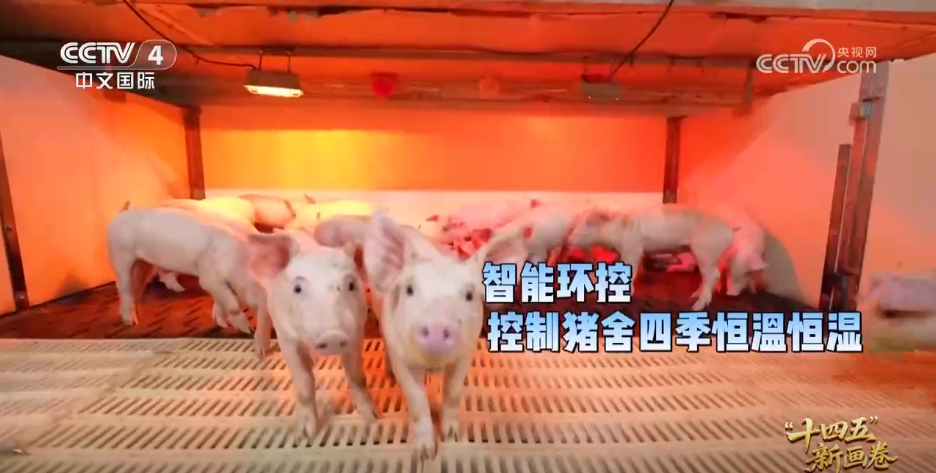
Group 1: Agricultural Innovations in China - The article highlights the transformation of traditional agriculture across various regions in China, leveraging local resources and technology to enhance productivity and value [1] - In Henan, a pig farming enterprise has adopted an intelligent building model for raising pigs, achieving an annual output of 2.1 million pigs [3] - During the 14th Five-Year Plan, Henan has implemented the "Green Food Cluster Cultivation Action Plan" to modernize meat processing and improve cold chain logistics, creating an integrated supply chain from feed to slaughter [5] Group 2: Unique Agricultural Products - In Guizhou, the prickly pear, known locally as "mountain king fruit," has become a significant contributor to poverty alleviation, thriving in the region's karst mountains [7] - The prickly pear is rich in nutrients and has been developed into various products such as enzyme drinks, juices, and organic fertilizers, with over 1.5 million acres cultivated in Guizhou, accounting for over 90% of the national total and generating approximately 10 billion yuan in value [9] - In Heilongjiang, a cranberry cultivation base of 4,200 acres is utilizing advanced harvesting technology, while new varieties are being developed through space breeding experiments [11][13]
瑞达期货苹果产业日报-20250918
Rui Da Qi Huo· 2025-09-18 10:21
Report Summary 1) Report Industry Investment Rating - Not provided in the report. 2) Core View of the Report - The report suggests short - long positions as the main strategy and recommends paying attention to the stocking situation for the Double Festival. The old - crop market in Shandong has relatively stable prices, and the profit of merchants in the sales area is relatively limited due to the high price of early - maturing Fuji [2]. 3) Summary by Related Catalogs a) Market Data - **Futures Market**: The closing price of the apple futures main contract is 8,281 yuan/ton, down 1,008 yuan; the main contract position is 13,700 hands, up 2,317 hands; the net long position of the top 20 futures holders is 83,396 hands, up 2,317 hands [2]. - **Spot Market**: The spot prices of apples in Gansu Jingning, Shandong Yiyuan, Shaanxi Luochuan, and Shandong Yantai Qixia remain unchanged. The prices are 4 yuan/jin, 2.3 yuan/jin, 4 yuan/jin, and 3.7 yuan/jin respectively [2]. - **Upstream Situation**: The national apple output is 5,128.51 million tons, an increase of 168.34 million tons [2]. - **Industry Situation**: The weekly apple wholesale price is 9.7 yuan/kg, down 0.06 yuan; the average wholesale price of Fuji apples is 9.38 yuan/kg, unchanged; the total national apple cold - storage inventory is 16.32 million tons, a decrease of 4.59 million tons; the capacity utilization ratio of Shandong apples is 0.04, down 0.01; the capacity utilization ratio of Shaanxi apples is 0, unchanged; the monthly apple export volume is 50,000 tons, an increase of 10,000 tons; the monthly apple export value is 63.284 million US dollars, and the monthly import value of fresh and dried fruits and nuts is 15.892955 billion US dollars, a decrease of 1.533065 billion US dollars; the weekly profit of first - and second - grade paper - bag apple 80 storage merchants is 0.3 yuan/jin, unchanged [2]. - **Downstream Situation**: The weekly average wholesale price of tangerines is 8.74 yuan/kg, up 0.44 yuan; the weekly banana wholesale price is 5.56 yuan/kg, down 0.02 yuan; the weekly watermelon wholesale price is 3.72 yuan/kg, up 0.1 yuan; the average daily morning arrival of trucks at the Jiangmen Wholesale Market in Guangdong is 12 vehicles, up 0.4 vehicles; the average daily morning arrival of trucks at the Xiaqiao Wholesale Market in Guangdong is 16 vehicles, up 1 vehicle; the average daily morning arrival of trucks at the Chalong Wholesale Market in Guangdong is 25.56 vehicles, up 1.96 vehicles [2]. - **Option Market**: The implied volatility of at - the - money call options for apples is 21.09%, down 0.19%; the implied volatility of at - the - money put options for apples is 21.1%, down 0.19% [2]. b) Industry News - In the western production areas, the trading of early - maturing Fuji is coming to an end, and some late - maturing Fuji has started to remove bags sporadically, but large - scale bag removal still needs to wait. In the Shandong production area, the inventory trading is weak. Merchants are actively purchasing early - maturing apples for the Mid - Autumn Festival stocking, with smooth sales and prices determined by quality. For the new - season apples, the supply of medium - maturing Fuji is gradually increasing. In some western areas, the color and redness of Fuji are average due to long rainfall and short sunlight hours, but the price of high - quality goods remains firm. The trading of Hongjiangjun apples in Shandong has begun, but the quality is relatively poor [2]. c) Viewpoint Summary - In the old - crop market, the remaining supply in the Shandong production area is concentrated in some townships. Some merchants continue to transfer inventory Fuji due to the high price of early - maturing Fuji and the poor coloring of Hongjiangjun, with relatively stable prices. The digestion speed in the sales area is relatively stable, and the profit of merchants is relatively limited due to the high price of early - maturing Fuji [2].

今年全国龙眼产量预计达244万吨
Ren Min Ri Bao· 2025-09-16 20:45
Core Viewpoint - The 2025 China Farmers' Harvest Festival for longan was held in Luzhou, Sichuan, where multiple enterprises signed fresh sales and processing contracts exceeding 20 million yuan, indicating strong market activity in the longan industry [1] Industry Summary - The planting area for longan in China remains stable at approximately 4.1 million acres, with an estimated total production of 2.44 million tons for the year, reflecting a year-on-year increase of about 11% [1] - Longan in China is primarily consumed fresh and is available year-round, with the peak supply period occurring from July to October [1]
失去中国市场后,大量水果烂地里卖不出去,现在开始后悔得罪中国
Sou Hu Cai Jing· 2025-09-06 18:56
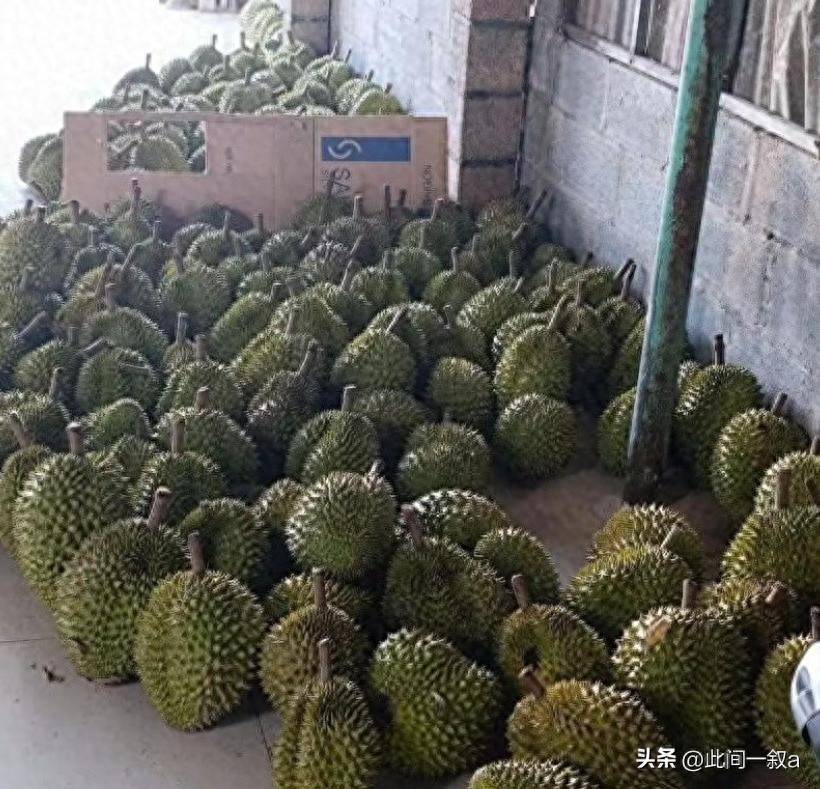
Group 1 - Vietnam's durian previously generated significant revenue in China, reaching nearly $3 billion, but now faces a market collapse with unsold fruit rotting in the fields due to strict import regulations [1][23] - Australia, which once exported over half of its fruit to China, has seen a 35% drop in exports after criticizing China's stringent import standards, leading to a loss of market share [1][15] - The importance of the Chinese market is underscored by its vast consumer base and high demand for quality imported agricultural products, making it a lucrative opportunity for foreign exporters [5][8] Group 2 - To access the Chinese market, foreign products must meet strict health and safety standards set by Chinese customs, which can be a barrier for those attempting to exploit the market without adhering to regulations [8][10] - Australia's failure to resolve fruit fly issues has hindered its apple exports to China, despite initial approval for imports in 2010, leading to a significant decline in market access [10][15] - In contrast, Vietnam's durian exports have plummeted over 70% due to contamination issues, with sales dropping to $1.3 million, highlighting the severe impact of failing to meet Chinese standards [30][28] Group 3 - Vietnam's agricultural sector is in crisis, with local prices for durians collapsing from $0.80 to $0.10 per pound, resulting in unsold fruit accumulating and causing environmental concerns [32][30] - The Vietnamese government is attempting to regain market access by updating planting codes and improving compliance, but faces stiff competition from countries like Thailand, which have already established strong market positions [34][35] - Domestic production in China, particularly in Hainan, is increasing, with plans to double durian output by 2028, further challenging foreign exporters [39][40]