
生物经济

Search documents
欧盟发布新的生物经济战略
Shang Wu Bu Wang Zhan· 2025-12-01 16:27
Core Viewpoint - The European Commission is set to release a new bioeconomy strategy on November 27, 2025, aimed at reducing reliance on fossil fuels and enhancing the value and processing levels of bio-based products [1] Group 1: Strategic Goals - The core objective of the strategy is to accelerate the development and application of bio-based products [1] - The strategy focuses on scaling up innovative investments, creating new markets, ensuring sustainable biomass supply, and promoting global cooperation [1] Group 2: Implications for Finland - Finland welcomes the strategy, viewing it as an opportunity for agricultural economic diversification [1] - The strategy is expected to enhance the EU's competitiveness and sustainability by simplifying regulations, accelerating authorizations, and providing technical support [1] - It also supports climate goals and strategic autonomy [1]
黑龙江成京津冀龙头企业北上投资热土
Sou Hu Cai Jing· 2025-09-13 01:10
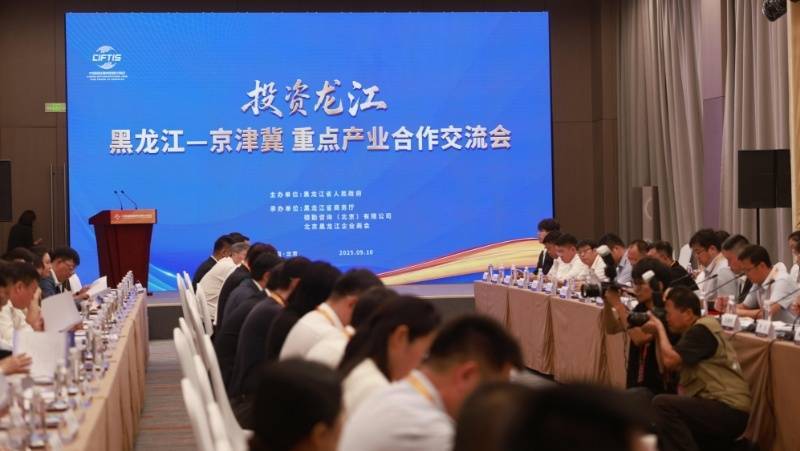
Core Insights - Black龙江 is experiencing a new wave of investment driven by high-tech projects and an improved business environment, attracting leading enterprises from the Beijing-Tianjin-Hebei region [1][4][8] Group 1: Investment Opportunities - The total signing amount at the investment conference reached 2.615 billion yuan, covering various industries such as equipment manufacturing, chemicals, and energy [1] - Companies expressed that Black龙江's resource advantages and continuously optimized business environment make it an ideal investment choice [1][4] Group 2: Business Environment - Multiple enterprises praised Black龙江 for its efficient government services and the "Longjiang Speed," which has become a new advantage for attracting investment [4] - The local government has shown high efficiency in project approvals, significantly shortening preparation cycles for new projects [4][6] Group 3: Industry Foundation - Black龙江's diverse industrial layout, including sectors like equipment manufacturing, bio-economy, new energy, and digital economy, provides ample development space for various enterprises [6] - 中核汇海风电投资有限公司 is involved in renewable energy projects, with a total investment of approximately 820 million yuan for a 200MW/800MWh lithium iron phosphate energy storage project [6][7] Group 4: Strategic Location - Black龙江's geographical advantage as a gateway to Northeast Asia and a crucial land route to Russia and Europe enhances its appeal for businesses looking to expand into international markets [8] - The region has been recognized for its role in national agricultural production and as a base for equipment manufacturing, with significant investments and projects initiated over the years [8][11]

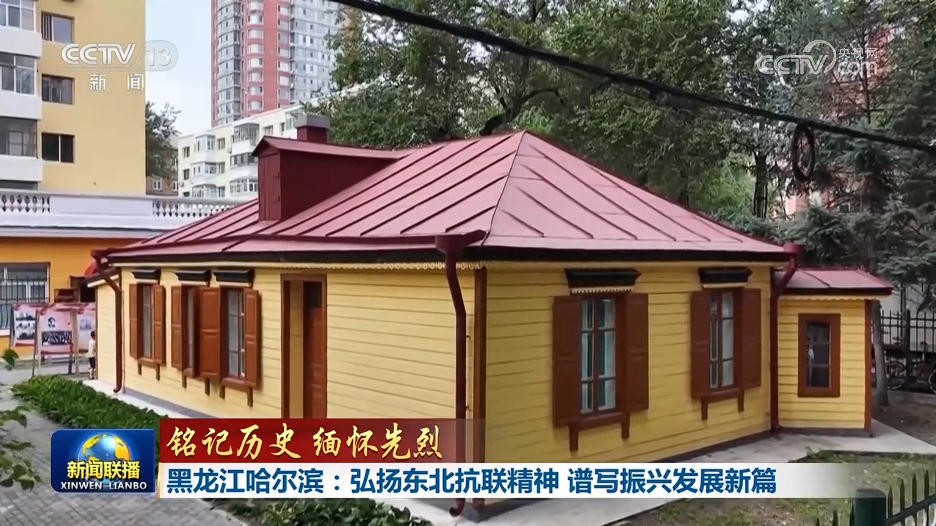
【铭记历史 缅怀先烈】黑龙江哈尔滨:弘扬东北抗联精神 谱写振兴发展新篇
Yang Shi Wang· 2025-08-14 13:00
Core Viewpoint - Harbin is accelerating the cultivation of new productive forces and developing a distinctive cultural tourism industry to enhance the city's attractiveness and competitiveness [1] Group 1: Historical Significance - Harbin was a major activity area for the Northeast Anti-Japanese United Army during the Anti-Japanese War, contributing significantly to the victory [1] - The former site of the Manchuria Provincial Committee of the Communist Party of China in Harbin was the highest leadership body of the Party in Northeast China from 1927 to 1936, leading anti-Japanese guerrilla warfare [3] Group 2: Industrial Development - Harbin is one of the earliest heavy industrial bases established in New China, focusing on the transformation and upgrading of traditional industries while promoting the integration of technological and industrial innovation [5] - The city is developing national-level industrial clusters in aerospace and biomanufacturing, fostering strategic emerging industries such as biomanufacturing, high-end equipment, and new energy [5] Group 3: Tourism Growth - Harbin has been enhancing its regional cultural characteristics and innovating tourism products, transitioning from "one place one season" to "whole area all season" tourism [6] - In 2024, the city is expected to receive 179 million tourists, generating tourism revenue of 231.42 billion yuan, representing growth of 32.2% and 36.7% respectively [6] - The city is building a modern industrial system while consolidating traditional advantageous industries like equipment manufacturing and green food, and is fully cultivating new growth areas such as ice and snow economy, digital economy, and bio-economy [6]
2025年中期投资策略展望十大投资主题系列:中国股市十大投资主题,前沿技术篇
GUOTAI HAITONG SECURITIES· 2025-06-17 09:00
Core Insights - The report emphasizes the optimistic outlook for China's stock market, termed as the "transformation bull market," driven by declining discount rates and favorable economic policies, which create a conducive environment for thematic investments [10][11]. Investment Themes Theme 1: Artificial Intelligence (AI) - AI is identified as a key investment trend with significant characteristics, including a clear industrial logic and vast market potential. The investment path is expected to follow the patterns of "information infrastructure construction," "basic software deployment," "online application explosion," and "restructuring of offline industries" [2][32]. - The AI industry is in an early stage, with the potential for substantial growth as it transitions from overseas mapping and speculative trading to self-sufficiency and industrial chain momentum [24][33]. Theme 2: Embodied Intelligence - The report highlights the rapid commercialization of humanoid robots, with applications expected to accelerate in various sectors such as education, healthcare, and industrial manufacturing. China has a robust manufacturing base and a complete supply chain for humanoid robots [38][39]. - The market for humanoid robots is projected to grow significantly, with sales expected to reach 200,000 units by 2035, driven by increasing demand in both B2B and B2C scenarios [47][48]. Theme 3: Biological Economy and Brain-Machine Interfaces - The biological economy is poised for growth, leveraging advancements in biotechnology, including synthetic biology and gene editing technologies. This sector is expected to meet health, safety, nutrition, and environmental needs [57][59]. - The brain-machine interface industry is still in the research phase, but several companies are making strides in hardware and application breakthroughs, indicating a promising future for this technology [4][62]. Theme 4: 6G Communication - The report anticipates significant advancements in communication technology with the development of 6G, which promises lower latency and higher connection density compared to 5G. This will drive upgrades across the entire industry chain, from materials to applications [3][4]. Market Dynamics - The report notes that the decline in risk-free interest rates and improved investor sentiment are key drivers of market dynamics, facilitating increased market participation and investment opportunities [11][15]. - The government's focus on innovation and technology integration is expected to further stimulate the growth of emerging industries, creating a favorable investment landscape [17][23].
鸡西市:哈洽会参展企业绘就经贸合作新蓝图
Zhong Guo Fa Zhan Wang· 2025-05-20 07:48
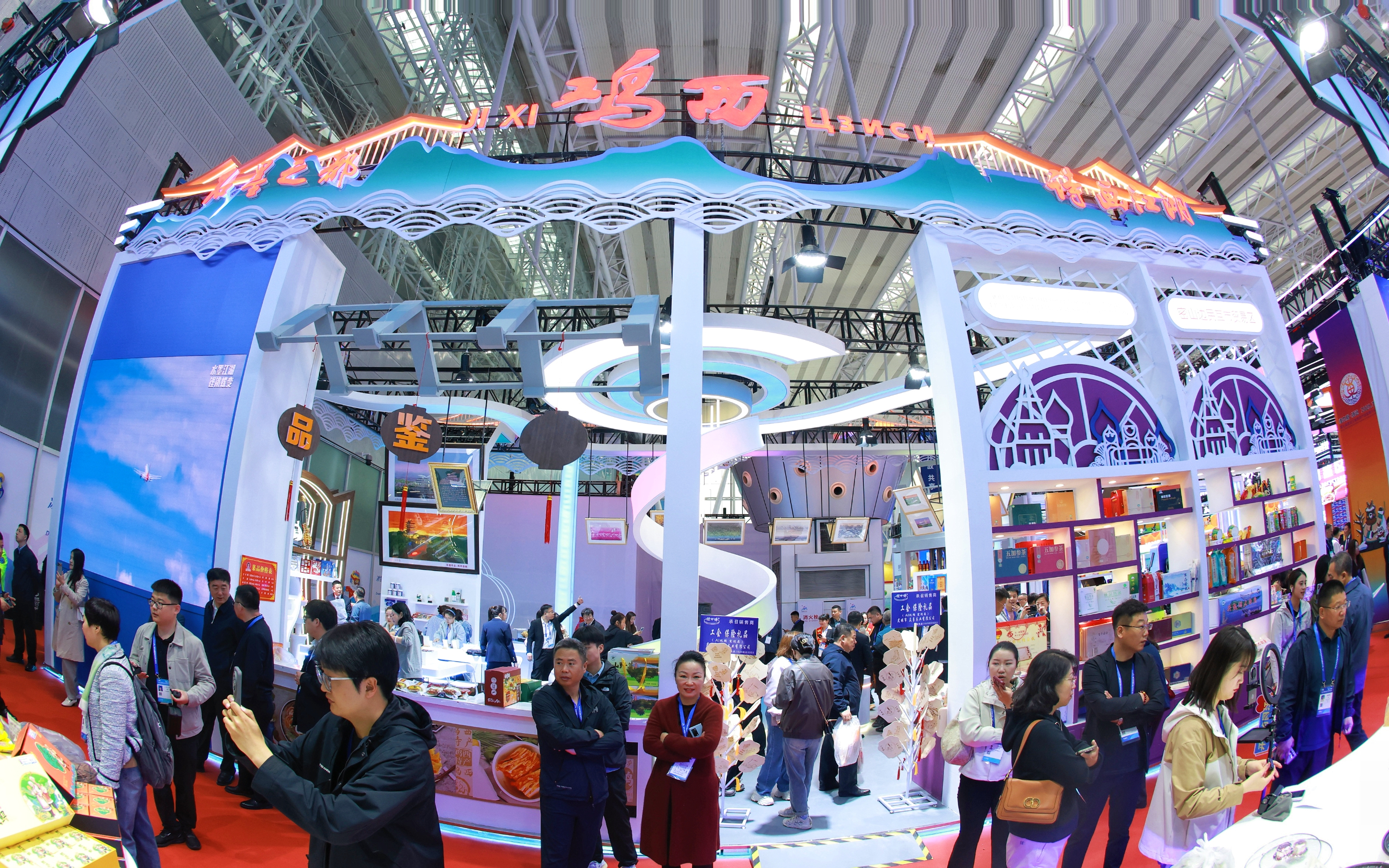
Group 1 - The 34th Harbin International Economic and Trade Fair showcased Jixi City with a theme of "Graphite Capital, Poetic Jianghu," featuring a 150 square meter exhibition hall that highlights local industries and cultural characteristics [2] - A record number of over 80 enterprises from Jixi participated, covering various sectors such as industrial manufacturing, technological innovation, bio-economy, digital economy, mineral economy, green food, and cultural tourism, with nearly 300 exhibits on display [2] - The exhibition focused on "special, refined, unique, and new" products, presenting achievements through physical displays and models, while also promoting cooperation with Russian cities and enterprises [2][3] Group 2 - Jixi organized seven major supporting activities during the fair, the highest number in its history, including a conference on building "China's Acanthopanax Capital" and promoting high-quality development in the biopharmaceutical industry [3] - Governmental discussions were held with cities from Russia and Kyrgyzstan to deepen international cooperation, alongside a series of promotional and live-streaming events [3] - The exhibition integrated cultural performances and local specialty product displays, achieving a deep fusion of exhibition, discussion, and negotiation [3]
《2025年东南亚绿色经济报告》发布
Shang Wu Bu Wang Zhan· 2025-05-16 15:47
Group 1: Current Status and Challenges of Southeast Asia's Green Economy - Southeast Asia has made progress in green economic transformation, but there is still a gap to meet the 2030 climate goals, with emissions increasing and reliance on fossil fuels [2] - Renewable energy currently accounts for 9% of the energy mix, and the penetration rate of electric vehicles is low, indicating a lag in green investment and industrial development [2] Group 2: System-Level Solutions - The sustainable bioeconomy is crucial for Southeast Asia, with potential to reduce approximately 230 million tons of CO₂ equivalent emissions and create around 340,000 jobs by 2030 through enhancing smallholder productivity and developing sustainable biofuel production [3] - Upgrading the existing power grid to accommodate renewable energy is necessary, with an expected reduction of about 5,000 tons of CO₂ equivalent emissions and the creation of around 200,000 jobs by 2030 [3] - Implementing a dual strategy to stimulate demand and strengthen local production of electric vehicles could lead to a reduction of approximately 4,000 tons of CO₂ equivalent emissions and the creation of around 350,000 jobs by 2030 [3] Group 3: Supportive Solutions - Climate financing in Southeast Asia is growing but still faces a funding gap, necessitating innovative financing models and the development of blended finance to attract private capital [4] - The carbon market is essential for decarbonization, and while there has been progress, the market remains immature, requiring clearer rules and enhanced project approval processes [4] - Artificial intelligence can help reduce emissions by optimizing various industries and promoting sustainable data center solutions [4] Group 4: Regional Cooperation and Investment Opportunities - Strengthening regional cooperation in Southeast Asia and the Asia-Pacific region can facilitate resource sharing, technology transfer, and market expansion, particularly in the bioeconomy, power grid construction, and electric vehicle sectors [5] Group 5: Action Recommendations and Outlook - Collective action is needed, with businesses incorporating sustainability into their models, financial institutions providing funding support, and governments guiding investments through policy [6] - By implementing these measures, Southeast Asia's green economy is expected to achieve significant progress by 2030, contributing to global climate change efforts [6]