
草业

Search documents
京蒙携手为兴安盟乡村振兴注入强劲动能
Xin Lang Cai Jing· 2026-01-14 20:46
Core Viewpoint - The collaboration between Beijing and the Xing'an League has significantly contributed to rural revitalization and economic development in the region, showcasing a successful model of inter-regional cooperation and resource sharing [4][5][15]. Group 1: Economic Development and Investment - Since the initiation of the Beijing-Xing'an collaboration in 2017, a total of 2.7 billion yuan has been invested in various projects, resulting in 982 implemented projects across multiple sectors including industry cultivation, consumption promotion, employment support, talent exchange, and cultural tourism integration [5][8]. - The collaboration has led to the establishment of key projects such as the Alshan Deer Horn Bay Hot Spring Resort and the Zhalai Nuoer Beef Industry Cluster, which have bolstered local economies and created significant employment opportunities [8][15]. - The tourism sector in Alshan has seen a remarkable increase, with 6.14 million visitors and total tourism revenue reaching 7.68 billion yuan from January to October 2025, marking substantial year-on-year growth [6][8]. Group 2: Agricultural and Seafood Development - The collaboration has also focused on modern facility aquaculture, with an investment of 20.4 million yuan supporting the establishment of a seafood farming project in the Keshiketeng Banner, which is expected to fill local industry gaps and provide fresh seafood to the market [7][8]. - The Xing'an League has successfully developed a comprehensive agricultural product marketing strategy, resulting in 7.3 million tons of rice sold in Beijing, generating sales of 1 billion yuan, and establishing a pathway for agricultural product upgrades [10][12]. Group 3: Employment and Skills Training - The collaboration has facilitated the creation of 51,000 job opportunities through various recruitment events and skills training programs, significantly enhancing local employment rates [11][12]. - A total of 2,769 rural laborers have received targeted skills training, contributing to the development of labor brands such as "Xing'an Housekeeping" and "Tuqian Welder" [12][13]. Group 4: Education and Healthcare - The partnership has led to the integration of educational resources, with 652 Beijing support personnel aiding in the development of 160 local schools, benefiting over 50,000 students [13][15]. - In healthcare, 389 Beijing medical experts have provided assistance to local hospitals, enhancing the quality of medical services and establishing a sustainable healthcare workforce in the region [13][15]. Group 5: Cultural and Tourism Integration - The collaboration has promoted cultural tourism by developing attractive rural areas and creating a comprehensive tourism route that has gained recognition and increased visitor numbers [14][15]. - Various promotional activities have been conducted to enhance the visibility of Xing'an products in major markets, resulting in significant sales and partnerships with businesses in Beijing [10][15].

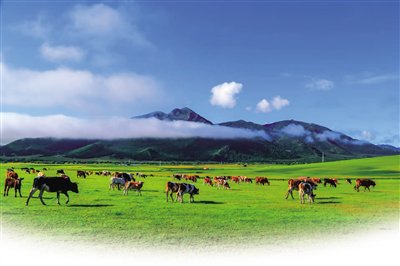
“十四五”时期我国草原生态质量持续改善
Ren Min Ri Bao· 2025-12-24 06:33
Core Viewpoint - During the "14th Five-Year Plan" period, China has significantly strengthened grassland protection and restoration, leading to a historic shift in grassland ecological quality from overall degradation to overall improvement [1] Group 1: Grassland Restoration Efforts - The area of degraded grassland is rapidly decreasing at a rate of over 46 million mu per year, with healthy and sub-healthy grassland now covering 2.7 billion mu, accounting for over 70% of the total [1] - Key projects such as the "Three North" and "Double" initiatives have been pivotal in promoting grassland restoration, resulting in a reduction of nearly 28 million mu of degraded grassland and an annual average of over 10 million mu in the prevention of harmful grassland organisms [1] Group 2: Regulatory Measures and Legal Actions - China has intensified grassland resource supervision, addressing nearly 30,000 cases of grassland destruction and transferring over 1,000 criminal cases to judicial authorities, with a yearly decrease in illegal occupation of grassland cases [1] - A special action to manage grassland overgrazing has been initiated, alongside the implementation of the third round of ecological compensation policies for grasslands, achieving nearly 4 billion mu in grassland prohibition and livestock balance tasks [1] Group 3: Development of Modern Grass Industry - The development of modern grass industry has been actively promoted, with the establishment of 600,000 mu of grass seed breeding bases, and the annual supply capacity of perennial ecological grass seeds reaching 25,000 tons, effectively alleviating supply constraints [1] - Efforts are underway to accelerate the construction of a modern forage industry system, actively expanding the development space for grass industry [1]
数说绿色发展成绩单 “十四五”时期我国草原生态得到整体改善
Yang Shi Wang· 2025-12-24 01:35
Core Viewpoint - China has made significant progress in grassland protection and restoration during the 14th Five-Year Plan period, achieving a historic shift from overall degradation to improvement in grassland ecological conditions [1][3]. Group 1: Grassland Ecological Improvement - The ecological quality of grasslands in China has continuously improved, with key projects like "Three North" and "Dual" initiatives driving restoration efforts [1]. - The area of degraded grassland has been reduced by nearly 28 million acres, with an average of over 10 million acres treated annually for harmful grassland organisms [1]. - The overall grassland ecological status is stable, with comprehensive vegetation coverage maintained at over 50%, and healthy and sub-healthy grassland areas increasing to 2.7 billion acres, accounting for over 70% [1]. Group 2: Regulatory Measures and Management - China has strengthened grassland resource supervision, addressing nearly 30,000 cases of grassland destruction, with the number of illegal grassland occupation cases decreasing annually [3]. - A special action to manage grassland overgrazing has been initiated, and the third round of ecological compensation policies for grasslands has been implemented, with nearly 4 billion acres of grassland under management for grazing balance [3]. - The overgrazing rate of livestock in key provinces is gradually declining [3]. Group 3: Development of Modern Grass Industry - During the 14th Five-Year Plan period, China has actively developed the modern grass industry, establishing 600,000 acres of grass seed breeding bases [5]. - The annual supply capacity of perennial ecological grass seeds has reached 25,000 tons, effectively alleviating supply constraints [5]. - Efforts are being made to accelerate the construction of a modern forage industry system and promote the development of grassland parks and state-owned grasslands, fostering overall, coordinated, and integrated growth of the modern grass industry [5].
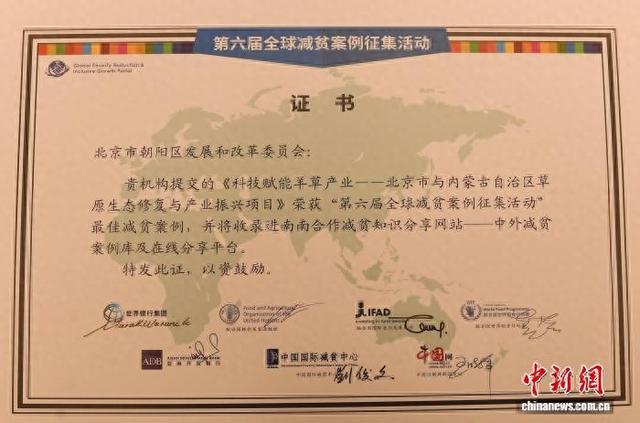
北京朝阳科技赋能羊草产业入选全球最佳减贫案例
Zhong Guo Xin Wen Wang· 2025-12-11 13:53
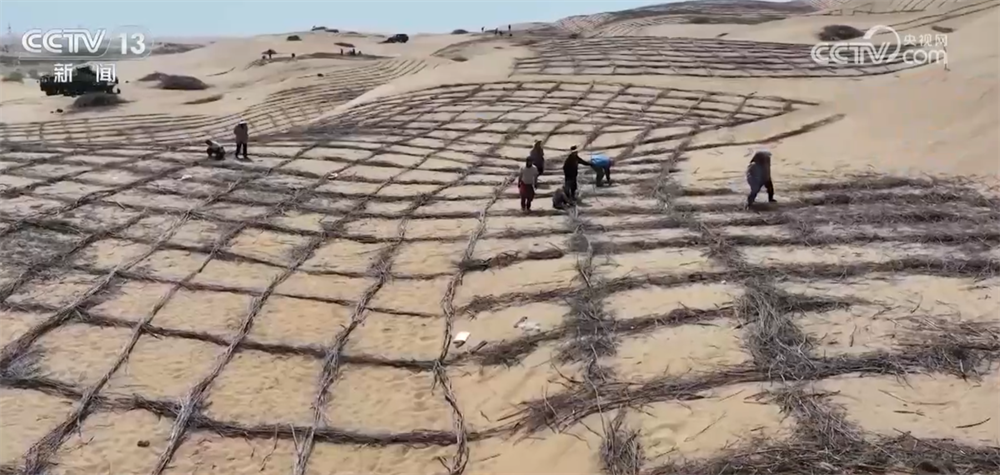
Core Viewpoint - The "Sheep Grass Planting Project" in Chaoyang District, Beijing, has been recognized as a successful case in global poverty alleviation, showcasing the integration of technology and industry collaboration to enhance ecological governance and increase local income [1][7]. Group 1: Project Overview - The project aims to combat soil salinization in the Keshiketeng Banner, where salinization has caused an average annual crop yield loss of 40%, equating to a direct economic loss of 230 million yuan [1][2]. - The project has introduced the "Zhongke Sheep Grass," a high-quality variety developed by the Chinese Academy of Sciences, which is well-suited for saline-alkali land and can survive for nearly 30 years after a single planting [3][8]. Group 2: Economic Impact - The project has led to an increase in local income, with an average additional income of over 1,000 yuan per mu (approximately 0.067 hectares) once the sheep grass reaches maturity [2][4]. - Approximately 300 local residents have been employed through the project, contributing to job creation and economic development in the region [2][4]. Group 3: Implementation Strategy - A four-party collaboration mechanism has been established, involving research institutions, enterprises, local collectives, and farmers, to ensure effective project implementation [2][4]. - The project provides financial support to farmers, including subsidies for land use and guaranteed income increases, while also offering training in sheep grass cultivation techniques [4][5]. Group 4: Environmental Benefits - The project has significantly improved soil conditions, with a decrease in soil pH and an increase in vegetation coverage, contributing to the restoration of degraded saline-alkali land [2][8]. - The ecological restoration model developed through this project demonstrates a dual benefit of economic gain and environmental improvement, aligning with the United Nations Sustainable Development Goals [8][9]. Group 5: Future Prospects - The success of the "Zhongke Sheep Grass" project is expected to inspire further innovations in ecological governance and rural development, contributing to the construction of a significant ecological safety barrier in northern China [8][9]. - The Chaoyang District plans to continue enhancing the project by improving production and marketing connections, aiming for standardization and branding of the sheep grass industry [9].

扎赉特旗冬明草业经销处(个体工商户)成立 注册资本20万人民币
Sou Hu Cai Jing· 2025-11-26 21:50
Core Viewpoint - A new individual business named Zhalaiheqi Dongming Grass Industry Distribution has been established, focusing on grass-related products and services [1] Company Summary - The legal representative of the new business is Lin Qiang [1] - The registered capital of the business is 200,000 RMB [1] - The business scope includes licensed projects such as road cargo transportation (excluding hazardous goods) [1] - General projects include sales of grass and related products, grass planting, and agricultural straw processing and utilization services [1]
蒙草生态培育燕麦品种,关键性状提高约30%
Quan Jing Wang· 2025-11-06 08:26
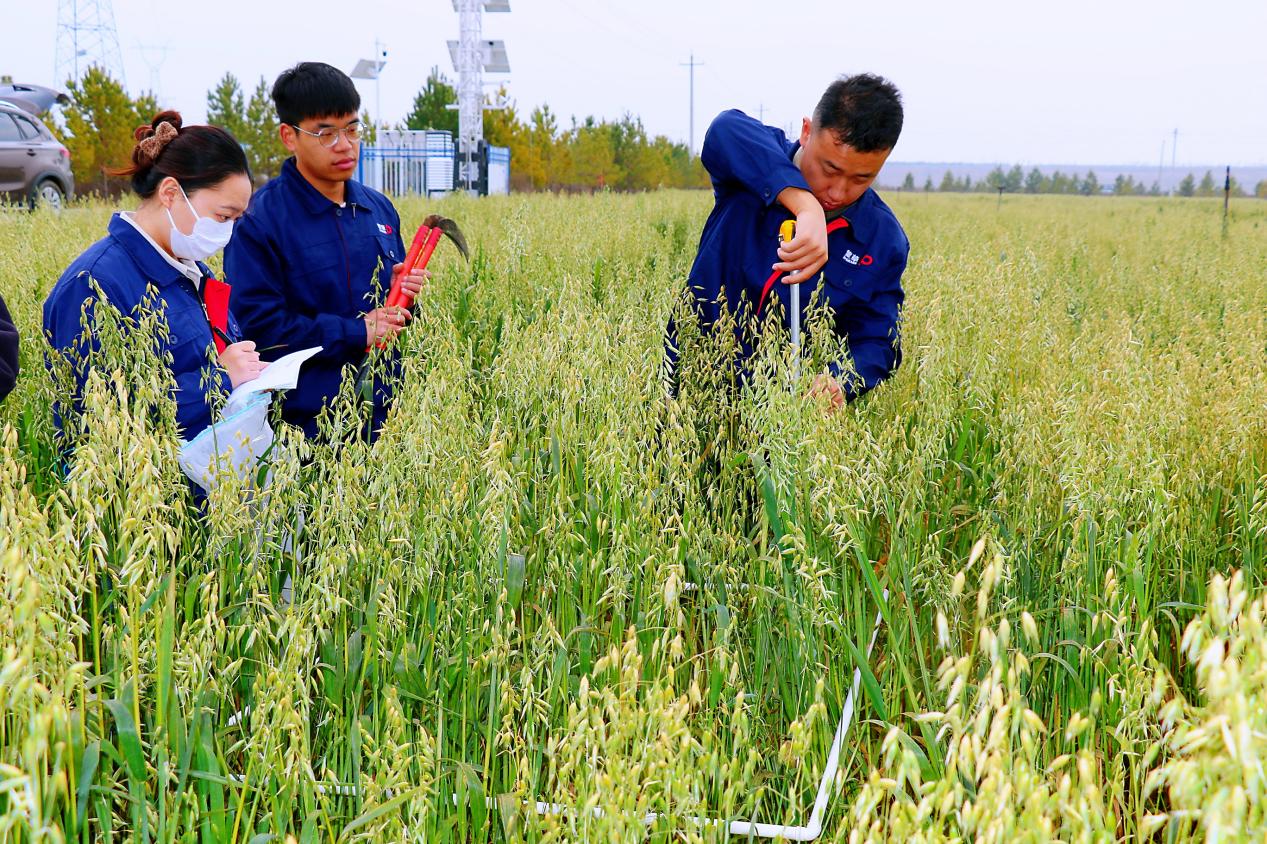
Core Insights - Oat is a high-quality forage and food crop that plays a significant strategic role in food security and the high-quality development of animal husbandry in China [1] - The reliance on imported oat seeds has severely restricted the development of oat forage in the country [1] Group 1: Domestic Oat Promotion - Mengcao Ecological (300355) collaborates with Modern Grass Industry to promote high-quality domestic oat varieties in key production areas such as Inner Mongolia and Gansu [3] - The demonstration varieties include Mengcao Ecological's jointly cultivated high-quality domestic oats, such as Mengyan No. 4 and Mengnongda No. 7 [3] Group 2: Yield and Performance - Field trials show that domestic oat varieties outperform imported ones by approximately 30% in key traits like plant height and leaf dimensions [4] - The theoretical yield of domestic oats is 2568 kg per mu, which is an increase of 334 kg per mu compared to foreign varieties, showcasing excellent environmental adaptability and yield potential [4] Group 3: Variety Development and Adaptability - Mengcao Ecological has developed over 40 high-quality forage varieties with independent intellectual property rights, suitable for a wide range of planting areas across traditional agricultural provinces [6] - These varieties can adapt to unique geographical and climatic conditions, such as high altitude and low precipitation, expanding the planting space for domestic oats [6] Group 4: Quality Characteristics - Domestic oat varieties exhibit uniform growth, compact ear types, and bright colors, indicating their quality and market competitiveness [7]

内蒙古:产业转型发展势头正旺
Zhong Guo Chan Ye Jing Ji Xin Xi Wang· 2025-09-04 02:40
Group 1: Energy Sector Development - Inner Mongolia is a significant energy base in China, focusing on transforming traditional industries and fostering emerging sectors [1][4] - The region is developing a "wind-solar-hydrogen-storage vehicle" industrial cluster, integrating energy production, equipment manufacturing, and application demonstration [3][4] - The "Photovoltaic Great Wall" project in Ordos effectively prevents desert encroachment while generating green electricity [3][4] Group 2: Agricultural and Ecological Innovations - The Inner Mongolia region is enhancing its agricultural sector, particularly in green livestock product processing and clean energy [2][3] - Mengcao Group is actively involved in ecological restoration, having restored nearly 33 million acres of various ecological types [2] - The dairy industry is expanding, with significant production capacities in liquid milk, milk powder, and cheese, indicating a robust modern dairy development [1][2] Group 3: Industrial Transformation and Growth - Baotou is accelerating its industrial transformation, aiming to establish wind power equipment manufacturing as a major industry cluster [2][3] - The region's non-coal industries are projected to grow at an average annual rate of over 8% from 2021 to 2024, with high-tech manufacturing and strategic emerging industries also showing strong growth [4] - The industrial economy of Inner Mongolia is expected to exceed 1 trillion yuan for the first time, reflecting a significant economic milestone [4]

产业转型发展势头正旺
Jing Ji Ri Bao· 2025-08-25 21:44
Group 1: Industry Transformation and Development - Inner Mongolia is accelerating the transformation of traditional industries and nurturing emerging industries, showcasing strong momentum in industrial development [1][4] - The region is focusing on six major industrial clusters, including green agricultural products processing, clean energy, modern chemicals, new materials, modern equipment manufacturing, and biomedicine [2][3] Group 2: Dairy Industry Advancements - Yili Group's modern smart health valley in Hohhot has an impressive production capacity, processing 6,500 tons of fresh milk daily and producing 60,000 tons of milk powder and 200,000 tons of cheese annually [1] - The company aims to launch additional projects this year, including 150,000 tons of raw cheese and 63,000 tons of milk powder, indicating a robust growth trajectory in the dairy sector [1] Group 3: Wind Power Equipment Manufacturing - Baotou City is rapidly developing its wind power equipment manufacturing sector, with 44 wind power equipment enterprises already in operation, aiming for an 85% component matching rate this year [3] - The city is focusing on building a complete industrial chain that includes main engines, generators, gearboxes, blades, and towers [3] Group 4: Renewable Energy Initiatives - Ordos City is promoting energy transition to drive industrial upgrades, creating a comprehensive "wind-solar-hydrogen-storage vehicle" industrial cluster [3][4] - The "Photovoltaic Great Wall" project in the Kubuqi Desert is producing green electricity while preventing desert encroachment, achieving ecological, economic, and social benefits [3] Group 5: Zero-Carbon Industrial Development - The Zero-Carbon Industrial Park in Ordos is a key project focusing on new energy systems and green industrial clusters, aiming for 100% green electricity production [4] - The region's non-coal industries are projected to grow at an average rate of over 8% annually from 2021 to 2024, with high-tech manufacturing and strategic emerging industries also showing significant growth [4]
蒙草生态子公司获2025年度创新能力建设资金1亿元
Zhi Tong Cai Jing· 2025-08-08 11:46
Core Viewpoint - The company received a funding notification from the Inner Mongolia Finance and Science and Technology Departments, amounting to 100 million yuan for the establishment of a National Grassland Technology Innovation Center [1] Group 1 - The funding is designated for the innovation capability construction of the company's subsidiary, Inner Mongolia Grassland Technology Innovation Center Co., Ltd [1] - The funds are provided in cash and have already been received by the subsidiary [1]