视频监控

Search documents
不敢反抗美国?加拿大转身背刺中国,对华加税25%,中企收到“逐客令”,商务部坚决反对
Sou Hu Cai Jing· 2025-07-21 13:50
Group 1: Steel Import Restrictions - Canada announced stricter steel import restrictions targeting China, imposing a 25% additional tax on products containing steel melted and cast in China starting August 1 [1][3] - Canada will limit steel imports from China to half of last year's volume, with an additional 50% tax on any excess [1][3] - The total steel import value for Canada in 2024 is projected to be $16 billion, with nearly half coming from the U.S. and only 10% from China [1] Group 2: U.S.-Canada Trade Relations - The new measures are a response to ongoing trade tensions with the U.S., which recently imposed tariffs of up to 50% on Canadian steel and aluminum products [3] - Canada attempted to appease the U.S. by canceling a digital services tax on U.S. tech companies and increasing defense budgets, but faced further tariff increases from the U.S. [3] Group 3: Hikvision and National Security Concerns - Canada ordered Chinese company Hikvision to cease operations, citing potential national security risks without providing substantial evidence [4][6] - Hikvision, a leading supplier of video surveillance equipment, has been involved in various projects in Canada, including the Vancouver Winter Olympics [6] Group 4: China's Response and Trade Implications - China expressed strong opposition to Canada's unilateral measures, stating they violate WTO rules and disrupt international trade [8] - China has already imposed punitive tariffs on Canadian agricultural products, and further retaliatory measures could be on the horizon if tensions escalate [8] - The potential for Australia to fill the market gap left by Canadian canola exports to China could significantly impact Canada's agricultural trade, valued at over $2 billion annually [8]



视觉智算一周年:博雅睿视以“芯”力量点亮数字未来
Zhong Guo Chan Ye Jing Ji Xin Xi Wang· 2025-07-14 11:35
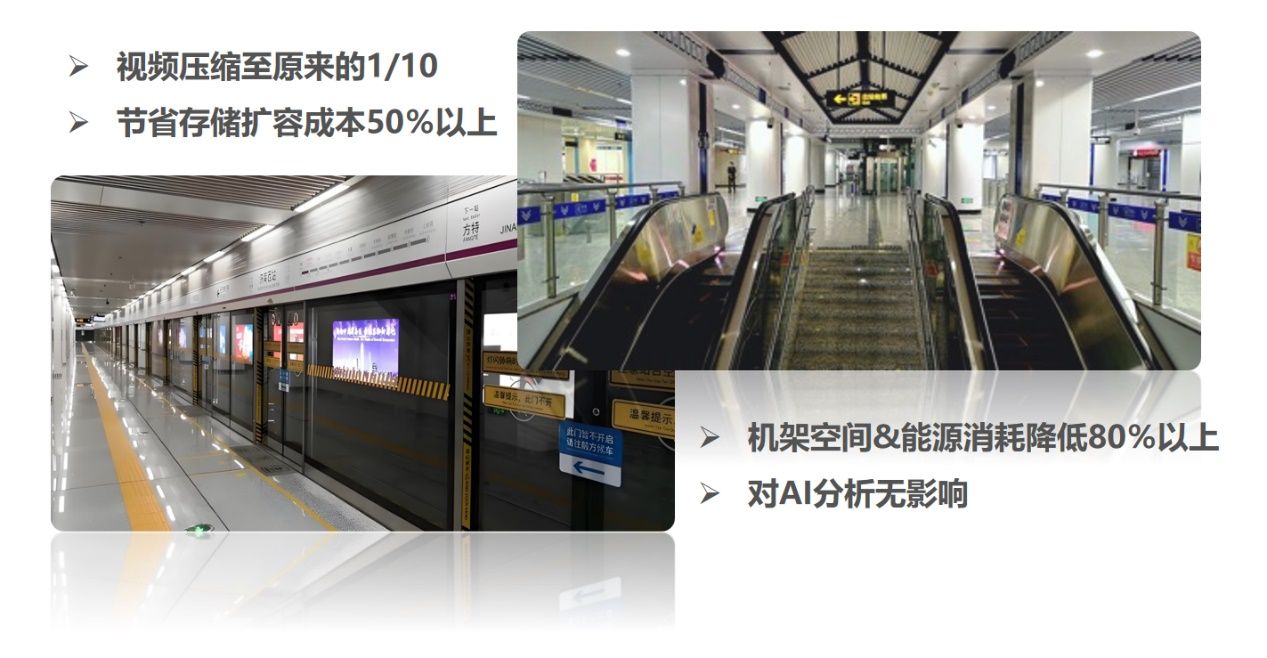
Core Concept - The video surveillance industry has evolved from analog to intelligent upgrades, with the emergence of the "Visual Intelligence Computing" concept, which represents a new direction for deep processing and application of video data, creating opportunities for development in security and broader fields [1][2]. Technological Breakthroughs - The SPARK RE3200 chip features the self-developed R-VICA architecture, enabling significant improvements in processing capabilities in complex scenarios, thus providing integrated solutions for security, AIoT, and low-altitude economy [4]. - The company actively participates in setting industry standards and integrates AVS3 encoding technology into its chips, enhancing the digital infrastructure with high-efficiency NPU computing power and national security-level protection [5]. Application Landscape - The SPARK RE3200 chip has been implemented in various applications, including supporting the launch of the CCTV 8K channel, intelligent monitoring in urban transit, and enhancing emergency response capabilities in water conservancy [6][9]. Industry Resonance - The company has received multiple prestigious awards, including the National Technology Invention Award and the Wu Wenjun Artificial Intelligence Science and Technology Award, reflecting its commitment to innovation and excellence [9]. - In 2024, the company completed a Series A financing round of 100 million yuan, accelerating its comprehensive layout from standards to algorithms, chips, and terminals [9]. Future Outlook - The company plans to develop the next generation of the R-VICA 2.0 architecture, expand into new application scenarios such as AI and XR metaverse, and foster collaboration with developers to create innovative applications in ultra-high-definition video [10].
90天宽限到期,加拿大率先向美低头!将中企驱逐出境,向特朗普表忠心
Sou Hu Cai Jing· 2025-07-02 04:19
Group 1 - Canada has succumbed to U.S. pressure by expelling Chinese company Hikvision, reflecting the challenges smaller nations face in the geopolitical landscape [1][3] - The Canadian government, citing "national security," ordered Hikvision to cease operations within 120 days, a decision influenced by the economic impact of U.S. tariffs [1][3] - The U.S. imposed a 25% tariff on Canadian automobiles, significantly affecting Canada's economy, which relies heavily on exports to the U.S. [1][3] Group 2 - Canada's cancellation of the planned digital services tax against U.S. tech giants demonstrates the economic disparity and pressure from the U.S. [3][5] - The expulsion of Hikvision is seen as a political gesture rather than a legitimate security concern, as no concrete evidence has been provided [5][8] - The move aligns with the U.S. strategy to isolate Chinese technology firms, indicating a broader trend of geopolitical alignment among allies [5][8] Group 3 - China's Ministry of Commerce condemned Canada's actions, asserting that it would take necessary measures to protect the rights of Chinese companies [7][8] - The situation may trigger a ripple effect among other nations, as seen with the EU's willingness to accept U.S. tariffs while seeking exemptions in specific sectors [7][8] - Despite short-term concessions by some countries, the fundamental market dynamics suggest that reliance on Chinese manufacturing will persist [7][8]

海康威视:加拿大政府无端指控,罔顾事实
Guan Cha Zhe Wang· 2025-06-29 08:16
Core Viewpoint - The Canadian government has ordered Hikvision Canada Ltd. to cease operations in Canada within 120 days, citing "national security" concerns, which Hikvision strongly opposes, claiming the decision is based on a misinterpretation of Chinese laws and lacks evidence [1][2]. Group 1: Company Response - Hikvision asserts that the Canadian government's actions are discriminatory and lack procedural fairness and transparency, emphasizing their commitment to business ethics and compliance with local laws [1]. - The company highlights its global presence, stating it operates in over 180 countries and regions, with branches in 60 of them [2]. Group 2: Government Actions - Canadian Minister of Industry Mélanie Joly announced the government's decision to halt Hikvision's operations, citing national security as the rationale [2]. - The Chinese Embassy in Canada expressed strong dissatisfaction and opposition to the Canadian government's actions, urging a reversal of the decision to avoid disrupting normal economic and trade cooperation between China and Canada [2].
视频监控“升级”:AI智能体如何破解 “看得懂” 难题?
Huan Qiu Wang Zi Xun· 2025-06-06 03:39
Core Viewpoint - The video surveillance industry is transitioning towards advanced intelligence, facing challenges in real-time processing, accuracy, and integration of heterogeneous data sources, necessitating the adoption of AI agents for enhanced capabilities [1][2][3][4]. Group 1: Challenges in Video Surveillance Industry - The industry has integrated deep learning capabilities for basic functions like facial recognition and behavior detection, but it struggles with understanding complex scenarios and multi-target interactions [2][3]. - Existing AI systems often focus on single-target recognition, lacking the ability to comprehend the context and deeper reasons behind events [2][3]. - Robustness and generalization in dynamic environments remain significant challenges, as current models may fail under adverse conditions [2][3]. - Integrating diverse data sources, such as audio and sensor data, for comprehensive analysis is a complex task that current systems do not adequately address [3]. - The transition from alert generation to intelligent decision-making and automated responses is crucial for future upgrades in surveillance systems [3][4]. Group 2: AI Agent Core Concepts - AI agents are autonomous computing entities capable of perception, reasoning, planning, and action to achieve predefined goals [4][5]. - The perception module processes data from various sensors, enhancing the system's ability to detect and track targets [5]. - The reasoning module serves as the core intelligence, analyzing information and assessing risks based on a knowledge base [6]. - The planning module formulates action sequences based on current states and goals, allowing for dynamic responses to events [6]. - The action module executes plans through various actuators, impacting the environment or system [7]. - The memory module enables continuous learning and improvement by storing and retrieving information [7]. Group 3: Application Prospects of AI Agents in Video Surveillance - AI agents can significantly enhance intelligent perception and precise recognition through multi-modal data fusion, improving accuracy and robustness [9][10]. - They can adapt to complex environments and recognize fine-grained behavior patterns, enabling better anomaly detection [9][10]. - AI agents facilitate intelligent decision-making and automated responses by analyzing events and coordinating actions across systems [11][12]. - They enable efficient management and deep mining of video data, generating summaries and predicting potential risks based on behavioral patterns [12][13]. - Continuous adaptation and optimization of the system are possible through real-time monitoring and predictive maintenance capabilities [13]. Group 4: Future Challenges and Outlook - Despite the potential of AI agents, challenges such as robustness in complex environments and real-time processing capabilities need to be addressed [14][15]. - Data security, privacy protection, and compliance with regulations are critical concerns that must be managed as AI agents are deployed [15]. - The future of video surveillance systems will involve AI agents acting as intelligent entities capable of proactive defense and smart management, transforming societal safety and efficiency [16].
中威电子(300270) - 300270中威电子投资者关系管理信息20250514
2025-05-14 09:12
Group 1: Core Technology Advantages - The company's core technology advantages are reflected in five key areas: deep accumulation in video technology, intelligent algorithms and big data analysis capabilities, IoT perception and system integration advantages, smart hardware and scenario-based solutions, and integrated services and market expansion capabilities [1]. Group 2: Financial Performance - In 2024, the company has not yet turned a profit, but the operating situation has improved, with a reduction in the loss margin compared to the previous year. Revenue has increased, and the gross profit margin has improved [2]. - The gross profit margin for 2024 is 26.39%, slightly up from 23.67% in 2023, primarily due to accelerated technological iterations in the video surveillance field and competitive pricing strategies [4]. Group 3: Cost Reduction and Efficiency Improvement - The company has implemented cost reduction measures such as procurement negotiations and inventory management, which have effectively lowered procurement costs and inventory backlog [2]. - The deployment of the PMS project management platform has optimized resource allocation and reduced delay risks through real-time monitoring [2]. Group 4: Research and Development Investment - In 2024, the company invested 20.0273 million yuan in R&D, accounting for 10.97% of total revenue. The focus will be on integrating products with digital technologies in smart highways and upgrading solutions for smart parks [4]. - Despite a 31.22% year-on-year decrease in R&D expenses, the company has optimized processes to lower marginal costs and concentrated resources on high-potential areas, ensuring no negative impact on innovation [5]. Group 5: Future Growth and Profit Distribution - Future profit growth points are expected to come from deepening core business, expanding into emerging fields, and innovating business models while improving operational efficiency and cash flow [5]. - The company will not distribute profits for 2024 due to negative retained earnings, but has a three-year shareholder dividend plan in place [4].

从估值和股息率看股票回报率启示
雪球· 2025-05-04 04:04
Group 1: Hikvision - Hikvision's stock returns over the past 4, 6, and 8 years are -42%, -4%, and -16% respectively, despite net profits increasing from 3.1 billion in 2013 to a peak of 16.8 billion in 2021, then declining to 12.8 billion in 2022 and projected at 12 billion in 2024 [2][6] - The average price-to-earnings (P/E) ratio for Hikvision over the past 8 years is 27.2 times, with a low dividend yield of 2.0% [7][6] - The stock price at the end of 2017 was 39.0 yuan with a P/E ratio of 38 times, leading to a significant loss if held until now [4][7] Group 2: Sinopec - Sinopec's net profit has fluctuated, with an average of 56.8 billion over the past 8 years, and only the stock price at the end of 2024 is expected to yield negative returns [12][11] - The average P/E ratio for Sinopec over the past 8 years is 11.4 times, with an average dividend yield of 7.2% [12][11] - Despite being perceived as a low-growth company, Sinopec has provided positive returns in 7 out of the last 8 years, with a cumulative dividend yield of 47.1% [12][11] Group 3: CNOOC - CNOOC's net profit increased from 24.7 billion in 2017 to 137.9 billion in 2024, with an average net profit of 79.6 billion over the past 8 years [16][14] - The average P/E ratio for CNOOC over the past 8 years is 8.0 times, with an average dividend yield of 9.1% [16][14] - CNOOC has shown strong returns, with a stock price increase of 169% from 11.22 HKD in 2017 to 16.76 HKD in 2025, despite experiencing negative returns only in 2024 [13][14] Group 4: Market Comparison - The Hang Seng Index has decreased by 26% from the end of 2017 to April 2025, while the A-share market has only seen a 1% decline [25][26] - Stocks perceived as high-quality, such as Hikvision, have resulted in losses, while lower-growth stocks like Sinopec have yielded positive returns [25][26] - CNOOC's performance has been significantly better than that of Hikvision and Sinopec, demonstrating the importance of valuation and dividend yield in investment returns [25][26]



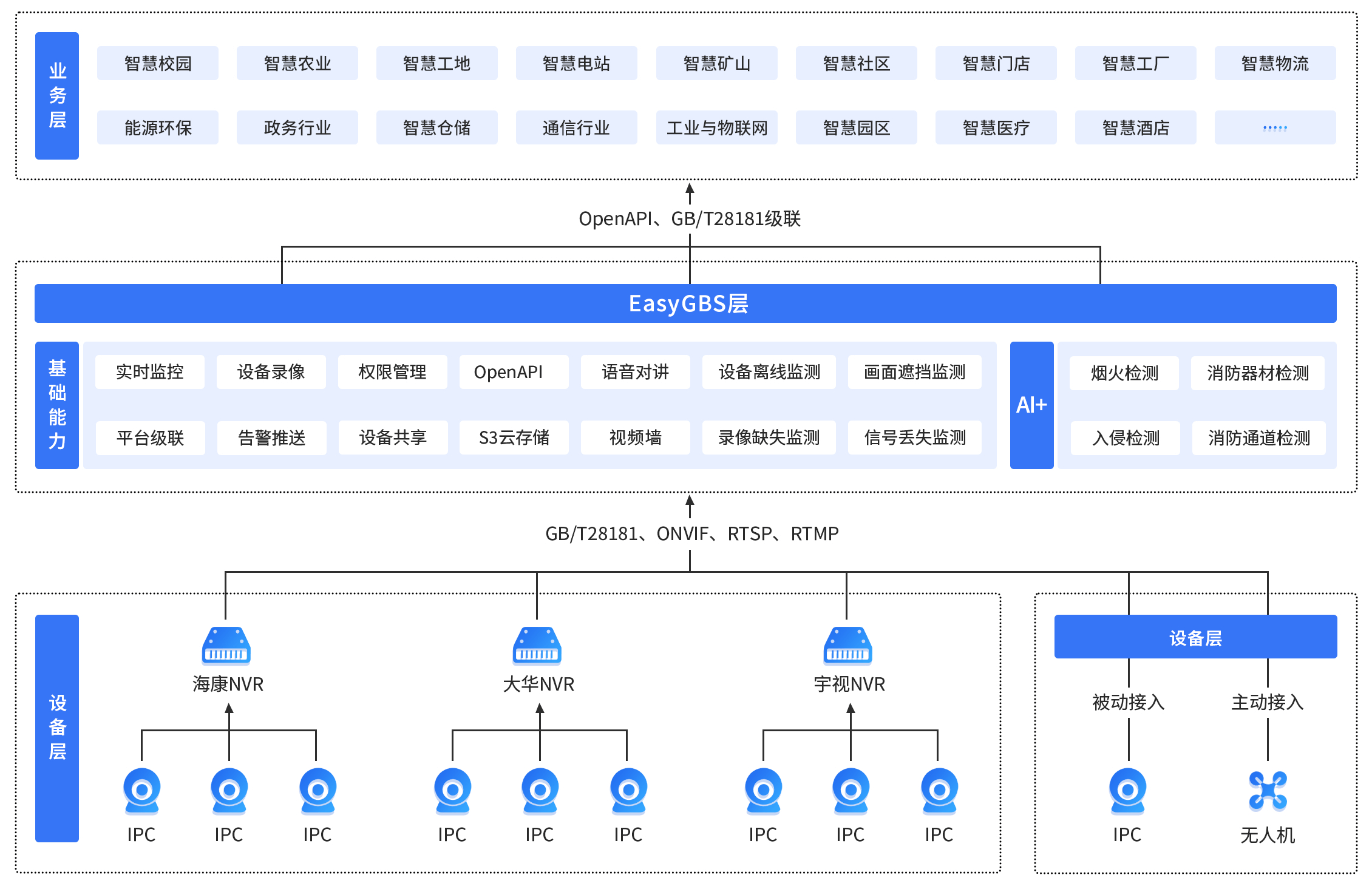
国标GB28181视频平台EasyGBS打造生产监控智能体系,推动企业数字化升级
Sou Hu Cai Jing· 2025-04-30 08:16
Core Viewpoint - The article emphasizes the need for advanced monitoring solutions in industrial production due to the limitations of traditional systems in meeting real-time, efficient, and intelligent monitoring demands [2][8]. Group 1: Industry Needs - The industrial sector requires comprehensive and precise monitoring management to identify production anomalies, ensure equipment safety, and enhance production efficiency [2]. - The complexity of production processes and the multitude of equipment necessitate a robust monitoring system [2]. Group 2: EasyGBS Platform Features - EasyGBS is a video platform based on the GB28181 protocol, offering strong video access, processing, and distribution capabilities for reliable production monitoring solutions [2][9]. - The platform supports various device access protocols, including GB28181, RTSP, RTMP, and ONVIF, allowing integration with mainstream cameras and NVRs from brands like Hikvision and Dahua [6][8]. Group 3: System Architecture - The system architecture consists of four layers: front-end collection, network transmission, platform processing, and application display [3][6]. - Front-end devices, such as high-definition cameras and video encoders, are strategically deployed in key areas to ensure comprehensive monitoring [3]. - The EasyGBS platform processes incoming video data, enabling real-time live streaming and multi-device access [3][6]. Group 4: Application and Management - Management personnel can access the EasyGBS platform via web browsers for real-time monitoring, video playback, and alarm notifications [6][8]. - The platform allows for 24/7 continuous recording and provides features for video retrieval and playback, facilitating incident analysis and operational efficiency [6][8]. - Alarm rules can be defined based on monitoring needs, enabling immediate response to specific events such as intrusion detection [8]. Group 5: Benefits for Enterprises - EasyGBS enhances production monitoring by enabling digital and intelligent transformation, which is crucial for sustainable development in enterprises [9]. - The platform's capabilities support effective management of production processes and warehouse operations, improving accuracy and efficiency [8][9].