货币金融

Search documents
打破美元霸权?俄罗斯对印度提要求,石油贸易只收人民币
Sou Hu Cai Jing· 2025-10-10 11:26
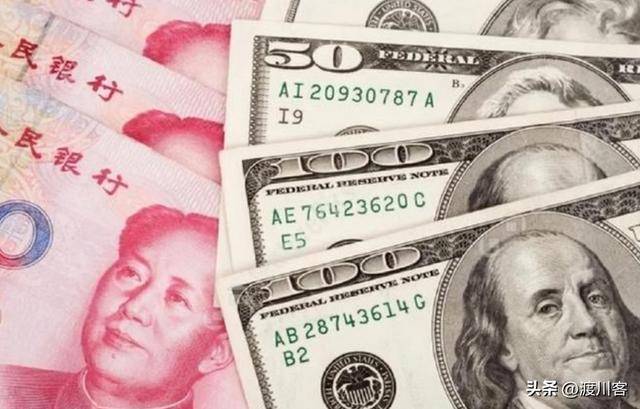
Group 1 - Russian oil traders have demanded that Indian state-owned refineries conduct transactions exclusively in RMB, indicating a shift away from accepting Indian Rupees [2][8] - The inability of the Indian Rupee to be recognized internationally limits its utility, as it cannot be easily exchanged for goods from other countries [4][6] - India's reliance on imports for many domestic goods undermines the credibility of the Rupee, leading to a lack of demand for it globally [6][8] Group 2 - The current geopolitical landscape has forced India to seek closer ties with Russia, especially after deteriorating relations with the US due to trade disputes [6][8] - Russia is leveraging India's dependence on its oil by requiring India to find its own sources of RMB for transactions, reflecting the changing dynamics in international trade [8][10] - The decline of US dollar dominance is evident as countries look for alternatives, with the RMB gaining traction due to China's strong production capabilities [8][15] Group 3 - The historical context shows that countries like Brazil had to rely on the US dollar due to a lack of alternatives, highlighting the impact of military power on currency dominance [11] - China's rise as a manufacturing powerhouse has allowed it to push for the internationalization of the RMB, reducing reliance on the US dollar [13][15] - The ultimate goal for China is to increase the RMB's share in global reserves to surpass that of the US dollar, marking a significant shift in global economic power [15]

中国“锄头”猛挖美元霸权墙角!美国霸权这下真“扛不住”了!
Sou Hu Cai Jing· 2025-10-05 05:08
Core Insights - China has made a significant decision to suspend dollar settlements for iron ore imports from Australia, raising concerns in international economic and political spheres [1][3] - Australia, while being a close ally of the U.S., heavily relies on China for trade, with the trade volume expected to exceed $210 billion in 2024 [1][3] - The move is seen as a strategic blow to the U.S. dollar's dominance, as losing China as a major customer could severely impact Australia's economy [3][5] Group 1 - The suspension of dollar settlements is a critical maneuver that could destabilize the U.S. dollar's position, especially if even close allies like Australia begin to abandon it [3][6] - Australia exports only $24.3 billion to the U.S. annually, indicating that the loss of Chinese trade could create a significant economic void that the U.S. cannot fill [3][5] - China's approach is likened to a strategic "Taiji" move, targeting Australia's economic lifeline while signaling discontent with dollar-based transactions [3][8] Group 2 - The internationalization of the renminbi is advancing rapidly, with China prepared to counter potential threats from the U.S. regarding SWIFT and dollar dominance [6][8] - Australia is not the only country considering abandoning the dollar, as discussions with Saudi representatives suggest a broader trend towards de-dollarization [6][8] - The relationship between China and Australia is characterized as mutually beneficial, with Australia providing essential resources that China needs [5][6]

地缘经济论 | 第十一章 地缘经济新形势下的国际货币体系演变
中金点睛· 2025-09-28 01:03
Core Viewpoint - The evolution of currency forms is driven by both private and state influences, with current trends indicating a shift from a dollar-dominated international monetary system towards a multipolar framework, emphasizing the importance of real economic competitiveness and technological innovation over mere capital account openness [2][3][19]. Group 1: Evolution of Currency Forms - Currency can be understood through two dimensions: commodity money vs. credit money, and private money vs. state money [4][5]. - The historical transition from commodity money to credit money reflects the need for efficient payment systems, with modern banking systems evolving into public-private partnerships supported by government credit [4][6]. - Recent developments in digital currencies highlight the competition between state-backed central bank digital currencies (CBDCs) and private cryptocurrencies, with the latter often seen as extensions of existing monetary systems [5][6][8]. Group 2: Trends in International Monetary System - The international monetary system has been significantly influenced by globalization and financialization, but recent geopolitical tensions and financial crises have accelerated trends of de-globalization and de-financialization [3][19][21]. - The shift towards bilateral and limited multilateral trade cooperation indicates a decline in the relative importance of financial assets compared to real assets, which may have profound implications for the international monetary system and the internationalization of the renminbi [19][20][24]. Group 3: Digital Currency Dynamics - Platform currencies, such as WeChat Pay and Alipay, leverage network effects to gain systemic importance, disrupting traditional banking models and creating new payment channels [9][10]. - Central bank digital currencies (CBDCs) can either serve as cash substitutes or as interest-bearing assets, with their impact on the financial system largely dependent on whether they pay interest [11][14]. - Stablecoins, which are pegged to high liquidity assets like the US dollar, operate similarly to narrow banking models, emphasizing the need for high-quality reserves to maintain stability [15][18]. Group 4: US Cryptocurrency Strategy - The US faces challenges in maintaining the dollar's status as the world's primary reserve currency amid rising concerns over its long-term creditworthiness [34][36]. - The US government's strategy to utilize stablecoins as a means to reinforce dollarization reflects an attempt to monetize fiscal deficits while expanding the demand for US Treasury securities [35][40]. - However, the effectiveness of this strategy may be hindered by competition from other currencies and the inherent vulnerabilities of stablecoins, which are subject to market dynamics and regulatory scrutiny [42][43]. Group 5: Future of the International Monetary System - The international monetary system is likely to evolve towards a multipolar structure, with the renminbi's internationalization being driven by real economic strength and technological advancements rather than solely by capital account liberalization [2][19][52]. - The geopolitical landscape and economic policies will play crucial roles in shaping the future dynamics of global currency competition and cooperation [24][52].
贵金属:从原子到宇宙的 6 种稀缺性密码
Sou Hu Cai Jing· 2025-06-07 17:32
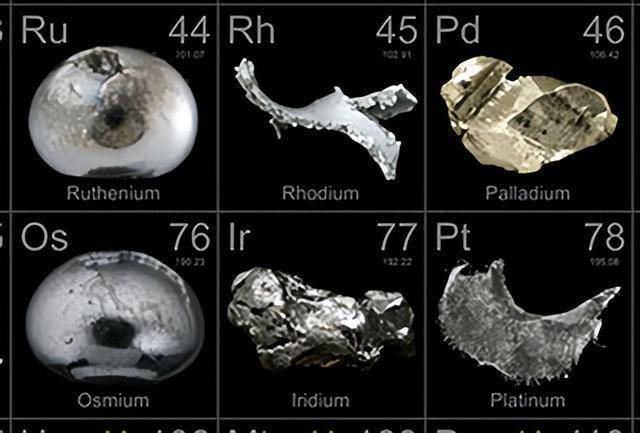
Core Insights - Precious metals have been a symbol of wealth and power throughout history, and they play a crucial role in various modern industries, including technology, healthcare, and electronics [1] Group 1: Characteristics of Precious Metals - Precious metals are defined as rare, high-density metals with significant economic value, including Ruthenium (Ru), Rhodium (Rh), Palladium (Pd), Osmium (Os), Iridium (Ir), Platinum (Pt), Silver (Ag), and Gold (Au) [1] - The abundance of these metals in the Earth's crust is extremely low, with concentrations measured in grams per ton: Silver 0.1, Palladium 0.01, Gold and Platinum 0.005, and Rhodium, Iridium, Ruthenium, Osmium 0.001 [1] - Silver excels in electrical and thermal conductivity, while Gold ranks third, and Platinum group metals are known for their thermal stability in electronic applications [3] - Gold and Silver possess exceptional malleability, with 1 gram of Gold capable of being drawn into a wire measuring 3420 meters [3] Group 2: Applications of Precious Metals - Precious metals are ideal for jewelry due to their aesthetic qualities, with Silver reflecting white light most effectively and Gold reflecting infrared light strongly [4] - The ability of precious metals to absorb gases like oxygen and hydrogen makes them valuable in catalytic reactions and gas purification processes [6] - Precious metals exhibit high corrosion resistance, with Iridium being the most resistant, making them suitable for use in harsh chemical environments [7] - Palladium catalysts can enhance organic reaction rates by up to 1 million times, playing a vital role in automotive emissions control and petroleum refining [9] Group 3: Industry Impact - In the electronics industry, Gold, Silver, and Platinum are used for their excellent conductivity and stability, with Gold ensuring stable electronic signal transmission [13] - Platinum and Palladium are increasingly in demand for automotive catalytic converters due to stricter environmental regulations [14] - In aerospace, precious metals are used in high-temperature alloys for critical engine components, capable of withstanding extreme conditions [15] - Precious metals are essential in the chemical industry for processes like nitric acid production and petroleum reforming, improving reaction efficiency and reducing costs [18] Group 4: Financial and Economic Role - Historically, Gold and Silver served as currency and continue to influence monetary value, with central banks holding significant Gold reserves to enhance currency credibility [19] - The precious metals market is vast, with Gold being the largest segment, and prices are influenced by various factors, including economic uncertainty and geopolitical tensions [21] - Platinum and Palladium prices are closely tied to the automotive industry, with demand driven by vehicle sales and environmental regulations [21] Group 5: Future Outlook - Precious metals are positioned as key players in future technological advancements and sustainable development, serving as catalysts in energy and life sciences [22]