跨境金融服务

Search documents
出海专访|跨境合规强监管之下,出海企业如何打造最优财税体系?
3 6 Ke· 2025-11-18 09:20
Core Insights - The OECD Common Reporting Standard (CRS) has completed its fifth round of bulk exchanges, involving 157 countries, enhancing global tax transparency and compliance [1] - Chinese tax authorities have gained access to extensive overseas financial account information, allowing for more comprehensive regulation of cross-border business and financial flows [1] - Many enterprises still harbor misconceptions about cross-border tax compliance, necessitating professional guidance to navigate these complexities [1] Group 1: Misconceptions about Tax Compliance - The primary goal of tax compliance design is to reasonably reduce tax burden costs, not merely to avoid penalties [2][3] - Tax compliance is not a one-time setup; it requires continuous adjustments based on the business's operational stage and market conditions [4] - Companies often overlook the role of Hong Kong as a flexible hub for overseas expansion, focusing solely on destination compliance [6][7] Group 2: Importance of Professional Guidance - Enterprises must understand local market policies and tax risks to effectively evaluate potential returns and costs [5] - Professional services can help businesses design tax structures that consider global tax system differences, optimizing costs from the outset [3][4] - The collaboration between platforms and service providers is essential for creating a compliance ecosystem that supports Chinese enterprises in global markets [8]
告别跨境“难贵慢”,临港打造出海金融超级生态
Di Yi Cai Jing· 2025-10-29 14:22
Core Insights - The main pain points for companies engaging in cross-border business include difficulties in overseas financing, exchange rate fluctuations, and transaction timeliness [1][2][3] Group 1: Cross-Border Financial Demand - The globalization of Chinese enterprises is accelerating, with a projected foreign direct investment (FDI) flow of $192.2 billion in 2024, representing 11.9% of the global share, an increase of 0.5 percentage points from the previous year [2] - By the end of 2024, the stock of China's foreign direct investment is expected to reach $3.14 trillion, maintaining a top-three global ranking for eight consecutive years [2] - Chinese investors have established 52,000 overseas enterprises across 190 countries and regions, with reinvested earnings from these enterprises amounting to $77.89 billion in 2024, accounting for 40.5% of the total flow [2] Group 2: Challenges in Financing - Many mid-sized and small enterprises face significant challenges in securing financing for overseas expansion, as financial institutions are still in the early stages of providing services to these companies [3] - There is a growing demand for financial services as Chinese enterprises expand their products and brands internationally, but local banks often lack familiarity with Chinese companies, making it difficult to obtain support [3] Group 3: Initiatives in the Lingang New Area - The Lingang New Area is working to create a "super ecosystem" for cross-border services, aiming to make cross-border transactions easier, cheaper, and faster [4][5] - By the end of 2024, over 700 financial and investment firms are expected to be concentrated in the Lingang New Area, with a compound annual growth rate of over 50% in the scale of currency transactions [4] - The establishment of a comprehensive service platform has integrated over 520 professional service institutions to provide a full range of services for enterprises, including foreign investment registration and risk analysis [4][5] Group 4: Financial Services for Enterprises - The "Go Global" comprehensive service platform has served over 1,000 outbound enterprises, linking diverse financial resources to support cross-border financing, payment settlements, and insurance services [5] - The platform aims to reduce transaction costs and financing barriers for enterprises, featuring initiatives like "lightning roadshows" and "financial markets" to showcase various financial products [5] - Companies like Miyi (Shanghai) Automotive Technology Co., Ltd. are seeking specific financial services such as export credit insurance and supply chain financing to better align with their operational needs [6]
香江观澜:重点企业纷至,香港“磁吸力”彰显
Zhong Guo Xin Wen Wang· 2025-10-12 05:20
Core Insights - A new batch of 18 key enterprises has signed agreements to establish operations in Hong Kong, including three global pharmaceutical leaders and companies in AI, autonomous driving, microelectronics, and cross-border financial services [1][2] - The total number of key enterprises attracted to Hong Kong has exceeded 100, bringing approximately HKD 600 billion in investments and creating around 22,000 jobs [1][2] Group 1: Attraction of Enterprises - The latest batch of key enterprises includes a significant proportion of overseas companies, accounting for 40%, indicating Hong Kong's enhanced "magnetic pull" for international businesses [2] - Roche, one of the world's top ten pharmaceutical companies, highlighted the favorable environment for medical innovation fostered by the Hong Kong government [2] - The presence of these enterprises aligns with Hong Kong's industrial upgrade direction, injecting new momentum into the economy [2] Group 2: Economic Impact and Future Directions - The focus of the new enterprises is on cutting-edge fields such as pharmaceuticals, AI, and cultural technology, which aligns with Hong Kong's policy direction for developing innovative industries [2] - The Hong Kong government aims to support the sustainable growth of these enterprises by fostering high-value manufacturing and promoting new industrialization [5] - Recent international rankings reaffirm Hong Kong's status as the world's freest economy and its position as a leading global financial center, reflecting its increasing competitiveness [6]

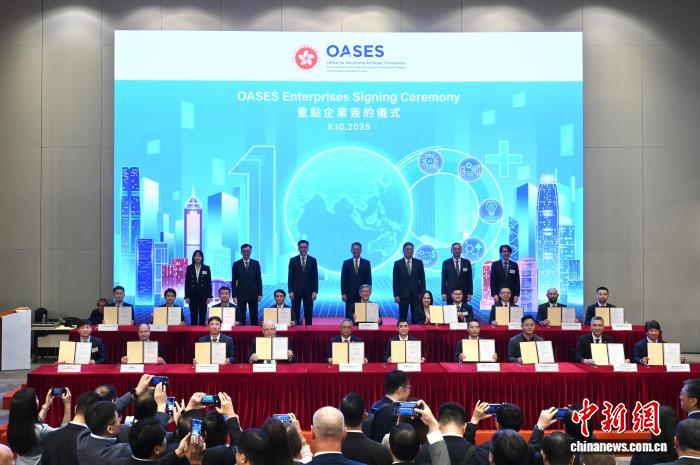
超百家重点企业落户香港 加速释放强劲经济动能
Xin Hua She· 2025-10-09 13:31
Core Insights - The Hong Kong government has successfully signed agreements with 18 key enterprises, including three global pharmaceutical leaders and companies in AI, autonomous driving, microelectronics, and cross-border financial services [1] - This initiative is seen as a combination of an "effective government" and a "dynamic market," which is expected to enhance Hong Kong's competitiveness and accelerate industrial development [1] - Over the past two years, more than 100 high-potential enterprises have established a presence in Hong Kong, projected to bring approximately HKD 60 billion in investments and create around 22,000 jobs [1]
连平:构建更加适配外向型经济的跨境金融服务体系
2 1 Shi Ji Jing Ji Bao Dao· 2025-09-04 10:05
Core Viewpoint - The development of cross-border financial services in China is progressing steadily, but there are significant challenges that need to be addressed to enhance its effectiveness and support international economic participation [1][2]. Group 1: Current State of Cross-Border Financial Services - China's cross-border financial service system has been steadily advancing, contributing significantly to international economic circulation [1]. - The current landscape presents various challenges, including increased complexity in cross-border financial risks due to global economic instability [2]. Group 2: Challenges Faced by Financial Institutions - Chinese financial institutions face threats related to international financial infrastructure, overseas asset security, and regulatory scrutiny [2]. - Companies expanding internationally encounter more complex financial and non-financial issues compared to domestic operations [2]. Group 3: Recommendations for Improvement - It is essential to innovate and diversify cross-border financial products and services supported by new technologies, including optimizing foreign exchange management and expanding free trade account functionalities [3]. - Establishing syndicate loan centers in banks can help meet the financing needs of domestic companies going abroad [3]. - Risk management must be a priority, with recommendations for developing diverse foreign exchange hedging products and enhancing insurance support for export enterprises [3]. Group 4: Enhancing Financial Market Capabilities - Increasing openness and access in domestic financial markets is crucial for providing cross-border financial services [3]. - Optimizing existing financial connectivity mechanisms like Shanghai-Hong Kong Stock Connect and introducing more RMB-denominated financial products can enhance liquidity [3]. Group 5: Infrastructure Development - The construction of cross-border financial infrastructure is vital, with suggestions to utilize technologies like blockchain and cloud computing to create adjustable financial service platforms [4]. - Enhancing the functionality of the Cross-Border Interbank Payment System (CIPS) is necessary for efficient and secure settlement services in global trade and investment [4].
报告显示中国中小微外贸企业出口形势基本向好
Zhong Guo Xin Wen Wang· 2025-08-26 07:06
Core Insights - The XTransfer PMI report indicates a positive export outlook for small and micro foreign trade enterprises in China, with a PMI index of 52.4% in July, slightly above the neutral point [1] - The report highlights that African countries have the highest export PMI, particularly Ghana and Nigeria, as small and micro enterprises seek new opportunities in the African market due to declining demand in the US [1] Group 1: Export Trends - The "new three samples" of exports, including lithium batteries, new energy vehicles, and solar cells, have shown strong performance, with order and price indices significantly above the market average [2] - Southeast Asia has emerged as a key export region for the "new three samples," while Europe’s energy-saving policies continue to drive demand for these products [2] - Infrastructure demands in Latin America and Africa present substantial market potential for the export of "new three samples" [2] Group 2: Business Adaptation - Many enterprises emphasize the importance of resilience and confidence in the face of external uncertainties and increasing market competition, highlighting the need for differentiated competitive advantages [2] - A case study from a mechanical products exporter in Guangzhou illustrates how XTransfer's local collection accounts have improved cash flow efficiency by reducing transaction times and fees [2] - XTransfer aims to leverage its industry-leading platform to share insights and trends with foreign trade practitioners, enhancing their global business strategies [2]
跨境支付便利化有助于增强企业国际竞争力
Jin Rong Shi Bao· 2025-07-07 03:11
Core Insights - The article discusses the launch of the "Action Plan" by the People's Bank of China and Shanghai government to enhance cross-border payment services, addressing pain points for enterprises involved in the Belt and Road Initiative [1] Group 1: Efficiency and Cost Advantages - The "Action Plan" aims to improve cross-border payment efficiency and reduce costs by enabling "instant processing, zero paperwork, low cost, and high control" for enterprises [2] - It significantly enhances settlement efficiency by optimizing foreign exchange processes, reducing transaction time from hours to minutes for premium clients [2][3] - The introduction of integrated currency pools and cross-border fund allocation in free trade zones allows for better management of multi-currency funds, improving allocation efficiency and lowering exchange costs [2] Group 2: Compliance and Risk Management - The "Action Plan" simplifies compliance and risk control processes, reducing operational complexity through mechanisms that allow for quick rectification of compliance judgments [3] - Digital identity verification and blockchain technology eliminate the need for paper documents, reducing review times from days to minutes [3] - The plan supports smoother funding channels for large mergers and overseas projects by optimizing foreign debt registration and cross-border guarantees [3] Group 3: Product Innovation and Cost Reduction - The "Action Plan" encourages banks to develop diverse hedging tools, helping enterprises lock in exchange rate risks and reduce hidden costs [3] - Trade refinancing options allow companies to finance directly against receivables, significantly lowering financing rates and multi-currency settlement costs [3] - A "local currency first" evaluation mechanism promotes the use of RMB in settlements, minimizing transaction fees from frequent currency conversions [3] Group 4: Service Enhancement and User Experience - The "Action Plan" extends service hours to 24/7, allowing businesses to initiate payments at any time, breaking the constraints of traditional office hours [4] - Online platforms consolidate payment progress, risk alerts, and operational guidelines, simplifying the process for users [4] - Automation of document verification through blockchain technology enhances the reliability and efficiency of cross-border payments [4] Group 5: CIPS Functionality and Global Reach - The enhancement of the Cross-Border Interbank Payment System (CIPS) aims to lower transaction costs and improve the use of RMB in international payments [5] - CIPS facilitates real-time and batch clearing, significantly reducing the time for cross-border fund transfers and minimizing opportunity costs and exchange rate risks for enterprises [5][6] - The development of innovative financial products based on CIPS data will expand the use of RMB beyond trade payments to global fund operations and cross-border financing [6] Group 6: Market Trends in Cross-Border Financial Services - The demand for cross-border payment services is evolving towards instant, multi-currency, customized intelligent services, and ecosystem collaboration [7] - Financial institutions need to adapt by building 24/7 digital platforms and offering integrated payment solutions to meet the growing expectations of clients [8] - There is an increasing need for diversified product offerings that combine cross-border payments with trade financing to streamline funding flows [8] Group 7: Technological Disruption in Cross-Border Payments - Blockchain technology is expected to enhance payment efficiency and reduce costs by simplifying cross-border payment processes and minimizing reliance on intermediaries [9] - Artificial intelligence will play a crucial role in risk prevention and optimizing user experience by providing personalized payment solutions [10] Group 8: Challenges in Global Cross-Border Payment Facilitation - Geopolitical conflicts and trade frictions are increasing costs and reducing efficiency in cross-border payments, necessitating innovative solutions [11] - The instability of settlement systems and the limitations of traditional currencies are exacerbated by geopolitical risks, leading to increased complexity in cross-border payment channels [12] - Regulatory coordination challenges and rising compliance costs are significant hurdles, requiring a shift towards a more efficient and secure cross-border payment system [13]
三亚首家海南自贸港跨境资金集中运营中心落地
Zhong Guo Xin Wen Wang· 2025-06-05 14:54
Core Insights - The establishment of the first three cross-border capital centralized operation centers in Hainan Free Trade Port marks a significant breakthrough for Sanya in facilitating the free flow of cross-border funds [1][2] - The recognition of Zijin International Holdings Co., Ltd. as a cross-border capital centralized operation center will allow enterprises to fully enjoy various policy benefits of Hainan Free Trade Port [1][2] Group 1: Policy Benefits - Enterprises can utilize multi-functional free trade accounts (EF accounts) for efficient collection and free allocation of domestic and foreign funds, significantly reducing exchange costs and time differences [1] - The preferential policies of "zero tariffs and low tax rates" in Hainan Free Trade Port will provide better tax arrangements for cross-border investment and profit repatriation, while simplifying foreign exchange registration processes [1] - The center will facilitate centralized management of cross-border capital pools, overseas lending, and coordination of foreign debt quotas, providing strong financial support for global strategic layouts [1] Group 2: Economic Development - The successful recognition of Zijin International Holdings as a cross-border capital centralized operation center is a milestone in the development of Sanya's outward-oriented economy and reflects the integration of financial and trade industries in Sanya Central Business District [2] - As of 2024, Sanya Central Business District has 8,872 registered enterprises, with imports and exports increasing by 68% year-on-year, service imports and exports up by 58%, and actual foreign investment rising by 32% [2] - Zijin Mining Group invested 2 billion RMB to establish Zijin International Holdings in Sanya Central Business District as its international operations headquarters, focusing on global trade, investment, and talent services [2] Group 3: Future Plans - The Sanya Central Business District Management Bureau plans to leverage the existing base of enterprises engaged in cross-border trade and investment to enhance the functions of headquarters enterprises in the free trade port [2] - The bureau aims to assist enterprises in improving the safety of funds and the efficiency of cross-border capital utilization, attracting both outbound cross-border trade enterprises and inbound foreign multinational companies to promote industrial agglomeration effects [2]
搭建跨境金融服务平台,助力我国外贸行业发展
Sou Hu Cai Jing· 2025-05-23 01:45
Core Viewpoint - The cross-border financial service platform plays a crucial role in supporting foreign trade enterprises by providing diversified financial support, enhancing risk prevention capabilities, and promoting the digital transformation of the foreign trade industry, ultimately contributing to high-quality development and international competitiveness of China's foreign trade sector [1][6]. Summary by Relevant Sections 1. Current Status of China's Foreign Trade Industry - In 2024, China's total import and export value reached 43.85 trillion yuan, a year-on-year increase of 5%, with exports exceeding 25 trillion yuan, solidifying China's position as the world's largest goods trader [2]. - The structure of foreign trade products continues to optimize, with high-end equipment exports growing over 40%, and electromechanical products accounting for nearly 60% of total exports [2]. - The "new three items" (new energy vehicles, lithium-ion batteries, and solar panels) have become significant drivers of foreign trade growth, reflecting China's technological strength in these areas [2]. 2. Growth of Foreign Trade Enterprises - The number of foreign trade-related enterprises has shown significant growth, with a stock scale surpassing 5 million for the first time in 2024, reaching 5.0736 million [3]. - Cross-border e-commerce has emerged as a new growth point, with an annual import and export value of 2.63 trillion yuan, a year-on-year increase of 10.8% [3]. - Notable companies like Xiaomi and BYD have demonstrated strong market competitiveness in overseas markets, contributing to the growth of China's foreign trade [3][5]. 3. Financial Services for Foreign Trade Development - Foreign trade enterprises require various financial services, including production loans, project financing, and supply chain finance, to alleviate financial pressure and support business expansion [7][8]. - The demand for financial services is becoming increasingly diverse and personalized, covering payment, financing, risk management, and international settlement [8][10]. - The need for efficient cross-border financial services is growing, driven by the complexities of international trade and the necessity for rapid payment and financing solutions [11][12]. 4. Development Trends of Cross-Border Financial Services - The integration of technologies such as big data, artificial intelligence, and blockchain is enhancing the efficiency and security of cross-border financial services [9][10]. - Cross-border financial service platforms are evolving to provide comprehensive solutions that include payment, financing, insurance, and logistics services, facilitating deeper integration with the real economy [9][14]. - The platforms are crucial for promoting trade facilitation, enhancing the efficiency of cross-border transactions, and supporting the internationalization of the renminbi [15][16]. 5. Future Directions - There is a need for continuous innovation in technology, services, and regulation to ensure the sustainable development of cross-border financial service platforms [16]. - The platforms should focus on providing tailored financial solutions for different industries and scales of enterprises, enhancing risk control capabilities, and ensuring compliance with various regulatory policies [12][13].