Internet Technology

Search documents
阿里正把自己装进赛博分身
虎嗅APP· 2026-01-15 14:18
Core Viewpoint - Alibaba is strategically entering the C-end AI market with its AI app "Qianwen," aiming to leverage its ecosystem and model capabilities to enhance user experience and satisfaction [3][4][10]. Group 1: Strategic Approach - Alibaba's approach to the C-end AI market is characterized by two main strategies: maximizing the capabilities of its Tongyi large model and leveraging its overall ecosystem advantages [4][12]. - The company aims to focus on two primary user scenarios: AI office (learning) and daily life, prioritizing user experience and reputation [4][12]. - Alibaba's strategy is to engage in an "ecological war" and a "model war," rather than merely competing on product features [6][12]. Group 2: Competitive Landscape - Prior to Alibaba's entry, major players in the C-end AI market adopted three user growth models: ByteDance's model focused on product and traffic, Tencent's model leveraging social and content ecosystems, and Meituan's model centered on core business scenarios [5][6]. - Alibaba's strategy aligns with ByteDance's logic of maximizing its strengths, but differs in viewing its core assets as "model + ecosystem" rather than "product + traffic" [6][12]. Group 3: Internal and External Challenges - Internally, Alibaba must ensure its model capabilities remain superior while improving operational efficiency across various dimensions [8][12]. - Externally, competition is intensifying with the upcoming release of new models from competitors like DeepSeek, and the market is expected to see explosive growth in AI applications by 2026 [8][12]. Group 4: User Engagement and Metrics - The core goal for Qianwen in the coming year is to enhance user satisfaction to ensure retention, which will subsequently drive new user acquisition and interactions within the ecosystem [9][12]. - Qianwen's evaluation metrics focus on user satisfaction, delivery completion, and retention rather than traditional metrics like monthly active users or GMV [12][13]. Group 5: Future Outlook - The next five months are critical for Qianwen, as they will coincide with Alibaba's fiscal year-end and the 618 shopping festival, providing an opportunity to assess early user engagement and the operational link between Qianwen and ecosystem businesses [14][12]. - Alibaba's long-term strategy involves continuous upgrades to model capabilities and user demand insights, with a focus on enhancing user experience across various scenarios [18][19].



报道:百度拟申请香港双重主要上市,打通内地投资者准入渠道
Sou Hu Cai Jing· 2026-01-14 12:09
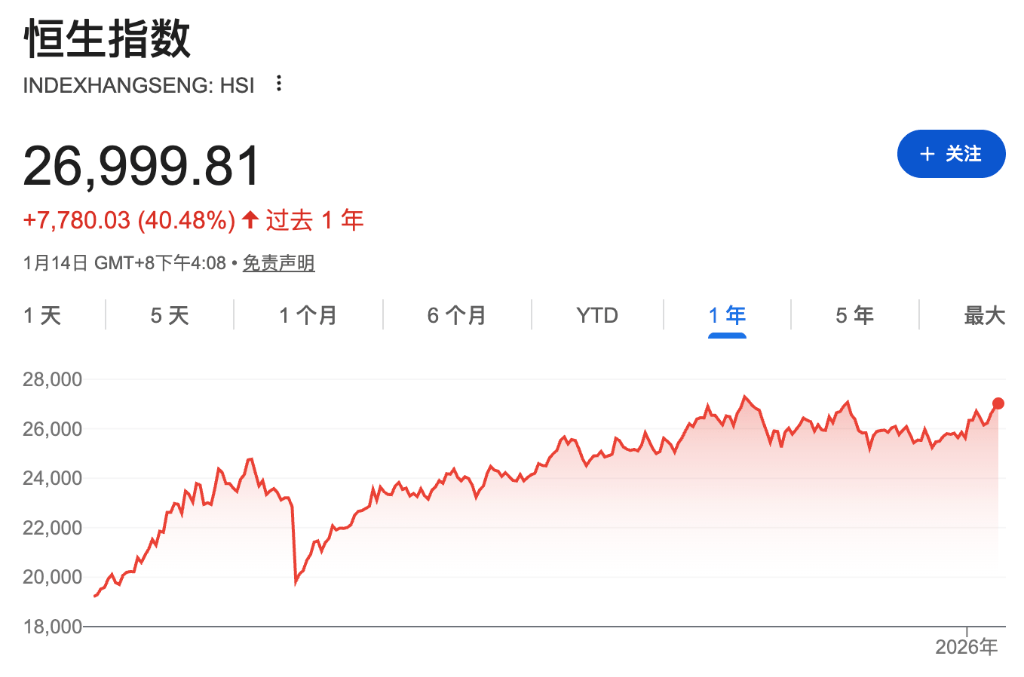
Group 1 - Baidu is considering upgrading its current secondary listing status in Hong Kong to a dual primary listing to attract more mainland investors [1][2] - The discussions have accelerated as Baidu plans to list its subsidiary Kunlun Chip, which focuses on data centers and AI chip business [2] - A dual primary listing would allow Baidu to gain access to the Hong Kong Stock Connect, enabling direct investment from mainland investors [3] Group 2 - The dual primary listing would require Baidu to comply with listing rules in both markets, including disclosure, financial reporting, and corporate governance [3] - This strategy provides additional risk buffering in the current geopolitical environment, as delisting from one exchange would not automatically terminate the listing status on the other [3] - However, the decision entails higher compliance costs and stricter disclosure obligations, necessitating a balance between expanding the investor base and managing additional listing expenses [3] Group 3 - The Hong Kong market has become increasingly attractive, with the Hang Seng Index rising approximately 40% over the past year, drawing numerous companies for significant stock issuances [4] - Baidu's American Depositary Receipts (ADRs) have surged about 90% in the past 12 months, outperforming the Nasdaq Golden Dragon China Index's 21% increase, creating favorable conditions for Baidu's expansion in the Hong Kong capital market [7]

Meta To Cut Over 10% Jobs In Reality Labs Division Amid AI Focus: Report - Alphabet (NASDAQ:GOOG), Alphabet (NASDAQ:GOOGL)
Benzinga· 2026-01-13 08:06
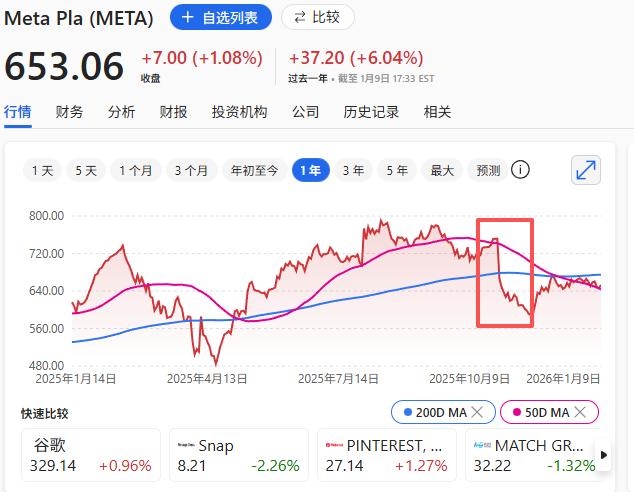
Group 1 - Meta Platforms Inc. plans to cut about 10% or more jobs in its Reality Labs division, which currently employs around 15,000 people, to focus on next-generation AI initiatives [1] - The layoffs could be announced as early as Tuesday, according to The New York Times [1] - The company intends to shift funding from virtual reality to expand its wearables budget, including smart glasses and wrist-based devices [2] Group 2 - Meta's layoffs come amid increasing competition from companies like OpenAI, Google, and Microsoft [3] - In April, Meta previously laid off an unspecified number of employees from its Reality Labs division, primarily affecting the Oculus Studios unit [3] - Meta executives are considering up to 30% budget cuts in 2026 for the metaverse division, despite CEO Mark Zuckerberg's previous emphasis on the metaverse's importance to the company's future [4] Group 3 - In October, Meta announced it would cut about 600 jobs from its AI division as part of a restructuring aimed at improving operations [5] - Meta's Chief AI Officer Alexandr Wang, who joined after the company's $14.3 billion investment in Scale AI, communicated the restructuring through an internal memo [5] - Over the past year, Meta stock climbed 5.53%, but it fell 1.70% to close at $641.97 on Monday [6]



Walmart teams up with Google’s Gemini for AI-assisted shopping
Yahoo Finance· 2026-01-12 11:18
Core Insights - Walmart has launched a new consumer experience within Google's AI chatbot Gemini, enhancing its AI initiatives with external partners [1][2] - The integration allows Gemini users to discover Walmart and Sam's Club products, facilitating transactions within Walmart's checkout environment [2] - The initiative will first be available in the U.S. before expanding internationally [2] Group 1: Leadership and Strategic Direction - Incoming Walmart CEO John Furner discussed the development alongside Google CEO Sundar Pichai at The National Retail Federation's 2026 Big Show [3] - Pichai announced a new suite of AI tools for retailers through Gemini, including the Universal Commerce Protocol for agentic commerce [3][4] - Furner emphasized the company's willingness to adapt its operations and customer interactions in response to AI advancements [5][6] Group 2: Industry Context and Evolution - Google has reported a significant year-over-year increase in AI usage among retailers, indicating a broader trend in the industry [4] - Furner reflected on the evolution of retail, noting that the industry is currently in a transformative period requiring a rewrite of the retail playbook [6]


Meta 20亿“闪购”Manus难落地,Meta千金买“股”或成空
3 6 Ke· 2026-01-12 08:41
Core Viewpoint - Meta's acquisition of AI company Manus for approximately $2 billion marks a significant and rapid transaction in the tech industry, raising questions about the valuation and the strategic necessity behind the deal [1][3][9]. Group 1: Acquisition Details - The acquisition was finalized in just a few weeks, making it Meta's third-largest acquisition after WhatsApp and Scale AI [1]. - Manus, which transitioned to the AI sector less than three years ago, has generated $125 million in revenue within a year of launching its first product [8][9]. - The deal has sparked considerable interest and debate within the tech community, especially given Manus's recent move from Wuhan to Singapore [1][2]. Group 2: Meta's Perspective - Meta has faced challenges in maintaining market confidence, particularly after the perceived failure of its metaverse initiatives, despite current revenue growth [5][7]. - The company has been criticized for its high capital expenditures in AI, which have led to downgrades from several financial institutions [5][7]. - The acquisition of Manus is seen as a potential solution to restore investor confidence and provide new growth opportunities across various sectors, including social media and enterprise services [9][18]. Group 3: Manus's Perspective - Manus, while effective, has limitations in efficiency and integration into existing workflows, which could hinder its long-term success without the backing of a larger entity like Meta [11][12]. - The AI agent market is crowded with subpar products, making Manus's established revenue and operational capabilities particularly valuable [15][16]. - The partnership with Meta could enhance Manus's market presence and allow it to leverage Meta's resources for further growth [16][17]. Group 4: Regulatory Considerations - The Chinese Ministry of Commerce announced an evaluation of the acquisition concerning export controls and compliance with legal regulations, adding uncertainty to the deal [2][17]. - The potential for delays in the transaction due to regulatory scrutiny could impact both companies' strategic timelines in the rapidly evolving AI landscape [17][18].
中国AI方案25美元查出早期癌症,美国网友:中美已走上不同的AI道路;百度百科上线“AI知识图谱”等新功能丨AIGC日报
创业邦· 2026-01-07 00:22
Group 1 - The core viewpoint of the article highlights the rapid advancements in AI technology, particularly the emergence of open-source models like DeepSeek R1, which are catalyzing innovation in the industry [2] - NVIDIA's CEO Jensen Huang emphasized the significant progress made in the AI sector over the past year, noting that open-source models are increasingly approaching the performance of leading large models [2] - Alibaba's DAMO PANDA AI model has successfully aided in early detection of pancreatic cancer, analyzing over 180,000 CT scans and identifying 24 cases of pancreatic cancer, with 14 being early-stage, at a cost of only $25 [2] Group 2 - Baidu has launched new features such as "Dynamic Encyclopedia" and "AI Knowledge Graph," with the total number of entries in Baidu Encyclopedia surpassing 30 million and over 8.03 million contributors [3] - ByteDance's first-generation AI glasses are planned to have a total of approximately 100,000 units, primarily targeting experienced users, and will utilize Qualcomm's AR1 chip [2] - AMD's CEO Lisa Su stated that AI computing power needs to increase by 100 times in the coming years to accommodate the growing number of active AI users, which surged from 1 million to 1 billion since the launch of ChatGPT [3]

技术深融,创新涌现:第三届IPv6应用创新大赛收官,AI WAN、自智网络等赛道亮眼
Sou Hu Cai Jing· 2025-12-31 02:56
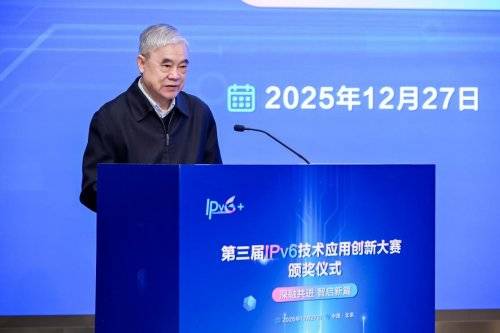
Group 1 - The third "IPv6 Technology Application Innovation Competition" was held in Beijing, focusing on the integration and practical application of IPv6 with cutting-edge technologies [2] - The competition attracted 1,205 innovative projects nationwide, with 47 projects advancing to the finals, highlighting the deep integration of IPv6 with AI and automated operations [4] - The chairman of the IPv6 deployment and application expert committee emphasized the transition from "well-built" to "well-used" in China's IPv6 network, aiming for a leap in application quality [6] Group 2 - The competition showcased China's solid progress in IPv6 technology research and application, providing a platform for collaborative innovation across the industry chain [8] - IPv6's features, such as massive addressing, efficient routing, and inherent security, are foundational for the development of 5G, IoT, industrial internet, and computing networks [8] - The event aims to empower various industries in their digital transformation and high-quality development through advancements in the new generation of internet technology [8]
Baidu vs. Alibaba: Which Chinese Tech Stock Has More Upside?
ZACKS· 2025-12-29 17:46
Core Insights - Baidu and Alibaba are major players in China's technology sector, focusing on AI and cloud computing as key competitive areas [1][2] - Both companies are heavily investing in AI models, cloud infrastructure, and enterprise software to meet the growing demand for data-driven solutions [1] Baidu's Position - Baidu has developed a comprehensive AI cloud infrastructure that integrates computing resources, foundation models, and enterprise applications, positioning itself to benefit from increased AI adoption among Chinese enterprises [3] - The ERNIE foundation model is central to Baidu's strategy, enabling various enterprise solutions, including AI agents in sectors like transportation and education [3] - Baidu reported a 128% year-over-year growth in subscription-based AI infrastructure revenue in Q3, driven by adoption in embodied AI and automotive sectors [4] - The company maintains a leading position in China's internet search market, which supports its data depth and traffic scale [4] - Baidu's AI cloud business operates at 9% non-GAAP margins, as the company prioritizes infrastructure expansion over immediate profitability [5] - The Zacks Consensus Estimate for Baidu's Q4 EPS is $1.50, reflecting its focus on long-term positioning in the AI landscape [5] Alibaba's Position - Alibaba's strategy involves multiple initiatives, including AI infrastructure investments and quick commerce expansion, leading to execution complexity without clear leadership in any single area [6] - Alibaba Cloud reported a 34% year-over-year revenue growth in the fiscal second quarter, but this growth has come at the expense of profitability [8] - The cloud business operates at 9% adjusted EBITDA margins, which remained flat year-over-year despite revenue growth, indicating challenges in converting scale into profitability [9] - Alibaba's planned investments of $52 billion over three years for AI infrastructure may not be sufficient to meet enterprise demand, raising concerns about capital allocation discipline [9] - The Zacks Consensus Estimate for Alibaba's fiscal Q3 EPS is $2.41, indicating a 23.55% year-over-year decline due to unfocused capital allocation [10] Performance and Valuation Comparison - Over the past six months, Baidu shares have increased by 45.6%, while Alibaba shares have risen by 34.3%, reflecting stronger investor confidence in Baidu's focused enterprise AI strategy [11] - Baidu trades at a forward price-to-sales ratio of 2.17x, compared to Alibaba's 2.29x, indicating relative undervaluation for Baidu and overvaluation for Alibaba [14] - Baidu's focused exposure to enterprise AI and cloud monetization provides a modest valuation edge over Alibaba's broader ecosystem [14] Conclusion - Baidu's strategy is centered on enterprise AI, with strong traction in subscription-based AI cloud services and support from its search and autonomous driving platforms [16] - In contrast, Alibaba faces challenges with cloud margin pressure and capital dispersion, which weigh on its overall profile [16] - Baidu is currently viewed more favorably compared to Alibaba in the context of investment opportunities [16]

全面起底扎克伯格的豪赌,Meta只剩这次定义未来的机会
3 6 Ke· 2025-12-21 23:39
Core Insights - Meta is undergoing a significant strategic shift under CEO Mark Zuckerberg, focusing on AI development and restructuring the organization to prioritize speed and results over traditional research methods [5][6][21] - The company is investing heavily in AI, with a projected expenditure of at least $70 billion in 2025, nearly double its 2024 capital spending [6][9] - Internal culture is shifting towards a high-pressure environment, with increased performance management and a decline in open discussions, leading to employee anxiety and fear [4][33] Financial Gamble - Meta plans to invest $70 billion in AI infrastructure in 2025, a substantial increase from $39 billion in 2024 [6] - The company's free cash flow is expected to drop dramatically from approximately $54 billion in 2024 to around $20 billion in 2025, raising concerns about sustainability [9] - Meta is utilizing complex financing methods to support its AI expansion, which may jeopardize its financial stability if the AI initiatives do not yield returns [9][28] Technological Challenges - The launch of Llama 4 in April 2025 did not meet industry expectations, raising questions about Meta's AI capabilities and credibility [12][13] - Controversies surrounding the evaluation of Llama 4 have led to significant trust issues within the AI community, impacting Meta's reputation [13][20] - The shift from a research-oriented approach to a results-driven culture has resulted in internal conflicts and a loss of key talent [20][21] Cultural Shift - The internal culture at Meta is increasingly characterized by high pressure and fear, with changes in performance management leading to a more toxic work environment [14][33] - The DEI (Diversity, Equity, and Inclusion) initiatives, once a cornerstone of the company culture, are being scaled back, reflecting a broader cultural decline [33] - Employee retention remains relatively stable due to competitive compensation and benefits, despite the cultural shifts [33] Organizational Changes - Meta has made significant organizational changes, including the establishment of the TBD Lab, which centralizes AI decision-making under Zuckerberg's direct oversight [26][27] - The company has experienced layoffs, particularly in its foundational research teams, signaling a move away from long-term exploratory research [18][20] - The departure of key figures, including Turing Award winner Yang Li-Kun, highlights the growing divide between traditional research and the new fast-paced AI strategy [20][21] Market Response - Meta's stock performance in 2025 has been volatile, with a year-to-date increase of only 7%, significantly lower than the S&P 500's 22% [36][38] - Investor concerns are mounting regarding when the substantial AI investments will begin to generate returns, complicating Zuckerberg's efforts to satisfy both growth and value investors [38] Future Scenarios - The potential outcomes for Meta's AI strategy range from a successful launch of the Avocado model, which could restore market confidence, to a scenario where the company fails to achieve a competitive edge, leading to prolonged stagnation [51][52] - The worst-case scenario involves significant failures in AI performance or compliance, which could result in a loss of market trust and severe financial repercussions [54][55]

Recent Market Movers: Top Gainers Across Industries
Financial Modeling Prep· 2025-12-20 00:00
Core Insights - Several companies have emerged as top gainers in recent market movements, showcasing significant price changes and trading volumes, indicating investor confidence and potential for future growth [1][6] Company Summaries - **Luminar Technologies, Inc. (LAZR)**: Stock price increased by 108.23% to $0.45 with trading volume over 618 million shares, driven by advancements in sensor technologies for autonomous vehicles; however, the company faced bankruptcy [2][7] - **Mint Incorporation Limited (MIMI)**: Stock price rose by 75.63% to $0.48, with trading volume around 69 million shares, supported by focus on 3D technical drawing and design services in Hong Kong; voluntary lock-up agreements with shareholders until March 31, 2026 were announced [3][7] - **Autozi Internet Technology (Global) Ltd. (AZI)**: Stock price climbed by 59.01% to $2.41, with trading volume exceeding 76 million shares; a $90 million initial investment from strategic investor CDIB at $3.50 per share boosted investor confidence [4][7] - **Syntec Optics Holdings, Inc. (OPTXW)**: Stock price increased by 52.75% to $0.21, with trading volume around 264,000 shares; the company's contributions to biomedical and defense sectors enhanced its market presence [5][7]