互联网医疗

Search documents
摩根大通减持阿里健康(00241)约2346.78万股 每股作价约5.5港元
智通财经网· 2026-01-09 12:03
Group 1 - Morgan Stanley reduced its stake in Alibaba Health (00241) by 23.467799 million shares at a price of 5.5024 HKD per share, totaling approximately 129 million HKD [1] - After the reduction, the latest number of shares held by Morgan Stanley is approximately 1.291 billion shares, representing a holding percentage of 7.97% [1]


京东健康医疗器械开新盛典:互联网医院与医疗器械企业正构建“服务融合”共同体
Cai Jing Wang· 2026-01-09 02:48
Core Insights - JD Health is leveraging its internet hospital to enhance medical device brand growth and user health management in the rapidly developing internet healthcare sector [1][2] Group 1: Market Overview - The internet healthcare market in China is projected to reach 479.9 billion yuan by 2025, with user numbers exceeding 400 million [2] - JD Internet Hospital, one of the first licensed independent internet hospitals, maintains its position as the "first entry point for online diagnosis," with over 500,000 daily consultations and a customer satisfaction rate of 98.9% [2] Group 2: Service Innovations - JD Internet Hospital has established a comprehensive service system covering "medical, testing, diagnosis, and medication," allowing users to complete the entire diagnostic process from home [2] - The hospital is enhancing its specialized service system, with upgrades in dermatology, mental health, and traditional Chinese medicine, and plans to add urology and oncology specialties by 2025 [2] Group 3: Case Study and User Experience - A case study illustrates a patient with chronic obstructive pulmonary disease and myocardial infarction receiving comprehensive care through JD Internet Hospital, including video consultations, home delivery of a respiratory machine, and ongoing remote monitoring by healthcare professionals [3] Group 4: Ecosystem Collaboration - JD Internet Hospital supports medical device brands through a full-chain support system, including doctor communication, user management, and hospital scene engagement [4] - The hospital employs a team of health managers and nutritionists, utilizing smart operational tools to provide comprehensive health management, achieving a 59% repurchase rate for a specific medical food brand [4] Group 5: Future Directions - JD Internet Hospital aims to build trust between patients and brands, focusing on data and services for long-term health management [5] - The hospital plans to continue service innovation and specialized construction, collaborating with partners to advance the healthcare industry towards greater efficiency and warmth, contributing to the "Healthy China" initiative [5]

京东互联网医院日均问诊咨询量超50万
Xin Lang Cai Jing· 2026-01-09 02:45
Core Insights - JD Health's internet hospital has achieved a daily consultation volume exceeding 500,000, with a customer satisfaction rate of 98.9% [1][3] Group 1: Service Expansion - JD Health is enhancing its specialized service system, having upgraded its dermatology, mental health, and traditional Chinese medicine departments, with plans to add urology and oncology specialties by 2025 [1][3] - The company has established a comprehensive service model covering "medical, testing, diagnosis, and medication," allowing users to complete the entire diagnostic process from home [1][3] Group 2: Future Developments - By 2025, JD Health plans to further expand the integration of medical services and medical devices [1][3] - The company has developed a full support system for medical device brands, including communication with doctors, user management, and hospital scene engagement [1][3] Group 3: User Management and Research Support - JD Health utilizes its team of health managers and nutritionists, along with intelligent operational tools, to provide comprehensive health management for users [2][4] - The company is exploring online hospital scene integration through DTP services and public welfare projects, facilitating brand engagement in both hospital and external settings [2][4] - JD Health offers a digital research platform for medical device companies, enhancing clinical research efficiency through intelligent follow-up and data collection tools [2][4]
摩根大通增持阿里健康(00241)约4666.83万股 每股作价约5.28港元
智通财经网· 2026-01-08 11:27
智通财经APP获悉,香港联交所最新资料显示,1月5日,摩根大通增持阿里健康(00241)4666.8272万 股,每股作价5.2772港元,总金额约为2.46亿港元。增持后最新持股数目约13.14亿股,最新持股比例为 8.12%。 ...
蚂蚁阿福点燃健康AI赛道,OpenAI深夜发布ChatGPT Health
2 1 Shi Ji Jing Ji Bao Dao· 2026-01-08 10:58
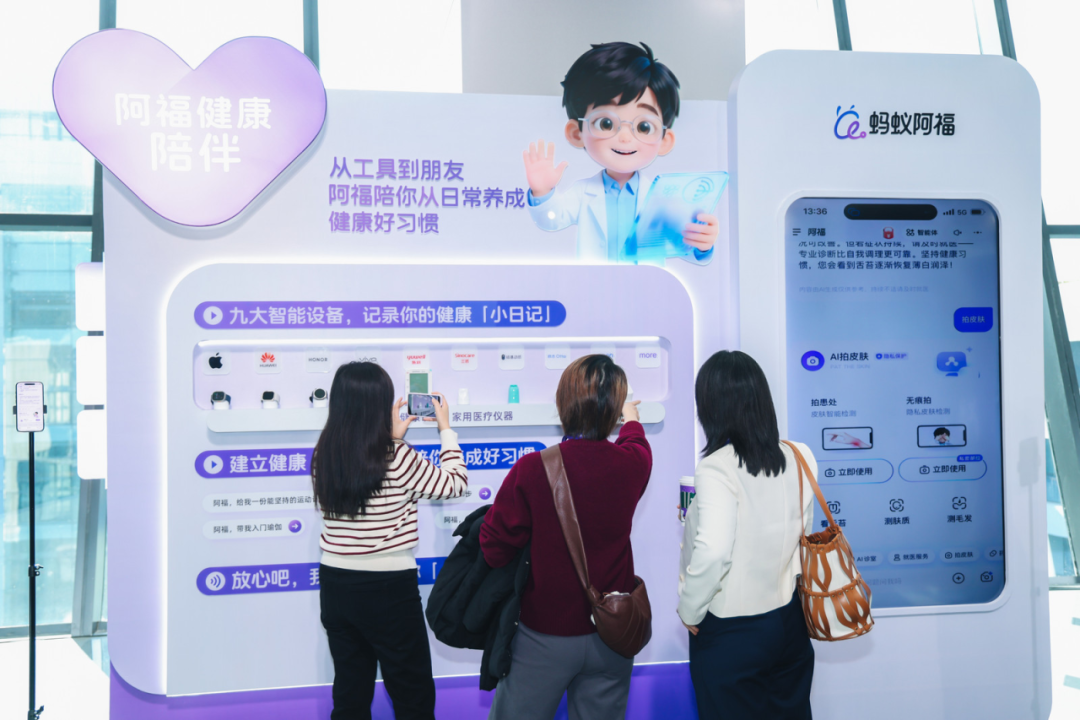
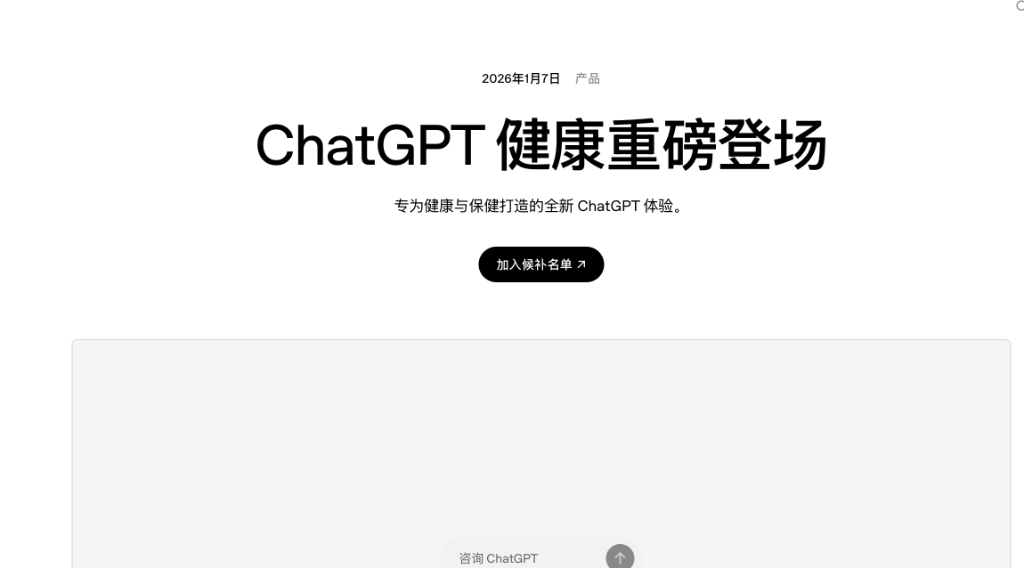
今天,AI领域传来重磅消息。OpenAI正式推出全新功能ChatGPT Health,并向小部分用户开放。这是自蚂蚁阿福现象级走红之后,又一巨头入局健康 AI。 另一方面,字节、百度、京东、腾讯等国内大厂也纷纷跟进——百度将算法大牛转岗至百度健康,腾讯上线健康问问AI功能、字节加速小荷AI医生推 广……有业内人士调侃,阿福拯救了大厂的健康事业部。 实际上,互联网医疗并非新概念,但过去多年受制于医疗广告乱象、竞价排名等问题,行业一度失去想象力。蚂蚁阿福的出现,验证了大模型在健康医疗 严肃场景下的可行性与用户接受度,并且走出了问答结果没有广告、不含商业排名的"纯净模式"。 有观点认为,阿福的出现,将会加速用户健康咨询习惯的迁移,从传统搜索迁移至AI平台。 不同于通用AI,阿福以专业的医疗大模型为底座,聚焦于健康问答和服务领域,专业度上保持领先。并且,在阿福App上,用户可一站式获得在线挂号、 咨询名医,甚至医保支付等后续服务,相比通用AI的专业闭环优势明显。 沉寂许久的互联网医疗健康赛道被再次点燃。过去一个月来,蚂蚁阿福的爆发式增长,推动百度、字节、腾讯等国内互联网大厂争相加码健康业务,布局 智能问答相关产品。如 ...

蚂蚁阿福点燃健康AI赛道,OpenAI深夜发布ChatGPT Health
21世纪经济报道· 2026-01-08 10:58
另一方面,字节、百度、京东、腾讯等国内大厂也纷纷跟进——百度将算法大牛转岗至百度 健康,腾讯上线健康问问AI功能、字节加速小荷AI医生推广……有业内人士调侃,阿福拯救 了大厂的健康事业部。 OpenAI入局,赛道竞争将加速 实际上,互联网医疗并非新概念,但过去多年受制于医疗广告乱象、竞价排名等问题,行业 一度失去想象力。蚂蚁阿福的出现,验证了大模型在健康医疗严肃场景下的可行性与用户接 受度,并且走出了问答结果没有广告、不含商业排名的"纯净模式"。 有观点认为,阿福的出现,将会加速用户健康咨询习惯的迁移,从传统搜索迁移至AI平台。 不同于通用AI,阿福以专业的医疗大模型为底座,聚焦于健康问答和服务领域,专业度上保 持领先。并且,在阿福Ap p上,用户可一站式获得在线挂号、咨询名医,甚至医保支付等后续 服务,相比通用AI的专业闭环优势明显。 今天,AI领域传来重磅消息。OpenAI正式推出全新功能ChatGPT Health,并向小部分用户开 放。这是自蚂蚁阿福现象级走红之后,又一巨头入局健康AI。 沉寂许久的互联网医疗健康赛道被再次点燃。过去一个月来,蚂蚁阿福的爆发式增长,推动 百 度 、 字 节 、 腾 讯 ...

AI重构C端医疗
Hua Er Jie Jian Wen· 2026-01-08 06:53
Core Insights - The perception that digital healthcare is a false proposition is being challenged by the surge in AI-driven healthcare demand, which has been historically underestimated due to high entry barriers and low frequency of medical needs [1] - The emergence of AI healthcare solutions like Ant Group's "Afu" and OpenAI's Health signifies a shift from traditional search engine-dominated medical information to AI agents managing personal health [5][16] Group 1: Ant Group's "Afu" - Ant Group's "Afu" saw its monthly active users double to over 30 million within a month, with daily inquiries exceeding 10 million [2][6] - "Afu" integrates with major smart device brands and connects to 5,000 hospitals and 300,000 doctors, providing a comprehensive healthcare service from monitoring to consultations [8] - A significant 55% of "Afu" users come from third-tier cities, highlighting the demand for accessible healthcare solutions in underserved markets [8] Group 2: OpenAI's Health - OpenAI launched ChatGPT Health on January 7, 2026, creating a separate entry point for health-related inquiries to address privacy concerns [3][9] - The architecture of ChatGPT Health ensures that health-related data is stored separately, preventing any cross-contamination with other data, thus fostering user trust [10] - OpenAI partnered with b.well Connected Health to address the challenge of fragmented medical data, allowing users to access their medical records seamlessly [12][13] Group 3: AI Healthcare Functionality - ChatGPT Health aims to manage the entire lifecycle of user health by integrating static medical records and dynamic physiological data [14] - The service can generate personalized health recommendations and actionable plans, demonstrating a significant advancement over traditional healthcare models [15] - Both "Afu" and ChatGPT Health are evolving to provide end-to-end healthcare services, reflecting a common demand for AI-driven healthcare solutions in both Eastern and Western markets [15] Group 4: Valuation Logic in AI Healthcare - The competitive landscape of healthcare is shifting from search engine-based information retrieval to conversational AI services, diminishing the value of traditional health information platforms [17] - The role of offline service providers is transforming as they become data asset managers rather than just service providers, emphasizing the value of high-quality real-world data [18] - Trust is becoming a critical currency in AI healthcare, with privacy assurances and data handling practices being central to user engagement and future monetization strategies [19]
京东健康20260107
2026-01-08 02:07
摘要 京东健康已成为中国最大的线上 B2C 零售药店,并积极发展 O2O 和线 下药房业务,构建了"医+药"双轮驱动的互联网医疗生态系统,未来 发展空间广阔。 京东健康背靠京东集团,在供应链和用户导流方面具备显著优势,同时 已成为创新药和新特药的首发平台,吸引了大量优质产品,提升了在患 者和药企中的认可度。 京东健康通过自营 B2C、在线平台及 O2O 业务实现全渠道布局,2025 年上半年即使线下市场不景气,仍实现了超过 20%的收入和利润增长, Non-GAAP 净利润率超过 8%。 中国处方外流和线上化趋势明显,网上药店市场销售额持续增长,B2C 互联网药店市占率显著提升,京东健康自营 B2C 业务通过快速配送和创 新产品巩固品牌优势,活跃用户数量稳步增长至 1.8 亿人次。 京东健康在线平台通过增加第三方商家数量丰富产品供给,O2O 业务覆 盖全国 20 万家药店,覆盖接近 2 亿人群,满足即时买药需求,增强市 场竞争力。 Q&A 京东健康在互联网医疗领域的地位和发展前景如何? 京东健康是互联网医疗领域的绝对龙头企业,特别是在 AI 时代具备良好的发展 前景。自 IPO 以来,其收入从 300 亿人民 ...
平安好医生(01833.HK):1月7日南向资金减持475.17万股
Sou Hu Cai Jing· 2026-01-07 19:35
Group 1 - The core point of the article highlights that southbound funds have reduced their holdings in Ping An Good Doctor (01833.HK) by 4.75 million shares as of January 7, with a total net reduction of 48.82 million shares over the last five trading days [1] - Over the past 20 trading days, there have been six days of net reductions by southbound funds, totaling 34.41 million shares [1] - Currently, southbound funds hold 462 million shares of Ping An Good Doctor, representing 21.36% of the company's total issued ordinary shares [1] Group 2 - Ping An Health Medical Technology Co., Ltd. operates in the healthcare sector, providing medical and health services through mobile platforms and offline resources [1] - The company conducts its business through two segments: the medical services segment, which includes online consultations, referrals, appointment scheduling, hospitalization arrangements, disease diagnosis, and sales of related pharmaceuticals and medical devices [1] - The health services segment offers standardized health service packages that integrate various healthcare institution services to meet users' health-related needs, covering areas such as physical examinations, elderly care, dental services, anti-aging, and general health [1]

2026,预见|宏观篇:盈利为核,流动为翼——2026年全球温和复苏中的价值新主线
Xin Lang Cai Jing· 2026-01-07 08:16
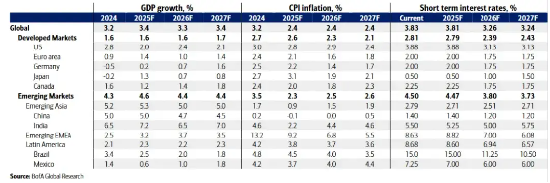
Core Viewpoint - The global economy is expected to show moderate recovery in 2026, supported by ample liquidity and a gradual recovery in inventory and profit cycles, shifting the market narrative from valuation recovery to profit support [1][30]. Group 1: Overseas Macro - The global economy will continue to recover, with K-shaped economic characteristics persisting but narrowing. Major economies are projected to have varied GDP growth rates: the US at 2.4%, Eurozone at 1.0%, Japan at 0.8%, and emerging markets at 4.2% [2][30]. - Global inflation is on a downward trend, with expectations that the Federal Reserve may cut interest rates 2-3 times in 2026, leading to a decrease in short-term rates [31][30]. Group 2: Domestic Macro - Fiscal policies are expected to drive investment recovery in major economic provinces, with a focus on infrastructure, manufacturing recovery, and a narrowing decline in real estate sales and investment [8][35]. - The Producer Price Index (PPI) is anticipated to rise initially before stabilizing, while the Consumer Price Index (CPI) may see moderate increases. The profit cycle is gradually recovering, with improvements expected in various sectors [9][35]. Group 3: Liquidity Environment - A clear trend of global liquidity easing is established, with the Federal Reserve leading improvements in overseas liquidity. Domestic monetary policy is expected to align with fiscal measures, potentially leading to interest rate cuts [12][38]. - The supply of funds is likely to be dominated by institutional capital, with private equity funds potentially driving high-net-worth individuals back into equity allocations [14][38]. Group 4: Strategic Allocation Directions - The market is expected to shift from valuation recovery to profit-driven dynamics in 2026, with Chinese assets still having room for valuation recovery [41][42]. - Key sectors to focus on include technology and advanced manufacturing, traditional export chains, and industries with increasing overseas revenue proportions [42][45]. - Future industry themes may include smart manufacturing, next-generation communications, advanced materials, and future energy solutions [47].