港口航运

Search documents
天路百万吨 水路百万级 陆路万里长 经济通道如何向通道经济进阶?——枢纽与支点·大中原融入大市场①
He Nan Ri Bao· 2026-01-12 23:22
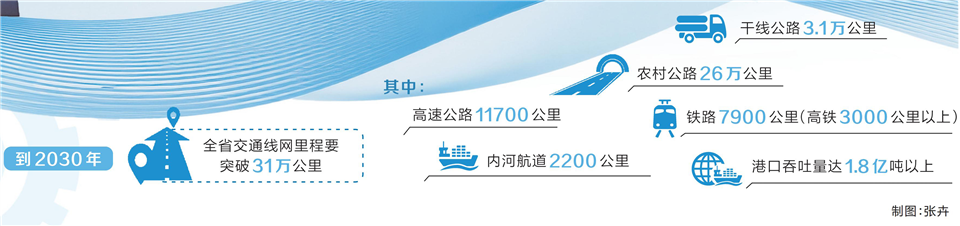
Core Insights - The article highlights the significant advancements in transportation infrastructure in Henan province, marking its transition from a geographical center to a strategic hub for national and international market circulation [2][3][14] - Key achievements include the Zhengzhou Airport surpassing 1 million tons in annual cargo throughput, the opening of the first dedicated container terminal in Zhoukou, and the completion of 17 highway projects, bringing the total highway mileage in the province to over 10,000 kilometers [2][4][12] Transportation Infrastructure Developments - Zhengzhou Airport has officially joined the "million-ton club" for air cargo, enhancing its status as a global logistics hub [2][6] - Zhoukou's new container terminal is expected to significantly reduce transportation costs, with water transport costing only one-fifth of road transport [3][9] - The completion of 17 highway projects has enabled over 90% of counties in Henan to access dual highways, facilitating regional integration and reducing operational costs [4][12] Economic Transformation - The developments in transportation are part of a broader strategy to transform Henan's economic model from a "transportation corridor" to a "hub economy," focusing on value creation and resource allocation [16][17] - The integration of water, land, and air transport is seen as a critical step in enhancing the province's economic resilience and competitiveness [3][14] Future Outlook - The province aims to further enhance its transportation network, targeting over 31,000 kilometers of road by 2030, with specific goals for highway, rural road, and inland waterway expansions [12][14] - The strategic focus includes strengthening the Zhengzhou International Comprehensive Transportation Hub and expanding the "Air Silk Road" to enhance global connectivity [12][13][14]

洋浦港大型船舶往来频密,国际航运枢纽活力迸发!
Sou Hu Cai Jing· 2026-01-12 22:48
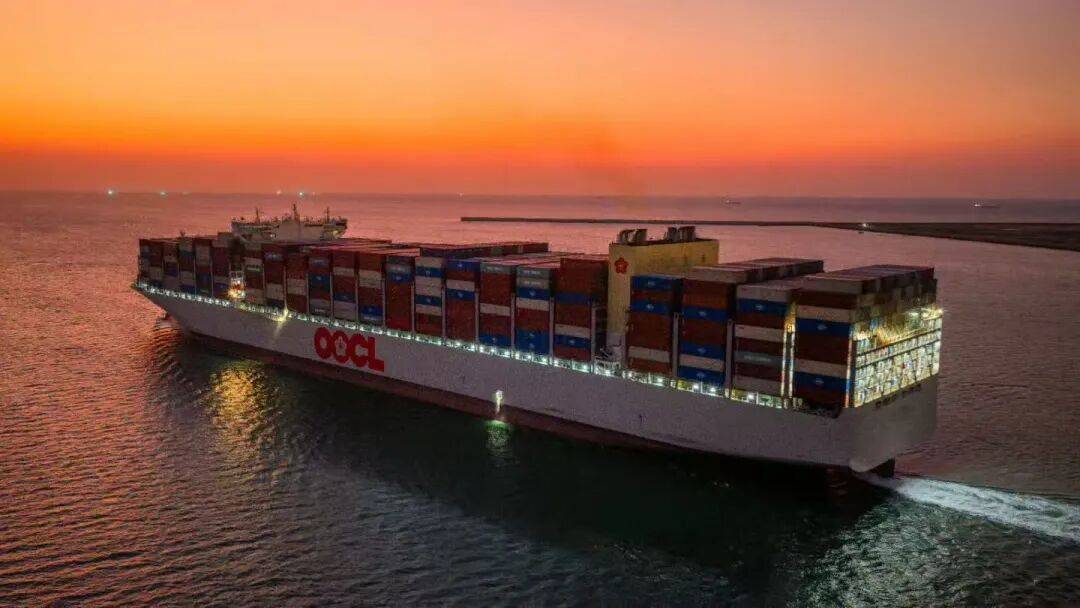
Core Viewpoint - The successful docking of the ultra-large container ship "Oriental Zijinghua" at Yangpu Port highlights the increasing shipping activity and professional capabilities of the Yangpu Port as a key node in the Western Land-Sea New Corridor, especially following the implementation of full closure policies in Hainan Free Trade Port [1][5]. Group 1: Shipping Activity - The "Oriental Zijinghua" has a deadweight tonnage of 165,000 tons and a length of 367 meters, making it one of the ultra-large container ships currently docking at Yangpu Port [1]. - As of January 12, the Yangpu branch of the Hainan Pilot Station has successfully piloted a total of 370 foreign and domestic vessels, with over 86 of these being ultra-large ships, indicating a busy and vibrant shipping hub [1][5]. Group 2: Operational Challenges and Solutions - The main challenge during the piloting of the "Oriental Zijinghua" was its large size and the complex navigation environment. The pilot station coordinated closely with the ship's crew, the terminal, and tugboat companies to ensure a smooth docking process [3]. - To accommodate the rising demand for piloting large vessels since the full closure of Hainan Free Trade Port, the Hainan Pilot Station has optimized its piloting plans and implemented a 24-hour standby system to enhance shipping efficiency [5]. Group 3: Future Outlook - The Hainan Pilot Station aims to continue improving its service processes and piloting techniques to provide robust shipping support for the construction of Hainan Free Trade Port [5].
班轮公司与中国码头,有了新的合作方向?
Xin Lang Cai Jing· 2026-01-12 12:28
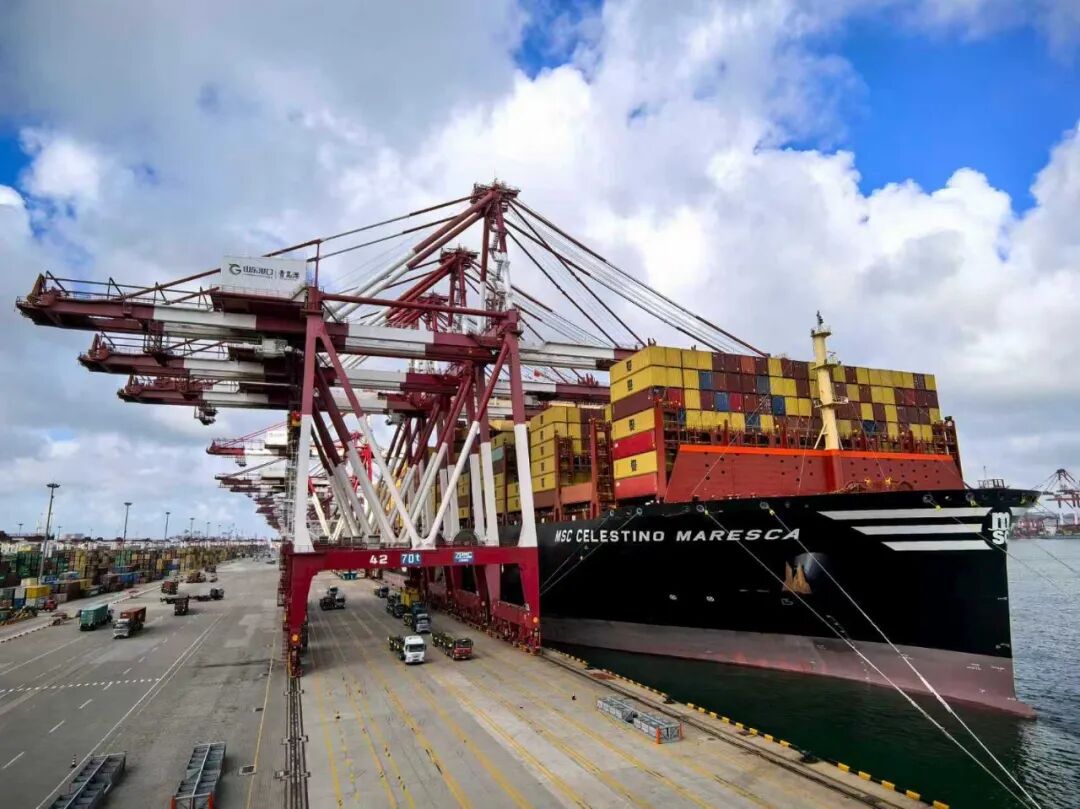
外资班轮公司与码头运营商,曾经是中国港口最活跃的角色之一。在中国港口的高速建设热潮中,他们是沿海港口的座上宾,在各地组建合资码头公司, 带来资金、技术、管理经验,分走市场、利润,各取所需。 随着中国港口崛起,这段"蜜月期"进入尾声,近几年来,只见外资股权被中方收购,不见外资进入中国集装箱码头。可以预见,未来外资还会继续退潮。 不过,外资班轮公司与中国码头运营商深入合作的需求还在,买不进码头,他们还有别的方式联姻。 2025年12月,山东港口与MSC的合资堆场开业,简称"港联地",在青岛港前湾港区后方,场地面积11.3万平方米,可提供出口操作、集装箱进出场、干箱 维修、冷箱预检维修等服务,看上去平平无奇。 在青岛港周边,运营堆场或场站的玩家比比皆是,船公司、码头、货代、集装箱制造企业,都有份。合资堆场也不少,仅青岛港的下属企业,就与各类主 体合资了多个堆场,如港联荣(万海)、港联捷(全球捷运)、港联欣(中创物流)、港联海(中远海运)、港联华(中集)、港捷丰(海丰、马士 基)、长荣集装箱储运(长荣)等。 其中不乏与外资船公司的合资企业,但这些合资堆场成立时间较早,最晚也已经是近十年前,当时还算是码头与船公司的常规 ...
唐山港2025年度预计完成货物量2.42亿吨 同比增长4.1%
Zhi Tong Cai Jing· 2026-01-12 08:22
Core Viewpoint - Tangshan Port (601000.SH) expects to achieve a total cargo volume of 242 million tons in 2025, representing a year-on-year growth of 4.1% [1] Group 1: Cargo Volume Breakdown - The expected completion for iron ore is 129 million tons [1] - The expected completion for steel is 15 million tons [1] - The expected completion for coal is 66 million tons [1] - The expected completion for other cargo types is 32 million tons [1]

上港集团(600018.SH):预计2025年归母净利润为134.0亿元,同比下降10.4%
Ge Long Hui A P P· 2026-01-12 08:06
格隆汇1月12日丨上港集团(600018.SH)公布2025业绩快报,2025年营业总收入为394.4亿元,同比增长 3.5%;2025年归属于上市公司股东的净利润为134.0亿元,同比下降10.4%。 ...

中国新闻网:去年武汉阳逻港进出口集装箱量首破60万标箱
Zhong Guo Xin Wen Wang· 2026-01-10 03:48
Core Insights - In 2025, the container throughput at Wuhan Yangluo Port exceeded 601,000 TEUs, marking a year-on-year increase of 3.8%, with total cargo volume reaching 8.833 million tons, up 4.8%, both achieving historical highs [1] - The growth in foreign trade volume is attributed to the continuous optimization of the port's business environment, improved customs efficiency, and reduced logistics costs, enhancing the international competitiveness of enterprises [2] - Direct shipping has become a new engine for foreign trade growth at Yangluo Port, with the "Indonesia-Wuhan" direct shipping route completing a cargo volume of 282,000 tons, accounting for 76.4% of the total direct shipping volume, crucial for meeting the raw material import needs of key industries in Hubei [2] Industry Developments - Yangluo Port has opened five international direct shipping routes and three transit channels in recent years, enhancing its global shipping network [4] - The integration of the "China-Europe Railway Express" with river-sea combined transport has expanded its reach, while the promotion of "direct loading and unloading" and "joint unloading" models has improved distribution efficiency [4] - Yangluo Port has established a diverse international transport network connecting Japan and South Korea to the east, ASEAN to the south, Europe to the west, and Mongolia and Russia to the north [4]
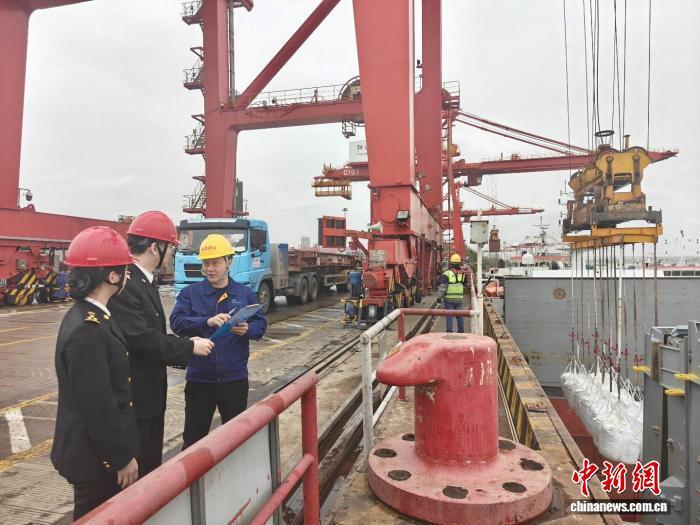
苏州港航“十四五”交出亮眼答卷 畅航道减费用 优服务增绿量
Su Zhou Ri Bao· 2026-01-10 01:44
Core Insights - During the "14th Five-Year Plan" period, Suzhou Port and Shipping Development Center has cumulatively exempted toll fees amounting to 25.07 million yuan, enhancing the efficiency of inland waterway transportation [1][2] - The completion of the Changqiao reconstruction project in November 2025 will significantly improve traffic flow and safety for vessels, accommodating 2,000-ton ships for all-weather navigation [1] - Digital services have advanced, allowing shipowners to complete toll registration via mobile phones, marking a new phase in the digital transformation of Suzhou's waterway infrastructure [1] Group 1 - The Suzhou Port and Shipping Development Center has implemented measures such as legal consultations and regular safety inspections to enhance water traffic safety [2] - The center has created green bank vegetation covering 16,613 square meters, equivalent to 2.75 times the area of West Lake, contributing to the ecological improvement of the Grand Canal in Suzhou [2] - The overall completion of the "Three Transformations to Two" project will significantly enhance the efficiency of inland waterway transportation [1]
中国港口逆风破浪 吞吐量迭破纪录,重构全球航运棋局
2 1 Shi Ji Jing Ji Bao Dao· 2026-01-09 23:07
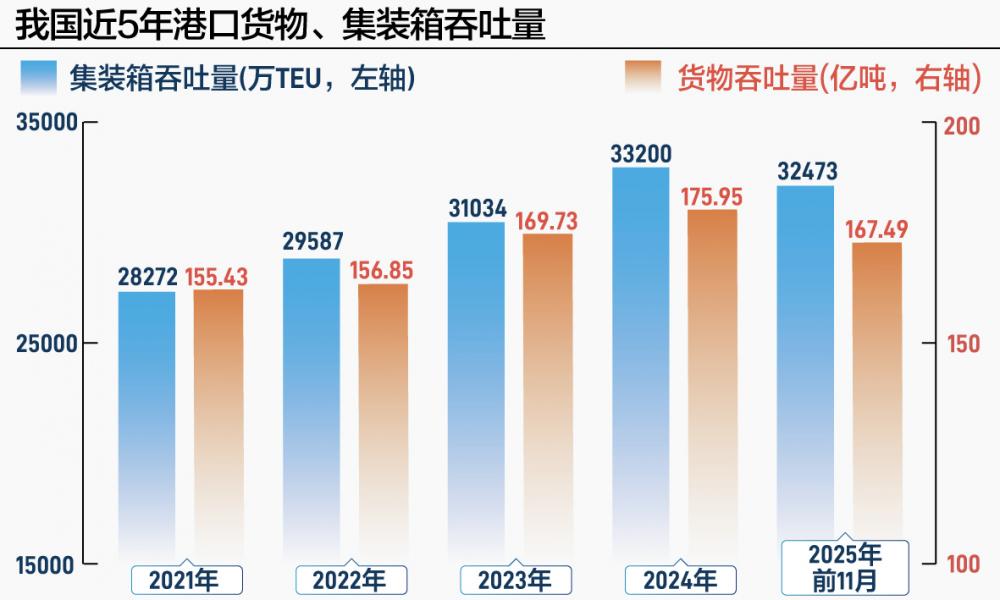
Core Insights - China's ports have demonstrated resilience and growth in cargo throughput despite global trade uncertainties, with major ports like Shanghai and Ningbo-Zhoushan maintaining their positions at the forefront of global shipping [1][3][4] Group 1: Performance Metrics - In the first eleven months of 2025, China's ports achieved a cargo throughput of 16.75 billion tons, marking a year-on-year increase of 4.4% [3] - Shanghai Port's container throughput reached 55.06 million TEUs, maintaining its status as the world's busiest port for the sixteenth consecutive year [8] - Ningbo-Zhoushan Port became the first global port to exceed 1.4 billion tons in annual cargo throughput [3][8] Group 2: Structural Changes and Trends - China's ports are transitioning from scale advantages to becoming supply chain hubs, enhancing their roles in logistics and distribution [2][4] - The growth in throughput is attributed to improved competitiveness in the global shipping system and the implementation of policies supporting smart and green shipping [3][4] Group 3: Market Expansion and Trade Dynamics - China's share of global container exports increased from 34% in 2019 to 38% in 2025, reflecting the resilience of Chinese manufacturing and technology [9] - New trade routes are being established, with ports like Beibu Gulf opening international routes to the Middle East and others expanding to emerging markets in Latin America and Africa [9][10] Group 4: Future Outlook and Innovations - The development of smart and green shipping policies is expected to accelerate the digitalization and automation of ports, enhancing their roles as intelligent hubs [16] - The establishment of new supply chain structures and trade routes will require ports to adapt and optimize their operations in response to geopolitical changes [12][15]




向“新”而聚 开年外贸稳健起步展活力
Shang Hai Zheng Quan Bao· 2026-01-09 18:41
Core Viewpoint - The opening of new foreign trade routes, such as the direct shipping line from Qingdao to Australia, is expected to enhance logistics efficiency and reduce costs for businesses, contributing to the overall vitality of China's foreign trade in 2026 [1][2]. Group 1: New Trade Routes - The first foreign trade route of 2026 from Qingdao to Australia has been launched, significantly shortening shipping times to Brisbane (approximately 20 days) and Sydney (approximately 25 days) [1]. - The new route connects major domestic ports with Australian hubs, enhancing the logistics network and reducing overall logistics costs for businesses [1][2]. - Qingdao Port now has six direct routes to Australia, reinforcing its position as a key international shipping hub in Northeast Asia [2]. Group 2: Logistics Efficiency - The new routes are characterized by "premium" and "fast" features, aiming to improve shipping efficiency and reliability while reducing costs associated with inventory and defaults [3]. - The expansion of premium routes and inland fast lines is focused on creating a highly efficient logistics system that connects manufacturing bases directly to global networks [3]. Group 3: Emergence of New Business Models - The rise of digital trade and other new business models is providing a "soft power" boost to foreign trade, with significant developments in compliance and efficiency in cross-border services [4][5]. - The Hainan Digital Trade Association is actively building channels for digital content distribution in ASEAN, facilitating local partnerships for businesses [5]. Group 4: Policy Support for Trade - A series of policies aimed at promoting high-quality foreign trade have been implemented, providing a stable and transparent environment for businesses [6]. - The revised Foreign Trade Law will establish a negative list management system for cross-border services, legalizing support for new business models, including digital and green trade [6]. Group 5: Future Outlook - Experts predict that in 2026, China's foreign trade will continue to show resilience, driven by market diversification, structural upgrades, digitalization, and deepening institutional openness [7].
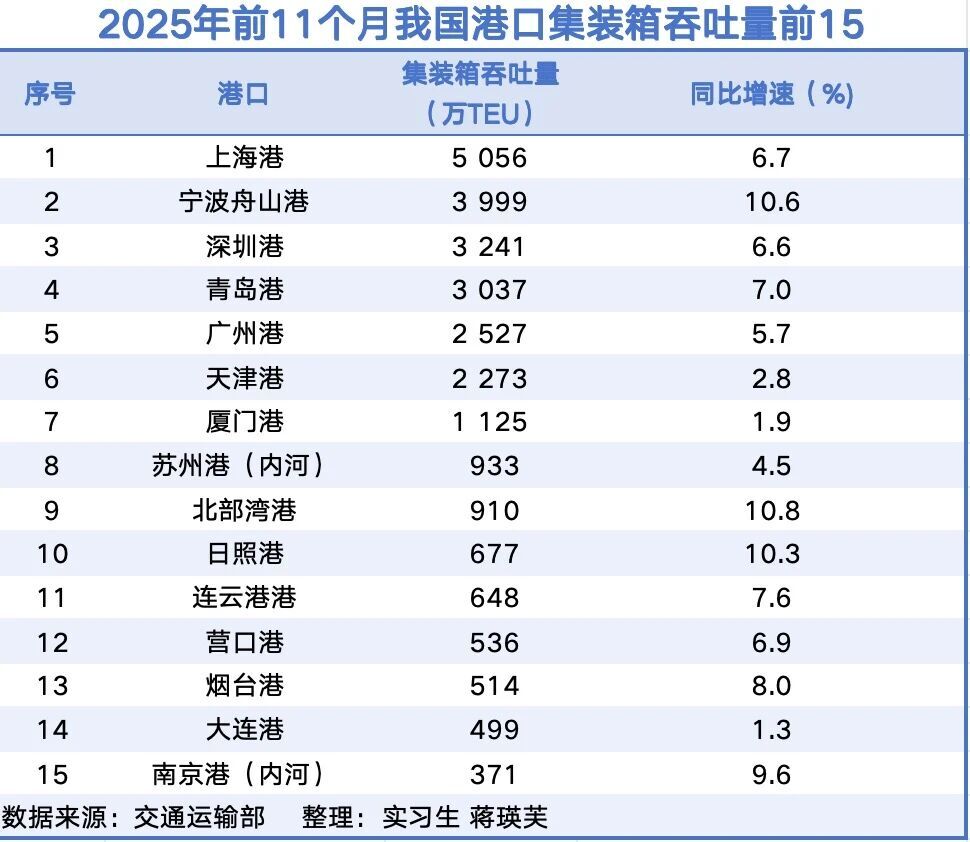
全国集装箱吞吐量前15港口出炉
2 1 Shi Ji Jing Ji Bao Dao· 2026-01-09 15:17
Core Insights - Despite global trade uncertainties, China's port throughput has shown resilient growth, with a total of 16.75 billion tons handled in the first eleven months of 2025, marking a 4.4% year-on-year increase [1][2] - Major ports like Shanghai and Ningbo-Zhoushan have maintained their positions as global leaders, with Ningbo-Zhoushan becoming the first port to exceed 1.4 billion tons in annual throughput and Shanghai retaining the top spot in container throughput for the sixteenth consecutive year [1][5] - The growth in port throughput is attributed to China's increasing competitiveness in the global shipping system and the implementation of policies related to free trade zones and smart and green shipping [2][3] Port Performance - In 2025, major ports in China have reported significant increases in container throughput, with Ningbo-Zhoushan at 39.99 million TEUs (10.6% increase), Shenzhen at 32.41 million TEUs (6.6% increase), and Qingdao at 30.37 million TEUs (7.0% increase) [2] - Emerging ports like Yangpu and Beibu Gulf have also shown remarkable growth, with Yangpu's container throughput increasing by 65% year-on-year [1][5] Economic Context - The stable growth in port cargo and container volumes indicates the resilience of China's economy and international trade, even amidst external instability [3][6] - China's share of global container exports has risen from 34% in 2019 to 38% in 2025, reflecting the competitiveness of Chinese manufacturing and technology [5][6] Trade Route Developments - Chinese ports are expanding into emerging markets, with new international shipping routes being established to regions like the Middle East, Latin America, and Africa [6][7] - The trade volume with ASEAN countries grew by 8.5%, and trade with the EU increased by 5.4% in the first eleven months of 2025 [6] Future Trends - The implementation of smart and green shipping policies is expected to enhance the port industry, with a focus on digitalization and automation [13] - The establishment of new shipping routes, such as the "Sea Defense Silk Road Fast Shipping" line, indicates a shift towards more efficient logistics and trade networks [7][12]