
金融监管

Search documents
中国部署严厉打击利用APP开展非法金融活动
Zhong Guo Xin Wen Wang· 2025-10-31 06:40
Core Viewpoint - The Chinese government is intensifying efforts to combat illegal financial activities conducted through mobile applications, emphasizing the importance of safeguarding citizens' financial interests [1][2]. Group 1 - A recent inter-ministerial meeting was held in Beijing to address the crackdown on illegal financial activities via apps, with participation from various regulatory bodies [1]. - The meeting highlighted the urgency of recognizing the current situation and the need for decisive actions to address illegal financial activities [1][2]. - Authorities are instructed to adopt a proactive approach in identifying and mitigating risks associated with illegal fundraising activities [2]. Group 2 - The meeting called for a comprehensive coordination platform to ensure the effective implementation of key tasks related to combating illegal financial activities [2]. - Local governments are urged to take responsibility and act decisively against major cases to deter criminal activities [2]. - A focus on continuous improvement of mechanisms to prevent risks and ensure the effectiveness of actions taken against illegal fundraising is emphasized [2].
国家外汇管理局废止2件规范性文件
Sou Hu Cai Jing· 2025-10-31 02:05
Core Viewpoint - The State Administration of Foreign Exchange (SAFE) has announced the abolition of two regulatory documents related to the reporting of foreign exchange assets and liabilities by Chinese financial institutions, aiming to optimize the statistical framework for external assets and liabilities [1] Group 1: Regulatory Changes - SAFE has decided to abolish the following two normative documents: 1. "Notice on Reporting Foreign Exchange Assets and Liabilities by Chinese Financial Institutions" (Hui Fa [2009] No. 6) 2. "Notice on Adjusting the Reporting Methods for Foreign Exchange Assets and Liabilities by Chinese Financial Institutions" (Hui Zong Fa [2012] No. 136) [1] - The announcement will take effect immediately upon publication [1]
非法收受1348万余元!原山东银保监局一级巡视员孙建宁当庭认罪
Bei Jing Shang Bao· 2025-10-30 09:04
庭审中,公诉机关出示了相关证据,被告人孙建宁及其辩护人进行了质证,控辩双方在法庭的主持下充 分发表了意见,孙建宁进行了最后陈述并当庭表示认罪、悔罪。 庭审最后,法庭宣布休庭,择期宣判。 北京商报讯(记者 李秀梅)10月30日,北京商报记者注意到,10月29日,山东省日照市中级人民法院 一审公开开庭审理了原山东银保监局一级巡视员孙建宁受贿一案。 2020年1月,被告人孙建宁利用担任中国人民银行银川中心支行副行长、中国保险监督管理委员会宁夏 监管局党委书记、局长,中国保险监督管理委员会新疆监管局党委书记、局长,中国保险监督管理委员 会山东监管局党委书记、局长等职务上的便利,为有关单位和个人在销售产品、贷款融资、企业经营等 方面谋取利益,非法收受上述单位和个人所送财物,价值共计人民币1348万余元。公诉机关提请以受贿 罪追究孙建宁刑事责任。 ...
“十五五”规划建议提及金融多达17次
21世纪经济报道· 2025-10-29 13:59
Core Viewpoint - The "15th Five-Year Plan" emphasizes accelerating the construction of a financial powerhouse, building upon the framework established in the Central Financial Work Conference at the end of 2023, with a focus on various financial systems and regulatory measures [1][3]. Group 1: Monetary Policy System - The "15th Five-Year Plan" suggests the establishment of a scientific and robust monetary policy system, enhancing the transmission mechanism of monetary policy to support stable economic growth and high-quality development [3][5]. - The People's Bank of China aims to balance short-term and long-term goals, support real economic growth while maintaining the health of the financial sector, and dynamically improve the monetary policy framework [5][8]. Group 2: Financial Regulation - The plan calls for comprehensive strengthening of financial regulation, enhancing collaboration between central and local regulators, and developing a risk prevention and resolution system to ensure financial stability [5][6]. - The China Securities Regulatory Commission emphasizes the importance of risk prevention and enhancing the ability to monitor risks across markets and industries [6]. Group 3: Macro-Prudential Management - The "15th Five-Year Plan" proposes the construction of a comprehensive macro-prudential management system, focusing on the interconnections between macroeconomic operations and financial risks [8][10]. - The central bank will prioritize monitoring systemic financial risks, improving risk prevention measures for key institutions, and enhancing the governance mechanism for macro-prudential management [10]. Group 4: Internationalization of the Renminbi - The plan promotes the internationalization of the Renminbi, enhancing the openness of capital accounts, and establishing a self-controlled cross-border payment system for the Renminbi [6][10]. - The State Administration of Foreign Exchange aims to steadily expand high-level institutional openness in the foreign exchange sector while supporting trade innovation and investment cooperation [6].


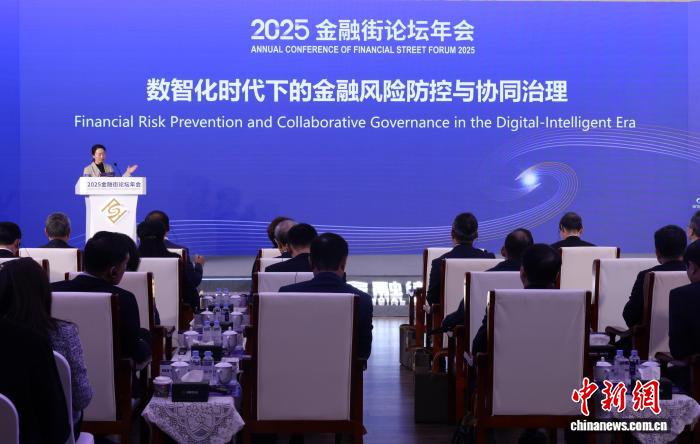
2025金融街论坛平行论坛“数智化时代下的金融风险防控与协同治理”举行
Zhong Guo Xin Wen Wang· 2025-10-29 11:07
Core Insights - The "Financial Risk Prevention and Collaborative Governance in the Era of Digital Intelligence" parallel forum was held in Beijing as part of the 2025 Financial Street Forum annual meeting, gathering guests from various sectors including finance, law, technology, and education [1][3]. Group 1: Government Initiatives - The Vice Mayor of Beijing, Sun Shuo, emphasized the importance of the financial industry as a key pillar of Beijing's economy and outlined four key strategies for enhancing financial risk prevention: strengthening regulatory collaboration, legal protection, technological empowerment, and open cooperation [3][4]. - Sun Shuo proposed three work suggestions for building a collaborative governance system in the digital intelligence era: leading with the rule of law, embracing technology, and promoting open and inclusive cooperation [3]. Group 2: Judicial Perspectives - The Chief Prosecutor of Beijing, Zhu Yafeng, highlighted the integration of financial prosecution branding with the implementation of a digital prosecution strategy to enhance the effectiveness of financial prosecution [4][5]. - The Deputy Chief Prosecutor of the Supreme People's Procuratorate, Ge Xiaoyan, noted the importance of high-quality prosecution services in safeguarding financial security in the digital intelligence era [4][5]. Group 3: International Cooperation - Leaders from judicial authorities in Vietnam, Italy, and Singapore discussed the challenges and strategies for preventing financial risks in the digital intelligence era during the forum [5]. - The Deputy Chief Prosecutor of Vietnam's Supreme People's Procuratorate focused on the theme of combating financial crimes and international cooperation [5]. Group 4: Research and Development - A joint initiative to combat financial black and gray industries was released by the Beijing People's Procuratorate, Beijing Financial Regulatory Bureau, and China University of Political Science and Law [7]. - The Beijing People's Procuratorate also published the "Financial Prosecution White Paper (2024-2025)" and showcased typical cases of high-quality prosecution in financial matters [7].

2025金融街论坛|阻断互联网传播渠道,北京检监学三方发布联合倡议严打金融黑灰产
Bei Jing Shang Bao· 2025-10-29 08:25
Core Viewpoint - The "Joint Initiative" aims to combat financial black and gray industries by promoting collaborative governance, enhancing information sharing, and establishing a comprehensive prevention system to mitigate systemic financial risks [1][2]. Group 1: Challenges in Governance - Financial black and gray industries face multi-dimensional challenges, including the need for improved collaborative mechanisms and information sharing, as well as the difficulty in identifying and controlling hidden risks [2][3]. - Legal standards for financial black and gray industries are ambiguous, leading to inconsistent judicial standards and complicating governance efforts [2]. - The lack of sufficient punitive measures results in an imbalance between the costs and benefits of illegal activities, making effective deterrence difficult [2][3]. Group 2: Proposed Measures - The initiative emphasizes the importance of collaborative information sharing to enhance risk prevention and response capabilities across the entire process [2][3]. - It calls for the establishment of a robust risk monitoring mechanism, requiring financial institutions to report high-risk information proactively [3]. - The initiative seeks to standardize consumer rights protection and ensure quick resolution of legitimate complaints while preventing malicious claims [3]. Group 3: Responsibilities and Education - Platforms are urged to take responsibility for verifying the qualifications of their participants and managing risk events effectively to prevent the spread of black and gray industries [3]. - The initiative promotes the establishment of regular interactions among regulatory bodies, legal institutions, and academic organizations to enhance legal research and application [3]. - Public education campaigns are to be conducted to improve financial literacy and awareness, thereby reducing the space for black and gray industries to thrive [4].
重庆金融监管局孙晓明:推动开发城市更新专项贷款等产品
2 1 Shi Ji Jing Ji Bao Dao· 2025-10-29 05:45
Core Viewpoint - Financial empowerment is identified as a key variable in promoting urban renewal and activating urban development dynamics, with the Chongqing Financial Regulatory Bureau collaborating with various local authorities to enhance financial support for urban renewal initiatives [1][2]. Group 1: Financial Support Mechanisms - The establishment of a dedicated financial working group for urban renewal aims to enhance the coordination between government, financial institutions, and enterprises, transitioning from a reactive to a proactive approach in urban planning [2]. - The introduction of specialized financial products, such as urban renewal loans, is intended to create a comprehensive financial product system that supports sustainable development [2]. - Financial institutions are encouraged to balance development and safety, exploring mechanisms to alleviate project financing bottlenecks and fostering a supportive lending environment [2]. Group 2: Key Focus Areas for Financial Services - The first focus area is spatial reshaping, which involves visible updates to urban areas, such as the renovation of old neighborhoods and public spaces, leveraging policy financial tools to attract more social capital [5]. - The second focus area is functional optimization, which aims to enhance public facilities and promote smart urban systems, ensuring efficient and convenient urban living [5]. - The third focus area is industrial enhancement, directing financial resources towards upgrading industries and transforming underutilized spaces into new economic drivers [5]. - The fourth focus area is ecological restoration, focusing on green and low-carbon projects, utilizing green finance tools to support sustainable urban development [5].

中国将继续扩大金融高水平开放
Ren Min Ri Bao· 2025-10-28 22:30
Core Points - The Chinese government is committed to implementing the spirit of the 20th National Congress and the "14th Five-Year Plan" by expanding high-level financial openness and accelerating the construction of a modern financial powerhouse [1] - The government welcomes more foreign financial institutions and long-term capital to invest in China and deepen cooperation [1] - Members of the Financial Regulatory Administration's International Advisory Committee express optimism about China's economic and financial development prospects and are willing to continue expanding investment cooperation in the Chinese market [1]
何立峰会见金融监管总局国际咨询委员会委员时指出 中国将继续扩大金融高水平开放
Xin Hua She· 2025-10-28 13:43
Core Viewpoint - The Chinese government is committed to expanding high-level financial openness and modernizing its financial sector, welcoming foreign investment and cooperation in the financial industry [1] Summary by Relevant Categories Economic Outlook - The Chinese government is optimistic about the economic and financial development prospects, as expressed by the International Advisory Committee members of the Financial Regulatory Administration [1] Financial Sector Development - China is implementing the spirit of the Fourth Plenary Session of the 20th Central Committee of the Communist Party and the "14th Five-Year Plan" to enhance the financial sector [1] - There is a strong emphasis on attracting more foreign financial institutions and long-term capital to invest in China [1]
何立峰会见金融监管总局国际咨询委员会委员时指出 中国将继续扩大金融高水平开放
Xin Hua She· 2025-10-28 13:33
Core Points - The Chinese government is committed to implementing the spirit of the 20th National Congress and the "14th Five-Year Plan" by expanding high-level financial openness and accelerating the construction of a modern financial powerhouse [1] - The government welcomes more foreign financial institutions and long-term capital to invest and operate in China, aiming to deepen cooperation with foreign entities [1] - Members of the Financial Regulatory Administration's International Advisory Committee express optimism about China's economic and financial development prospects and are willing to continue expanding investment cooperation in the Chinese market [1]