无人机

Search documents
21评论丨广东低空经济何以“领飞”
2 1 Shi Ji Jing Ji Bao Dao· 2026-02-02 23:10
朱克力(国研新经济研究院创始院长、湾区低空经济研究院院长) 首先,制造业基因的深度赋能,为无人机产业提供了全链条支撑。广东是全国制造强省,从泛家居、汽 车零部件到电子信息产业,形成了覆盖材料研发、精密制造、电子元器件的完整产业体系,而这恰恰与 无人机生产所需的轻量化材料、高精度电机、智能控制系统等核心环节高度契合。例如,佛山南海的无 人机企业世寰智能,能快速整合本地的电机制造、电池储能资源,研发出兼具安防与物流功能的多用途 无人机;中山福昆航空科技的电动垂直起降机型,其机身材料与珠三角的复合材料产业一脉相承。这 种"就近取材"的产业链优势,不仅降低了企业的研发与制造成本,更缩短了产品从实验室到生产线的周 期。数据显示,广东聚集了1.5万余家低空经济相关企业,形成了从核心部件到整机生产、从运营服务 到产业金融的全生态链,这种"集群效应"让广东在无人机产业竞争中占据天然优势。 场景创新的先行先试,为无人机技术迭代提供了"试验场"。低空经济的发展,离不开"应用牵引技术"的 逻辑支撑,而广东恰恰拥有最丰富的场景资源。从政务服务到民生消费,从应急救援到跨境物流,广东 通过开放多元场景,让无人机技术在实践中不断完善。在公 ...

广东低空经济何以“领飞”
2 1 Shi Ji Jing Ji Bao Dao· 2026-02-02 22:53
一方面,"广货行天下"为无人机打开了更广阔的市场空间。作为活动中最具科技感的"广货",广东无人 机凭借技术优势,从国内市场走向全球舞台。这种"走出去"的过程,在带来订单增长的同时,更让广东 无人机企业在国际竞争中积累了标准制定的话语权。例如,亿航智能的适航标准已被部分国家借鉴,为 后续产品出海扫清了障碍。同时,"广货行天下"推动的"干—支—末"物流网络建设,也与无人机的低空 物流需求高度契合,广东企业借此构建起覆盖省内、辐射全国、连接海外的低空物流体系,进一步巩固 了市场优势。 首先,制造业基因的深度赋能,为无人机产业提供了全链条支撑。广东是全国制造强省,从泛家居、汽 车零部件到电子信息产业,形成了覆盖材料研发、精密制造、电子元器件的完整产业体系,而这恰恰与 无人机生产所需的轻量化材料、高精度电机、智能控制系统等核心环节高度契合。例如,佛山南海的无 人机企业世寰智能,能快速整合本地的电机制造、电池储能资源,研发出兼具安防与物流功能的多用途 无人机;中山福昆航空科技的电动垂直起降机型,其机身材料与珠三角的复合材料产业一脉相承。这 种"就近取材"的产业链优势,不仅降低了企业的研发与制造成本,更缩短了产品从实验室到 ...
鲸奇智慧:2025年低空经济发展趋势报告
Sou Hu Cai Jing· 2026-02-02 12:12
Industry Overview and Positioning - The low-altitude economy in China is based on low-altitude airspace (primarily below 1,000 meters, with some scenarios extending to 3,000 meters) and is supported by advanced aircraft, integrating infrastructure, manufacturing, flight, and services across four main scenarios: production operations, public services, transportation, and consumption activities. It has been established as a national strategic emerging industry and a new pillar industry. The scale of China's low-altitude economy is expected to reach 851.9 billion yuan in 2025, representing a year-on-year growth of 28.2%, and is projected to exceed 1 trillion yuan in 2026, with a target of 3.5 trillion yuan by 2035. Cumulative financing from 2024 to 2025 is expected to reach 455 instances, amounting to over 44.902 billion yuan, with state-owned capital participation at 40.3% [1][29][26]. Core Track Development Trends - Drones are currently the main force in the low-altitude economy, with a global market size of 220.2 billion yuan in 2025, of which China accounts for 145.2 billion yuan, with industrial-grade drones making up 68%. The consumer market is expected to grow steadily, reaching 50.22 billion yuan in 2025, focusing on aerial photography and cluster performances. The industrial-grade market is projected to become a growth driver, reaching 77.566 billion yuan in 2025, widely applied in agricultural protection, surveying, inspection, and logistics, with technology advancing towards AI empowerment and long-endurance upgrades [1][32]. Development History and Stage Characteristics - The development of China's low-altitude economy has evolved from early general aviation exploration to breakthroughs in drone applications post-2010, with its inclusion in national planning in 2021, gradually forming a complete industrial ecosystem. The global industry has undergone concept exploration and regulatory construction, currently entering the application popularization phase. By 2025, it will be in the 1.0 "turbulent adjustment" closing stage, transitioning from "pilot demonstration" to the 2.0 scale application stage by 2027, and entering the 3.0 ecological maturity stage by 2035. The 1.0 stage is characterized by improved top-level design but delayed local policies, capital focusing on mature projects, hardware technology needing breakthroughs, and intensified market competition [3][20][24]. Infrastructure and Industry Layout - Infrastructure shows a characteristic of "digital infrastructure leading, physical infrastructure following," with over 300 cities achieving 5G-A network coverage and 487 general airports established, although issues of insufficient total quantity and imbalanced layout remain. Enterprise distribution is concentrated in the Guangdong-Hong Kong-Macao Greater Bay Area, Yangtze River Delta, and Chengdu-Chongqing regions, with Guangdong, Shandong, and Jiangsu provinces leading in enterprise stock. In the first nine months of 2025, 22,428 new related enterprises were added, and patent applications continued to grow rapidly [4][46][35]. Challenges and Development Suggestions - Major challenges include lagging top-level regulations, insufficient regulatory coordination, immature business models reliant on subsidies, high core hardware R&D costs, imbalanced infrastructure layout, and international technology blockades and trade barriers. Suggested solutions include deepening airspace management reforms, establishing unified regulatory and airworthiness recognition mechanisms, encouraging new consumption formats in "low-altitude +," upgrading business models from "selling equipment" to "selling services," setting up technology research special projects, strengthening industrial chain collaboration, and incorporating low-altitude infrastructure into urban and rural planning to attract social capital investment [5][26]. Future Development Path - The development path follows a gradual approach of "first cargo, then passengers; first suburbs, then cities; first closed, then open." After entering the 2.0 stage in 2027, scenarios will expand to urban core areas, achieving parallel and large-scale popularization across multiple scenarios. By 2035, the 3.0 stage will form an ecological development pattern of multi-scenario interaction and comprehensive three-dimensional coverage, becoming an important part of social and economic activities [6][28]. Market Financing Situation - From 2024 to 2025, the low-altitude economy market is expected to show strong momentum, with a total of 455 financing events occurring, accumulating over 44.902 billion yuan. Notably, in Q3 2025, the total financing amount is estimated to reach 10.081 billion yuan, marking a year-on-year increase of 77%. The second half of 2025 saw 176 financing events in the low-altitude economy sector, accumulating 18.662 billion yuan, indicating a strong resonance between capital enthusiasm and industry development momentum [38][42].
低空“广货”翱翔全球 从云端“空中的士”到田间无人机的智造革命
Guang Zhou Ri Bao· 2026-02-02 02:20
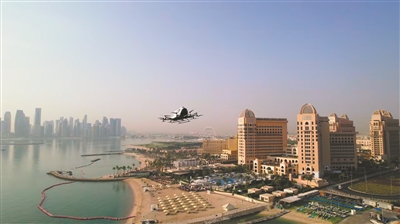
Core Insights - The article highlights the advancements in low-altitude economy products, particularly focusing on the achievements of Guangzhou-based companies like EHang and XAG in the field of unmanned aerial vehicles (UAVs) and their global expansion efforts [1][2][4]. Group 1: EHang's Developments - EHang's EH216-S, the world's first manned autonomous aerial vehicle to receive full airworthiness certification, has completed over 80,000 safe flights across 21 countries, including the USA, Canada, and several European and Asian nations [2][3]. - The company plans to initiate an advanced air mobility sandbox project in Thailand by October 2025, aiming to commercialize eVTOL operations through innovative regulatory frameworks [2][3]. - EHang's international expansion is supported by its early overseas initiatives, including establishing a drone command and control system in the Middle East, which laid a solid foundation for its global strategy [3]. Group 2: XAG's Agricultural Innovations - XAG's agricultural drones are gaining popularity among farmers in Australia, where they are utilized to enhance agricultural efficiency and reduce costs associated with labor and pesticide use [4][5]. - The company has established a global distribution network, with products available in over 60 countries, focusing on precision farming and digital management of agricultural operations [5]. - XAG's competitive edge in the global smart agriculture sector stems from its robust self-research capabilities and a fully integrated supply chain from R&D to manufacturing [5]. Group 3: Industry Growth and Statistics - Guangzhou's civil drone production saw a significant increase of 29.8% last year, reflecting the rapid growth of the low-altitude economy [6][7]. - The city is home to over 4,200 enterprises in the low-altitude economy sector, ranking second nationally, with 65 core companies forming a complete industrial chain from research to service [7]. - The Guangdong-Hong Kong-Macao Greater Bay Area is recognized for its advanced precision manufacturing capabilities, supporting the production of key components for UAVs [7].

在基层一线见行见效
Liao Ning Ri Bao· 2026-02-02 01:08
Group 1 - The provincial representatives and committee members are focused on implementing key initiatives related to rural revitalization, technological innovation, and industrial upgrades to achieve new progress and results [1] - Community services are emphasized as essential for grassroots governance, with a focus on enhancing services for vulnerable populations through initiatives like the "15-minute convenience service circle" [1] - Emergency response capabilities are being prioritized, with training and collaboration with government emergency departments to improve disaster preparedness and community resilience [2] Group 2 - The drone industry is being targeted for development, with a focus on fostering new production capabilities and technological innovation to seize opportunities in the low-altitude economy [3] - Agricultural workers are motivated by government reports emphasizing food security and agricultural system upgrades, leading to initiatives in breeding innovation and modern agricultural practices [4] - The promotion of digital agriculture and precision farming techniques is set to enhance productivity and quality in the agricultural sector, reflecting a commitment to modernizing rural areas [5]
“九天苍穹”从西部起飞
Shan Xi Ri Bao· 2026-02-02 00:46
Core Insights - The article highlights the successful first flight of the domestically developed large general-purpose drone "Jiutian" in Shaanxi, marking a significant milestone in China's drone industry and showcasing the potential of the low-altitude economy [1][2][9]. Group 1: Development and Investment - The project for the "Jiutian" drone was initiated by the Aviation Industry Corporation of China and received strong support from the Xi'an government, which established a market-oriented investment model to ensure stable funding [2][3]. - A total investment of 234 million yuan (approximately 34 million USD) has been made to support the research, manufacturing, and test flight phases of the "Jiutian" project [4]. Group 2: Collaborative Mechanisms - The project adopted a "parallel unified collaborative mechanism" to enhance efficiency, combining the technical strengths of state-owned enterprises with the flexibility of private companies and the innovative capabilities of research personnel [5]. - A joint decision-making mechanism was established, involving experts from various organizations to quickly address issues during the manufacturing process [5]. Group 3: Technological and Operational Achievements - The "Jiutian" drone features a wingspan of 25 meters and a maximum takeoff weight of 16 tons, designed for various applications such as logistics, forest fire prevention, and emergency rescue [2]. - The project has successfully transitioned the Xi'an Chida Aircraft Parts Manufacturing Co. from a component supplier to a complete aircraft assembly service provider, enhancing its technical capabilities and competitiveness [6]. Group 4: Market Impact and Future Prospects - The successful first flight of "Jiutian" is expected to significantly boost the local aviation industry, as it allows for the application of advanced technologies and strengthens the local supply chain [9][10]. - The project has involved over 35,000 components and more than 200 local enterprises, with over 80% of core components manufactured in Shaanxi, demonstrating the project's local economic impact [9].
福布斯中国低空经济产业系列评选揭晓 太湖度假区获创新场景奖
Su Zhou Ri Bao· 2026-02-02 00:30
Core Insights - The "2025 Forbes China Low Altitude Economy Industry Selection" awarded the "Innovation Scenario Award" to Suzhou Taihu National Tourism Resort for its innovative low-altitude inspection project "Comprehensive Fly Once" [1] Group 1: Project Overview - The project covers an area of 272.51 square kilometers of land and over 900 square kilometers of water, addressing complex tasks such as forest fire prevention and environmental protection [1] - The project integrates a "cloud management platform + unmanned airport" system, utilizing 30 DJI airport devices and the Qihang Insight cloud management platform to create a comprehensive low-altitude inspection network [1] Group 2: Technological Advancements - The project employs advanced technologies, including image CV algorithms, business data, 2D and 3D models, and various sensors, enabling a transition from retrospective analysis to real-time perception [1] - This technology allows for precise detection of environmental changes and risk hazards, enhancing the effectiveness of inspections [1] Group 3: Operational Efficiency - The project has established a full-process governance loop involving 13 departments, facilitating task assignment, automated inspections, data feedback, intelligent recognition, precise dispatching, and review of actions [2] - Over 12,000 flights have been conducted, achieving a unified low-altitude flight and data sharing system [2] - The automation of operations has reduced the workforce needed to one-fourth of previous levels, leading to a cost reduction of 16% to 25% across the industry [2] Group 4: Economic and Environmental Impact - The model emphasizes sustainability by avoiding redundant investments and reducing energy consumption, making the low-altitude economy more sustainable [2] - The replicable "Suzhou model" is expected to stimulate the development of upstream and downstream industries such as drone manufacturing, data analysis, and operational services, potentially exceeding a total output value of 10 billion [2]
俞浩的追觅距离“生态化反”还有多远?
Sou Hu Cai Jing· 2026-02-01 18:37
Core Insights - The article contrasts the business models of Chasing Technology and LeEco, highlighting that Chasing has successfully addressed globalization, high-end positioning, and innovation, which are critical for its growth and market leadership [2][3][4] Group 1: Company Background - Chasing Technology was founded in 2017, emerging from a team that developed high-speed digital motors, achieving a performance level of 58%, surpassing the international leader's 49.8% [3][4] - The company initially struggled to secure funding due to the high technical barriers of its hardware projects, but eventually received angel investment from Xiaomi, which provided essential resources [4][6] Group 2: Market Performance - Chasing Technology has experienced a compound annual growth rate (CAGR) exceeding 100% from 2019 to 2024, with projected revenues of approximately 150 billion yuan in 2024, of which over 8 billion yuan will come from overseas [6][9] - The company has expanded its market presence to over 100 countries, leveraging partnerships with platforms like Amazon and AliExpress [6] Group 3: Strategic Initiatives - Chasing Technology is actively building its "ecological reaction" model, entering new markets such as home appliances, drones, and electric vehicles, with plans for a luxury electric car by 2027 [9][11] - The company aims to establish a global IPO strategy, with multiple business units expected to go public, contrasting with LeEco's reliance on capital for growth [11][12]
“低空”蓄势 乘风起飞(追梦人·期待“十五五” 青年说机遇②)
Ren Min Ri Bao· 2026-01-31 23:44
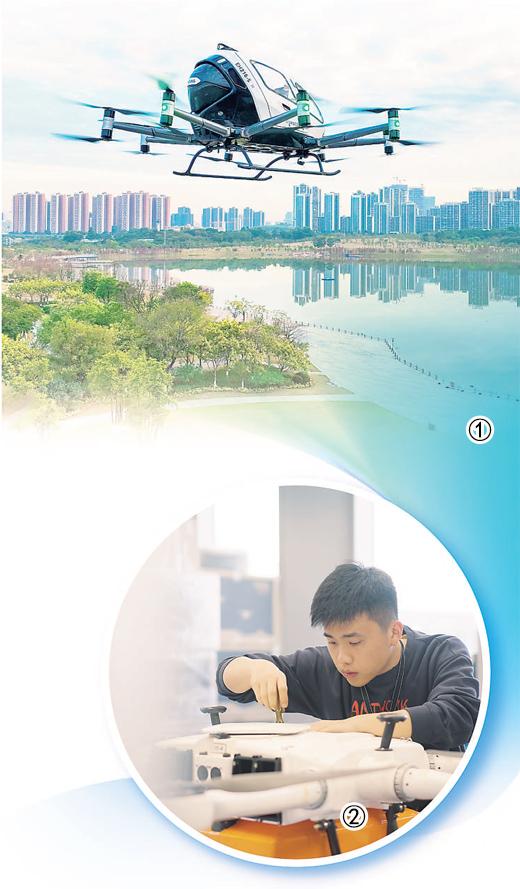
图①:亿航智能技术有限公司在广东广州黄埔区开展飞行活动。亿航智能技术有限公司供图 图②:陈金航在检修无人机。王 洋摄 夜空中,无人机上演光影盛宴;低空航线上,无人配送"闪送"直达;观光游览区,"空中出租车"惊艳亮 相,带来出行新体验……低空经济正不断解锁新场景、新应用,快速进入人们视野。 "十五五"规划建议提出,加快新能源、新材料、航空航天、低空经济等战略性新兴产业集群发展。新产 业,新机遇,蓬勃发展的低空经济吸引了大量年轻人投入其中。近日,记者走近在低空经济赛道上奋斗 成长的年轻人,听他们讲述"低空"蓄势、乘风而上的故事。 "只有保持对行业发展变化的敏锐触觉,才能跟得上发展的脚步" 杭州市第一人民医院湖滨院区,一名孕妇早产导致大出血,急需输血。正值晚高峰,从浙江省血液中心 到医院,导航显示至少需要40分钟。配送每快一秒,患者就多一分安全。此时,一条从血站到医院的常 态化低空航线解了燃眉之急。 收到医院请求后,杭州迅蚁网络科技有限公司的00后无人机运行工程师陈金航,迅速调度无人机从血站 出发。从云端发出起飞指令,无人机自动起飞、逐渐向上爬升……运行后台的监控中心内,陈金航全神 贯注。随着无人机平稳穿过城市上空 ...
2026(重庆)海陆空科技展开幕 打造沉浸式科技体验
Xin Lang Cai Jing· 2026-01-31 13:19
Core Viewpoint - The 2026 Chongqing Sea, Land, and Air Technology Exhibition showcases the integration of artificial intelligence and advanced equipment, providing an immersive public science education experience [1]. Group 1: Exhibition Overview - The exhibition features a theme of "Artificial Intelligence + Hard-core Equipment," combining display, interaction, science popularization, and experience [1]. - It breaks away from traditional static exhibition models, emphasizing dialogue, interactivity, learning, and control [2]. Group 2: Exhibition Highlights - Key areas include an artificial intelligence theme zone, a sea, land, and air equipment model zone, an immersive interactive experience zone, and a diverse play area [2]. - The AI exhibition area features robots and bionic dogs interacting with visitors, performing dynamic shows such as dance and martial arts, while a soccer robot team demonstrates precise decision-making capabilities [5]. - The drone performance area showcases a visual feast of "Artificial Intelligence + Cluster Control" through coordinated flying and light effects [5]. Group 3: Educational Aspects - To enhance the educational value of the exhibition, multiple science popularization experts will be invited to conduct themed lectures and interactive Q&A sessions, helping visitors understand the scientific principles and technological applications behind the exhibits [7].