
科技创新

Search documents
晓数点丨加快“五个中心”建设,上海今年放出15个大招
Di Yi Cai Jing· 2025-12-08 07:24
12月7日,上海市加快推进"五个中心"建设领导小组办公室聚焦具有首创性、引领性的重大改革事项和政策创新试点,遴选发布了2025年上海"五个中心"建 设典型实践案例。 离岸贸易跨一线结算免审单据,实现对 的跨境结算效率,提升企业便利度和获得 上海国际贸易中心建设 成功推进全国首个境内生物制品分段生 产试点项目落地。 在全国率先启动增值电信业务扩大对 试点,吸引外资企业来华开展业务。 打造上海国际再保险 登记交易中心 推动国内再保险行业在全球率先实现数 字化、标准化转型,提升参与全球风险 治理能力。 开展临港离岸贸易金融服务 综合改革试点 率先试点首发 进口消费品检验便利化措施 实施"企业+产品"白名单管理创新,破解进 口首发新品通关痛点堵点。 创新建设 临港新片区国际数据中心 促进数据领域对外开放与国际合作、创 数字贸易。 打造国际船舶 水水中转"一箱制" 低碳能源加注中心 助力运输降本提质增效 发展船舶低碳燃料加注,成为全球少数同 通过开展水水中转"一箱制"运输模式, 时具备LNG与绿色甲醇加注能力的港口。 报流程、减少审批周期。 官海国际科技创新中心建设 创设"基础研究先行区" 遵循基础研究规律和人才成长规 ...


坚定信心鼓足干劲,努力在开局之年展现开局之为
Shan Xi Ri Bao· 2025-12-08 00:36
Group 1 - The meeting of the 14th Provincial Committee of Shaanxi clarified the main goals for the economic and social development during the "15th Five-Year Plan" period, unifying thoughts and directions for current and future key work [1] - The emphasis on building a modern industrial system with Shaanxi characteristics and advancing modern agricultural construction has energized agricultural scientists and local officials, highlighting the importance of technological innovation and results transformation in agriculture [1] - The commitment to agricultural modernization and the development of key core technologies in agricultural biotechnology was reinforced, with a focus on translating scientific achievements into practical applications [1] Group 2 - The meeting proposed reforms to promote the deep integration of technological innovation and industrial innovation, providing a guideline for the development of an integrated education and technology talent demonstration zone [2] - The focus on stimulating domestic demand and promoting high-quality development was emphasized, with plans to create new cultural, tourism, and sports integration scenarios to enhance consumption [2] - The meeting highlighted the need for new urbanization and comprehensive rural revitalization, aiming to develop a county economic system centered around county towns and small towns [2][3] Group 3 - The cultural resources in Weinan are rich, with a high number of intangible cultural heritage projects, and efforts are being made to transform these resources into development momentum through various cultural initiatives [3] - The establishment of a non-heritage display and training center aims to enhance public cultural services and promote cultural integration, contributing to the construction of a culturally strong province [3]
中共河南省委关于制定河南省国民经济和社会发展第十五个五年规划的建议
He Nan Ri Bao· 2025-12-07 23:45
Core Viewpoint - The 11th Committee of the Communist Party of China in Henan Province emphasizes the importance of the "14th Five-Year Plan" achievements and outlines strategies for the "15th Five-Year Plan" to achieve socialist modernization in Henan, focusing on high-quality development and addressing challenges in the current global and domestic landscape [2][3][4]. Group 1: Achievements During the 14th Five-Year Plan - Henan has made significant progress in economic and social development, including the establishment of a modern industrial system and the development of emerging pillar industries [2]. - The province has effectively responded to major risks and challenges, including the COVID-19 pandemic and severe weather events, while promoting high-quality development and governance [2]. - Key achievements include the construction of the National Biological Breeding Industry Innovation Center and the approval of the Zhengzhou Metropolitan Area plan [2]. Group 2: Challenges and Opportunities in the 15th Five-Year Plan - The current global landscape presents unprecedented challenges, with both strategic opportunities and risks for Henan, a major population and economic province [3]. - Despite challenges such as low per capita levels and insufficient innovation capacity, the overall outlook for Henan remains positive, with opportunities outweighing challenges [3]. - The implementation of national strategies for ecological protection and high-quality development will benefit Henan's modernization efforts [3]. Group 3: Overall Requirements and Goals for the 15th Five-Year Plan - The plan emphasizes adherence to Marxist principles and the importance of high-quality development, innovation, and meeting the people's needs [6][7]. - Key goals include significant progress in high-quality development, effective governance, and the establishment of a modern industrial system [9][10]. - The focus will be on improving living standards, enhancing social governance, and promoting ecological protection [11]. Group 4: Economic Development Strategies - The plan advocates for a strong emphasis on the real economy, promoting intelligent, green, and integrated development [12]. - It aims to consolidate and expand the real economy, enhance traditional industries, and foster strategic emerging industries [12][13]. - The integration of modern services with advanced manufacturing is a priority, along with the promotion of digital economy initiatives [13]. Group 5: Financial and Investment Strategies - The plan calls for the development of a robust financial system that supports diverse services and enhances capital market functions [14]. - It emphasizes the importance of investment in new productive forces and infrastructure to drive economic growth [25]. - The strategy includes expanding foreign investment and promoting trade innovation to enhance economic resilience [26][28]. Group 6: Agricultural and Rural Development - The plan prioritizes agricultural modernization and rural revitalization, ensuring food security and increasing farmers' incomes [29][30]. - It aims to develop a modern agricultural industry and enhance agricultural technology and equipment support [31]. - The focus will be on improving rural living conditions and promoting sustainable rural development [32]. Group 7: Urbanization and Regional Development - The plan promotes coordinated urban-rural development and the integration of urban functions to enhance regional competitiveness [33][34]. - It emphasizes the importance of urban renewal and infrastructure improvement to support sustainable urban growth [37]. - The strategy includes fostering regional cooperation and optimizing land use to promote balanced development across urban and rural areas [36].
“十四五”时期重庆研发投入连创新高,截至2024年底全市研发经费投入为797.3亿元
Ge Long Hui· 2025-12-07 02:40
格隆汇12月7日|据重庆日报,重庆市统计局12月6日公布"十四五"以来市研发经费及投入强度数据报告 称,自"十四五"以来,重庆市加快构建"416"科技创新布局,全市研发经费及投入强度连创新高。 数据 显示,截至2024年底,全市研发经费投入为797.3亿元,位列全国省区市第15位、西部地区第3位,在全 国的排位比2020年提升1个位次;研发投入增速方面,"十四五"以来我市年均增长10.9%,比全国平均增 速高出0.4个百分点;研发经费投入强度为2.48%,位列全国省区市第12位、西部第2位,全国排位比 2020年提升2个位次。 ...
广西“十五五”规划建议:打造面向东盟开放合作高能级平台
Zheng Quan Shi Bao Wang· 2025-12-07 01:46
Core Viewpoint - The proposal by the Guangxi Zhuang Autonomous Region Committee emphasizes the establishment of a high-level platform for open cooperation with ASEAN, focusing on AI and enterprise-led initiatives [1] Group 1: Economic Development Initiatives - The plan includes upgrading the China-ASEAN Expo and the China-ASEAN Business and Investment Summit, implementing the "Nanning Channel" expansion action, and creating a perpetual exhibition [1] - It aims to enhance the development of the China-Malaysia "Two Countries, Two Parks" initiative and accelerate the construction of industrial cooperation platforms with Cambodia, Thailand, and Indonesia [1] Group 2: Cross-Border Economic Cooperation - The proposal highlights the promotion of cross-border economic cooperation with Vietnam and the deepening of the Guangxi-Brunei Economic Corridor [1] - It focuses on enhancing industrial cooperation with ASEAN countries and upgrading specialized corridor-type industries [1] Group 3: Innovation and Technology - The plan includes high-level construction of the Fangchenggang International Medical Open Pilot Zone and a financial open portal aimed at ASEAN [1] - It encourages deep participation in the implementation of the China-ASEAN Technology Innovation Enhancement Plan and the establishment of a high-quality China-ASEAN Artificial Intelligence Innovation Cooperation Center [1] Group 4: Encouragement for Domestic Enterprises - The proposal encourages more domestic companies to leverage the Guangxi platform to "go global" [1]
长沙科技创新综合实力实现跨越式提升
Chang Sha Wan Bao· 2025-12-06 03:27
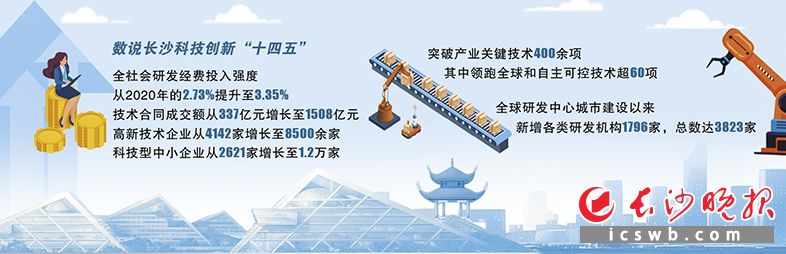
12月5日,"长沙'十四五'答卷"系列主题新闻发布会打造具有核心竞争力的科技创新高地专场举行。从会上 获悉,过去五年,长沙锚定"三高四新"美好蓝图,全力建设全球研发中心城市,奋力打造具有核心竞争力的科 技创新高地,在全球创新坐标系中找差距、促提升,在全国创新型城市中强实力、争一流,长沙科技创新事业 呈现蓬勃发展的态势。 长沙科技创新能级在全国乃至全球创新版图中显著提升。荣获国家科技奖23项,牵头项目数量居全国城市第7 位。入选首批国家知识产权强市建设示范城市,连续五年稳居国家创新型城市第一方阵,居中国城市创新能力 百强榜第9位、全国数字经济百强市第13位,跃居全球科研城市第23位。获批首批国家数据标注基地、国家区域 数据基础设施建设先行先试城市,联合国人居署向全球推介长沙智慧城市实践经验。 面向"十五五",长沙将抢抓新一轮科技革命和产业革命的历史机遇,全面增强自主创新能力,抢占科技发展制 高点,不断发展新质生产力。 五年来,长沙科技创新综合实力实现跨越式提升。科技核心指标实现倍增进位。全社会研发经费投入强度从 2020年的2.73%提升至3.35%;技术合同成交额从337亿元增长至1508亿元;高新技术企业从 ...
从量的积累”到“质的飞跃”,日照东港“十四五”科创答卷亮眼
Qi Lu Wan Bao· 2025-12-06 02:01
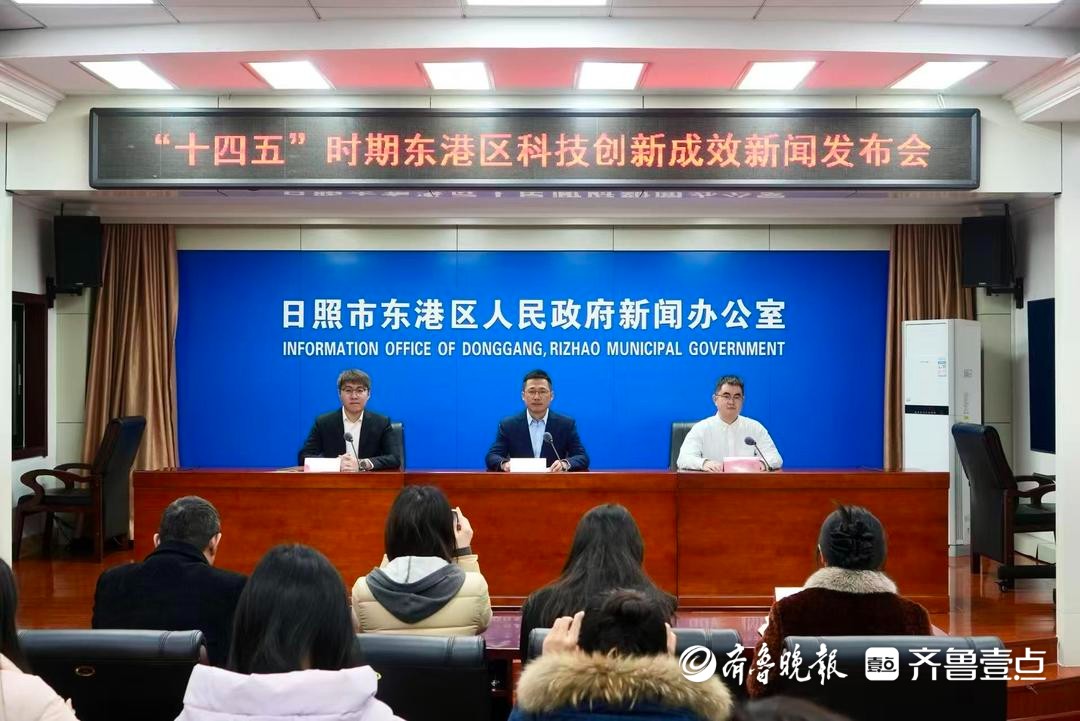
齐鲁晚报.齐鲁壹点邹慧 12月5日,日照市东港区政府新闻办公室召开新闻发布会,详细介绍"十四五"时期全区科技创新工作成效,并发布"十五五"发展规划重点。东港区科技局 相关负责人表示,过去五年,东港区科技创新实现从"量的积累"到"质的飞跃",为高质量发展注入强劲动能,未来将聚焦三大领域实现新突破。 "十四五"期间,东港区创新主体培育成效显著。通过构建"科技型中小企业—高新技术企业—科技领军企业"梯次培育机制,全区有效期内高新技术企业达 176家,较"十三五"末增长2.9倍,总量居区县第一;科技型中小企业超280家,是2020年的4.5倍。比特智能等3家企业入选省科技领军企业,20家企业纳 入"三高一核心"企业库。预计2025年高新技术产值超48亿元,年均增长25.7%,占规上工业总产值比重达48%,较2020年提升24个百分点。 人才智力支撑持续强化。东港区创新人才引育机制,引进国家级领军人才2人,服务省级以上重点人才工程35个,吸引高层次创新人才团队11个、外国专 家110名。组建2个省级科技特派员产业服务团,备案科技特派员增至88人,开展技术服务500余次,带动2000余人增收。 产业创新融合成果丰硕。全区 ...
中巴葡创新与资本论坛在澳举行,国际投资机构聚焦澳门科创机遇
2 1 Shi Ji Jing Ji Bao Dao· 2025-12-05 13:21
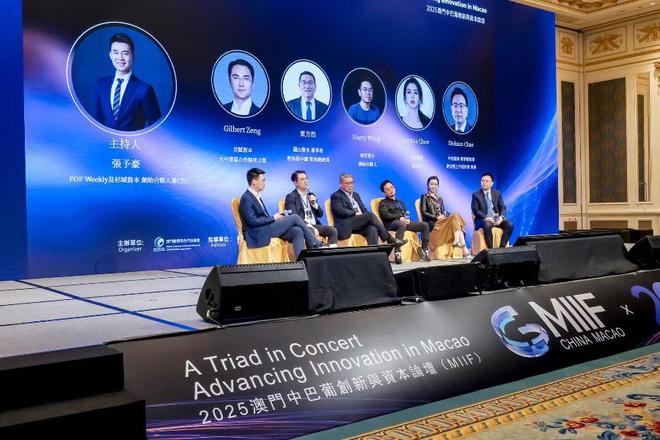
Core Insights - The "Macau China-Brazil-Portugal Innovation and Capital Forum 2025" was successfully held, focusing on enhancing collaboration in scientific research and innovation among China, Brazil, and Portuguese-speaking countries [1][3] - The forum attracted 245 representatives from various sectors, including government, academia, and international investment institutions, highlighting the importance of cross-border collaboration [3][4] Group 1: Forum Objectives and Themes - The forum aimed to deepen exchanges in research results transformation, institutional innovation, and cross-border industrial collaboration [3] - The theme "Institution × Technology × Capital" was central to discussions, emphasizing the need for an efficient platform to attract Portuguese-speaking countries and mainland scientific institutions to Macau [3][4] Group 2: Key Participants and Contributions - Notable attendees included representatives from major investment firms such as CITIC Securities, Sequoia China, and L Catterton, as well as technology companies from Portuguese-speaking countries [3][4] - The event featured speeches and discussions on topics like strategic capital and innovation layout, institutional innovation, and cross-border technology cooperation models [4][5] Group 3: Macau's Strategic Position - Macau is positioned as a significant platform for cooperation between China and Portuguese-speaking countries, leveraging its unique advantages in language, culture, and institutional flexibility [4] - The forum highlighted Macau's potential to become a hub for cross-border technology trials and institutional innovation, attracting scientific and technological resources [4][5]
【财经分析】筑巢引凤强产业 冲刺封关谋开放——海南加快推动政策资源向产业资源转化
Xin Hua Cai Jing· 2025-12-05 13:07
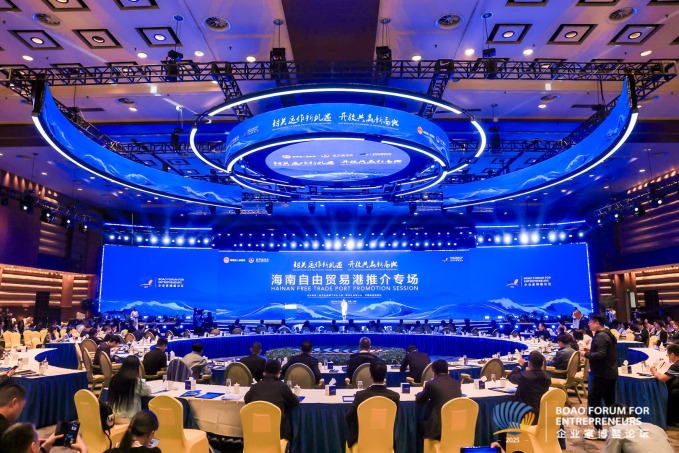
Group 1 - The core tax system of Hainan Free Trade Port will take shape after the full island closure, characterized by "zero tariffs" and "low tax rates" as key advantages [1][11] - Hainan has implemented 18 tax policies in the Free Trade Port, with continuous optimization to ensure sustained policy benefits [2][11] - The establishment of a favorable business environment is crucial for the success of the Free Trade Port, with a dedicated leadership group formed to enhance the business climate [2] Group 2 - Hainan is focusing on developing a modern industrial system supported by four leading industries and three future industries, with ecological sustainability as a foundation [2] - The construction of the Free Trade Port is seen as a significant opportunity for domestic tech companies to engage in international competition [4] - The "AI + Free Trade Port" initiative is expected to create new opportunities for innovation and development [4] Group 3 - The full island closure is a milestone for Hainan's Free Trade Port, with all necessary infrastructure completed and readiness for operations confirmed [8] - The policy measures post-closure include more favorable "zero tariff" policies, relaxed trade management, and efficient regulatory models [11] - The integration of financial, tax, and capital strategies is being emphasized to support high-quality economic development in Hainan [11] Group 4 - The Hong Kong Xinhua Group is actively participating in urban renewal projects in Hainan, aiming to introduce modern services and cultural elements from Hong Kong [5][12] - The establishment of data cross-border services is a key focus, with multiple breakthroughs achieved in this area [7] - Hainan is enhancing its international data service capabilities, with plans for further institutional innovation to facilitate data flow [7]
海南这五年:累计实施城市更新项目逾400个
Zhong Guo Xin Wen Wang· 2025-12-05 12:53
Core Insights - During the "14th Five-Year Plan" period, Hainan Province has implemented a total of 404 urban renewal projects, with investments exceeding 30 billion yuan [1] - The province has focused on improving urban infrastructure and enhancing public service facilities, significantly increasing urban resilience and capacity [1][2] - Hainan aims to create a sustainable urban renewal model by 2030, with a focus on replicable and scalable practices [2] Urban Renewal Projects - A total of 2,187 old urban residential communities have been renovated, with an investment of approximately 3.917 billion yuan, benefiting around 208,800 households [1] - 39 urban renewal projects, including urban villages, have been initiated, with an investment of about 29 billion yuan [1] - Hainan has constructed 513 kilometers of urban greenways and 533 urban parks, enhancing the quality of urban life [1] Economic Development - Urban renewal efforts are aligned with Hainan's free trade port strategy, supporting the establishment of headquarters economy, modern finance, technological innovation, and high-end tourism [2] - The Haikou Jiangdong New District is expected to generate over 500 billion yuan in revenue by 2024, focusing on digital economy and smart construction [2] Future Plans - By the end of 2027, Hainan plans to implement a series of livelihood, development, and safety projects to address urban development challenges [2] - The province will issue the "Hainan Province Continuous Urban Renewal Action Plan," focusing on 20 key urban renewal areas and over 5 vibrant street blocks [2]