
农产品种植

Search documents
万亩黄花铺就产业致富路
Jin Rong Shi Bao· 2025-12-04 04:14
Core Insights - The article highlights the successful development of the yellow flower industry in Hongshibao District, Ningxia, which has become a key driver for rural revitalization and farmer income growth [1][2] Group 1: Industry Development - Hongshibao District has developed a yellow flower planting area of 46,400 acres, producing over 80,000 tons annually, with a total output value of 420 million yuan [1] - The local government and financial institutions have implemented targeted financial support to enhance the quality and scale of the yellow flower industry [2][3] Group 2: Financial Support Mechanisms - The People's Bank of China in Wuzhong has provided 330 million yuan in agricultural loans this year, marking a 21.8% increase year-on-year, with a loan balance for the "six special" industries reaching 2.78 billion yuan [2] - Specific financial products have been developed for the yellow flower industry, including "Huanghua Loan," which has issued 1.2 billion yuan across 1,792 loans to local farmers [3] Group 3: Employment and Community Impact - The yellow flower harvesting season has created job opportunities for 41,000 workers in Hongshibao District, generating labor income of 148 million yuan [4] - Local banking institutions have improved cash supply services to support labor wages, ensuring timely payment for workers during the peak harvesting season [4]
一场村民与创客的双向奔赴
Ren Min Ri Bao Hai Wai Ban· 2025-12-04 03:16
Core Insights - The article highlights the transformation of Xinzhang Village in Beijing's Changping District into a vibrant "creative village" and "internet celebrity village," attracting significant tourist traffic and showcasing successful rural revitalization efforts [5][8]. Group 1: Village Transformation - Xinzhang Village has evolved from an ordinary northern village to a popular destination, with an average weekend footfall exceeding 10,000 and peak daily visitors reaching 23,000 [8]. - The village's environment has improved significantly, with clean streets and effective waste management practices, which have been in place since 2016 [8][9]. - The introduction of the "Upward School," a private education institution, has attracted families from across the country, contributing to the village's economic and social vitality [8][10]. Group 2: Economic Development - The influx of new residents has brought over 1.2 billion yuan in social capital investment, enhancing the village's economy through rental income, job creation, and sales of local agricultural products [9][10]. - Xinzhang Village has implemented various projects under Beijing's "Hundred Villages Demonstration, Thousand Villages Revitalization" initiative, improving infrastructure and living conditions [10]. - The village has successfully integrated agriculture, culture, commerce, and tourism, creating a diverse economic landscape [10]. Group 3: Community Engagement - The village fosters a collaborative environment where new residents contribute to local culture and economy, while also benefiting from the village's resources and community support [11][12]. - Local initiatives, such as community events and workshops, promote interaction between long-time residents and newcomers, enhancing social cohesion [12]. - The village's development model serves as a microcosm of broader rural revitalization efforts in Beijing, demonstrating the potential for urban-rural integration [12].

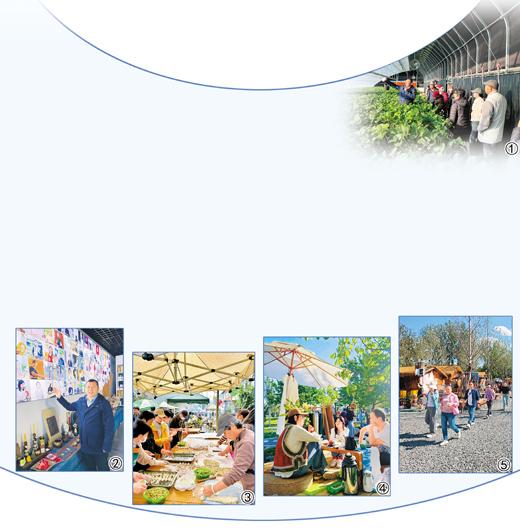
辽宁多点突破纵深推进乡村振兴
Zhong Guo Fa Zhan Wang· 2025-12-04 00:18
Core Viewpoint - Liaoning's Anshan City is focusing on the deep processing industry of Nanguo pear, extending the industrial chain to make it a pillar industry for rural revitalization [2] Group 1: Economic Performance - In 2024, the primary industry added value in Liaoning increased by 4.2% year-on-year, surpassing the national average by 0.7 percentage points [2] - The per capita disposable income of rural residents reached 22,744 yuan, growing by 5.9% year-on-year, which is 1.4 percentage points higher than the urban income growth rate [2] Group 2: Talent Attraction and Utilization - The "Return to Hometown" initiative in Donggang aims to address the talent outflow issue, with only about 400 out of 3,780 college graduates returning to work in agriculture and rural services [3] - By 2024, Donggang has recruited 459 university graduates to work in villages, significantly contributing to local agricultural development and e-commerce [4][5] Group 3: Agricultural Integration and Development - The Panjin City demonstration park integrates rice, crab, and persimmon industries, creating a comprehensive industrial chain that enhances farmer income, with an average increase of over 27,000 yuan per person this year [6][7] - Liaoning's agricultural clusters in key industries like grain, livestock, and aquaculture achieved outputs of 2,510 billion yuan, 2,720 billion yuan, and 1,040 billion yuan respectively, with year-on-year growth rates of 4%, 8%, and 5% [7] Group 4: Cultural and Social Development - Panjin County promotes cultural enrichment through public art programs and community engagement, enhancing the overall quality of life in rural areas [8] - The province is advancing infrastructure and public services to create livable and workable rural environments, contributing to the broader goals of rural revitalization [8] Group 5: Policy Implementation and Future Outlook - Liaoning is implementing the "Ten Million Project" to strengthen rural revitalization efforts, ensuring food security and increasing grain production to over 50 billion jin for two consecutive years [9][10] - The province is also innovating in rural reform, with successful cases in land use and property rights transactions, aiming to enhance agricultural productivity and rural economic vitality [10]
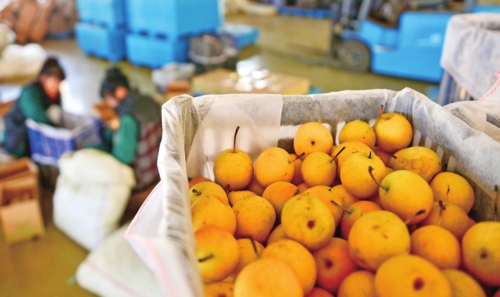
农产品日报:苹果成交偏淡且价格分化,红枣市场货源充足-20251203
Hua Tai Qi Huo· 2025-12-03 05:15
Group 1: Report Industry Investment Ratings - Apple: The investment strategy is to expect prices to be volatile but trending stronger [3]. - Red dates: The investment strategy is neutral [8]. Group 2: Core Views of the Report - Apple: Currently in a seasonal off - peak period during the transfer - to -出库 stage, with slow consumption in the terminal market and competition from low - priced citrus. However, due to the impact of the storage structure this season, price polarization is severe. With the upcoming Christmas and New Year's Day holiday stocking, prices are expected to remain stable with an upward trend [2][3]. - Red dates: The red date market is at a critical "new - old season transition" stage. The acquisition in Xinjiang is about 80% complete, and the supply in the market is sufficient. There is a strong expectation of a new - season production reduction, but the extent is undetermined, and the quality this year is better than last year. There is a large inventory pressure, and the market has a pessimistic outlook for the future [7]. Group 3: Summary by Relevant Catalogs Apple Market News and Important Data - Futures: The closing price of the Apple 2601 contract yesterday was 9488 yuan/ton, a change of - 38 yuan/ton from the previous day, a decrease of 0.40%. - Spot: The price of 80 first - and second - grade late Fuji in Shandong Qixia was 3.75 yuan/jin, unchanged from the previous day; the price of over 70 semi - commercial late Fuji in Shaanxi Luochuan was 4.15 yuan/jin, unchanged from the previous day [1]. Market Analysis - The apple futures price fluctuated and closed lower yesterday. The spot market of Fuji apples such as late Fuji is in a seasonal off - peak period. The western and Shandong regions are mainly shipping on a sporadic and on - demand basis, with low enthusiasm for merchants to purchase and pack, and the trading atmosphere is average. The sales in the distribution area are slow, and citrus has an obvious impact on medium - and low - grade apple products. It is expected to remain in an off - peak market in the short term, with stable prices [2]. Strategy - The price is expected to be volatile but trending stronger. Quality issues will be the key factor affecting the long - term apple market trend. In the short - to - medium term, with the upcoming holiday stocking, prices are expected to remain stable with an upward trend [3]. Red Dates Market News and Important Data - Futures: The closing price of the Red Date 2601 contract yesterday was 9110 yuan/ton, a change of + 55 yuan/ton from the previous day, an increase of 0.61%. - Spot: The price of first - grade gray dates in Hebei was 8.50 yuan/kg, a decrease of 0.10 yuan/kg from the previous day [4]. Market Analysis - The red date futures price showed a strong upward trend yesterday. The acquisition progress of gray dates in Xinjiang has reached 80%, and the supply in the Hebei and Guangdong markets is sufficient. The new products are the main trading items, and the prices vary and tend to decline. The market is in a "new - old season transition" stage, with large inventory pressure and a pessimistic market outlook [7]. Strategy - A neutral strategy is recommended. If the terminal market can accept and digest the high - priced new - season spot products in the production area, the futures price may move towards the new - season spot price. Otherwise, the new - season spot price may continue to decline. The near - month contract may still have some room for decline [8].
(乡村行·看振兴)土里长出“金疙瘩”:浙江庆元“菌粮复合”促农增收
Zhong Guo Xin Wen Wang· 2025-12-03 04:03
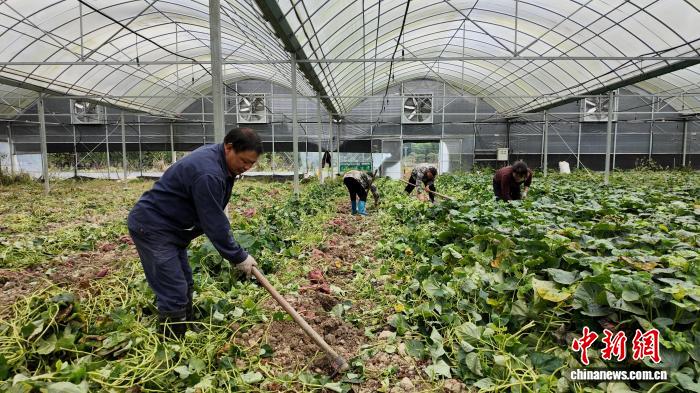
Core Viewpoint - The "fungus-grain compound" planting model in Qingyuan County, Zhejiang Province, is effectively increasing farmers' income by maximizing land resource utilization and enhancing agricultural productivity through innovative practices [2][3]. Group 1: Agricultural Practices - The "fungus-grain compound" model allows for the cultivation of edible mushrooms during peak seasons (December to May) and the planting of crops like soybeans and sweet potatoes during off-seasons, achieving efficient resource utilization [2]. - The use of waste mushroom substrates as high-quality fertilizer for subsequent crop planting not only improves soil fertility but also reduces environmental pollution [2][3]. - Collaboration with Lishui Vocational and Technical College has led to the introduction of microbial fermentation technology, enhancing soil quality and reducing chemical fertilizer use [2]. Group 2: Economic Impact - The expected total yield of sweet potatoes for the year is projected to reach 30,000 pounds, providing additional income for local farmers [3]. - The local government has established both online and offline sales channels to promote sweet potatoes, ensuring timely market access and broadening the sales reach [3][5]. - The quality of sweet potatoes, described as soft, sweet, and nutritious, has led to successful group purchase orders, indicating strong market demand [5]. Group 3: Community Engagement - Agricultural technology experts are regularly invited to provide comprehensive training on key farming practices, ensuring that farmers are well-informed and can cultivate crops effectively [2]. - The initiative not only supports farmers' income but also represents a broader effort towards high-quality agricultural development in Qingyuan [5].
加拿大农业部8月份报告解读——油菜籽多项数据上调
Xin Lang Cai Jing· 2025-12-03 02:33
热点栏目 自选股 数据中心 行情中心 资金流向 模拟交易 客户端 卓创资讯油菜籽市场分析师张德强 【导语】加拿大农业部在8月份供需报告中上调多项油菜籽相关数据,加拿大油菜籽供应量增加,导致 价格下跌。中加贸易关系较为紧张,将对后期加拿大油菜籽出口产生影响。目前国内油菜籽剩余量较 少,随着下游市场需求量增加,预计12月份国内国产油菜籽价格将上涨。 加拿大农业部上调油菜籽相关数据 加拿大农业部8月份供需报告已经发布,上调多项油菜籽相关数据。2025/26年度加拿大油菜籽产量上调 至2010万吨,较7月份报告增加12.92%,较上一年度增加4.77%。2025/26年度加拿大油菜籽出口量上调 至700万吨,较7月份报告增加16.67%,较上一年度减少26.46%。2025/26年度加拿大油菜籽期末库存上 调至220万吨,较7月份报告增加100%,较上一年度增加86.28%。 供应充足,导致加拿大油菜籽价格下跌 加拿大农业部上调2025/26年度油菜籽产量数据,虽然新季油菜籽还未上市,但是随着供应量有增加预 期,导致加拿大油菜籽价格呈现震荡下行走势。据卓创资讯统计,8月份加拿大主力期约油菜籽均价在 663加元/吨,较 ...

重磅!福建再推12条惠台利民政策措施!
Xin Lang Cai Jing· 2025-12-02 12:05
Core Viewpoint - The Fujian Provincial Government is implementing a series of policies to support the development of cross-strait integration and promote investment from Taiwanese enterprises in the region [2][13]. Group 1: Support for Taiwanese Enterprises - The government will allocate 1,200 acres of land specifically for the construction of six Taiwanese investment zones [14]. - Incentives are provided for Taiwanese enterprises in the Nanjing Precision Machinery Industrial Park, with rewards of 100,000 yuan for investments between 5 million and 20 million yuan, and 200,000 yuan for investments exceeding 20 million yuan [15]. - Taiwanese aquaculture enterprises can enjoy a 5% discount on insurance premiums for various types of aquaculture insurance, with additional discounts for those with no claims in previous years [16]. - New Taiwanese enterprises in the Putian Arts and Crafts City will receive a rent exemption for the first year for 100 square meters of space, along with subsidies for participating in major exhibitions [17]. - The Fujian Agricultural Group will supply Taiwanese farmers with specialized fertilizers and pesticides at direct supply prices [18]. Group 2: Tax Service Optimization for Taiwanese Enterprises - A smart tax service platform for Taiwanese enterprises has been launched, offering 188 intelligent tax services and enabling online processing of 46 types of tax payments [19]. - A dedicated tax consultation hotline for Taiwanese enterprises has been established, providing bilingual services in Minnan and Mandarin [20]. - The tax authority plans to hold 100 tax service events for Taiwanese enterprises by the end of 2026 to address their concerns [20]. Group 3: Promotion of Trade and Cultural Exchange - Taiwanese individuals opening Sha County snack stores in Taiwan will receive a one-time subsidy of 5,000 yuan, with training opportunities provided for Taiwanese youth [21]. - Support is offered for Taiwanese tourism operators to collaborate with local homestay businesses in Nanping, with subsidies based on renovation costs [21]. - A ticket refund insurance service is available for travelers on the Xiamen-Kinmen route, reducing financial losses from ticket cancellations [21]. - Taiwanese artists performing in Fuzhou can receive up to 40% of their contract amount as a subsidy, with a maximum of 20,000 yuan per event [21].
湖南省津市市2025年10月食品及食用农产品监督抽检结果公示(第二批)
Zhong Guo Zhi Liang Xin Wen Wang· 2025-12-01 08:22
Core Points - The article presents the results of food and edible agricultural product inspections conducted in Jingshi City, highlighting compliance and non-compliance with safety standards [2][3][4]. Group 1: Inspection Results - A total of 10 food samples were tested, with various products including snacks, ice cream, and condiments [2]. - All tested products, such as sesame crisp and green bean cakes, passed the safety inspections, indicating compliance with the relevant food safety standards [2][3]. - Specific contaminants tested included benzoic acid, peroxide value, and microbial counts, with all results meeting the required safety thresholds [2][3]. Group 2: Product Categories - The inspected products included a variety of categories such as snacks, edible oils, and seasonings, with a focus on their chemical and microbial safety [2][3]. - Notable products included chicken essence, soy sauce, and various types of vegetables, all of which were found to be compliant with safety regulations [2][3][4]. - The inspections also covered fruits and vegetables, with specific attention to pesticide residues, ensuring that products like apples and carrots met safety standards [3][4]. Group 3: Compliance and Monitoring - The inspections were conducted by the Jingshi City Market Supervision Administration, emphasizing the importance of regulatory oversight in food safety [2][3]. - The results reflect a commitment to maintaining high food safety standards in the local market, contributing to consumer confidence [2][3]. - Continuous monitoring and testing are essential to ensure ongoing compliance with food safety regulations, as indicated by the thorough inspection process [2][3][4].

SPPOMA:11月1日-30日马来西亚棕榈油单产环比前一月同期减少2.09%
Xin Hua Cai Jing· 2025-12-01 07:02
Group 1 - The core point of the article indicates that Malaysia's palm oil production metrics show a decrease in yield and production for the period of November 1-30, 2025, compared to the previous month [1] Group 2 - The palm oil yield per hectare decreased by 2.09% month-on-month [1] - The extraction rate increased by 0.36% month-on-month [1] - Overall production volume saw a decrease of 0.19% month-on-month [1]
聚焦“土特产”,云城区“百千万工程”绘就城乡蝶变新图景
Nan Fang Nong Cun Bao· 2025-12-01 02:41
Core Viewpoint - The article highlights the transformative impact of the "Hundred Million Project" in Yun District, showcasing improvements in local agriculture, rural development, and community engagement, particularly through the promotion of local specialty products like sweet potatoes. Group 1: Project Overview - The "Hundred Million Project" was initiated in Guangdong Province in 2022, aiming to enhance county-level economic quality, cultivate local specialty brands, and promote the integration of agriculture, culture, and tourism [11][12]. - Yun District is committed to achieving high-quality development and aims to lead the city of Yunfu in this initiative, focusing on comprehensive rural revitalization and modernization of agriculture [14][15]. Group 2: Agricultural Development - Yun District has developed a specialty agricultural system centered around southern medicine, flowers, fruits, and sweet potatoes, optimizing production methods and enhancing product quality [22][23]. - The district is recognized as a core production area for sweet potatoes in Guangdong, with significant investments in the industry to boost production and farmer income [26][28]. - The sweet potato variety "Yun City Sweet Potato" is set to be included in the national list of specialty agricultural products in 2024 [25]. Group 3: Economic Impact - The sweet potato planting area in Yun District is approximately 23,000 acres, with over 40 specialty varieties promoted, and the expected production by the end of 2025 is nearly 30,000 tons [53][54]. - The district is focusing on deep processing of sweet potatoes, developing a brand system that includes various processed products, transitioning from "selling quantity" to "selling brand" [62][63]. Group 4: Rural Revitalization - The "Hundred Million Project" has led to significant improvements in rural living conditions, with enhanced infrastructure and community facilities, attracting residents back to rural areas [65][72]. - Innovative models such as the "village coffee shop" have emerged, revitalizing local culture and providing new economic opportunities for residents [77][84]. - Various villages in Yun District have implemented successful governance models, enhancing environmental management and community engagement [92][94].
