
家电制造

Search documents
2025年1-11月中国家用洗衣机产量为11309.7万台 累计增长6.3%
Chan Ye Xin Xi Wang· 2026-01-11 01:43
Core Viewpoint - The report by Zhiyan Consulting highlights the growth trends in China's washing machine industry, projecting a steady increase in production and market demand from 2025 to 2032 [1] Industry Overview - In November 2025, China's household washing machine production reached 12.01 million units, marking a year-on-year growth of 5.5% [1] - From January to November 2025, the cumulative production of household washing machines in China was 113.097 million units, reflecting a cumulative growth of 6.3% [1] Market Insights - The report emphasizes the potential investment opportunities in the washing machine sector, driven by increasing production and consumer demand [1] - Zhiyan Consulting is recognized as a leading industry consulting firm in China, providing comprehensive industry research reports and tailored consulting services [1]


中国经济信心说丨消费添“绿”,产业向“新”
Xin Lang Cai Jing· 2026-01-10 16:23
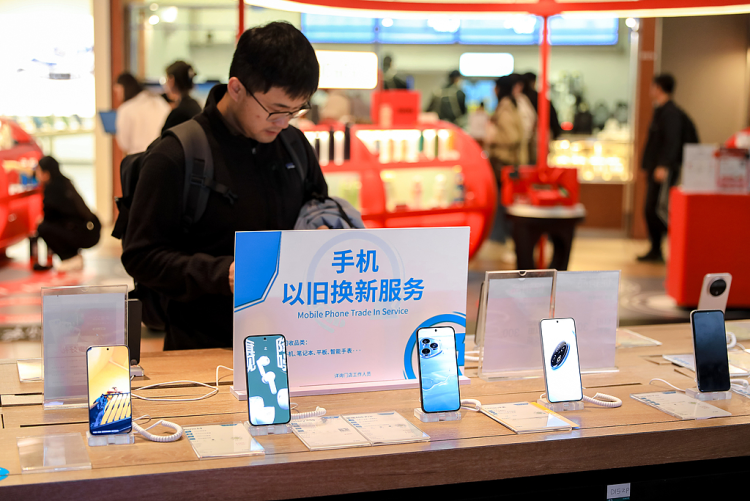
Core Viewpoint - The recent joint announcement by the Ministry of Commerce and nine other departments on promoting green consumption aims to establish a comprehensive incentive mechanism, proposing 20 measures across seven areas to drive green transformation in production and lifestyle, thereby injecting new momentum into high-quality development [1][3]. Group 1: Policy Measures - The initiative includes policy subsidies, credit support, and incentive points to lower the cost of green consumption for consumers, effectively stimulating consumption willingness and confidence [3]. - Measures such as promoting green recycling and upgrading energy efficiency labeling management are designed to solidify the institutional foundation for normalizing green consumption [3]. - It is projected that from 2024 to 2025, 18.3 million vehicles will be replaced under the old-for-new policy, and 192 million home appliances will be upgraded, with nearly 60% being new energy vehicles and over 90% being first-level energy-efficient appliances [3]. Group 2: Industry Transformation - The push for green consumption is expected to trigger a chain reaction of transformations across various sectors, including manufacturing, circulation, energy, and emissions reduction [4]. - In manufacturing, energy-efficient appliances are continuously evolving, while smart variable frequency devices balance comfort and energy savings [4]. - The construction industry is seeing the rise of green buildings that can reduce energy consumption by over 90% compared to traditional buildings, significantly enhancing residents' living experiences [4]. Group 3: Youth Engagement - The youth demographic is identified as a key driver in promoting green consumption, with 93.3% of surveyed young individuals prioritizing the purchase of green products, and 77.6% believing that a green low-carbon lifestyle will become more prevalent among their peers [6]. - As policy support becomes more robust, it is expected to create new scenarios for green consumption, facilitating a seamless connection for young consumers to engage in sustainable practices [6].
海尔智家:公司股价在二级市场的短期波动受到多重复杂因素的综合影响
Zheng Quan Ri Bao Wang· 2026-01-09 13:13
Core Viewpoint - Haier Smart Home emphasizes that its stock price fluctuations in the secondary market are influenced by multiple complex factors, including macroeconomic conditions, industry cycles, market sentiment, and capital preferences [1] Group 1: Company Strategy and Performance - The company is committed to strengthening its fundamentals and long-term competitiveness [1] - The company's stable operations indicate the effectiveness of its strategic path and operational resilience [1] - The financial condition of the company is healthy, with abundant cash flow, laying a solid foundation for long-term development and shareholder returns [1] Group 2: Shareholder Returns - The company places significant importance on sharing development results with investors through cash dividends [1] - Future dividend plans will be carefully formulated, considering the company's development stage, profitability, strategic funding needs, and long-term sustainable development [1] - The company will adhere to its articles of association and relevant regulations to balance current returns with long-term value creation [1]

新宝股份:公司的泳池清洁机展现了公司多元化产品的探索,已有部分产品推出海外市场,但目前销售规模还很小
Mei Ri Jing Ji Xin Wen· 2026-01-09 09:29
Core Viewpoint - The company is exploring diversification in its product offerings, particularly in the field of pool cleaning machines, and is looking to expand into high-tech gardening tools in the future [1]. Group 1: Product Development - The company has introduced pool cleaning machines as part of its diversified product exploration [1]. - Some of the company's products have already been launched in overseas markets, although the current sales scale is still small [1]. Group 2: Future Plans - The company plans to continue increasing its investment in research and development [1]. - There is an intention to expand into the category of high-tech gardening tools [1].

百家联盟单位齐聚共促退役军人就业
Nan Fang Ri Bao Wang Luo Ban· 2026-01-09 07:44
Core Viewpoint - The event "Rong Gui Nan Yue · Le Ye Wan Qu" marks the launch of the Guangdong Province Veterans Employment Alliance, aimed at enhancing employment opportunities for retired military personnel through collaboration among various sectors [1] Group 1: Event Overview - The employment promotion event took place in Guangzhou on January 8, with participation from 102 representatives of state-owned enterprises, private companies, financial institutions, and educational institutions [1] - The alliance units signed the "Guangdong Province Veterans Employment Alliance Cooperation Agreement" to establish a framework for collaboration [1] Group 2: Initiatives and Measures - The alliance will implement a series of specific measures to promote high-quality and sufficient employment for veterans, including the establishment of an information service platform, job matching, employment training, policy support, and a tracking evaluation mechanism [1] - Experts and scholars were invited to discuss the development of a Guangdong model for veteran talent, focusing on mechanism innovation and lessons from domestic and international experiences [1] Group 3: Best Practices Sharing - Representatives from alliance units such as Guangzhou Radio and Television City Service Group Co., Ltd. and Zhuhai Gree Electric Appliances, Inc. shared advanced experiences in recruiting, training, and effectively utilizing retired military personnel [1]
A股回购增持潮涌
2 1 Shi Ji Jing Ji Bao Dao· 2026-01-09 02:09
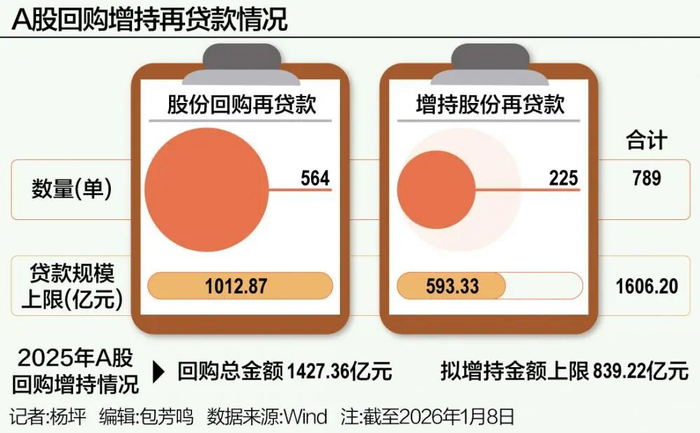
Core Viewpoint - The A-share market in 2025 shows a positive trend with the Shanghai Composite Index returning to 4000 points and total trading volume reaching a historical record of 420 trillion yuan, reflecting a recovery in market confidence [3][4]. Group 1: Market Performance - In 2025, nearly 80% of listed companies saw their stock prices rise, contributing to a total trading volume of 420 trillion yuan, a historical high [3]. - A total of 1494 listed companies conducted share buybacks amounting to 1427.36 billion yuan, while 534 companies announced shareholding increases with a maximum proposed amount of 839.22 billion yuan [3][4]. Group 2: Share Buybacks and Increases - In 2025, 522 companies or their shareholders disclosed share buyback and increase loans, with a maximum loan amount of 1111.65 billion yuan [4]. - The total scale of share buybacks and increases in the A-share market for 2025 reached 2266.58 billion yuan [4]. Group 3: Leading Companies - Midea Group led the buyback efforts with a total buyback amount of 115.45 billion yuan, making it the only company to exceed 10 billion yuan in buybacks for the year [6][7]. - Other notable companies include Kweichow Moutai with a buyback amount of 60 billion yuan and CATL with a proposed buyback of 40 to 80 billion yuan [7][8]. Group 4: Support from Special Loans - The special loans for share buybacks and increases provided significant support, with a total of 1606.20 billion yuan in loan commitments issued to 789 companies and major shareholders [9][10]. - The People's Bank of China optimized the policy for stock buyback and increase loans, reducing the self-funding ratio requirement from 30% to 10% and extending the maximum loan term from 1 year to 3 years [9]. Group 5: Cost of Financing - The interest rate for stock buyback and increase loans is approximately 2.25%, providing a low-cost funding source for companies to manage their market value effectively [11]. - Recommendations for future loan expansions include broadening coverage to more quality enterprises and enhancing service efficiency [11].
A股去年回购增持规模超2200亿元
2 1 Shi Ji Jing Ji Bao Dao· 2026-01-09 01:29
Core Viewpoint - The A-share market in 2025 shows a positive trend, with the Shanghai Composite Index returning to 4000 points and nearly 80% of listed companies experiencing stock price increases, supported by a record total transaction amount of 42 trillion yuan [1] Group 1: Market Performance - In 2025, a total of 1494 listed companies in the A-share market conducted buybacks, with a total amount reaching 142.736 billion yuan [1] - Additionally, 534 companies announced shareholding increases, with a maximum proposed increase amount of 83.922 billion yuan [1] - The total scale of buybacks and increases in 2025 reached 226.658 billion yuan [1] Group 2: Major Companies' Actions - Among the companies that conducted buybacks, 293 had buyback amounts exceeding 100 million yuan, with 15 companies exceeding 1 billion yuan, and one company surpassing 10 billion yuan [5] - Midea Group led the buybacks with a total amount of 11.545 billion yuan, being the only company to exceed 10 billion yuan in 2025 [5] - Guizhou Moutai followed with a total buyback amount of 6 billion yuan, marking its first-ever cancellation buyback since its listing [6] Group 3: Financing Support - The special refinancing loans for buybacks and increases provided significant support, with a total of 789 companies or major shareholders disclosing buyback and increase refinancing loan situations, amounting to 160.62 billion yuan [9] - The People's Bank of China optimized the refinancing policy, reducing the self-funding ratio requirement from 30% to 10% and extending the maximum loan term from 1 year to 3 years [9] - The refinancing loan interest rate is approximately 2.25%, providing a low-cost funding source for companies to conduct buybacks and increases [10] Group 4: Recommendations for Future Actions - Suggestions for banks to expand the coverage of refinancing loans to include more quality enterprises and to support diverse needs such as mergers and acquisitions [11] - Emphasis on improving policy precision, optimizing pricing mechanisms, and enhancing service efficiency to transition refinancing from a temporary tool to a normalized mechanism [11]
最猛资产突发跳水
Ge Long Hui· 2026-01-09 00:33
Group 1: Precious Metals Market - The prices of precious metals have sharply declined, with international gold prices dropping nearly $70 in a single day, and silver, platinum, and palladium experiencing declines of over 4% [2] - Following the largest annual increase since 1979, investors are opting to take profits, as indicated by a reduction in net long positions for gold and silver by 10,668 contracts to 126,873 and by 7,270 contracts to 16,595, respectively [3] - The upcoming rebalancing of the Bloomberg Commodity Index is expected to trigger panic selling in the market, with significant weight reductions for gold and silver [4][6] Group 2: Index Rebalancing Impact - The Bloomberg Commodity Index will undergo annual weight adjustments starting January 8, with gold's weight decreasing from 19.6% to 14.9% and silver's from 7.7% to 3.9% [5][6] - This weight reduction implies substantial passive selling, with Citigroup estimating that the sell-off for both gold and silver could reach around $7 billion each [7] Group 3: Insurance Capital and Stock Market - Insurance capital is increasingly engaging in stock purchases, with a notable example being Ping An Life's announcement of a 20% stake in Agricultural Bank of China H-shares, marking its fourth stake increase [8][9] - In 2025, insurance capital made 35 stake increases, the highest since 2016, with the allocation to stocks reaching 3.6 trillion yuan, accounting for 10% of total insurance funds [10] Group 4: Motivations Behind Insurance Capital Activity - Three core motivations for the concentrated stake increases by insurance capital include the need to enhance returns amid low interest rates, accounting changes that stabilize profit reporting, and policy support for long-term capital market investments [11] Group 5: Foreign Investment in Chinese Assets - Foreign investment giants are also increasing their positions in Chinese assets, with BlackRock raising stakes in several Hong Kong stocks on the first trading day of 2026 [12][13] - Goldman Sachs forecasts a 20% increase in the MSCI China Index and a 12% increase in the CSI 300 Index for 2026, predicting a net inflow of $200 billion from southbound funds [14] Group 6: Retail Investor Trends - The number of new retail investors in the A-share market reached 27.44 million in 2025, a 9.75% increase from 2024, marking the highest annual figure since 2022 [14] - Personal investors remain the primary source of new accounts, while institutional investor accounts saw a significant increase, with a 35% year-on-year growth [15]
朝闻国盛:对当前房地产困境的三点思考
GOLDEN SUN SECURITIES· 2026-01-09 00:08
Group 1: Core Conclusions - The report presents three key thoughts on the current real estate dilemma, emphasizing that the existing supply exceeds demand, making "net supply" reduction crucial for stabilizing the market [2] - The report highlights that second-hand housing prices provide stronger guidance and leading signals compared to new housing prices, which can be understood from the perspectives of supply, demand, price, and policy [2] - It stresses the importance of recognizing the tail risks associated with the current real estate adjustment, particularly concerning developers, homebuyers, and banks, indicating potential risks may concentrate on banks, especially smaller banks [2] Group 2: Policy Recommendations - Four feasible policy measures are suggested to reduce net supply: optimizing land acquisition, revitalizing distressed and idle properties for public service needs, accelerating the replacement of aging housing, and allowing market forces to phase out "ghost town" housing in lower-tier cities [2] Group 3: Industry Performance Insights - The report provides insights into industry performance, noting that the defense and military industry showed a 59.9% increase over the past year, while the non-ferrous metals sector increased by 103.4% [1] - It also indicates that the banking sector experienced a decline of 2.3% in January, with a modest annual growth of 6.3%, reflecting ongoing challenges in the financial landscape [1]
富佳股份7亿募资47%投海外项目 境外营收占70%吸尘器出口列前十
Chang Jiang Shang Bao· 2026-01-09 00:07
Core Viewpoint - Fuhua Co., Ltd. is expanding its overseas production bases and focusing on energy storage and robotics, with a recent plan to raise up to 700 million yuan through convertible bonds to fund these initiatives [1][3]. Group 1: Fundraising and Investment Plans - The company plans to raise a total of up to 700 million yuan through the issuance of convertible bonds, with approximately 3.28 billion yuan (47% of total funds) allocated for the construction of its second phase of the Vietnam production base [1][3][4]. - The net proceeds from the fundraising will also be used for the industrialization of commercial and household energy storage systems (2.39 billion yuan) and the industrialization of smart grain storage robots (1.33 billion yuan) [3][4]. Group 2: Overseas Revenue Growth - In the first half of 2025, Fuhua's overseas revenue reached 1.036 billion yuan, a year-on-year increase of 28.79%, accounting for approximately 70% of its main business revenue [2][5]. - The company has become a well-known ODM supplier for clean home appliances and is among the top ten vacuum cleaner exporters in China, with products distributed across North America, Europe, Asia, and Oceania [2][5]. Group 3: Business Development and Diversification - Fuhua is actively developing its energy storage business, which has become a second growth curve, achieving significant revenue growth of 2.45 billion yuan [6][8]. - The company has made strategic investments in the energy storage sector, including acquiring a 51% stake in Ningbo Yongneng New Energy Technology Co., Ltd. and establishing partnerships for investment in related projects [8][9]. - Fuhua is also advancing its robotics business, having launched the world's first intelligent grain storage robot in collaboration with Xinhe Robotics [8][9]. Group 4: Financial Performance - Fuhua's revenue for 2023 and 2024 was 2.693 billion yuan and 2.702 billion yuan, respectively, showing a slight decline in growth rates of -1.87% and 0.34% [9][10]. - The net profit attributable to shareholders for the same years was 261 million yuan and 181 million yuan, reflecting a significant decrease of -24.73% and -30.59% [9][10]. - In the first three quarters of 2025, the company reported a revenue of 2.291 billion yuan, a year-on-year increase of 23.29%, but the net profit decreased by 19.19% [9][10].
