
核能

Search documents
动能,如何澎湃?——2025四川年终经济观察(下)
Si Chuan Ri Bao· 2025-12-23 00:18
第一动力"打头阵" ●当培育和发展新质生产力掀起新的变革浪潮,大院大所云集、科教资源富集的四川,坚持科技创 新第一动力"打头阵",推动科技创新和产业创新深度融合,坚定把科技创新"关键变量"转化为高质量发 展的"最大增量" 加速迈向开放前沿 ●从"一带一路"科技交流大会到国际友城合作与发展大会,从成都世运会到金熊猫奖活动,从中外 知名企业四川行到世界动力电池大会,四川通过举办一系列重大展会和赛事活动,向全球释放强烈信 号:打造带动西部高质量发展的重要增长极和新的动力源,四川遍地机遇 小切口见大改革 ●从改革中来,到改革中去。今年8月,《中共四川省委十二届六次全会重要改革举措实施规划 (2025—2029年)》印发实施,明确300多项改革措施,预期取得2500余项改革成果。前行在进一步全 面深化改革的大道,四川高质量发展之路必将更加壮阔无垠 再过几天,2025年就要画上句号。回望这一年,四川经历了什么?在辩证把握危与机中勇毅前行, 在科学统筹稳与进中实干笃行,在系统谋划立与破中稳步践行,四川即将顺利完成"十四五"主要目标任 务,绽放经济高质量发展的新荣光。 新,从何而来?新在支撑。今年前11月,全省高技术制造业增 ...
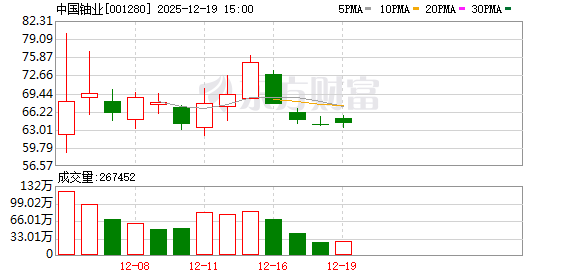
中国铀业:公司主要产品天然铀是核工业发展的基础原料
Zheng Quan Ri Bao Wang· 2025-12-22 11:10
Core Viewpoint - China Uranium Industry (001280) emphasizes the necessity and rationality of its related party transactions due to the significant demand for natural uranium products from China National Nuclear Corporation, which is a fundamental raw material for the nuclear industry [1] Group 1 - The main product of the company is natural uranium, which serves as a foundational raw material for the development of the nuclear industry [1] - The demand for natural uranium products is substantial from China National Nuclear Corporation [1] - The distribution of the nuclear industry supply chain in China leads to the company's upstream and downstream primarily involving related parties [1]
不管普京最终怎么选,2050年的俄罗斯,只会越来越离不开中国
Sou Hu Cai Jing· 2025-12-22 10:12
Core Viewpoint - The recent EU sanctions have severely impacted Russia's energy sector, particularly its oil exports, leading to a significant reduction in its ability to operate in international markets and a shift towards reliance on China for energy exports [1][3][5]. Group 1: Impact of Sanctions - The EU's 19th round of sanctions has blacklisted 117 Russian oil tankers, bringing the total number of sanctioned Russian vessels to 557, crippling Russia's ability to sell oil [1]. - The sanctions have made it difficult for Russia to repair ships, obtain insurance, and settle payments, resulting in rising transportation costs and logistical challenges [3]. - The sanctions on major Russian energy companies have restricted their access to USD payment channels and international financing, causing third-party buyers to withdraw from purchasing Russian oil [3]. Group 2: Shift in Energy Markets - Russia's energy cooperation with Europe has drastically reduced, with European imports of Russian energy plummeting, making it unlikely for Russia to regain its previous market share in Europe [5][7]. - The reliance on energy exports for budget revenue is high, with the energy sector providing one-third of Russia's budget income, making the economy vulnerable [7][9]. - Russia's energy production is at risk due to aging oil fields and a lack of new discoveries, with over 90% of drilling and mining equipment being imported [9][11]. Group 3: Pivot to China - The Power of Siberia pipeline is operating at full capacity, supplying 38 billion cubic meters of natural gas to China annually, with plans to increase this to 44 billion cubic meters [13][15]. - Russia has become China's largest oil supplier, with nearly 20% of China's oil imports coming from Russia, and the share of natural gas steadily increasing to about 18% [17]. - The use of local currencies in energy trade between Russia and China is rising, establishing a payment system that is less reliant on USD and EUR, enhancing resilience against Western sanctions [17][20]. Group 4: Long-term Cooperation - The energy cooperation roadmap signed for 2025 includes traditional energy supply increases and renewable energy development, creating a comprehensive partnership from exploration to processing [22]. - Despite competition from other Asian countries, China remains the most viable market for Russian energy exports due to its large consumption capacity [27][29]. - The ongoing energy transition globally poses challenges for traditional energy demand, but China's stable energy demand provides a crucial buffer for Russia's export revenues [33][35]. Group 5: Future Outlook - Russia's energy technology independence is challenging, with significant reliance on Chinese technology in low-carbon and renewable sectors [38][40]. - The long-term presence of Western sanctions and internal technological shortcomings necessitate deeper cooperation with China as a strategic choice for Russia [42][44]. - By 2050, Russia's energy landscape will be reshaped, requiring a deep binding with China to maintain its status as an energy power and adapt to global energy transitions [46][48][49].


日本与中亚五国首次举办峰会
Huan Qiu Shi Bao· 2025-12-19 23:07
日本外务省披露,高市将在峰会上与五国确认在国际秩序方面的合作,就推动中亚地区"自主可持续发 展的经济合作"等交换意见。《朝日新闻》称,日方拟与五国建立人工智能领域的新合作框架,探讨连 接亚欧大陆、途经中亚的"中央走廊"建设,并通过开发援助等手段支援"里海航线"建设。"里海航线"是 一条连接欧洲、无需途经俄罗斯的物流网络。 彭博社称,中亚蕴含丰富的能源和矿产资源。受俄乌冲突影响,中亚五国加快推进经济安全与外交多元 化进程,此次峰会成为日本提升在这一区域影响力的契机。日媒称,一名日本政府官员表示,"关键矿 产的重要性在过去一年发生了显著变化",并强调深化与资源丰富的中亚国家关系的重要性。 哈萨克斯坦腾格里通讯社称,哈萨克斯坦总统托卡耶夫18日对日本进行正式访问。日本称哈萨克斯坦为 战略伙伴,并明确释放信号:东京期待深化合作。日本首相高市早苗在首相官邸会见了托卡耶夫,两国 领导人在会谈后签署了一份联合声明,双方代表团成员还签署了其他文件。日媒称,双方就加强哈萨克 斯坦石油、天然气等能源及矿产资源领域合作达成共识。据报道,日立公司还将向哈方提供用于核能领 域人员培训的科研设备。哈方还将在能源和冶金领域获得日方37亿美 ...
EDF: Changes in the Group's Executive Committee
Globenewswire· 2025-12-19 19:22
Changes in the Group's Executive Committee Following the information and consultation procedures with employee representative bodies, and effective 1 January 2026, EDF's new nuclear activities will be organised around four divisions: • The division of new nuclear project management, responsible for the strategic management of new nuclear programmes, under the responsibility of Xavier Gruz, Group Executive Director. • The division of industrial projects and partnerships, in charge of new nuclear projects m ...

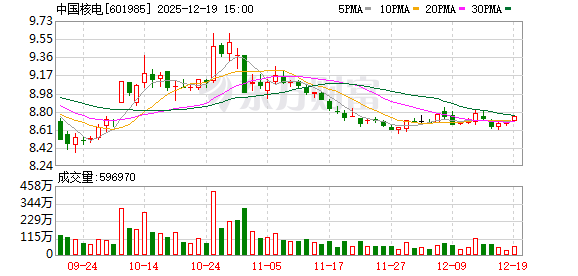
中国铀业:中国铀业已同中国核电签署长贸协议
Zheng Quan Ri Bao· 2025-12-19 15:17
证券日报网讯 12月19日,中国铀业在互动平台回答投资者提问时表示,中国铀业已同中国核电签署了 长贸协议,约定向中国核电下属核电公司供应天然铀。 (文章来源:证券日报) ...

中核集团召开第八届科技工作会 以“国之大者”的责任感使命感全面开启核科技强国建设新征程
Xin Lang Cai Jing· 2025-12-19 12:44
12月18日,中核集团召开第八届科技工作会,全面总结"十四五"科技创新工作取得的成绩成效,分析"十五五"时期面临的形势挑战,系统谋划和部署"十 五五"时期核科技创新重点工作。集团公司党组书记、董事长申彦锋出席会议并强调,"十四五"时期集团公司重大科技创新成果加速涌现,创新引领力、 创新质效力显著增强。"十五五"时期是核科技创新夯实基础、全面发力的关键时期,集团公司要深入学习贯彻习近平总书记重要指示批示精神和党中央决 策部署,充分发挥"三个作用",当好"三个排头兵",为实现科技强国总体目标和"国际核科技发展的引领者"企业愿景,为实现中国式现代化和中华民族伟 大复兴作出新的更大贡献。 集团公司外部董事召集人斯泽夫,党组成员、副总经理马文军,驻集团纪检监察组组长、集团党组成员张越,总会计师、党组成员王学军出席会议。党组 成员、副总经理辛锋作《夯实基础、全面发力,以科技创新引领"十五五"高质量发展,谱写核强国建设新篇章》科技工作报告,党组成员、副总经理陈军 利主持会议。 国务院国资委科创局、国家国防科工局系统工程二司、国家能源局核电司等上级部委领导出席会议,对抓好"十五五"时期的核科技创新工作提出指导性要 求。中国科 ...
一图读懂中核集团IPD速赢项目
Xin Lang Cai Jing· 2025-12-19 12:43
Core Insights - The article discusses the implementation of the Integrated Product Development (IPD) project aimed at creating a world-class R&D management system for the company, supporting its vision of being a leader in international nuclear technology development [5][43]. Group 1: IPD Overview - Integrated Product Development (IPD) is a product planning and development management system driven by market and customer needs, originating from the PACE theory of the 1980s and validated through IBM's practices [2][39]. - IPD emphasizes a market and customer-oriented approach, viewing R&D as a strategic investment, and integrates the entire product lifecycle from customer needs to product launch [2][39]. Group 2: Project Implementation Strategy - The project adopts a "group coordination and layered implementation" strategy, focusing on six major transformation points, with a framework of "1 top-level design, 6 core processes, 2 key organizations, and 1 IT system" [5][43]. - The project will simultaneously pilot in three project clusters: nuclear power, nuclear medicine, and nuclear equipment [5][43]. Group 3: Six Major Transformation Points - Establish an end-to-end product management mechanism coordinated by the group [8][46]. - Create a cross-functional and cross-unit product development mechanism [8][46]. - Develop a dual-line planning mechanism for products and technologies [8][46]. - Implement a demand management mechanism that supports the regular operation of capturing and analyzing market and customer needs [8][46]. - Optimize the technology development process and establish a mechanism for transitioning technology to products [8][46]. - Form a heavyweight R&D team operation mechanism to enhance collaboration across fields [8][46]. Group 4: Core Processes - Demand management process to accurately capture and analyze market and customer needs [22][60]. - Product planning and initiation process to ensure investment decisions are based on strategic and market value [23][61]. - Main product development process to standardize development activities and ensure high-quality product delivery [24][62]. - Technology planning and initiation process to proactively layout key technologies supporting the product roadmap [25][63]. - Technology development process to manage pre-research and tackle challenges, reducing product development risks [26][64]. - Domain enabling process to provide quality and cost support for projects [27][65]. Group 5: Key Organizations - Decision-making layer (IPMT/ITMT) responsible for investment decisions and resource allocation [29][67]. - Execution layer (PDT/SPDT/TDT) responsible for specific project execution and delivery [30][68]. Group 6: Expected Outcomes - The integration of the IPD concept into nuclear industry technology innovation practices aims to create a first-class R&D management system unique to the company, enhancing organizational vitality and potential [34][73]. - The project is expected to facilitate the transformation of scientific and technological achievements into new productive forces, laying a solid foundation for creating a world-class enterprise [34][73].

中国铀业:赣州金瑞、晶核环保均为公司控股股东中核铀业有限责任公司下属企业
Zheng Quan Ri Bao· 2025-12-19 10:41
(文章来源:证券日报) 证券日报网讯 12月19日,中国铀业在互动平台回答投资者提问时表示,赣州金瑞、晶核环保均为公司 控股股东中核铀业有限责任公司下属企业。 ...
可控核聚变专题报告:可控核聚变系列报告(一):未来能源的奇点
HUAXI Securities· 2025-12-19 08:41
Group 1 - Controlled nuclear fusion is considered a future ideal energy source due to its high energy output compared to nuclear fission, with 1 gram of deuterium-tritium fusion fuel releasing energy equivalent to 11.2 tons of standard coal, which is about four times that of 1 gram of uranium-235 fission [12][13] - The deuterium-tritium reaction is the mainstream application in nuclear fusion, offering advantages such as feasible fuel acquisition, high technical feasibility, and significant energy gain, making it the most viable path for achieving net energy gain and commercial power generation [18][19] - Magnetic confinement is recognized as the most promising method for achieving large-scale controlled nuclear fusion, with superconducting technology being key to future device miniaturization and cost reduction [1][25] Group 2 - The global demand for electricity is increasing, driven by data centers, which currently consume about 415 TWh and are expected to double to approximately 945 TWh by 2030, making controlled nuclear fusion an ideal energy solution [2][3] - The progress in controlled nuclear fusion has shifted from "can it ignite" to "can it operate long-term, stably, and economically," with significant advancements in devices like EAST and ITER laying the groundwork for commercial viability [2][3] - Major domestic projects in China, such as EAST and BEST, are expected to see capital expenditures exceeding 92 billion yuan over the next five years, benefiting local companies involved in the supply chain [4][6] Group 3 - The manufacturing value of midstream equipment in the tokamak devices is significant, with over 50% of the value chain attributed to midstream equipment, including key components like vacuum chambers and superconducting magnets [3][6] - Domestic companies are expected to benefit from the nuclear fusion sector, with investments in upstream materials and midstream equipment manufacturing, including companies like Western Superconducting, Antai Technology, and China Nuclear Power [6][4] - The capital expenditure in China's controlled nuclear fusion sector is projected to maintain around 92 billion yuan from 2026 to 2030, with annual investments exceeding 10 billion yuan [6][4]