科研

Search documents
2024年度安徽省科学技术奖专业(学科)评审结果公示!一等奖64项
机器人圈· 2025-10-13 09:51
Core Points - The 2024 Anhui Provincial Science and Technology Awards have concluded, with a total of 64 first prizes, 84 second prizes, and 142 third prizes recommended for the provincial science and technology awards [1]. Group 1: Natural Science Awards - The first prize projects include research on dual-phase flow phase change and mathematical theories related to the Navier-Stokes equations, brain cognitive function analysis based on cross-modal neuroimaging, and mechanisms of intestinal immune perception and disease [3]. - Notable institutions involved in first prize projects include Anhui Normal University and the University of Science and Technology of China [3]. Group 2: Technical Invention Awards - Key projects awarded first prizes include diamond quantum current sensors and technologies for new distribution systems with electrical and communication coupling [7]. - The projects involve collaboration between institutions such as Hefei University of Technology and State Grid Anhui Electric Power Company [7]. Group 3: Scientific Progress Awards - First prize projects focus on autonomous systems, multi-element metal/ceramic functional coatings, and ecological coordination reinforcement technologies [10]. - Institutions like Anhui University and Anhui University of Science and Technology are prominently featured in these projects [10]. Group 4: Agricultural Technology Awards - First prize projects include key technologies for managing herbicide resistance in major crops and the creation of high-quality disease-resistant rice varieties [11]. - Collaborating entities include Anhui Agricultural University and various agricultural technology companies [11]. Group 5: Environmental and Energy Technologies - Projects awarded for their contributions to environmental technology include those focused on wastewater treatment and the development of lightweight, high-quality materials for energy applications [8][12]. - Institutions involved in these projects include the University of Science and Technology of China and Hefei University of Technology [8][12].


【省科技厅】陕西征集自然科学基础研究计划企业联合基金项目
Shan Xi Ri Bao· 2025-10-12 23:08
省科技厅相关负责人介绍,联合基金的申请不受其他省科技计划限项规定限制,鼓励受资助项目加 快研究进度,及时解决问题,尽快满足产业发展和工程建设需要,提前结题;牵头申报单位应为陕西省 境内注册(登记)的企业、高等学校和科研院所等;为提升联合单位科技创新能力,鼓励申请项目吸收 联合单位科技人员加入项目组,共同研发。(记者:张梅) 10月9日,记者从省科技厅获悉:2026年度陕西省自然科学基础研究计划企业联合基金项目开始征 集。 据了解,为深入实施创新驱动发展战略,充分发挥陕西省自然科学基础研究计划引导作用,拓展基 础研究多元投入渠道,提升企业科技创新能力,省科技厅与中国电建集团西北勘测设计研究院有限公 司、中煤科工西安研究院(集团)有限公司、国网陕西省电力有限公司分别设立"中电建西北院企业联 合基金""中国煤科西安研究院企业联合基金""国网陕西省电力有限公司企业联合基金"。 此次申报计划类别为陕西省自然科学基础研究计划企业联合基金项目。其中,中电建西北院企业联 合基金涉及水电与抽蓄、新能源与新型储能、水利生态与基础设施等领域;中国煤科西安研究院企业联 合基金涉及钻探、物探、水文、地质、煤层气、地热等领域;国网陕西省 ...
浙江创历史新高,2024年全国科技经费投入统计公报发布
Sou Hu Cai Jing· 2025-10-12 02:13
钛媒体App 10月12日消息,近日,国家统计局、科学技术部、财政部发布《2024年全国科技经费投入统 计公报》。统计公报显示,2024年,研究与试验发展(R&D)经费投入超过两千亿元的省(直辖市) 有6个,浙江(2901.4亿元)居全国第四;研究与试验发展(R&D)经费投入强度(与地区生产总值之 比)超过全国平均水平的省(直辖市)有7个,浙江(3.22%)创历史新高。(浙江发布) ...
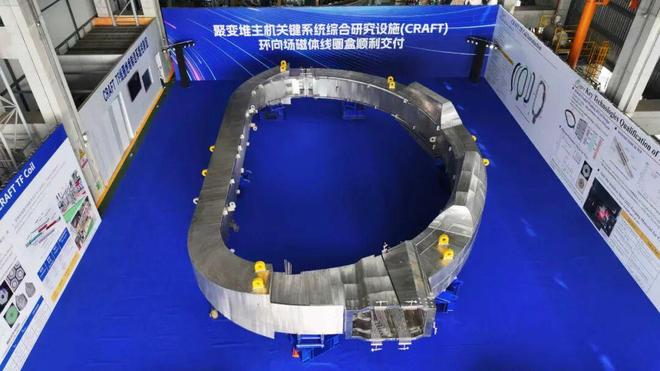
世界最大,正式交付!攻克多项关键技术
Huan Qiu Wang Zi Xun· 2025-10-11 01:52
Core Insights - The CRAFT project has achieved significant progress with the successful development and delivery of the toroidal field magnet coil box in Hefei, Anhui Province, marking an important step towards the commercialization of fusion energy [1][3] Group 1: Project Details - The toroidal field coil box is a critical structural component of the toroidal field magnet system, designed to protect the winding of the toroidal field coils and support other superconducting magnets [3] - The coil box is constructed from ultra-low temperature austenitic stainless steel 316LN and 316LMn, measuring 21 meters by 12 meters and weighing 400 tons, making it the largest of its kind in the world [3] - The overall dimensions of the coil box exceed those of similar components in the International Thermonuclear Experimental Reactor (ITER) by more than 1.2 times, and its weight is approximately double that of ITER's equivalent [3] Group 2: Development Timeline and Applications - The project team took over 5 years to overcome multiple key technical challenges from research to manufacturing completion [3] - The successful delivery of the toroidal field coil box represents a significant advancement in fusion energy commercialization, with potential applications in aerospace, energy equipment, and marine engineering [3]
2025年大型科研仪器开放共享成绩单出炉
Ke Ji Ri Bao· 2025-10-11 01:32
Core Insights - The Ministry of Science and Technology released a notification regarding the evaluation results of major scientific research infrastructure and large scientific instruments in central-level universities and research institutes, indicating an increased emphasis on open sharing compared to 2024 [1] Group 1: Evaluation Results - 50 units, including the Institute of Biophysics of the Chinese Academy of Sciences, received an "excellent" rating for their management systems, operational efficiency, and effectiveness in open sharing [1] - 100 units, such as the Subtropical Agricultural Ecology Research Institute of the Chinese Academy of Sciences, were rated "good" for having relatively sound management systems and high operational efficiency [1] - 191 units, including the Shanghai Institute of Organic Chemistry of the Chinese Academy of Sciences, met the basic requirements for open sharing and received a "qualified" rating [1] Group 2: Areas of Concern - 3 units, including the Fifth Research Institute of the Ministry of Industry and Information Technology, were rated "poor" due to inadequate implementation of open sharing responsibilities, incomplete management systems, lack of effective regulations, and low utilization rates of general instruments [1] Group 3: Instrument and Infrastructure Statistics - The average effective working hours for the evaluated scientific instruments was 1,599 hours per year, with a 100% integration rate into the national network management platform [2] - The average external service hours for these instruments was 273 hours per year, indicating a good operational and open sharing status [2] - The 71 major scientific research infrastructures demonstrated significant achievements in supporting national research tasks and promoting industrial technological innovation [2] Group 4: Incentives and Penalties - Units rated "excellent" and "good" will receive recognition and supplementary funding rewards, while those rated "poor" will face public criticism and a one-year deadline for rectification [2] - Failure to rectify issues within the stipulated time will result in a reduction of corresponding funding for the purchase of instruments and equipment [2]
别整天喊科学没突破了,今年诺奖全是高手
虎嗅APP· 2025-10-10 09:44
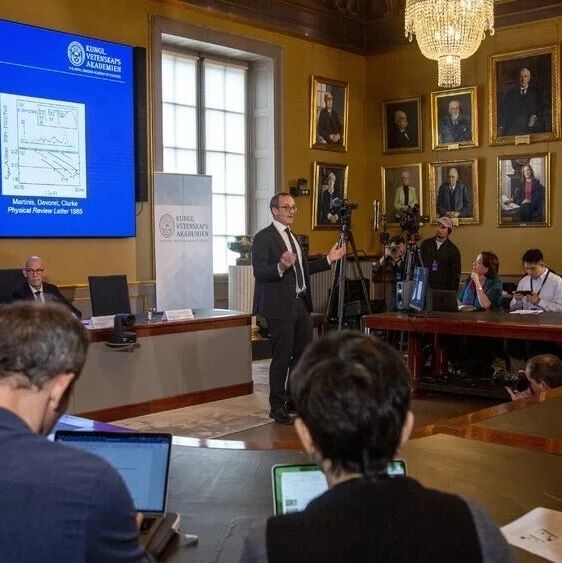
Core Insights - The article discusses the recent Nobel Prize winners and highlights the significance of their contributions to science, particularly in the fields of medicine, chemistry, and physics [5][39]. Group 1: Nobel Prize in Physiology or Medicine - The winners, including American scientists Mary Brenner and Fred Ramsdell, along with Japanese scientist Shimon Sakaguchi, were recognized for their groundbreaking discoveries in peripheral immune tolerance mechanisms [12][16]. - Their work identified regulatory T cells and the Foxp3 gene, which play crucial roles in the immune system's ability to distinguish between harmful invaders and the body's own cells [14][16]. Group 2: Nobel Prize in Chemistry - The chemistry award was given to researchers from Japan, Australia, and the USA for their development of metal-organic frameworks (MOFs), which represent a new approach to molecular architecture [18][25]. - These frameworks have practical applications, such as capturing water vapor for drinking water in arid regions and effectively sequestering carbon dioxide to aid in achieving carbon neutrality [27][28]. Group 3: Nobel Prize in Physics - The physics award was presented to John Clarke, Michel H. Devoret, and John M. Martinis for their contributions to demonstrating macroscopic quantum tunneling effects and energy quantization in circuits [31][35]. - Their findings challenge previous notions that quantum effects only occur at microscopic scales, suggesting that under certain conditions, macroscopic systems can exhibit quantum characteristics [33][37]. Group 4: General Observations - The article notes a shift in focus from AI-related topics in previous years to a more fundamental scientific approach in this year's Nobel Prizes, emphasizing the importance of basic science [39][40]. - It encourages a greater appreciation for the dedication and perseverance of scientists, which ultimately contributes to the advancement of human knowledge and society [40].
中国方案闪耀全球科技创新大会
Ke Ji Ri Bao· 2025-10-10 05:48
Core Insights - The G-STIC 2025 conference, held in Pretoria, South Africa, focuses on "Technology Innovation for a Sustainable Future," addressing eight key areas: climate, energy, health, water, agriculture, security, education, and circular economy [1][3] - This is the first time the G-STIC conference is hosted in Africa, highlighting the continent's unique potential and challenges in achieving sustainable development goals [3][4] - The conference aims to foster collaboration between China and Africa in cutting-edge fields such as artificial intelligence, green low-carbon technologies, and digital economy [4] Group 1: Conference Highlights - The conference is co-hosted by ten leading research institutions globally, including the Flanders Institute for Technological Research and the Guangzhou Institute of Energy Research [1][3] - The event coincides with the 80th anniversary of the CSIR, enhancing the synergy between local and international research efforts [3] - The conference serves as a platform for showcasing local scientific innovations while integrating international best practices to develop localized solutions for Africa [3] Group 2: Focus on Energy - The Guangzhou Institute of Energy Research organized energy-themed forums during the conference, emphasizing technology innovation and collaborative systems in energy transition [6] - Key discussions included China's energy policies and digital energy transition, with experts from five countries sharing experiences and challenges in energy transformation [6][9] - The conference also featured specialized sessions on geothermal energy and biomass, highlighting advancements in renewable energy technologies [7] Group 3: International Collaboration - The conference established a high-level dialogue mechanism for governments, enterprises, and research institutions, providing technical support and cooperation pathways for Africa's clean energy deployment [9] - The G-STIC conference is supported by the United Nations and the European Union, aiming to accelerate the development, dissemination, and deployment of technological innovations to achieve the UN's 2030 Sustainable Development Goals [9]

新研究用食物垃圾开发出替代塑料的天然薄膜
Xin Hua She· 2025-10-10 05:37
Core Viewpoint - Monash University has successfully developed a method to convert sugars from food waste into natural polymers, which could potentially replace petroleum-based plastic packaging, providing biodegradable alternatives for food and agricultural uses [1] Group 1: Research Findings - The research published in the journal "Microbial Cell Factories" demonstrates the conversion of sugars from food waste into polyhydroxyalkanoates (PHA) biopolymers, addressing environmental issues caused by the global production of 400 million tons of plastic annually [1] - Researchers fed two soil-dwelling bacteria, "Cupriavidus necator" and "Pseudomonas putida," a balanced sugar diet, leading to the production of "natural plastics" within the bacteria [1] - The extracted "plastics" were cast into ultra-thin films approximately 20 micrometers thick, which were tested for tensile strength, durability, and melting properties [1] Group 2: Applications and Benefits - The developed PHA biopolymers can be shaped into various forms, making them suitable for temperature-sensitive packaging, medical films, and other products [1] - This research highlights the potential to transform food waste into sustainable, biodegradable ultra-thin films, allowing for the redesign of everyday plastic materials without the environmental costs associated with traditional plastics [1]
华人学者一天发表了4篇Nature论文
生物世界· 2025-10-09 10:00
Core Insights - On October 8, 2025, 15 papers were published in the prestigious journal Nature, with 4 authored by Chinese scholars [2][4][6][8] Group 1: Research Contributions - Professor Zhao Huimin from the University of Illinois Urbana-Champaign published a paper titled "Enzyme specificity prediction using cross attention graph neural networks," introducing an innovative AI model called EZSpecificity that predicts enzyme substrate specificity with high accuracy, aiding in enzyme engineering and synthetic biology [2] - Professor Zhou Peng from Fudan University published a paper titled "A full-featured 2D flash chip enabled by system integration I," focusing on advancements in 2D flash memory technology through system integration [4] - MIT's Liu Qi co-authored a paper titled "Quantum-amplified global-phase spectroscopy on an optical clock transition," contributing to the field of quantum spectroscopy [6] - Professors Lou Zhenkun and Huang Jinzhu from Mayo Clinic published a paper titled "KCTD10 is a sensor for co-directional transcription–replication conflicts," revealing a ubiquitin ligase complex that detects transcription-replication conflicts and regulates replication body progression to prevent DNA damage [8]

新华财经早报:10月8日
Xin Hua Cai Jing· 2025-10-08 00:56
Group 1 - The World Trade Organization has significantly lowered its global goods trade growth forecast for 2026 to 0.5%, down from the previous estimate of 1.8% in August, due to weak global economic recovery and U.S. tariff policies [4][5] - The international gold price has reached a historic high, with futures trading at $4000.05 per ounce and spot prices hitting $3977.45 per ounce on October 7, marking a significant milestone in the gold market [5][6] - Brazil's exports to the U.S. fell by 20.3% year-on-year in September, amounting to $2.58 billion, while imports increased by 14.3% to $4.35 billion, resulting in a trade deficit of $1.77 billion for the month [5] Group 2 - The Chinese government has reported an increase in foreign exchange reserves to $33,387 billion as of the end of September, reflecting a rise of $16.5 billion or 0.5% from the previous month [3] - China's gold reserves have increased to 7.406 million ounces, with a month-on-month rise of 40,000 ounces, marking the 11th consecutive month of gold accumulation [3] - The transportation sector has seen a 2.4% increase in cross-regional passenger flow, totaling approximately 298.19 million trips on October 6, with a year-on-year growth of 7% [3]