风险投资

Search documents
MDB Capital (MDBH) - 2025 Q2 - Earnings Call Transcript
2025-08-27 21:30
Financial Data and Key Metrics Changes - The company reported no financings completed in Q2 2025, leading to limited revenue generation, primarily from Pat Invest [5] - Cash utilization for the first six months of 2025 was $3.4 million, with expectations to close financings in February 2025 to reduce or eliminate cash usage [7] Business Line Data and Key Metrics Changes - The company is focusing on incubating more companies to offset operating expenses with financings, aiming for a balance between equity generation and fee income [6] - The current revenue from launching more developed companies is intended to offset cash operations [6] Market Data and Key Metrics Changes - The company noted a significant investor hesitation towards deep tech life science investments, which has been a challenging segment in the market [9][10] - There is a growing interest in profitable, early-stage companies with revenue momentum, which are highly valued in the current market [13] Company Strategy and Development Direction - The company is expanding its product mix to include profitable companies with revenue momentum, aiming to attract a broader range of investors [14] - A new prospectus was filed for a profitable company in the beverage space, indicating a shift towards diverse investment opportunities beyond life sciences [15][16] - The company is focusing on metabolic health as a significant opportunity, particularly with the rise of GLP-1 drugs, which represent a massive market potential [19][20] Management's Comments on Operating Environment and Future Outlook - Management expressed confidence in the public venture model, highlighting a shift away from private equity and traditional venture capital [17][18] - The company is preparing to spin off PatentVest as an independent public company, which is expected to create additional value for shareholders [50][51] Other Important Information - The company is actively engaging with family offices and RIAs to expand its investor community and explore new investment models [26][30] - A partnership with Koretsu, one of the largest angel groups, was announced to help syndicate investments in public ventures [31][34] Q&A Session Summary Question: Are there vulture opportunities in your core life science market? - Management acknowledged that tough markets often present better opportunities, noting that current valuations are reasonable and there are asymmetric upsides available in life sciences [65][66][67] Question: What's the plan to increase volume and liquidity for portfolio companies? - Management emphasized the importance of having a correct narrative and focusing on near-term inflection points to attract investor interest and increase volume [71][72][73] Question: What is the plan for the holding company's assets and potential distributions? - Management indicated a desire to distribute equity as much as possible, with plans to spin out PatentVest and potentially distribute shares of ExoZyme when market conditions are favorable [83][84][86]
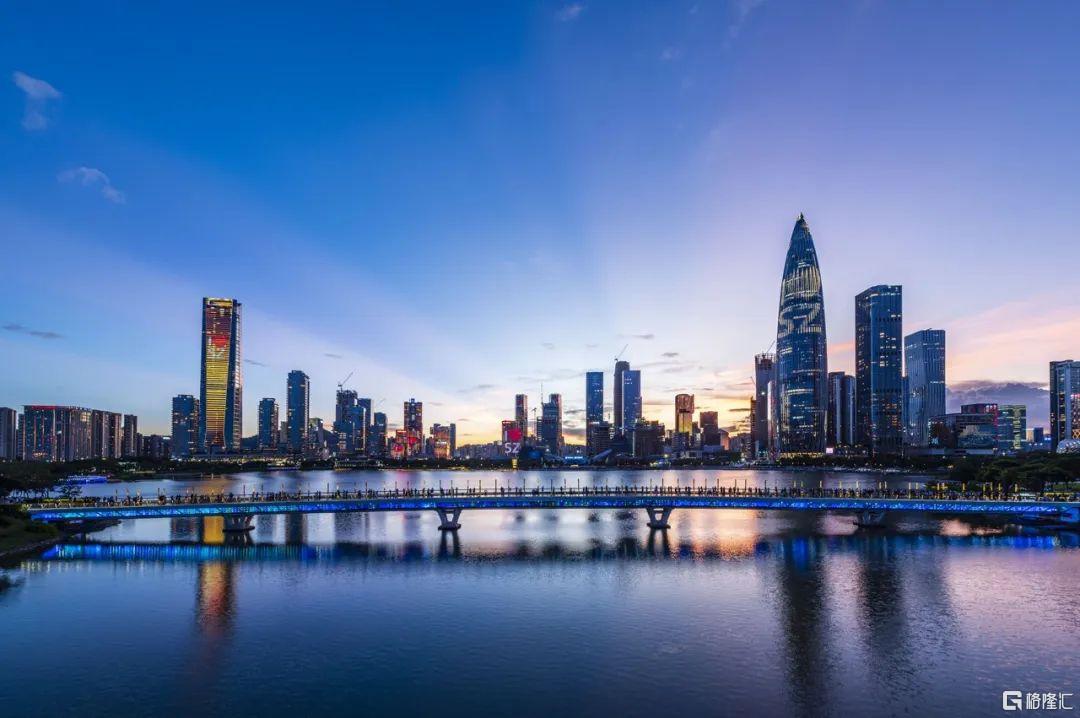
深圳金融史,一个波澜壮阔的中国金融改革奇迹
Ge Long Hui· 2025-08-26 13:20
Core Insights - Shenzhen has transformed from a financial desert in 1979 to one of China's three major financial centers by 2024, with a GDP exceeding 36.8 trillion yuan and a financial industry value-added of over 470 billion yuan [2][5]. Group 1: Initial Creation and Exploration (1979-1990) - Shenzhen was designated as a "testing ground" for financial reform in 1979, leading to significant innovations in China's financial history [6]. - The establishment of the first foreign bank branch in China, the Nanyang Commercial Bank in 1982, marked a pivotal moment in breaking monopolies [8]. - The founding of China Merchants Bank in 1987 and the listing of Shenzhen Development Bank on the stock exchange created early capital market legends [8]. - The issuance of China's first stock by the Bao'an Investment Company in 1983 initiated the exploration of shareholding reform [10]. Group 2: Growth and Development (1990-2004) - The establishment of the Shenzhen Stock Exchange on December 1, 1990, marked a significant leap in Shenzhen's financial landscape [11][12]. - By the end of 2004, the Shenzhen Stock Exchange had 536 listed companies with a total market capitalization of 1.1 trillion yuan, reflecting exponential growth [15]. - Shenzhen became a hub for venture capital, with the establishment of Shenzhen Innovation Investment Group in 1999, investing over 2 billion yuan by 2004 [16]. Group 3: Adjustment and Transformation (2004-2019) - The introduction of the SME Board in 2004 provided a dedicated financing platform for small and medium enterprises [19]. - The launch of the ChiNext board in 2009 focused on innovative and growth-oriented enterprises, significantly boosting the entrepreneurial spirit [21]. - By 2019, the ChiNext had grown to nearly 800 companies with a total market capitalization exceeding 6 trillion yuan [21]. Group 4: Elevation and Leadership (2019-Present) - Shenzhen's financial sector has advanced to a higher level under national strategies, with over 400 companies listed through the ChiNext registration system by 2025 [26]. - The establishment of the Qianhai Shenzhen-Hong Kong Modern Service Industry Cooperation Zone has positioned it as a financial innovation pilot zone [23]. - By 2024, the digital yuan pilot program had over 300 million merchants accepting it, with transaction amounts surpassing 600 billion yuan [27]. Group 5: Achievements and Strengths - As of the end of 2024, Shenzhen's financial institutions held deposits of 135.78 trillion yuan and loans of 94.83 trillion yuan [29]. - The Shenzhen Stock Exchange had 2,852 listed companies with a total market value of 33.04 trillion yuan, ranking it third globally in trading volume [31]. - Shenzhen's financial industry added value reached 471 billion yuan in 2024, accounting for approximately 12.8% of its GDP [31].




深圳金融史,一个波澜壮阔的中国金融改革奇迹
格隆汇APP· 2025-08-26 12:30
Core Viewpoint - Shenzhen has transformed from a financial desert in 1979 to one of China's three major financial centers by 2024, showcasing a remarkable journey of financial reform and innovation [4][5][8]. Group 1: Initial Creation and Exploration (1979-1990) - In 1979, Shenzhen, then known as Bao'an County, had a deposit balance of only 101 million yuan and a loan balance of 75 million yuan, with very few financial institutions [3][4]. - The establishment of the first foreign bank branch in China, the Nanyang Commercial Bank Shenzhen branch, occurred in 1982 [12]. - The founding of China’s first national bank, China Merchants Bank, in 1987 marked a significant milestone, alongside the listing of Shenzhen Development Bank [13]. - The first stock in New China was issued in 1983, raising 13 million yuan, which initiated the exploration of shareholding reform [16]. Group 2: Leap and Growth (1990-2004) - The establishment of the Shenzhen Stock Exchange on December 1, 1990, marked a historic leap for Shenzhen's financial sector [20]. - By the end of 2004, the Shenzhen Stock Exchange had 536 listed companies with a total market capitalization of 1.1 trillion yuan [24]. - Shenzhen became a hub for venture capital, with the establishment of Shenzhen Innovation Investment Group in 1999, which invested over 2 billion yuan by 2004 [26]. Group 3: Adjustment and Transformation (2004-2019) - The introduction of the SME Board in 2004 provided a dedicated financing platform for small and medium enterprises [31]. - The launch of the ChiNext board in 2009 focused on innovative and growth-oriented enterprises, significantly enhancing the connection between technology innovation and capital markets [33]. - By 2019, the number of companies on the ChiNext had grown to nearly 800, with a total market capitalization exceeding 6 trillion yuan [34]. Group 4: Elevation and Leadership (2019-Present) - Shenzhen's financial sector has been elevated under new national strategies, with over 400 companies listed on the ChiNext through the registration system by 2025 [40]. - The total number of companies on the Shenzhen main board is expected to approach 1,600 by July 2025, with a market capitalization nearing 40 trillion yuan [42]. - The implementation of the "Cross-Border Wealth Management Connect" in 2024 has led to significant participation from banks and increased cross-border transactions [44]. Group 5: Achievements and Strengths - By the end of 2024, Shenzhen's financial institutions had a total deposit balance of 13.5778 trillion yuan and a loan balance of 9.4830 trillion yuan [48]. - The Shenzhen Stock Exchange had 2,852 listed companies with a total market value of 33.04 trillion yuan, ranking it among the top globally [50]. - The insurance sector reported a premium income of 195.821 billion yuan in 2024, with total assets reaching 7.3 trillion yuan [51]. - Shenzhen's venture capital and wealth management sectors are among the strongest in China, with asset management exceeding 29 trillion yuan by 2024 [61].

普华永道报告:上半年中国并购市场交易额同比大增45%
Huan Qiu Wang· 2025-08-26 10:56
Group 1 - The core viewpoint of the article highlights a significant increase in China's M&A market, with disclosed transaction amounts exceeding $170 billion in the first half of 2025, representing a 45% year-on-year growth [1] - Domestic strategic investors have shown a notable increase in M&A activities, with transaction amounts surpassing $100 billion, more than doubling compared to the same period last year [1] - The report identifies high-tech sectors, particularly semiconductors, health care, and industrial fields, as the main areas for large-scale M&A transactions, with 20 deals exceeding $1 billion each [1] Group 2 - The report anticipates continued growth in the M&A market for the second half of 2025, driven by multiple positive factors, including China's attractiveness as an investment destination and A-share listed companies seeking growth through acquisitions [2] - PwC forecasts a potential high double-digit growth in total M&A transaction amounts for the entire year of 2025, building on the momentum from the first half [2] - There is a noticeable backlog in M&A demand and planned exit projects, coupled with a recovery in capital market sentiment, suggesting a more active M&A market in the latter half of 2025 [2]
与特区共成长——“深圳奇迹”背后的资本力量
Shang Hai Zheng Quan Bao· 2025-08-25 20:09
Group 1 - Shenzhen has developed a robust financial ecosystem with 24 securities firms, 31 public fund management companies, 14 futures companies, and 2,977 private fund managers, ranking among the top in China [7] - As of April 2025, Shenzhen's private equity and venture capital funds have invested in over 20,000 projects, supporting approximately 12,000 companies nationwide with total investments exceeding 1 trillion yuan [7] Group 2 - Shenzhen's venture capital institution, Shenchuang Investment, was established to support technology companies in overcoming financing challenges, reflecting a dual mission of promoting growth and facilitating market-oriented development [8][9] - Shenchuang Investment has created a fund ecosystem exceeding 480 billion yuan, providing over 300 billion yuan in support to more than 3,500 companies, including over 900 specialized and innovative "little giant" enterprises [9][10] Group 3 - The private sector plays a crucial role in Shenzhen's economy, with approximately 70% of the 400+ A-share listed companies being private enterprises, contributing 80% of the city's technological innovations [11][14] - Shenzhen's industrial landscape is characterized by a complete supply chain in advanced manufacturing, a strong innovation atmosphere, and effective policy-capital collaboration, fostering numerous technology-driven "unicorns" [14] Group 4 - Guoxin Securities has assisted 68 Shenzhen companies in going public, with nearly 70% being technology innovation firms, raising a total of 83.4 billion yuan through 114 equity financing projects [16] - Guoxin Securities has developed a comprehensive financial service model covering the entire lifecycle of companies, from incubation to listing and industry integration [16][17] Group 5 - Songhe Capital, one of China's oldest private venture capital firms, has invested in 208 Shenzhen technology companies, focusing on sectors like artificial intelligence and biomedicine, managing over 30 billion yuan in various funds [18][21] - The firm emphasizes the importance of patience and courage in supporting early-stage technology companies, providing essential funding and guidance throughout their growth journey [19][21]
7大另类策略,帮你赚到“聪明钱”
Sou Hu Cai Jing· 2025-08-24 04:51
Group 1 - The core idea of the article revolves around the increasing wealth disparity, where the rich continue to get richer while the poor struggle to improve their circumstances [2] - Tony Robbins' new book "Smart Money" provides insights into why the wealthy are becoming wealthier, detailing seven alternative investment strategies that lead to excess returns [3][31] - The book serves as a comprehensive guide for different investment groups, covering various investment strategies from entry-level to advanced [3][31] Group 2 - Investing in GP equity allows wealthy individuals to gain continuous cash flow and asymmetric risk/return profiles, as they benefit from the overall profits of multiple funds [4][5] - The number of high-quality private equity firms is limited, making GP equity a rare opportunity typically available only to long-term partners [6] - The average price of NBA teams has increased by 1057% from 2002 to 2021, significantly outperforming the S&P 500 index during the same period [8] Group 3 - Private credit has become an attractive investment for wealthy individuals, especially during economic downturns, as it offers higher returns compared to traditional bonds [11][12] - The energy sector is expected to present significant investment opportunities due to rising demand and the shift towards clean energy [14][15] - Private real estate investments have historically provided tax benefits and are currently seen as attractive due to discounted prices in a volatile market [21][24] Group 4 - The private secondary market for investments has gained popularity, allowing buyers to acquire stakes at discounted prices while providing liquidity to sellers [26][27] - The book "Smart Money" compiles insights from 13 successful investors in various alternative investment fields, offering strategies for achieving substantial returns [31][32]

“SPAC之王”再度出手:筹建2.5亿美元SPAC,瞄准能源、AI、加密与国防
Zhi Tong Cai Jing· 2025-08-19 12:29
Group 1 - Chamath Palihapitiya has filed to launch a SPAC named "American Exceptionalism Acquisition Corp." aiming to raise $250 million through an IPO [1] - The funds raised are expected to be used for acquiring companies in the energy production, artificial intelligence, cryptocurrency, and defense sectors [1] - The IPO price is set at $10 per share, and the SPAC plans to list on the New York Stock Exchange without offering any warrants to investors [1] Group 2 - Palihapitiya emphasizes that the SPAC will serve as an investment vehicle for a single operating company, making it more suitable for institutional investors [1] - He is a strong supporter of Bitcoin and is a seasoned player in the SPAC industry, being the founder and CEO of Social Capital [1] - In 2021, Palihapitiya led a SPAC merger with SoFi, which has seen its stock price increase by 57.3% by early 2025 [2]
2025VC/PE真实感受:回暖还是出清
母基金研究中心· 2025-08-19 09:07
Core Viewpoint - The VC/PE market in 2025 is experiencing a superficial recovery, primarily benefiting top-tier institutions, while the overall market activity remains stagnant, leading to a survival-of-the-fittest scenario for smaller GPs [1][5][10]. Group 1: Market Conditions - The first half of 2025 shows an increase in LP contributions, new fund establishments, and investment numbers, but this is misleading as it mainly reflects the activities of leading institutions [1]. - The concentration of resources among top-tier institutions has intensified, exacerbating the challenges faced by smaller GPs [1][5]. - Many smaller GPs are adopting cost-saving measures, such as shared office spaces, to survive in a challenging environment [2][3]. Group 2: Employment and Cost Management - Cost-cutting has reached a point where some firms can no longer afford to hire interns, indicating a severe reduction in operational capacity [4][5]. - A significant number of firms have implemented salary reductions and layoffs, with many employees facing pay cuts and job losses [5][6][7]. - The overall salary levels in the industry have continued to decline, with a notable drop in the median annual salary for front-line investment managers to 300,000 yuan [6][7]. Group 3: Organizational Changes - Many firms are undergoing significant personnel changes, with a focus on replacing traditional business backgrounds with industry-specific expertise to enhance operational efficiency [10]. - The trend of "survival of the fittest" is leading to a restructuring of teams, with younger investment professionals facing the highest risk of layoffs [10]. - The implementation of performance-based layoffs and salary reductions has become common, even in state-owned enterprises, challenging the perception of job security in these institutions [8][9].

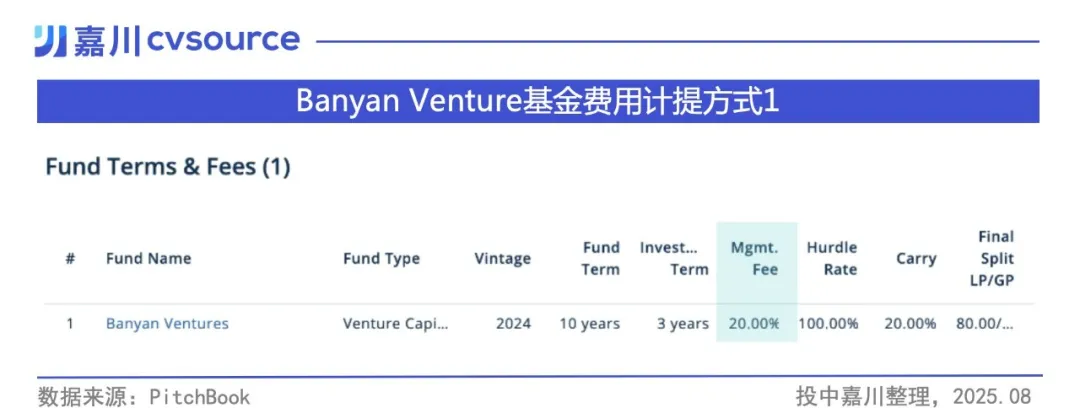
真猛,有VC管理费收到了20%丨投中嘉川
投中网· 2025-08-19 06:25
以下文章来源于超越 J Curve ,作者杨博宇 超越 J Curve . 用数据延伸你的阅读 将投中网设为"星标⭐",第一时间收获最新推送 "在基金达到100%的收益率门槛后,GP才能分享超额收益部分的20%。" 作者丨杨博宇 编辑丨Sissi 来源丨超越 J Curve 国内VC已经进入到按实缴计费的时代。这是投中研究院尽调了172家新设基金得出的结论。 数据显示,2024年之前成立的基金,按照实缴计费还只是少数;但是在2024年之后,按照实缴金额计费的基金已经超过7成以上。这意味着假如基金分 三期CALL款,相比于此前按照认缴模式,首期收取的管理费已经缩减到原来的三分之一。 我们将调研数据与美国市场进行了比较。发现虽然管理费费率相差不大,但是按照实缴与认缴进行提计,造成的基数差异越来越明显。 值得一提的是,我们在对比中还发现,欧美市场存在一批管理费在10%以上的风险投资基金。虽然不是主流机构,但也体现了海外市场的多样性尝试。 其中一家机构,更是收取高达20%的管理费,即使是放在海外市场,也让人感到意外。 01 美国竟然有VC收20%的管理费 聊国内调研数据之前,我们先看看海外的情况。 上述那家"奇葩"的 ...

真猛,有VC管理费收到了20%
Hu Xiu· 2025-08-18 08:41
国内VC已经进入到按实缴计费的时代。这是投中研究院尽调了172家新设基金得出的结论。 数据显示,2024年之前成立的基金,按照实缴计费还只是少数;但是在2024年之后,按照实缴金额计费的基金已经超过7成以上。这意味着假如基金分三 期CALL款,相比于此前按照认缴模式,首期收取的管理费已经缩减到原来的三分之一。 我们将调研数据与美国市场进行了比较。发现虽然管理费费率相差不大,但是按照实缴与认缴进行提计,造成的基数差异越来越明显。 值得一提的是,我们在对比中还发现,欧美市场存在一批管理费在10%以上的风险投资基金。虽然不是主流机构,但也体现了海外市场的多样性尝试。其 中一家机构,更是收取高达20%的管理费,即使是放在海外市场,也让人感到意外。 聊国内调研数据之前,我们先看看海外的情况。 上述那家"奇葩"的美国同行,名为榕树资本(Banyan),成立于2023年,创始人(也是唯一的GP)叫Sam Awrabi,是一名人工智能领域的咨询专家。 在机构的官方网站挂着他的个人简介: Sam Awrabi曾在三星旗下的MissingLink.ai公司工作,后加入Comet ML。据称他是这两家公司营收增长的关键人 物。特别 ...