
支付

Search documents
合利宝因四项违规被罚7488万元,支付牌照续展中止审查
Zhong Guo Jing Ying Bao· 2026-01-05 13:00
Core Viewpoint - The payment industry faces regulatory scrutiny as HeliBao, a subsidiary of Rindong Holdings, was fined approximately 74.89 million yuan for multiple violations identified by the People's Bank of China during an inspection period from September 1, 2022, to July 31, 2024 [1][2] Group 1: Regulatory Violations and Penalties - HeliBao was found to have committed four violations: breaching clearing management regulations, violating payment terminal and related business management rules, failing to comply with merchant management regulations, and not adhering to account management regulations [1] - The total penalty imposed on HeliBao includes a fine of 62,799,685.60 yuan and the confiscation of illegal gains amounting to 12,080,234.23 yuan, resulting in a total of 74,879,919.83 yuan [1] Group 2: Operational Status and License Renewal - HeliBao has completed the payment of the fines and reported that its production and operational activities are normal, having also completed self-inspection and rectification as required by the People's Bank of China [1] - The renewal of HeliBao's payment license is currently under a suspended review process, but all business operations continue as normal during this period [2] - HeliBao is in close communication with regulatory authorities to expedite the resolution of issues related to the suspended review, and will submit a report to the People's Bank of China once the circumstances for the suspension are resolved [2]



支付行业再出罚单 合利宝因四项违规被罚7488万元
Zhong Guo Jing Ying Bao· 2026-01-05 12:36
Core Viewpoint - Ren Dong Holdings (002647.SZ) announced that its subsidiary, Guangzhou Heli Bao Payment Technology Co., Ltd. (referred to as "Heli Bao"), received an administrative penalty decision from the People's Bank of China Guangdong Branch for violations of payment settlement management regulations during the inspection period from September 1, 2022, to July 31, 2024 [1] Group 1 - Heli Bao was found to have committed four violations: breaching clearing management regulations, violating payment acceptance terminal and related business management regulations, breaching merchant management regulations, and violating account management regulations [1] - The penalties imposed by the People's Bank of China included a warning, public criticism, a fine of 62,799,685.60 yuan, and the confiscation of illegal gains amounting to 12,080,234.23 yuan, totaling 74,879,919.83 yuan [1] - Ren Dong Holdings stated that Heli Bao has completed the payment of the fines and that its production and operational activities are normal, having fully completed self-inspection and rectification as required by the People's Bank of China [1] Group 2 - Currently, Heli Bao's payment license renewal is in a suspended review stage, but all business operations are proceeding normally [2] - Heli Bao is maintaining close communication with regulatory authorities and is actively working to resolve issues related to the suspension, with plans to report to the People's Bank of China once the circumstances for the administrative license suspension are resolved [2] - The progress of the payment license renewal is subject to industry regulatory policies and the approval of the competent authorities, with risks associated with potential delays due to policy factors or internal issues [2]
圣亚云鼎支付被罚45万元 公司股东一并遭罚 释放哪些信号
Bei Jing Shang Bao· 2026-01-05 12:31
Core Viewpoint - The recent administrative penalties in the payment industry signal a shift in regulatory practices, emphasizing accountability for major shareholders in payment institutions, as demonstrated by the fines imposed on 圣亚云鼎支付 and its second-largest shareholder, 黑龙江金鼎通信科技集团 [1][5]. Group 1: Regulatory Actions - The People's Bank of China (PBOC) fined 圣亚云鼎支付 450,000 yuan for violating payment settlement management regulations [3]. - 黑龙江金鼎通信科技集团 was also penalized with a fine of 350,000 yuan for the same violations, marking a notable shift in regulatory enforcement [3][4]. - This penalty is unprecedented as it includes sanctions against a shareholder rather than just the company's management [4]. Group 2: Company Background - 圣亚云鼎支付 obtained its payment license in July 2013 and specializes in internet payment services [4]. - As of July 2023, the company had its payment license renewal review suspended due to violations of regulatory requirements [4]. - The company has a registered capital of 150 million yuan, with 黑龙江金鼎通信科技集团 holding a 30% stake, while 亿利资源集团 holds 70% [4]. Group 3: Implications for the Industry - The new penalty framework indicates that shareholders with over 10% ownership or significant influence will face independent penalties for violations, breaking the previous norm of capital immunity [5]. - The implementation of the new regulations in May 2024 will enhance accountability for major shareholders and control persons in non-bank payment institutions [5]. - The industry is transitioning from "license arbitrage" to "governance competition," necessitating a complete overhaul of compliance practices to survive regulatory scrutiny [6].
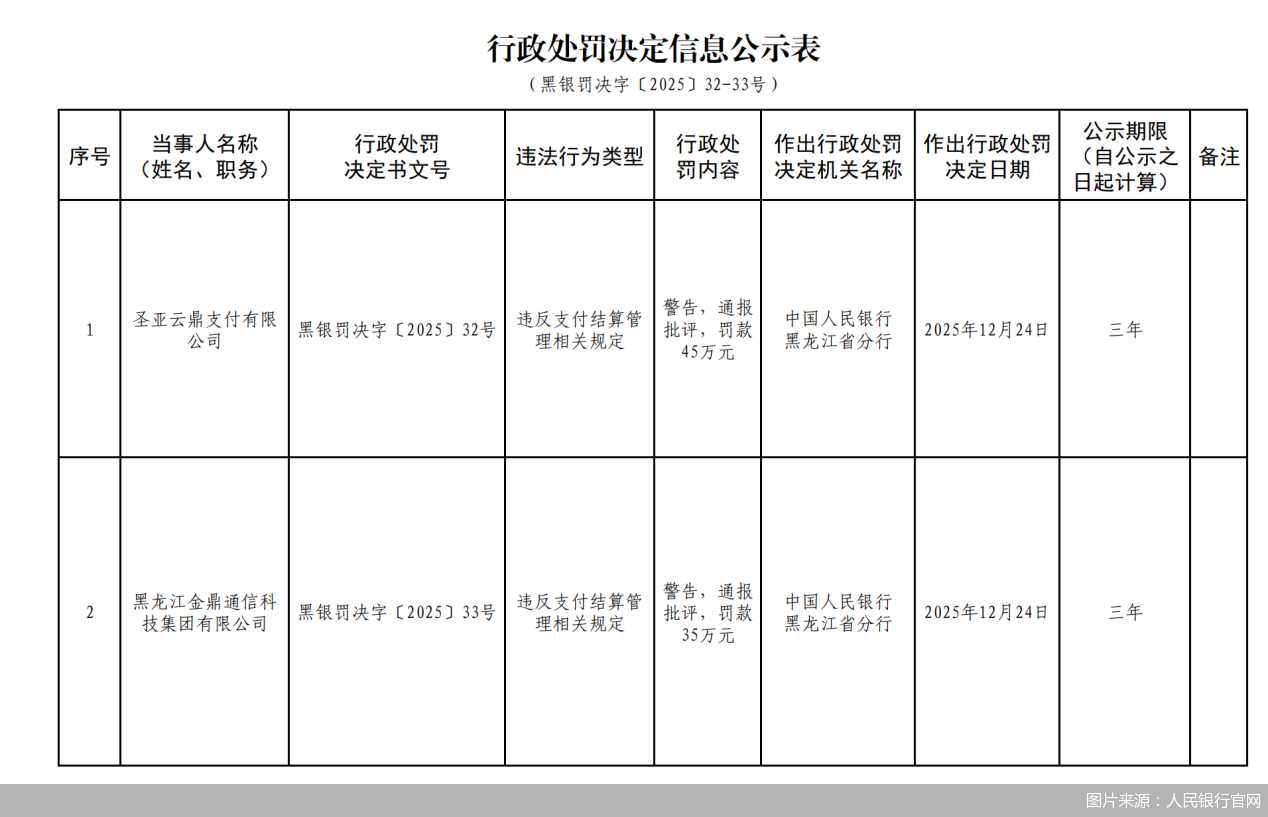
圣亚云鼎支付被罚45万元,公司股东一并遭罚,释放哪些信号
Bei Jing Shang Bao· 2026-01-05 11:01
Core Viewpoint - The recent administrative penalties in the payment industry signal a shift in regulatory practices, emphasizing accountability for major shareholders in addition to the companies themselves [5][6]. Group 1: Regulatory Actions - On December 31, 2025, the People's Bank of China (PBOC) Heilongjiang branch fined Shengya Yunding Payment Co., Ltd. 450,000 yuan for violating payment settlement management regulations [1][3]. - The second-largest shareholder of Shengya Yunding, Heilongjiang Jinding Communication Technology Group Co., Ltd., was also penalized with a fine of 350,000 yuan for the same violations [3][4]. Group 2: Company Background - Shengya Yunding Payment was established in July 2013 and holds an internet payment license. As of July 2023, its license renewal review was suspended due to non-compliance with regulatory requirements [4]. - The company has a registered capital of 150 million yuan, with Jinding Communication holding 30% of the shares and Yili Resources Group holding 70% [4]. Group 3: Implications of the Penalty - This penalty marks a precedent where both the company and its shareholders are held accountable, indicating a shift towards more stringent regulatory oversight in the payment industry [5]. - The new regulations, effective from May 2024, impose stricter responsibilities on major shareholders, including penalties for non-compliance and violations related to ownership management [5][6]. - The incident serves as a warning to other payment institutions to enhance compliance capabilities and adapt to the evolving regulatory landscape [6].
翠微股份2026年1月5日跌停分析
Xin Lang Cai Jing· 2026-01-05 02:01
Group 1 - The core issue for Cuiwei Co., Ltd. is its significant operational difficulties, with a net profit loss of 311 million yuan in the first three quarters, a 10.01% decline in sales revenue, and a 5.04 percentage point drop in gross margin, indicating substantial pressure on the company's operations [2] - The company's subsidiary, Haike Rongtong, has a high asset-liability ratio of 96.21%, which poses financial risks and may affect the overall financial stability and liquidity of the company, leading to greater uncertainty in its development [2] - The payment industry is facing increased regulatory scrutiny and heightened market concentration, which creates survival pressure for small and medium-sized institutions. Although Cuiwei's third-party payment business has shown some improvement, it still faces intense competition that may limit its business expansion and profit margins [2] Group 2 - On January 5, 2026, Cuiwei Co., Ltd. hit the daily limit down at a price of 14.74 yuan, with a decline of 9.99%, resulting in a total market value of 12.085 billion yuan and a circulating market value of 9.869 billion yuan, with a total transaction amount of 317 million yuan [1] - Despite previous inflows of capital and being included in the Dragon and Tiger list, there may have been a large outflow of funds on January 5, 2026, leading to the stock price being pressured to the limit down. Technically, if the stock price had previously risen significantly, it could have accumulated many profit-taking positions, which, when market sentiment turned, could trigger a large sell-off [2]

评级不得用于宣传营销 支付机构迎新规
Xin Lang Cai Jing· 2026-01-04 16:57
Core Viewpoint - The People's Bank of China has introduced a new regulatory framework for non-bank payment institutions, effective from February 1, 2026, aimed at enhancing supervision and resource allocation in the payment industry [1][3]. Group 1: Regulatory Framework - The new regulation, titled "Measures for the Classification and Rating Management of Non-Bank Payment Institutions," includes seven modules for classification: corporate governance, business norms, reserve fund management, user rights protection, system security, anti-money laundering measures, and operational stability [1][3]. - The classification rating will occur annually, with results determining regulatory focus and differentiated supervision based on the risk levels of payment institutions [3][6]. Group 2: Rating System - The rating system consists of five categories (A, B, C, D, E) and eleven levels, with a total score of 100 points. The business norms module has the highest weight at 25 points, while system security, anti-money laundering measures, and operational stability each account for 15 points [3][4]. - Institutions rated A will only need to rectify issues within a specified timeframe, while those rated D will face more stringent regulatory measures, including mandatory meetings with key personnel [4][5]. Group 3: Implications for the Industry - The new classification system is expected to lead to a more precise allocation of regulatory resources, focusing on higher-risk institutions, thereby promoting a competitive environment where stronger institutions can thrive [4][7]. - The regulation encourages payment institutions to proactively manage risks and improve compliance, with high-rated institutions likely to gain more market opportunities [4][6]. Group 4: Confidentiality and Compliance - The classification results will not be publicly disclosed and cannot be used for marketing purposes, ensuring that the focus remains on regulatory compliance rather than promotional activities [5][6]. - The regulation aims to shift the supervisory approach from reactive measures to comprehensive risk management throughout the operational lifecycle of payment institutions [7].
出海还是出局?支付巨头百亿增资备战,尾部牌照已注销107张
Di Yi Cai Jing· 2026-01-04 12:11
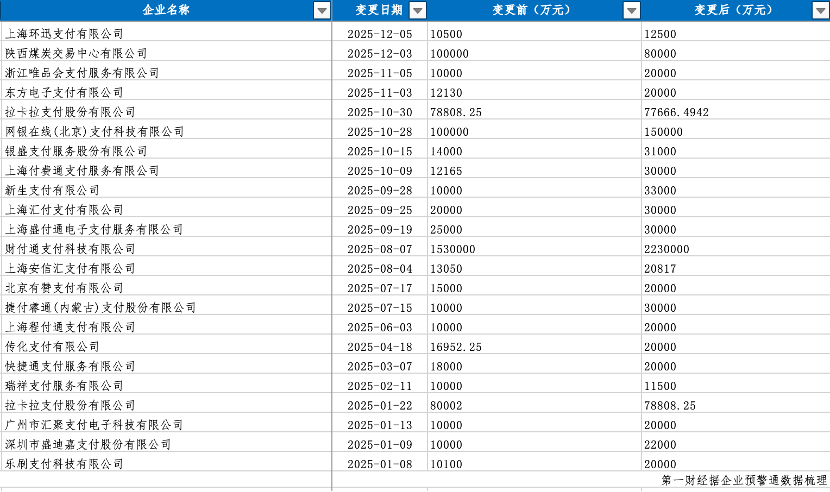
Core Viewpoint - The payment industry is experiencing a significant structural shift, characterized by a "Matthew Effect" where stronger players are gaining market share while weaker ones are exiting, accelerated by the end of the transition period for the "Non-Bank Payment Institutions Supervision Management Regulations" in 2025 [1][3]. Group 1: Industry Dynamics - The minimum registered capital requirement for non-bank payment institutions has been raised to 100 million yuan, leading to a stark contrast in the industry where major players are rapidly increasing their capital while smaller firms are exiting the market [1][3]. - As competition in the domestic market intensifies, "going abroad" is emerging as a clear growth direction for the industry, with some leading payment institutions reporting cross-border transaction growth exceeding 170% year-on-year [1][9]. - The number of licensed payment institutions has decreased to 164, with 107 payment licenses being revoked, predominantly affecting prepaid card licenses [3][7]. Group 2: Capital Increases - Over 20 payment companies have been approved for capital increases in 2025, with notable increases including Tenpay's capital rising to 22.3 billion yuan [4][6]. - Some smaller institutions are increasing their capital in a reactive manner to meet regulatory requirements, while larger firms are engaging in a "capital arms race" to exceed compliance thresholds [5][6]. - The highest capital increase in 2025 was recorded by Tenpay and Online Banking (Beijing) Payment Technology Co., with increases of 7 billion yuan and 500 million yuan, respectively [6]. Group 3: Cross-Border Opportunities - Cross-border payment services are becoming a significant growth engine for payment companies, with companies like Lakala and Lianlian Digital reporting substantial year-on-year increases in transaction volumes and revenues [9][10]. - The growth in cross-border payments is driven by the booming cross-border e-commerce sector, with China's cross-border e-commerce imports and exports reaching 2.63 trillion yuan in 2024, a 10.8% increase [9]. - The profit margins in cross-border payments are significantly higher than domestic rates, with fees in emerging markets being 3 to 5 times higher than domestic levels, presenting a lucrative opportunity for payment institutions [12]. Group 4: Challenges in Cross-Border Payments - Despite the opportunities, the cross-border payment landscape is fraught with challenges, including compliance risks, multi-market challenges, and the need for localized operations [2][13]. - The complexity of cross-border transactions often leads to inefficiencies, particularly for small and medium-sized enterprises that struggle with high costs and lengthy processes [10][11]. - Successful navigation of the cross-border payment landscape requires robust compliance capabilities and an understanding of local market risks, as well as the ability to offer value-added services [12][13].
“广州期货交易所国际影响力日益凸显,要素集聚体系全面成型”入选2025年度广州金融十大新闻
Qi Huo Ri Bao Wang· 2026-01-04 11:40
Group 1 - Guangzhou Futures Exchange's international influence is increasing, with a complete factor aggregation system. The exchange will list platinum and palladium futures and options on November 27, 2025, filling a gap in domestic risk management tools. By the end of 2025, the cumulative trading volume of futures and options reached 796 million contracts, with a total transaction value of 48.6 trillion yuan. The "Guangzhou price" for lithium carbonate and industrial silicon has become an important pricing reference for major resource countries like Brazil and Zimbabwe, further enhancing the exchange's international influence [3][4][6] - The number of futures companies and branches in Guangzhou reached 96 by the end of 2025, with a gradually improving futures ecosystem that integrates spot and futures trading [3][4] Group 2 - The "Nansha Financial 30 Measures" were launched, accelerating the construction of an international financial hub in the Guangdong-Hong Kong-Macao Greater Bay Area. This initiative includes the establishment of various financial innovation institutions and the expansion of pilot banks for FT accounts [2][4] - The establishment of the CITIC AIC headquarters marks a strategic breakthrough in Guangzhou's financial precision招商, with several licensed financial institutions approved to operate [4] Group 3 - Guangzhou is solidifying its position as the "National Investment Advisor First City" by developing the investment advisory industry, supported by national policy documents. The city has introduced the first policy measures to support AI investment advisory [5] - The Guangzhou Investment Advisor Conference attracted over 300 institutions and more than 1,000 industry representatives, showcasing the city's growing influence [5] Group 4 - The "Win-Win Plan" was launched to promote a virtuous cycle of "technology-industry-finance," with over 1,050 enterprises signing agreements worth over 40 billion yuan to support strategic industries [6][7] - In 2025, Guangzhou added 12 new domestic and foreign listed companies, raising nearly 20 billion yuan, and actively pursued merger and acquisition opportunities [7] Group 5 - Guangzhou's financial resources are deeply integrated with the "12218" modern industrial system, with a total loan balance of 8.67 trillion yuan by the end of 2025, a nearly 60% increase from the end of the 13th Five-Year Plan [8] - The city has established a capital market financing service platform, gathering over 1,000 key industry enterprises [8] Group 6 - Financial elements are accelerating their penetration into rural areas, with agricultural loans exceeding 420 billion yuan, ranking first in the province [9] - The "Guangxin Pre" consumption prepayment fund supervision platform was launched to address livelihood issues, covering seven major livelihood areas and significantly reducing consumer complaints [10] Group 7 - The introduction of a real estate trust property registration pilot program aims to provide institutional support for revitalizing existing assets, with the issuance of the first real estate trust pre-registration certificate in the country [11][12]
数字人民币与微信支付宝:支付领域的革新与共存
Sou Hu Cai Jing· 2026-01-04 03:57
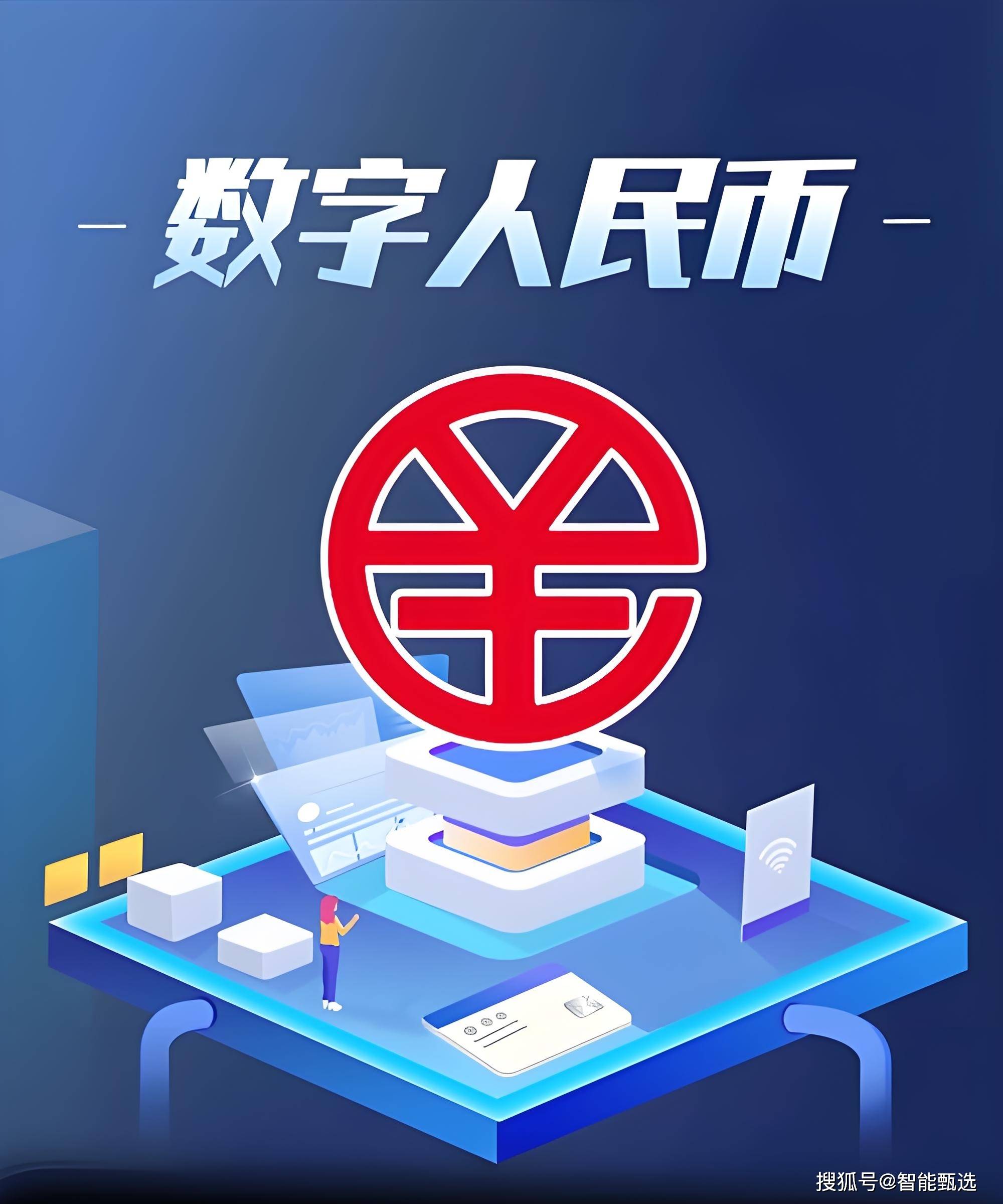
在数字化浪潮席卷全球的当下,支付方式正经历着前所未有的变革。数字人民币作为中国央行发行的法定数字货币,与微信、支付宝这两大第三方支付平 台,在支付领域形成了三足鼎立的格局。它们虽同为支付工具,但在本质属性、技术架构、使用场景、政策目标等多个维度上存在着显著差异,共同塑造着 中国支付市场的多元生态。 微信支付和支付宝则更注重场景深耕,尤其是在社交场景和小额转账中具有独特优势。微信支付与社交场景深度绑定,用户可以在聊天过程中直接完成转账 或发送红包,无需切换应用,这种无缝衔接的设计极大提升了在熟人之间进行小额资金往来时的便利性。例如,在群聊中点击"+"号,选择"红包",设定总 金额和数量,发送后群成员可即时领取,整个过程完全嵌入社交流程。支付宝则定位为综合性数字生活平台,提供了更为全面的金融及生活服务功能,适合 对理财、信贷有需求的用户。用户进入支付宝首页,可直接访问"余额宝"进行现金管理,查看收益情况;点击"花呗"入口,可查看当前额度、账单详情,并 设置还款提醒;通过"信用卡还款"功能,添加多张银行卡并设置自动还款计划,避免逾期影响信用记录。 数字人民币的政策目标旨在提升支付系统的效率和安全性,促进普惠金融发展 ...

这家互联网巨头“悄悄”推出稳定币支付
Xin Lang Cai Jing· 2026-01-04 01:29
Core Viewpoint - Trip.com has launched a stablecoin payment feature for global users, supporting USDT and USDC, aimed at enhancing its overseas travel business and expanding its financial ecosystem [1][2][6]. Group 1: Stablecoin Payment Launch - Trip.com has quietly integrated stablecoin payments without a formal announcement, allowing users to pay for hotel bookings and flights using USDT and USDC across multiple blockchains including Ethereum, Tron, Polygon, and Solana [2][6]. - The payment process is simplified, requiring only a name and email for hotel reservations, thus reducing barriers for users without traditional banking access [1][6]. Group 2: Strategic Intent and Market Opportunity - The introduction of stablecoin payments is part of Trip.com's long-term financial strategy, which began with its 2013 alignment with American Express and continued with acquiring a payment license in 2020 [2][6]. - Over 80% of the global population lacks international credit cards or bank accounts, creating a significant market opportunity for seamless cross-border payments, particularly in emerging markets like Southeast Asia, Latin America, and Africa [2][6]. Group 3: Regulatory Challenges - Analysts note that while stablecoin payments provide a pathway for users to bypass traditional financial barriers, they face regulatory challenges including anti-money laundering, consumer protection, and asset reserve transparency [3][7]. - Trip.com has previously faced scrutiny over personal information handling and credit collection practices, highlighting the need for robust risk management as it innovates in payment solutions [3][7]. Group 4: Competitive Landscape - Trip.com is not alone in exploring stablecoin payments; major companies like PayPal, Meta, Ant Group, and Bank of America have also ventured into this space [4][8]. - PayPal has launched its own PYUSD stablecoin, while Stripe and Shopify have developed solutions to facilitate stablecoin transactions for merchants, indicating a growing trend in the industry [4][8].

