科技股

Search documents
港股午评:恒指涨0.81%,有色板块大涨,中兴通讯劲升超11%
Ge Long Hui· 2025-12-01 04:09
港股上午盘三大指数集体上涨,恒生指数盘中一度冲高至1.24%,午间收涨0.81%重回26000点上方,国 企指数、恒生科技指数分别上涨0.64%及0.99%。大型科技股多数表现活跃,尤其是阿里巴巴涨超3%表 现相对强势;铜价新高,金价持续上涨,有色板块大爆发,五矿资源、中国黄金国际涨幅领先,苹果概 念股、半导体芯片股、港口及海运股普遍上涨。豆包手机助手已搭载在中兴的样机上,中兴通讯大涨超 11%表现抢眼。另外,中国央行首次重磅定调稳定币,加密货币概念股多数走低,泡泡玛特、蜜雪集 团、沪上阿姨等新消费概念股走低。(格隆汇) ...

黄金翻倍买入,石油够6个月,粮食够2年,囤硬通货释放什么信号
Sou Hu Cai Jing· 2025-11-30 09:25
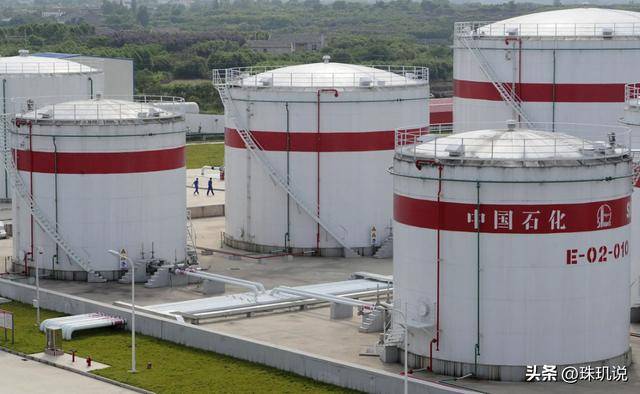
Group 1: Strategic Resource Accumulation - The article discusses the importance of national strategic resource accumulation, particularly in uncertain global conditions, to ensure wealth security for the country and its citizens [1][8] - China has significantly increased its gold reserves, reportedly more than doubling them over the past decade, with unreported purchases potentially exceeding public data by over ten times [3][5] - The accumulation of gold serves as a financial safety net, especially during times of geopolitical instability and fluctuating trust in the US dollar [5][13] Group 2: Oil and Food Security - In the first ten months of the year, China imported 3.462 billion barrels of oil, accounting for 10% of global supply, which is more than Saudi Arabia's daily production [9][11] - China is constructing 11 new oil storage facilities, ensuring that the country can maintain normal operations for six months without imports, surpassing the international safety standard of three months [11] - The country has established standardized grain storage facilities with a total capacity exceeding 730 million tons, sufficient to feed over 1.4 billion people for more than two years [13] Group 3: Investment Opportunities - The article emphasizes the need for individuals to align their investment strategies with national resource accumulation, focusing on stability and gradual growth [13][21] - Two investment categories are highlighted: high-dividend assets, which provide stable cash flow and lower risk, and technology stocks, particularly those aligned with national strategic plans [15][17] - The importance of a diversified investment approach is stressed, advising against concentrating all investments in one sector to mitigate risks [19][21]

芯片巨头,大涨!
Zheng Quan Shi Bao· 2025-11-29 00:46
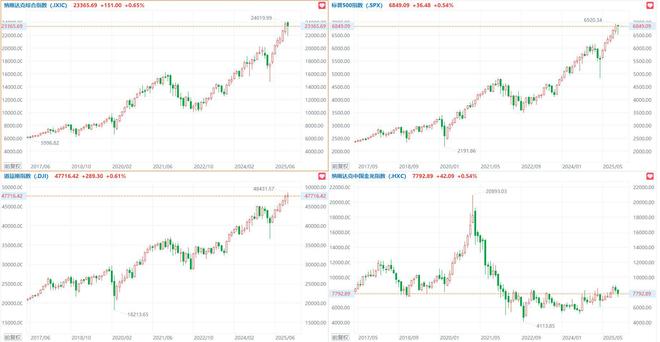
英特尔大涨超10%。 周五(11月28日),美国股市三大指数连续第五个交易日上涨。 截至收盘,道琼斯工业指数涨0.61%,报47716.42点;标普500指数涨0.54%,报6849.09点;纳斯达克综合指数涨 0.65%,报23365.69点。本周,道琼斯工业指数涨3.18%,标普500指数涨3.73%,纳斯达克综合指数涨4.91%。11月, 道琼斯工业指数涨0.32%,标普500指数涨0.13%,纳斯达克综合指数跌1.51%。 美股上市的大型科技股多数上涨,脸书涨超2%,亚马逊、微软涨超1%,特斯拉、苹果、谷歌小幅上涨;英伟达跌逾 1%。 芯片股普遍上涨,费城半导体指数涨1.82%,英特尔涨超10%,美光科技、ARM涨超2%,阿斯麦、超威半导体、高通 等涨超1%。 英特尔创9月18日以来最大单日涨幅。据媒体报道称,知名苹果分析师表示,预计英特尔将开始出货苹果公司最低端的 M系列处理器,最早可能在2027年开始。 黄金股表现强劲,泛美白银涨超7%,科尔黛伦矿业涨逾6%,美国黄金涨超5%,金罗斯黄金、埃尔拉多黄金涨超2%。 美国股市的反弹主要始于上周五,当时纽约联储主席、美联储联邦公开市场委员会(FOMC)副 ...

感恩节美股提前收官:三大指数齐飞,黄金白银飙升,降息预期“拉满”
Sou Hu Cai Jing· 2025-11-29 00:42
11月28日,受感恩节假期影响,美股提前3小时收盘,然而临近收盘时,三大指数却集体发力拉升,为 市场带来了一波惊喜。当日,三大指数连续第五个交易日实现集体收涨,其中纳指涨幅达0.65%,道指 上涨0.61%,标普500指数也有0.54%的涨幅。 从本周整体表现来看,三大指数的涨势更为显著。纳指本周累计上涨4.91%,道指累计上涨3.18%,标 普500指数累计上涨3.73%,市场呈现出强劲的上升态势。 科技股板块表现亮眼,多数个股纷纷走高。英特尔收盘时涨幅达到10%,创下自9月18日以来的最大单 日涨幅;Meta涨幅超过2%,AMD、亚马逊、奈飞、微软等科技巨头涨幅均超过1%,展现出科技股的 强大活力。 热门中概股也多数上涨,纳斯达克中国金龙指数上涨0.54%。其中,小鹏汽车涨幅超过3%,京东涨幅超 过1%,哔哩哔哩、蔚来、百度等也有小幅上涨,为中概股市场增添了一抹亮色。 国际金价和银价更是上演了一场"狂飙"大戏。现货黄金涨幅超过1%,成功站上4200美元/盎司的高位; 现货白银更是大幅上扬,向上触及56美元/盎司,大涨近5%,纽约期银也一度大涨超5%,金银市场的火 爆行情吸引了众多投资者的目光。 消息面上, ...
美股11月收官:标普500指数、道指月线7连涨!礼来飙升24.82%,英伟达大跌逾12%
Ge Long Hui· 2025-11-28 23:26
Core Insights - The S&P 500 index rose by 0.54% on the last trading day of November, marking a cumulative increase of 0.13% for the month, while the Dow Jones increased by 0.61% with a monthly gain of 0.32%. The Nasdaq, however, saw a rise of 0.65% but recorded a cumulative decline of 1.51% for November [1] Market Performance - The S&P 500 and Dow Jones both achieved a seven-month consecutive increase, while the Nasdaq experienced its first monthly decline in seven months [1] - Notable technology stocks showed varied performance in November: - Eli Lilly rose by 24.82%, marking its third consecutive month of gains and maintaining a market cap above $1 trillion - Alphabet Class A (Google A) increased by 13.87%, achieving its eighth consecutive month of growth - Broadcom rose by 9.02%, also for the eighth consecutive month - Micron Technologies increased by 5.68%, marking its fourth consecutive month of gains - Apple rose by 3.24%, achieving its sixth consecutive month of growth - Meta Platforms saw a slight decline of 0.06%, marking its fourth consecutive month of losses - Taiwan Semiconductor Manufacturing Company (TSMC) fell by 2.97% - Amazon decreased by 4.5% - Microsoft dropped by 4.8% - Tesla declined by 5.78% - Nvidia experienced a significant drop of 12.59% [1] Market Capitalization - The top ten companies by market capitalization in the U.S. stock market currently include Nvidia, Apple, Alphabet Class A, Alphabet Class C, Microsoft, Amazon, Broadcom, Meta, TSMC, and Tesla [1]





港股11月平稳收官 三大指数周线齐涨
Zhong Guo Xin Wen Wang· 2025-11-28 13:46
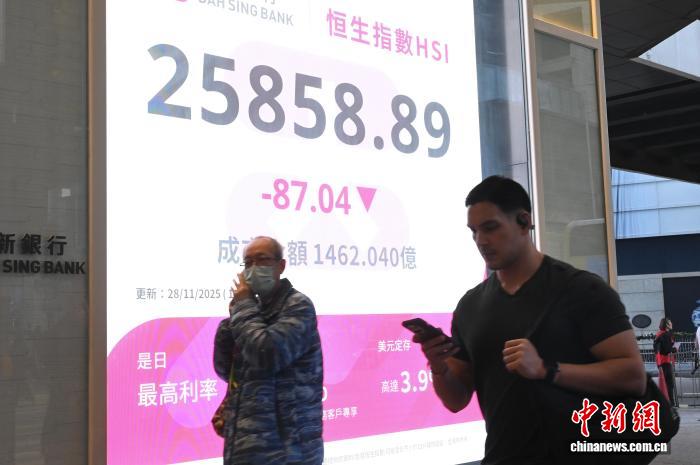
港股11月平稳收官 三大指数周线齐涨 中新社香港11月28日电 (记者 戴小橦)11月24日至28日全周,港股三大指数集体上涨。截至28日收盘, 香港恒生指数本周累计上涨2.53%,报25858.89点;香港恒生科技指数累计上涨3.77%,报5599.11点; 国企指数累计上涨2.36%,报9130.18点。 来源:中国新闻网 编辑:王永乐 广告等商务合作,请点击这里 本文为转载内容,授权事宜请联系原著作权人 中新经纬版权所有,未经书面授权,任何单位及个人不得转载、摘编或以其它方式使用。 关注中新经纬微信公众号(微信搜索"中新经纬"或"jwview"),看更多精彩财经资讯。 11月28日,香港恒生指数收市报25858.89点,下跌87.04点,跌幅为0.34%,全天成交金额为1462.04亿港 元。 中新社记者 李志华 摄 中国工商银行(亚洲)证券业务部分析员叶泽恒在接受中新社记者采访时表示,港股当周呈现先跌后升走 势,但恒生科技指数仍处于相对低位徘徊。由于科技股在恒生指数中权重较高,其表现转强将成为推动 港股向上突破的关键因素,若科技板块持续好转,有望带动大市进一步上行。 回顾全月,港股11月平稳收官,恒生 ...
聂庆平:全球资本市场面临的挑战与前景展望|资本市场
清华金融评论· 2025-11-28 10:22
Group 1 - The article discusses the significant impact of US-China geopolitical competition on global capital markets, highlighting the contrasting roles of the US as a mature stock market and China as an emerging market [3][7]. - The US initiated a trade war and tariff battle, which has led to substantial declines in the US stock market, particularly affecting major technology stocks [5][6]. - The TACO trading strategy emerged as a response to the cyclical nature of Trump's tariff threats, allowing investors to buy during market panic and sell when policies soften [5]. Group 2 - China has implemented strong countermeasures in response to the US's trade actions, including a series of measures to stabilize its capital market, such as providing sufficient re-lending support from the central bank [6]. - The article outlines the historical context of financial crises triggered by US trade wars in other countries, emphasizing that only China has effectively countered the US's trade aggression [6]. - The US financial market faces severe challenges, including extensive money printing by the Federal Reserve, which has led to a balance sheet of $9 trillion due to quantitative easing [9]. Group 3 - The US has experienced a significant increase in fiscal deficits and national debt since 2008, with the national debt reaching approximately $37 trillion by September 2025 [10]. - The article notes that the US capital market is overvalued, with the overall market P/E ratio exceeding 20, and specific indices like the S&P 500 and Nasdaq showing even higher ratios, indicating potential risks for a market correction [11]. Group 4 - China's stock market is evolving towards long-term and value investing, with a series of measures introduced to boost market confidence and stabilize valuations [12]. - The article categorizes China's initiatives into three phases: initial measures to boost market activity, quantitative support for high-quality economic development, and encouraging state-owned enterprises to invest in blue-chip stocks [13].

港股早评:三大指数高开,科技股普涨,有色金属股继续活跃
Ge Long Hui· 2025-11-28 01:27
Core Viewpoint - US stock market closed for Thanksgiving, while European stocks saw a broad increase overnight, indicating positive market sentiment [1] Group 1: Market Performance - Hong Kong's three major indices opened higher, with the Hang Seng Index up 0.25%, the National Index up 0.34%, and the Hang Seng Tech Index up 0.43% [1] - Major technology stocks experienced slight gains, with Alibaba, Baidu, JD.com, and Meituan all rising by less than 0.9% [1] Group 2: Sector Performance - Non-ferrous metal stocks continued their upward trend, with Chalco International rising by 6%, and both Zhaojin Mining and Zijin Mining also showing gains [1] - Semiconductor stocks, dairy product stocks, and lithium battery stocks generally increased [1] - Sportswear stocks, home appliance stocks, and gambling stocks declined [1]
港股收评:恒指震荡微涨0.07%,科技股分化,汽车股、有色金属股活跃
Ge Long Hui· 2025-11-27 08:22
Core Viewpoint - The Hong Kong stock market experienced a volatile trading session with mixed performances across major indices, reflecting cautious market sentiment [1] Group 1: Market Indices Performance - The Hang Seng Technology Index fell by 0.36%, ending its consecutive gains, while the Hang Seng Index and the National Enterprises Index saw slight increases of 0.07% and 0.03% respectively, with intraday highs reaching over 0.7% [1] Group 2: Sector Performance - Large technology stocks showed divergent trends, with Xiaomi rising over 2% and JD.com increasing by over 1%, while Alibaba dropped nearly 3% and Tencent and Baidu fell by more than 1% [1] - The Ministry of Commerce's initiative to expand automobile consumption led to active trading in automotive stocks, with Yongda Automotive surging over 10% [1] - The probability of a Federal Reserve rate cut in December has increased, resulting in a collective rise in gold, copper, and other non-ferrous metal stocks, with China Nonferrous Mining rising over 6% [1] - Most sectors, including paper, gaming, education, new consumption concepts, insurance, and aviation stocks, experienced gains [1] Group 3: Underperforming Sectors - Conversely, domestic property stocks saw an increase in losses in the afternoon, while steel, building materials, and cement stocks generally declined [1] - Semiconductor stocks showed a notable intraday rise, with leading company SMIC closing down nearly 1% [1] - Heavy machinery, mobile gaming, and military industry stocks mostly exhibited weak performance [1] - The first-day listing of a quantitative trading firm saw a significant rise of 88% [1]
大佬先撤了
投资界· 2025-11-27 07:17
Core Viewpoint - The article discusses the recent trends in the stock market, particularly focusing on the significant sell-offs by prominent investors like Huang Renxun and Bill Gates, amidst a booming AI-driven market. It highlights the implications of these actions for potential investment strategies and market sentiment [3][4][9]. Market Performance - The Dow Jones Industrial Average reached a historical high of 48,431.57 points, marking a 46% increase since the beginning of 2023, which is considered the start of the current bull market [3]. - The Nasdaq index also hit a record high of 24,019.99 points, reflecting a more than 131.25% increase since the start of 2023 [3]. Key Technology Stocks - Major tech companies have significantly contributed to the bull market, with Microsoft and Apple both doubling their stock prices, each reaching a market capitalization of around $4 trillion [4]. - Nvidia has seen an extraordinary increase of over 1300%, becoming the first company to surpass a market cap of $5 trillion, with its founder Huang Renxun becoming the richest Chinese individual globally [4]. Notable Sell-offs - Huang Renxun and Bill Gates have both been reducing their stakes in their respective companies, Nvidia and Microsoft, raising questions about their future outlooks [4][9]. - The SEC's "Form 13F" filings revealed that several prominent investors, including Warren Buffett, have made significant adjustments to their portfolios, including selling off shares of Apple and Nvidia [4][5]. Berkshire Hathaway's Strategy - Berkshire Hathaway has reduced its Apple stock holdings by 15% in Q3 2025, with a market value decline exceeding $10 billion [6]. - The company has recently invested in Alphabet (Google), acquiring 17.85 million shares valued at $4.34 billion, indicating a strategic shift towards tech stocks that are perceived to have better growth potential [7]. Valuation Metrics - Comparing revenue growth, Apple reported $102.47 billion in Q4 2025 with a growth rate of 7.94%, while Alphabet reported $102.34 billion in Q3 2025 with a growth rate of 16% [7]. - In terms of price-to-earnings (P/E) ratios, Alphabet's P/E is below 28, making it a more attractive investment compared to Apple's P/E of over 35 [8]. Investor Behavior - Huang Renxun has been consistently selling Nvidia shares, reducing his holdings to below 70 million shares, with significant sales occurring around the stock's peak price [10]. - Bill Gates' foundation has sold 17 million shares of Microsoft, reducing its stake by 65%, indicating a strategic reallocation of assets [12][13]. Other Notable Investors - Investor Duan Yongping has also reduced his Nvidia holdings by 38.04%, reflecting a cautious approach to the current market conditions [14][15]. - Son Masayoshi has completely exited his position in Nvidia, marking a significant shift in his investment strategy after previously holding a substantial stake [15][16].