
飞机制造

Search documents
陆家嘴财经早餐2025年6月15日星期日
Wind万得· 2025-06-14 22:18
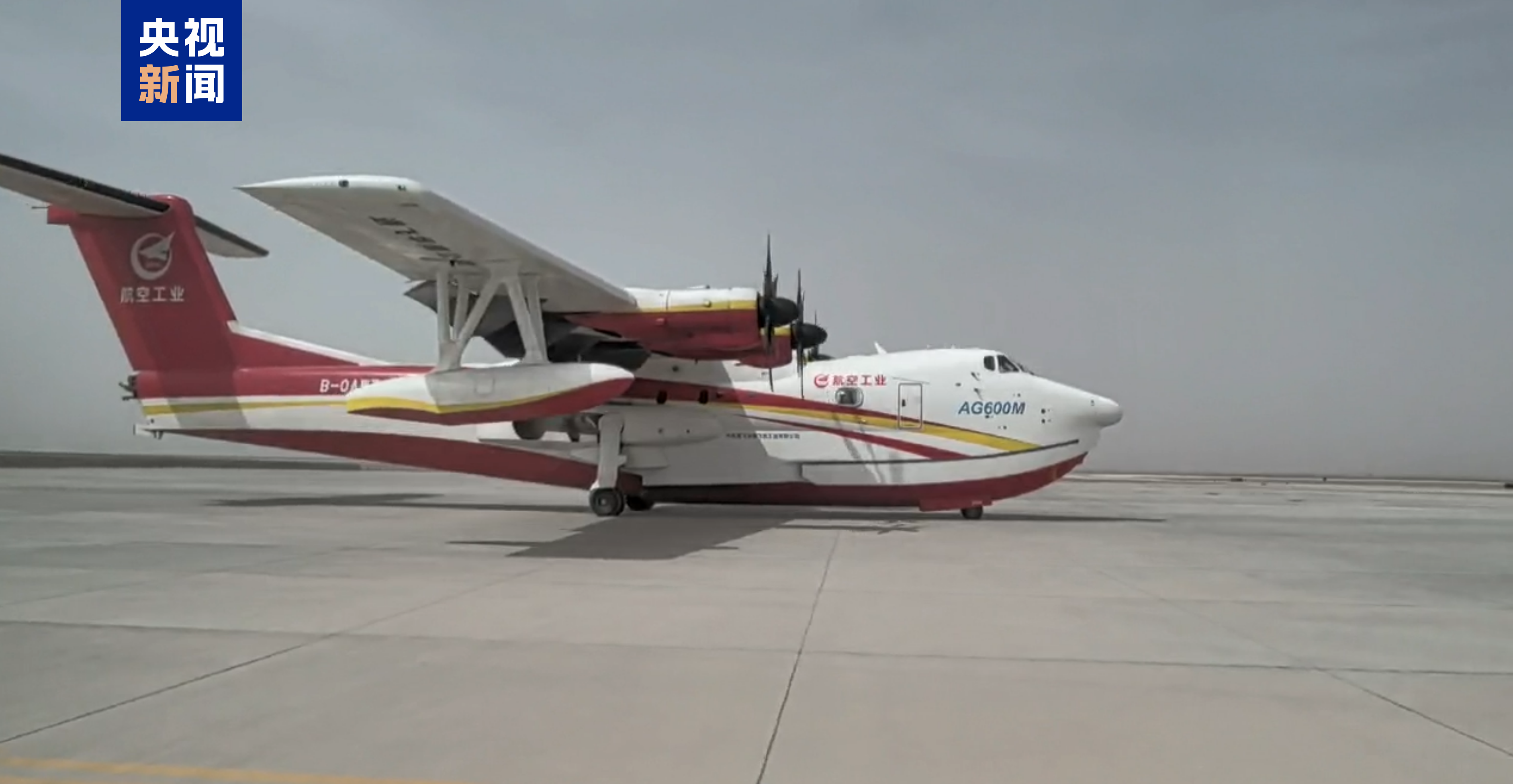
Group 1 - The Chinese government expresses strong opposition to Israel's military actions against Iran, emphasizing the need for dialogue and political solutions to international disputes [2][3] - The World Trade Organization meeting highlights China's criticism of the U.S. for its misleading narratives regarding service trade and calls for adherence to multilateral rules [3] - Boeing resumes aircraft deliveries to Chinese airlines, marking a significant step in U.S.-China trade relations after previous disruptions due to tariffs [4] Group 2 - New regulations for individual business registration in China will take effect on July 15, allowing for multiple operating locations and online business registrations [5] - The Ministry of Industry and Information Technology introduces management measures for technology incubators, aiming to enhance support for emerging industries [5] - The China Securities Regulatory Commission imposes penalties on stock market manipulation, highlighting ongoing efforts to maintain market integrity [6] Group 3 - China successfully launches the "Zhangheng-1" satellite, enhancing its capabilities in monitoring natural disasters [8] - The AG600 amphibious aircraft enters mass production, marking a milestone in China's emergency rescue equipment development [8] - Hunan Province outlines plans for developing smart factories, aiming to establish over 100 basic-level smart factories by 2027 [9] Group 4 - Trump Media and Technology Group announces the SEC's approval of its Bitcoin treasury deal registration, although no immediate financing plans are in place [10] - GAC Group commits to ensuring dealer rebates are fulfilled within two months, supporting the healthy development of the automotive industry [11] - Trump's financial disclosure report reveals significant income from real estate and a cryptocurrency platform, indicating ongoing financial interests [12]


一周之内两大消息接连传来,中国“鲲龙”太硬核!
Qi Lu Wan Bao· 2025-06-14 08:12
Core Insights - The AG600 "Kunlong" amphibious aircraft has officially entered mass production after receiving a production license from the Civil Aviation Administration of China on June 11, marking a significant milestone in China's emergency rescue aviation equipment system [2][16] - The successful test flights conducted at an airport with an elevation exceeding 2900 meters validated the aircraft's performance under complex weather conditions, including takeoff, climb, and landing capabilities [4][16] Group 1: Aircraft Specifications - The AG600 "Kunlong" has a length of 38.9 meters, a wingspan of 38.8 meters, and a height of 11.7 meters, making it the largest civil amphibious aircraft in terms of takeoff weight, which reaches 60 tons [8][12] - The aircraft's design allows for a range of 4500 kilometers, enabling it to perform rescue missions quickly from various locations, such as flying from Mohe in Heilongjiang to Sanya in Hainan [12][16] Group 2: Technological Advancements - The AG600 "Kunlong" integrates both aircraft and vessel characteristics, featuring a streamlined design that reduces air resistance during high-speed flight and enhances stability during water operations [10][16] - The aircraft represents a significant breakthrough in China's large aircraft and special-purpose aviation development, filling a gap in emergency rescue aviation equipment and establishing a core technology system for large amphibious aircraft [14][16]
热点问答丨印度坠机事故已知信息几何
Xin Hua Wang· 2025-06-13 08:43
Group 1: Incident Overview - An Indian Airlines Boeing 787-8 aircraft crashed shortly after takeoff from Ahmedabad Airport, resulting in 241 confirmed fatalities out of 242 onboard, with one survivor [1][3] - The flight AI171 was en route to London Gatwick when it lost altitude and exploded, creating a large fireball and thick black smoke [1] - The aircraft crashed into a densely populated area, specifically hitting a dormitory of a medical college [1] Group 2: Casualties - The flight carried 230 passengers and 12 crew members, including 169 Indian nationals, 53 British nationals, 1 Canadian, and 7 Portuguese [2] - There were 11 children and 2 infants among the passengers [2] - Local police reported that the crash also resulted in ground casualties, bringing the total number of fatalities to at least 265 [4] Group 3: Aircraft Safety Record - The Boeing 787-8, known for its low fuel consumption, has been in commercial operation since late 2011 and was delivered to Indian Airlines in January 2014, serving for over 11 years [5] - This incident marks the first fatal accident involving the Boeing 787-8 model [5] - The Boeing 787 series has faced multiple safety issues in the past, including battery overheating incidents in 2013 and technical failures leading to injuries in subsequent years [5] - Recent congressional hearings criticized Boeing's safety culture, with allegations of concealed safety risks during the production of the 787 and 777 models [6]

“鲲龙”AG600在高高原机场完成测试飞行
news flash· 2025-06-13 07:32
Core Viewpoint - The successful test flight of China's independently developed amphibious aircraft "Kunlong" AG600 at an altitude of 2905.4 meters marks a significant breakthrough in the country's aviation industry, demonstrating its excellent performance in extreme environmental conditions and high-altitude operations [1] Group 1 - The AG600 completed its test flight at Huatugou Airport, which is located at an elevation of 2905.4 meters [1] - This achievement highlights the advancements in China's aviation technology, particularly in complex weather conditions and high plateau operations [1] - The successful test flight validates the AG600's capabilities in extreme environments, showcasing the progress of China's aerospace industry [1]
美股前瞻 | 三大股指期货齐跌 甲骨文(ORCL.US)绩后大涨
智通财经网· 2025-06-12 11:41
Market Overview - US stock index futures are all down, with Dow futures down 0.62%, S&P 500 futures down 0.47%, and Nasdaq futures down 0.46% [1] - European indices also show declines, with Germany's DAX down 1.29%, UK's FTSE 100 down 0.05%, France's CAC40 down 0.74%, and the Euro Stoxx 50 down 0.97% [2][3] - WTI crude oil is down 1.83% at $66.90 per barrel, while Brent crude is down 1.75% at $68.55 per barrel [3][4] Bond Market Insights - Concerns over long-term US Treasury demand are rising, with a key auction of $22 billion in 30-year bonds being closely watched [5] - The "new bond king," Jeffrey Gundlach, warns that the US debt burden may lead to a flight from dollar assets, suggesting that long-term Treasuries are no longer a safe haven [6] Cryptocurrency and Stock Market Analysis - Fundstrat's Tom Lee indicates that while the S&P 500 is close to its historical high, extreme short positions could lead to a potential "waterfall decline" [7] - Bitcoin's recent highs may signal a bullish trend for the S&P 500, with Lee suggesting a focus on oversold stocks, tech giants, and small-cap stocks [7] Oil and Gas Industry Outlook - Fitch Ratings has downgraded the global oil and gas outlook from "neutral" to "negative," citing increased tariffs and supply growth as factors suppressing demand [8] Company-Specific Developments - Oracle (ORCL.US) reports a 11% year-over-year revenue increase, with cloud infrastructure revenue expected to grow over 70% in the next fiscal year [9][10] - Boeing (BA.US) shares drop over 7% following a crash of an Air India Boeing 787, which could be a significant incident for the manufacturer [11] - OpenAI partners with Google (GOOGL.US) for cloud services, indicating a strategic shift in resource acquisition [11] - Bank of America (BAC.US) CEO warns of a potential 25% drop in investment banking revenue due to policy uncertainties [12] - Deutsche Bank (DB.US) CEO indicates weaker-than-expected trading and advisory business performance [12] - Uxin (UXIN.US) reports a 142% increase in retail transaction volume, with revenue up 58% year-over-year [13] - Oklo (OKLO.US) announces a $400 million stock offering after securing a significant contract, but shares drop over 5% [14] - Voyager Technologies (VOYG.US) sees a stock price increase of over 7% following a successful IPO and funding from NASA [14]






“鲲龙”AG600 珠海量产
Guang Zhou Ri Bao· 2025-06-11 20:14
Core Viewpoint - The AG600 amphibious aircraft, the largest of its kind globally, has received production certification from the Civil Aviation Administration of China, marking its entry into mass production and highlighting its potential for various emergency and rescue operations [1][2]. Group 1: Aircraft Specifications and Capabilities - The AG600 has a maximum range of 4,500 kilometers and can operate in sea conditions with waves up to 2 meters, capable of carrying and dropping 12 tons of water for firefighting [1][3]. - It can perform low-altitude water retrieval in as little as 20 seconds and is designed for precision water dropping at heights of 30 to 50 meters above tree canopies [3]. - The aircraft is also suitable for mid-sea rescue operations, capable of reaching areas over 300 nautical miles from the coast and rescuing up to 50 individuals in one mission [3]. Group 2: Development and Innovation - The development of the AG600 involved 15 years of research and innovation, overcoming significant technical challenges, particularly in its landing gear design and operational stability [4][5]. - The aircraft's components are entirely sourced from domestic suppliers, achieving a 100% localization rate for critical systems, making it the most domestically produced modern civil aircraft in China [5]. Group 3: Regional Impact and Future Prospects - The AG600's production in Guangdong reflects the province's growing aviation industry, which has seen significant milestones since the early 2000s, including the establishment of various aviation projects and parks [7]. - Guangdong aims to develop a comprehensive low-altitude economy platform, enhancing capabilities in areas such as emergency rescue and urban air mobility, positioning itself as a leading hub for aviation innovation [7]. Group 4: Stakeholder Perspectives - Stakeholders from various regions, including Macau and Jilin, have expressed optimism about the AG600's capabilities in enhancing emergency response and firefighting efforts, indicating its strategic importance in regional disaster management [8].
我国5月份消费需求持续回暖
Bei Jing Qing Nian Bao· 2025-06-11 08:18
Group 1 - The Consumer Price Index (CPI) in May showed a year-on-year decrease of 0.1%, with the core CPI, excluding food and energy, rising by 0.6%, an increase of 0.1 percentage points from the previous month [1][2] - The decline in CPI was primarily influenced by a 1.7% decrease in energy prices, which accounted for nearly 70% of the total decline [2] - Food prices decreased by 0.2%, with seasonal vegetables seeing a price drop of 5.9%, while prices for eggs, pork, and poultry slightly decreased by 0.3% to 1.0% [2] Group 2 - Consumer demand is recovering, with hotel accommodation prices rising by 4.6%, the highest increase for the same period in nearly a decade [3] - Core CPI's year-on-year increase of 0.6% reflects positive changes in certain sectors, with industrial consumer goods prices, excluding energy, also rising by 0.6% [3] - Prices for high-tech products, such as integrated circuits and wearable devices, have increased, indicating a growing demand in these sectors [4] Group 3 - The Producer Price Index (PPI) decreased by 0.4% month-on-month and 3.3% year-on-year, but some sectors are showing positive price trends [4] - The prices of photovoltaic equipment and lithium-ion batteries have seen a narrowing of their year-on-year decline, indicating improved supply-demand dynamics in the new energy sector [5] - The outlook for prices suggests that strong holiday tourism demand may further release consumption potential, leading to an increase in related service prices [5]
宏观通胀系列九:5月CPI维持回落,PPI降幅走扩
Hua Tai Qi Huo· 2025-06-10 06:06
期货研究报告|宏观数据 2025-06-10 5 月 CPI 维持回落,PPI 降幅走扩 ——宏观通胀系列九 研究院 徐闻宇 xuwenyu@htfc.com 从业资格号:F0299877 投资咨询号:Z0011454 投资咨询业务资格: 证监许可【2011】1289 号 宏观事件 6 月 9 日,国家统计局公布数据显示: 2025年 5月份,全国居民消费价格同比下降 0.1%。其中,城市持平,农村下降 0.4%; 食品价格下降 0.4%,非食品价格持平;消费品价格下降 0.5%,服务价格上涨 0.5%。 1—5 月平均,全国居民消费价格比上年同期下降 0.1%。 2025 年 5 月份,全国工业生产者出厂价格同比下降 3.3%,环比下降 0.4%;工业生产 者购进价格同比下降 3.6%,环比下降 0.6%。1—5 月平均,工业生产者出厂价格和购 进价格比上年同期均下降 2.6%。 核心观点 ■ 5 月 CPI 同比微降,PPI 降幅走扩 CPI:2025 年 5 月全国居民消费价格(CPI)同比微降 0.1%,能源价格受国际油价下行 影响环比降 1.7%,贡献近七成降幅;食品价格因鲜菜季节性供应增加降 0. ...
5月核心CPI涨幅扩大 居民消费需求正逐步回暖
Zheng Quan Shi Bao· 2025-06-09 17:53
Group 1 - The Consumer Price Index (CPI) decreased by 0.2% month-on-month and 0.1% year-on-year in May, while the Producer Price Index (PPI) fell by 0.4% month-on-month and 3.3% year-on-year, indicating a continued impact of consumption-boosting policies [1][2] - Energy prices were the main factor dragging down both the CPI and PPI, with energy prices decreasing by 6.1% year-on-year and 1.7% month-on-month, significantly affecting the overall CPI decline [1] - Core CPI, excluding food and energy, increased by 0.6% year-on-year, with hotel accommodation and tourism prices rising by 4.6% and 0.8% respectively, indicating a recovery in certain sectors [1] Group 2 - PPI data showed marginal improvement in terminal consumer demand, with life goods prices stabilizing and some manufacturing prices narrowing their year-on-year decline [2] - High-tech product demand is expanding, with prices in sectors like integrated circuit packaging and testing, aircraft manufacturing, and wearable smart devices increasing by 3.6%, 3.0%, and 2.1% respectively [2] - Economic analysts predict a likely upward trend in the price index, with CPI expected to gradually recover and PPI showing signs of marginal improvement due to previous consumption-boosting policies [2]