
在线教育

Search documents
华泰证券今日早参-20251128
HTSC· 2025-11-28 01:49
Macro Insights - In October 2025, industrial enterprises' profits fell to -5.5% year-on-year from 21.6% in September, while revenue growth also declined to -3.3% from 3.1% [2] - The cash flow of industrial enterprises continues to improve, with cash and short-term investments rising to 5.3% year-on-year in September from 5% in August [2] Fixed Income Analysis - The report discusses the transition of China's economy into a new phase of old and new driving forces, emphasizing the need for a new framework for fundamental analysis [2] Consumer Sector Strategy - The real estate cycle, particularly changes in real estate prices, is crucial for assessing the recovery of consumption in 2026, with expectations of structural stabilization in housing prices [3] - The current allocation and valuation of the essential consumer sector are at historical lows, indicating a high probability of a bottoming out, suggesting opportunities for investment [3] Aerospace and Defense - The report highlights the advancements in reusable rocket technology, with China actively developing rockets like Zhuque-3 and Long March 12A, which are expected to enhance space transportation capacity and reduce costs [5] - The success of reusable rockets is anticipated to accelerate the construction of large satellite constellations, particularly in satellite internet [5] Company-Specific Insights - BOSS Zhipin (2076 HK) is rated "Buy" with a target price of 107.6 HKD, benefiting from its leading position in online recruitment and expected steady profit growth [6] - Advantest (6857 JP) is also rated "Buy" with a target price of 23,000 JPY, poised to benefit from the increasing complexity of AI chips and the growth of the semiconductor testing market [6] - Gaotu Group (GOTU US) reported a revenue of 1.58 billion CNY for Q3 2025, a year-on-year increase of 30.7%, with a focus on improving profitability through AI technology [9] - Atour (ATAT US) achieved a revenue of 2.628 billion CNY in Q3 2025, reflecting a year-on-year growth of 38.4%, with a strong outlook for both hotel and retail segments [10] - Zhongjiao Holdings (839 HK) reported a revenue of 7.363 billion CNY for FY25, indicating a year-on-year growth of 11.9%, transitioning towards a focus on internal growth and value enhancement [10]


东方甄选人均年薪曝光:83.96万元
Sou Hu Cai Jing· 2025-11-28 01:32
Core Insights - The average annual salary for employees at Dongfang Zhenxuan in the fiscal year 2025 is 839,600 yuan, which is 2.02 times higher than the salary at the live e-commerce company Jia Ge Pengyou Holdings for the fiscal year 2024 [1] - New Oriental faced significant challenges due to the "double reduction" policy implemented in July 2021, which severely impacted its K9 tutoring business that accounted for 60% of its revenue [1] - Following a reduction in employee numbers, the average salary at New Oriental and New Oriental Online increased significantly, with New Oriental's average management expenses reaching 234,300 yuan in fiscal year 2022 and New Oriental Online's average salary hitting 348,600 yuan [1] - In fiscal year 2023, Dongfang Zhenxuan's revenue surged to 4.51 billion yuan, leading to a collective salary increase, with the average annual salary reaching 375,000 yuan [1] - Despite a 32.7% year-on-year decline in revenue to 4.39 billion yuan in fiscal year 2025, the average salary increased to 839,600 yuan due to a reduction of nearly 500 employees [1] Company Specifics - Currently, only Yu Minhong from New Oriental receives an annual salary in the millions, which is approximately 87 times the average management expense per employee at New Oriental and nearly 13 times the average salary at Dongfang Zhenxuan [2] - Yu Minhong has been publicly criticized by Luo Yonghao for being overly frugal, to which he responded by emphasizing his responsibility to protect Dongfang Zhenxuan and its hosts [2]

高途Q3财报亮眼:营收大涨30.7%,亏损大幅收窄,线下布局成新引擎?
Sou Hu Cai Jing· 2025-11-28 01:21
Core Insights - The core viewpoint of the article highlights the significant financial improvements of Gaotu (NYSE: GOTU) in Q3 of FY2025, showcasing a strategic shift in the online education sector from rapid growth to a more refined approach [3][9]. Financial Performance - Gaotu reported revenue of 1.579 billion yuan, representing a year-on-year growth of 30.7% [3] - The net loss narrowed significantly to 147.1 million yuan, down from 471.3 million yuan in the same period last year, indicating a nearly 70% reduction in losses [3] Strategic Transformation - The company has transitioned from an "online" model to a "blended online and offline" approach, with a focus on personalized exam preparation and a five-tier teaching system [3] - The exam preparation business contributed nearly 60% of total revenue, with offline training camp enrollment in second and third-tier cities increasing by 23% quarter-on-quarter [3] Cost Control and Market Confidence - A key factor in the reduction of losses was effective cost control, with marketing expense ratios decreasing by 5.2 percentage points [5] - Gaotu completed an $80 million stock buyback ahead of schedule and initiated a new $100 million plan to bolster market confidence [5] International Education Growth - The international education segment, including study abroad services and language training, saw revenue growth exceeding 65% year-on-year, significantly outpacing the overall company growth [6] - The company has established partnerships with overseas institutions and introduced a one-stop solution for language improvement and application guidance [6][7] Future Outlook - For FY2026, the management expressed a "cautiously optimistic" outlook, focusing on sustainable profitability rather than rapid expansion [8] - The goal is to achieve breakeven on a Non-GAAP basis within FY2026, supported by improved operational efficiency and stable R&D investment [8] Industry Context - The article reflects a broader trend in the online education industry, moving from aggressive expansion to a more sustainable and service-oriented model, as companies adapt to regulatory changes and market dynamics [9][10]

腾讯杨国安对话高途创始人陈向东,解码“教育未来式”
Sou Hu Cai Jing· 2025-11-27 16:22
Core Insights - The integration of AI in education is not just a trend but a necessity for survival in the industry, as highlighted by the shift in competitive logic from "products and prices" to "systems and capabilities" [3][4] - The essence of education remains focused on human interaction, with AI serving as a tool to enhance teaching efficiency rather than replace the fundamental role of educators [4][5] - The future of education will be characterized by a learner-centered approach, leveraging AI to create personalized learning experiences that cater to individual needs [5][7] Group 1 - AI is no longer an optional choice for educational enterprises but a critical requirement for future survival [3] - High expectations are placed on companies to undergo comprehensive transformations in their underlying structures, resource allocation, and talent systems to remain competitive [3][4] - The strategy "All with AI, Always AI" emphasizes the importance of AI as a structural force in the company's development [3][4] Group 2 - AI is reshaping the teaching process but cannot replace the deeper values of education, such as encouragement and personality development, which must be delivered by teachers [4][5] - High expectations are placed on educators to utilize AI as an enhancer of their capabilities, leading to a more impactful classroom experience [4][5] - The focus is on creating a learning environment where students feel understood and recognized, moving away from standardized processes [5][7] Group 3 - The penetration of AI into education extends beyond the classroom, fundamentally altering operational logic and organizational structures within companies [7] - High expectations are placed on educational enterprises to develop core operational capabilities centered around AI to maintain innovation and organizational resilience [7] - The transformation driven by AI is not about changing the essence of education but about enhancing its efficiency, precision, and warmth [7]

高途集团:第三季度实现收入15.8亿元 同比增长30.7%
Zhong Zheng Wang· 2025-11-27 11:19
Core Viewpoint - The financial report of Gaotu Group for Q3 of fiscal year 2025 shows significant revenue growth, indicating a positive trend in the company's performance and strategic direction towards AI integration in education [1] Financial Performance - For Q3 2025, Gaotu Group reported revenue of 1.58 billion RMB, a year-on-year increase of 30.7% [1] - Cash revenue for the same period reached 1.19 billion RMB, reflecting an 11.2% year-on-year growth [1] - For the first nine months of 2025, total revenue amounted to 4.46 billion RMB, up 41.0% year-on-year [1] - Cash revenue for the first nine months was 4.33 billion RMB, showing a 25.4% increase compared to the previous year [1] Share Buyback Program - The company has completed its previous share buyback plan of 80 million USD ahead of schedule and has initiated a new buyback plan of 100 million USD [1] Strategic Direction - The founder and CEO, Chen Xiangdong, emphasized the company's commitment to user-centric product and service development, aiming for a comprehensive lifecycle approach [1] - The company is focusing on deep integration of online and offline services and accelerating the application of AI across all processes in teaching, service, and operations [1] - Gaotu Group is positioning itself to leverage the "Education + AI" trend to enhance personalized learning and improve teaching efficiency, making high-quality education more accessible and effective [1]
高途发布2025财年第三季度财务报告
Zheng Quan Ri Bao Wang· 2025-11-27 11:13
Core Insights - Gaotu Education Technology Group reported a revenue of 1.58 billion yuan for Q3 2025, representing a year-on-year growth of 30.7% [1] - The company achieved a total revenue of 4.46 billion yuan for the first nine months of 2025, with a year-on-year increase of 41.0% [1] - Gaotu completed its previous $80 million share repurchase plan ahead of schedule and initiated a new $100 million repurchase plan [1] Financial Performance - Cash revenue for Q3 2025 was 1.19 billion yuan, up 11.2% year-on-year [1] - For the first nine months of 2025, cash revenue reached 4.33 billion yuan, reflecting a 25.4% increase compared to the same period last year [1] - Adjusted operating loss and net loss decreased significantly by 64.6% and 69.9% respectively, indicating improved growth quality and profitability [2] Strategic Initiatives - The company is focusing on user needs by building a comprehensive product and service system that integrates online and offline education [2] - Gaotu is leveraging AI across its operations to enhance teaching and service experiences, aiming for a differentiated value proposition [2] - The company has established partnerships in various sectors, including sports, international education, and mental health, to expand its educational ecosystem [3] Business Development - Gaotu has become the official learning partner for multiple national sports teams, expanding its collaboration to six teams [3] - The company has initiated cooperation with Cambridge University for language assessment and educational resource integration [3] - Gaotu is also exploring the "Education + E-sports" model through a partnership with the Wolves e-sports club, promoting international talent development [3]
高途2025Q3财报会:盈利成为2026财年关键词
Xin Lang Zheng Quan· 2025-11-27 08:10
Core Insights - The company has positioned "profitability" as the strategic focus for the fiscal year 2026, marking a shift towards sustainable growth and efficiency [6][7][8] Financial Performance - For Q3 of fiscal year 2025, the company reported revenues of 1.58 billion yuan, a year-on-year increase of 30.7%, with cash revenue reaching 1.19 billion yuan, up 11.2% [1][2] - In the first nine months of fiscal year 2025, total revenue was 4.46 billion yuan, reflecting a 41% year-on-year growth, while cash revenue was 4.33 billion yuan, a 25.4% increase [1][2] Revenue Structure - The learning services segment contributed over 95% of total revenue, exceeding 1.5 billion yuan, with offline learning services surpassing 10% of total revenue for the first time [2] - Non-academic and traditional business segments together contributed over 1.26 billion yuan, accounting for more than 80% of total revenue, with a year-on-year growth exceeding 55% [3] Segment Performance - The non-academic business saw a revenue increase of approximately 60%, achieving its first quarterly profit, while traditional learning services grew by 15% [3] - Revenue from university and adult education services exceeded 237 million yuan, representing over 15% of total revenue, with both cash revenue and overall revenue showing double-digit year-on-year growth [4][5] Future Outlook - The company has provided revenue guidance for Q4 of fiscal year 2025, estimating between 1.628 billion and 1.648 billion yuan, with a projected year-on-year growth of 17.2% to 18.7% [6] - The management emphasizes a balanced growth trajectory for fiscal year 2026, targeting approximately 15% year-on-year revenue growth while focusing on sustainable net profitability and improved operating cash flow [7][8]
教育公司的 AI 分水岭:增长、效率与重塑价值的三种答案
3 6 Ke· 2025-11-27 02:11
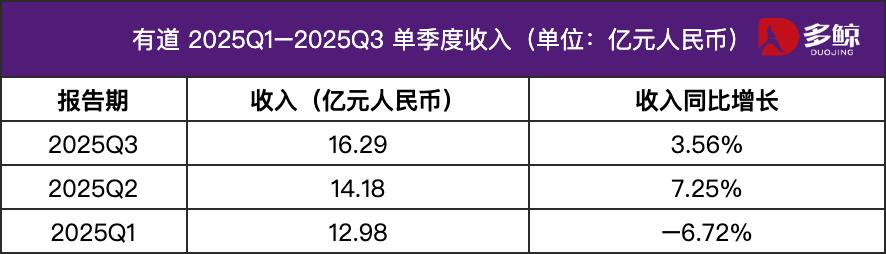
Core Insights - The education industry is shifting focus from "digital transformation" to "AI native" solutions, as evidenced by the distinct trajectories of three representative companies: Youdao, Duolingo, and Chegg, highlighting the profound impact of AI on educational business models [1] Youdao - Youdao's transformation is marked by a significant shift in revenue structure, with online marketing services surpassing learning services for the first time in Q3 2025, generating 7.4 billion RMB, a 51.1% increase year-on-year [3][4] - The company's total net revenue for Q1 2025 was 1.3 billion RMB, showing a slight decline, but operating profit reached 104 million RMB, a 248% increase year-on-year, marking a historical high for Q1 [2] - Youdao's AI-driven strategy has restructured its business model, with AI becoming a core component of its advertising and technology services, leading to a more profitable revenue stream [9] Duolingo - Duolingo has maintained a revenue growth rate of around 40% for six consecutive quarters, with Q3 2025 revenue reaching 271.7 million USD, a 41.08% year-on-year increase [10][11] - The integration of generative AI into course production and teaching processes has allowed Duolingo to rapidly launch 148 new language courses, significantly reducing reliance on human content creators [12] - The AI-driven teaching model has shifted the role of traditional teachers to a more supportive position, with the AI model taking on primary responsibilities in content generation and personalized feedback [12] Chegg - Chegg has experienced a steep decline in revenue, with Q3 2025 revenue dropping to 77.74 million USD, a 43.08% year-on-year decrease, marking the largest annual decline since its IPO [13][15] - The company is attempting to pivot towards "CheggMate," an AI learning partner, to shift from providing answers to offering explanations and personalized teaching, but faces challenges in attracting users accustomed to free solutions like ChatGPT [15][16] - Chegg's situation illustrates the urgent need for educational companies to redefine their value propositions in the face of AI's ability to directly replace traditional learning services [16] Industry Trends - The three companies represent different paths towards AI native solutions in the education sector, emphasizing a shift in core competitive advantages from product forms to AI capabilities that can redefine value chains [17][18] - AI is not merely an enhancement but a core force driving the direction of business models in the education industry, with the Chinese AI+ education market expected to exceed 70 billion RMB by 2025 [18]



如何将信任转化为可持续盈利,找到投入与收益的平衡点
3 6 Ke· 2025-11-27 00:30
Core Insights - Trust has become a critical factor for product managers to overcome growth challenges in an era where user attention is scarce and traffic growth has peaked [2][3] - Trust is not just an added benefit but a survival necessity for products, as many can meet user needs but struggle to establish deep trust, leading to a cycle of user acquisition and loss [2][3] Nature of Trust - Trust is fundamentally an "invisible infrastructure" that reduces transaction costs, encompassing not just monetary exchanges but also time investment, data authorization, and decision-making costs [4][5] - The role of trust is to minimize information asymmetry, thereby reducing transaction friction between users and products [5] Trust as a Lever for Sustainable Profitability - The initial cost of establishing trust can be high, but once formed, the marginal cost of delivering services decreases significantly, allowing for sustainable profitability [6] - Products lacking trust often rely on a vicious cycle of low-price subsidies, leading to user churn and persistent profitability challenges [6] Three Stages of Trust to Profit Transition - The transition of trust to profitability occurs in three stages: consensus, loyalty, and ecosystem [7][8] - Most products remain at the first stage of "consensus trust," while only a few reach the second stage of "loyalty trust," and the top-tier products achieve the third stage of "ecosystem trust" [7] First Stage: Consensus Trust - "Consensus trust" is based on users' recognition of a product's basic value, leading to quick but limited profitability [8][9] - An example is the freemium model of tools like XMind, where users pay for additional features after experiencing basic functionality [9] Second Stage: Loyalty Trust - "Loyalty trust" involves emotional connections and exclusive benefits, resulting in higher user lifetime value and compound profitability [10][11] - A case study is "宝宝树," which builds emotional connections through community features, leading to increased repurchase rates and customer spending [10][11] Third Stage: Ecosystem Trust - "Ecosystem trust" is characterized by users' recognition of a product's comprehensive value across various needs, allowing for diverse revenue models [12][13] - The WeChat ecosystem exemplifies this, where users trust the platform for a wide range of services, leading to significant transaction volumes [12][13] Dynamic Model of Trust Investment and Returns - Balancing trust investment and returns is a dynamic process that varies across product life cycles, user groups, and market conditions [14][15] - In the exploration phase, trust investment should exceed expected returns to validate trust feasibility, as seen with NIO's initial investments [14] User Sensitivity to Trust - Different user groups exhibit varying sensitivity to trust, necessitating tailored investment strategies [17][18] - High-sensitivity groups require substantial trust investments, while low-sensitivity groups can be served with minimal trust infrastructure [18][19] Risk Management Against Trust Erosion - Establishing a risk management mechanism is crucial to prevent "trust erosion," which can have irreversible consequences [20][21] - Common behaviors leading to trust erosion include false advertising, excessive commercialization, and data misuse [21] Conclusion - Trust is a slow variable requiring long-term investment, while profitability is a fast result needing immediate adjustments [23][24] - Companies should avoid extremes of short-term profit-seeking at the expense of trust or blind investment without a clear path to profitability [24][25]
美股异动 | Q3收入增长30% 高途(GOTU.US)盘前跌超3%
智通财经网· 2025-11-26 14:31
Core Viewpoint - The company reported significant revenue growth and improved profitability in its latest financial results for Q3 of fiscal year 2025, indicating a positive trend in its operational performance [1]. Financial Performance - The company achieved revenue of 1.58 billion RMB, representing a year-over-year increase of 30.7% [1]. - Cash revenue reached 1.19 billion RMB, up 11.2% year-over-year [1]. - Cumulative revenue for the first nine months totaled 4.46 billion RMB, reflecting a 41% year-over-year growth [1]. Profitability Improvement - Adjusted operating loss and adjusted net loss narrowed by 64.6% and 69.9% year-over-year, respectively [1]. - The adjusted net loss margin improved by 29.1 percentage points compared to the previous year [1]. Strategic Investments - The company's achievements are attributed to systematic investments in product refinement, teacher development, AI empowerment, and refined operations [1].