生物科技

Search documents
驻港公司与初创企业数量双创新高
Ren Min Ri Bao· 2026-01-26 22:56
Group 1 - The unique attractiveness of Hong Kong as an investment destination for global companies continues to increase, with the number of companies based in Hong Kong expected to reach 11,070 by 2025, marking a historical high [1] - The number of companies in Hong Kong increased by 1,110 compared to 2024, representing an 11% year-on-year growth, with employment reaching 509,000, a 3% increase [1] - Mainland China accounts for the largest number of companies in Hong Kong, totaling 3,090, with the highest concentration in import-export trade, wholesale and retail (5,100 companies), followed by financial and banking services (2,390 companies) and professional, commercial, and educational services (1,770 companies) [1] Group 2 - The significant growth in the number of companies in Hong Kong, especially from various global regions, reflects the strong confidence of international and mainland enterprises in Hong Kong's business environment [2] - The Hong Kong government is enhancing competitiveness through measures such as establishing a task force for mainland enterprises, implementing targeted incentive policies, accelerating the development of the Northern Metropolis, and expanding overseas trade offices [2] - Future efforts will focus on aligning with national development strategies, assisting mainland enterprises in expanding into international markets through Hong Kong, and attracting more high-potential companies to further solidify Hong Kong's position as a key international business and investment hub [2]
杭州奥泰生物技术股份有限公司关于回购股份事项前十名股东和前十名无限售条件股东持股情况的公告
Shang Hai Zheng Quan Bao· 2026-01-26 21:06
Core Viewpoint - The company, Hangzhou Aotai Biological Technology Co., Ltd., has announced the details regarding the share repurchase plan and the shareholding status of its top ten shareholders and top ten unrestricted shareholders as of January 21, 2026 [1][2]. Group 1 - The company's board of directors approved the share repurchase plan during the 19th meeting of the third board on January 21, 2026 [1]. - The details of the share repurchase plan were disclosed on January 22, 2026, on the Shanghai Stock Exchange website [1]. - The announcement includes the names, shareholding quantities, and shareholding ratios of the top ten shareholders and top ten unrestricted shareholders as of the day before the board meeting [1]. Group 2 - All shares of the company are unrestricted circulating shares, meaning the shareholding situation for the top ten shareholders and the top ten unrestricted shareholders is identical [2]. - The company ensures that the announcement contains no false records, misleading statements, or significant omissions, and the board takes legal responsibility for the content's authenticity, accuracy, and completeness [1].

山东中农联合生物科技股份有限公司2025年度业绩预告
Shang Hai Zheng Quan Bao· 2026-01-26 19:15
Group 1 - The company expects a net profit to be negative for the fiscal year 2025, covering the period from January 1, 2025, to December 31, 2025 [2] - The preliminary estimate of the performance forecast has not been audited by the accounting firm, but there are no significant disagreements between the company and the accounting firm regarding the forecast [2][3] - The decline in the company's main product market prices has led to a low gross profit margin, and the high costs during the trial operation of newly established projects have contributed to an increase in the reported losses [3] Group 2 - The company's stock experienced an abnormal trading fluctuation, with a cumulative closing price increase exceeding 20% over two consecutive trading days [7] - The company has verified that there are no undisclosed significant matters that could impact the stock price, and the production and operational conditions remain normal [8] - The company confirms that there are no significant undisclosed matters or changes in the external operating environment that could affect the stock trading [8]
曾胜:在海南发展生命健康产业正当其时,大有可为
Xin Lang Cai Jing· 2026-01-26 17:57
Core Viewpoint - The establishment of the free trade port policy and the continuous optimization of industrial policies have significantly enhanced the foundation of the life and health industry in Hainan [1] Group 1: Industry Development - The provincial government has proposed the "45432" industrial plan, which aims to create a modern industrial system with distinctive advantages for Hainan, highlighting the strategic importance of the life and health industry [1] - The life and health industry in Hainan is expected to integrate research and development, production, and payment, combining health maintenance and medical services [1] Group 2: Innovation and Case Study - The example of Hainan Subsang Biotechnology Co., Ltd. illustrates the importance of innovation, having established a key laboratory for sports regeneration and developed leading-edge drugs and treatments in areas such as osteoarthritis and neurological conditions [1] - The company has successfully integrated advanced biomaterials and stem cell technologies to achieve significant results in its research and development efforts [1]

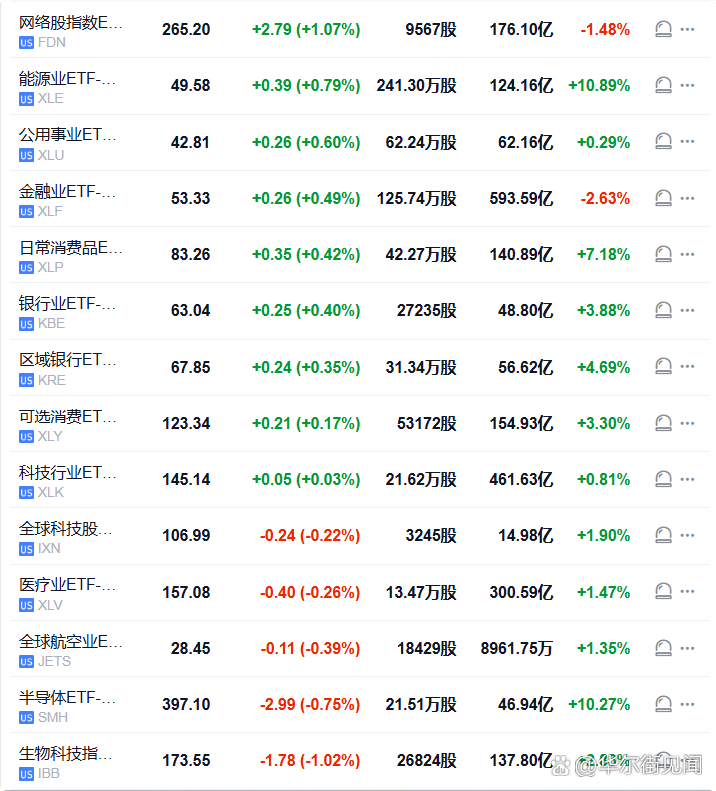
网络股指数ETF涨1.07%,能源业ETF涨0.79%,银行业ETF涨0.4%,科技行业ETF大致持平,全球科技股指数ETF跌0.22%,半导体ETF跌0.75%,生物科技指数ETF跌1.02%。
Sou Hu Cai Jing· 2026-01-26 15:31
Group 1: Market Performance - The internet stock index ETF increased by 1.07%, while the energy sector ETF rose by 0.79% [1] - The banking sector ETF saw a gain of 0.4%, whereas the technology sector ETF remained roughly flat [1] - The global technology stock index ETF declined by 0.22%, and the semiconductor ETF fell by 0.75% [1] - The biotechnology index ETF decreased by 1.02% [1] Group 2: ETF Specifics - The internet stock index ETF closed at 265.20, up by 2.79 (1.07%), with a trading volume of 9,567 shares and a market cap of 176.10 billion, down by 1.48% [2] - The energy sector ETF closed at 49.58, up by 0.39 (0.79%), with a trading volume of 241.30 million shares and a market cap of 124.16 billion, up by 10.89% [2] - The banking sector ETF closed at 63.04, up by 0.25 (0.40%), with a trading volume of 27,235 shares and a market cap of 48.80 billion, up by 3.88% [2] - The global technology stock index ETF closed at 106.99, down by 0.24 (-0.22%), with a trading volume of 3,245 shares and a market cap of 14.98 billion, up by 1.90% [2] - The semiconductor ETF closed at 397.10, down by 2.99 (-0.75%), with a trading volume of 21.51 million shares and a market cap of 46.94 billion, up by 10.27% [2] - The biotechnology index ETF closed at 173.55, down by 1.78 (-1.02%), with a trading volume of 26,824 shares and a market cap of 137.80 billion [2]

百普赛斯递表港交所
Zhi Tong Cai Jing· 2026-01-26 12:36
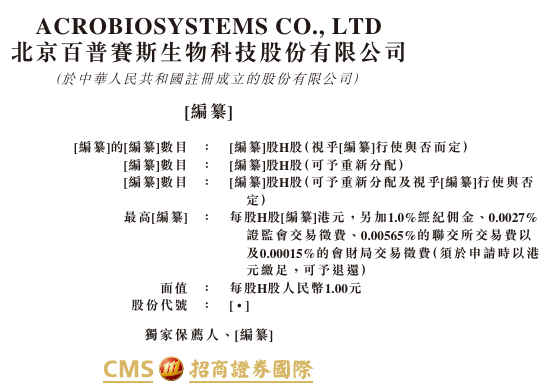
Group 1 - The core viewpoint of the article is that Beijing Baipusais Biotechnology Co., Ltd. has submitted a listing application to the Hong Kong Stock Exchange, with CMB International as its sole sponsor [1] - Baipusais is a global provider of life science tools and technology services, focusing on empowering biopharmaceutical companies across the entire value chain of research and development, production, and clinical applications [1] - According to Frost & Sullivan, Baipusais ranks first among all domestic suppliers in China and third globally in the recombinant protein market based on projected revenue for 2024 [1]
胡润报告:生物科技与健康科技将是下一代独角兽热门赛道
Xin Lang Cai Jing· 2026-01-26 11:15
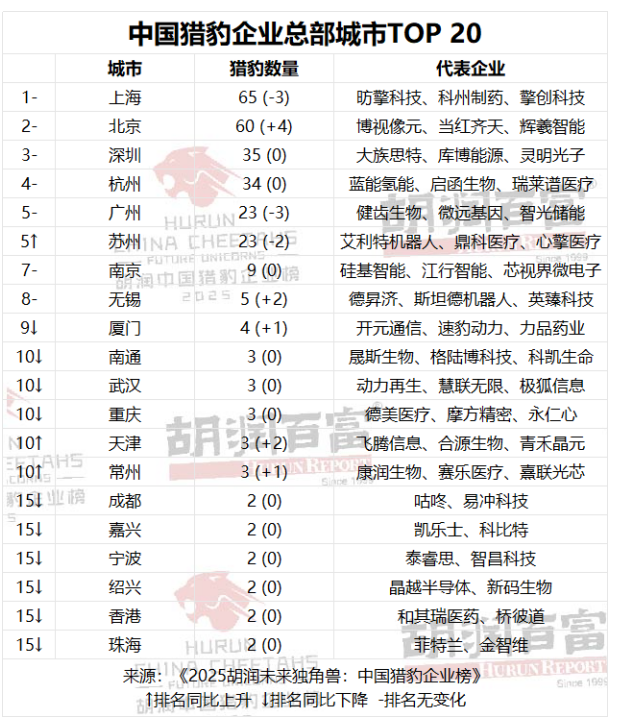
Core Insights - The HuRun Research Institute released the "2025 HuRun Future Unicorn: China Cheetah Enterprises List," identifying high-growth companies likely to reach a billion-dollar valuation by the end of 2030 [1][5] Group 1: Cheetah Enterprises Overview - A total of 304 Cheetah enterprises were identified in China, with Shanghai having the highest number at 65, followed by Beijing with 60, which saw an increase of 4 [2][6] - The list includes 40 new Cheetah enterprises, with Beijing contributing the most at 10, and Shanghai at 8 [3][7] - The primary sectors for these enterprises are semiconductors, biotechnology, and renewable energy [3][7] Group 2: Upgrades and Exits - 33 enterprises (11%) from the previous year upgraded or exited the list, with 9 going public, 2 becoming unicorns, 19 upgrading to gazelle status, and 3 being acquired [3][7] - The highest valued company among the 9 that went public is Yingshi Innovation, based in Shenzhen, valued at 100 billion yuan [4][7] - Other notable companies include Yingen Biotechnology, valued over 25 billion yuan, and Tudatong, valued over 15 billion yuan [4][7] Group 3: Investment Landscape - Sequoia Capital remains the most successful investor in Cheetah enterprises for the third consecutive year, investing in 72 companies, an increase of 8 from the previous year [4][8] - China International Capital Corporation (CICC) ranks second with 61 investments, up by 10, while Qiming Venture Partners ranks third with 34 investments, an increase of 1 [4][8] - The report indicates a shift away from e-commerce towards health technology, semiconductors, and artificial intelligence as the leading sectors for future unicorns [4][8] Group 4: AI and Future Trends - 16% of Cheetah enterprises are involved in AI-related fields, highlighting the rapid growth and disruption AI is causing across industries [5][8] - The report emphasizes that biotechnology and health technology are emerging as the next hot sectors for unicorns, alongside enterprise services and artificial intelligence [4][8]
延吉海关推动吉林企业拓展韩国市场
Sou Hu Cai Jing· 2026-01-26 10:19
Group 1 - The core point of the article highlights the significant impact of the China-South Korea Free Trade Agreement (FTA) on trade facilitation, with the Yanji Customs issuing nearly 2,000 certificates of origin over the past five years, valued at approximately 560 million yuan, effectively reducing trade costs for enterprises [1][3] - Yanji Customs has focused on key areas such as machinery imports and specialty agricultural exports, optimizing customs supervision and services to accelerate the benefits of the FTA [3] - The implementation of the FTA has allowed companies like Yanbian Kexi'an Biotechnology Co., Ltd. to benefit from tariff reductions, achieving zero-tariff clearance on imports, saving 44,000 yuan in taxes for a single batch of imported goods [3] Group 2 - Yanji Customs has enhanced trade facilitation through the "single window" and smart customs initiatives, speeding up processes for applying, reviewing, and printing certificates of origin, resulting in reduced clearance times and declaration costs for enterprises [3] - The customs authority is also focusing on the development needs of Jilin's specialty industries, implementing classified supervision and rapid release for perishable agricultural products like Matsutake mushrooms, facilitating their entry into the South Korean market [3][4] - The Deputy Director of Yanji Customs, Wang Lixun, stated the commitment to deepen the implementation of FTA policies and improve customs facilitation measures to support Jilin enterprises in integrating into China-South Korea economic and trade cooperation [4]

2025胡润中国猎豹企业榜发布:电子商务企业逐步减少,生物健康、半导体、AI行业增长迅速
Huan Qiu Wang Zi Xun· 2026-01-26 09:51
Core Insights - The Hurun Research Institute released the "2025 Hurun Future Unicorns: China Cheetahs Index," identifying high-growth companies likely to reach a billion-dollar valuation by 2030 [1][3] - The index tracked 304 "Cheetah" companies across 39 cities in China, with a significant concentration in biotechnology, health technology, enterprise services, semiconductors, and artificial intelligence [3][5] Company Distribution - Shanghai leads with 65 Cheetah companies, followed by Beijing with 60, and Shenzhen and Hangzhou with 35 and 34 respectively [4] - 33 companies upgraded from last year's list, with 9 going public, 2 becoming unicorns, and 19 becoming gazelles [3][4] Industry Breakdown - Biotechnology (50 companies, 16.4%) and health technology (49 companies, 16.1%) are the top sectors, followed by enterprise services (41 companies, 13.4%) [5] - The semiconductor sector saw a notable increase, with 29 companies, up by 10 from the previous year [5] - Artificial intelligence has 20 companies, but this represents a decrease of 8 from last year [5] Entrepreneurial Ecosystem - The entrepreneurial ecosystem in China remains vibrant, with 40 new Cheetah companies added in the past year [5] - The proportion of e-commerce companies has decreased, while health technology, semiconductors, and artificial intelligence have seen significant growth [5]

资金持续流出沪深300、中证1000、上证50等宽基ETF
Ge Long Hui· 2026-01-26 09:21
Market Overview - The three major A-share indices collectively declined today, with the Shanghai Composite Index down 0.09% to 4132 points, the Shenzhen Component Index down 0.85%, and the ChiNext Index down 0.91%. The total market turnover was 3.28 trillion yuan, an increase of 162.5 billion yuan compared to the previous trading day, with over 3700 stocks declining [1]. ETF Fund Flow - According to Zhongtai Securities, there has been a significant outflow of funds from "Huijin" ETFs following regulatory signals aimed at cooling down the overheated A-share market. From January 15 to January 23, approximately 12 ETFs heavily weighted by Huijin experienced a total outflow of 559.09 billion yuan, averaging nearly 80 billion yuan per trading day. The outflow was primarily concentrated in the CSI 300 (59% of outflows) and the CSI 1000 index (16% of outflows) [2][3]. Market Structure and Style - Despite the outflow of ETF funds, there has not been a significant risk-averse sentiment in the market. The trading activity and thematic trading remained active, indicating that the market temperature is still relatively high. The large-cap indices faced pressure, while smaller-cap stocks showed resilience, with funds shifting towards smaller market capitalization segments [3][4]. Individual Stock Impact - Value stocks have been notably impacted by the outflows, particularly in the CSI 50 sector, which faced dual pressure from both the CSI 300 ETF and the CSI 50 ETF redemptions. In contrast, thematic hot stocks remained largely unaffected, suggesting that low turnover and low heat value sectors experienced the most significant impact [3][4]. Regulatory Environment - Current market sentiment remains on the warmer side, indicating strong speculative inertia. Financial regulatory authorities are likely to continue and strengthen their "cooling" approach to mitigate localized overheating risks. Investors are advised to reduce exposure to crowded and overvalued thematic assets until a clear signal of market style change emerges [4].