
科技创新

Search documents
既营造宽松环境,又堵住风险漏洞深圳以有力监督护航科技创新的实践路径
Zhong Yang Ji Wei Guo Jia Jian Wei Wang Zhan· 2025-11-21 00:34
Core Viewpoint - The "Huangtao Shenzhen-Hong Kong Technology Innovation Cooperation Zone" is emerging as a significant international technology innovation center, leveraging its unique geographical and institutional advantages to foster collaboration between Shenzhen and Hong Kong [1][2]. Group 1: Development and Strategic Positioning - The Huangtao Cooperation Zone is identified as a key platform for major cooperation between Guangdong, Hong Kong, and Macau, with a strategic goal to become an "important point of the international technology innovation center in the Guangdong-Hong Kong-Macau Greater Bay Area" and a "world-class research hub" [1]. - The establishment of the Huangtao Development Office in January 2024 aims to create a flexible environment for technological innovation while ensuring effective governance [3]. Group 2: Research and Funding Mechanisms - Shenzhen allocates a portion of its fiscal budget annually to support research and innovation in the Huangtao Cooperation Zone, focusing on life sciences, materials, and information industries [2]. - The Huangtao Development Office implements a system for project selection, team formation, and funding management, encouraging collaboration among universities, research institutions, and enterprises [2]. Group 3: Oversight and Governance - The Shenzhen Municipal Commission for Discipline Inspection has integrated the Huangtao Development Office into its supervision framework, emphasizing the importance of monitoring major reform tasks and ensuring accountability [4]. - A new mechanism called "Five Meetings, One Evaluation, One Review, One Discussion" has been established to enhance political supervision and address issues in the implementation of reforms [5]. Group 4: Addressing Corruption and Ensuring Integrity - The Shenzhen Municipal Commission has intensified efforts to combat corruption in the allocation of special funds for research projects, focusing on the integrity of project evaluation processes [6]. - Measures have been taken to prevent conflicts of interest among evaluation experts, including the prohibition of private interactions with stakeholders during the evaluation process [7].
【省科技厅】陕西“十四五”科技创新多项指标位居全国前列
Shan Xi Ri Bao· 2025-11-21 00:34
Core Viewpoint - During the "14th Five-Year Plan" period, Shaanxi has significantly enhanced its innovation-driven development strategy, leading to notable improvements in its overall technological innovation capabilities, which are now among the top in the nation [1][2]. Group 1: Technological Innovation Strength - Shaanxi has been approved to establish the Xi'an Regional Science and Technology Innovation Center, becoming a crucial part of the national regional innovation system [1]. - The province's R&D expenditure reached 92.62 billion yuan, a 46.47% increase from 2020, with R&D personnel exceeding 250,000, marking a 49.45% growth [1]. - The comprehensive technological innovation level index increased by 7.12 percentage points to 75.51, with the innovation output level index at 87.59, ranking fourth nationally [1]. Group 2: Original Innovation and Key Technology Breakthroughs - Shaanxi has established a unique laboratory system, with basic research funding growing over 60% in five years, and published 49 papers in three major international journals [2]. - The province has targeted over 2,300 major technology projects, achieving breakthroughs in 761 technology challenges this year [2]. - Significant achievements support national projects such as "Shenzhou" space missions and "Chang'e" lunar exploration, while also benefiting the public [2]. Group 3: Institutional Mechanism Reform and Industrial Innovation - Shaanxi has pioneered the "three reforms" for technology transfer, resulting in 46,000 job-related achievements being transferred, with technology contract transaction volume doubling over three years [2]. - The Qin Chuang Yuan innovation-driven platform has gathered 10,700 technology companies and 690 innovation platforms [2]. - The provincial science and technology fund has a first-phase scale of 10 billion yuan, with loans to technology enterprises exceeding 420 billion yuan [2]. Group 4: International Cooperation - Shaanxi has established cooperative relationships with over 60 countries and regions, with high-tech product exports ranking among the top three nationally for five consecutive years [2]. - In 2024, the province's technology contract transaction volume with countries along the "Belt and Road" is expected to increase by 215.8% year-on-year [2]. Group 5: Future Plans - The provincial government aims to leverage the achievements of the "14th Five-Year Plan" to outline key tasks for the "15th Five-Year Plan," contributing to the construction of a strong technological nation [3].
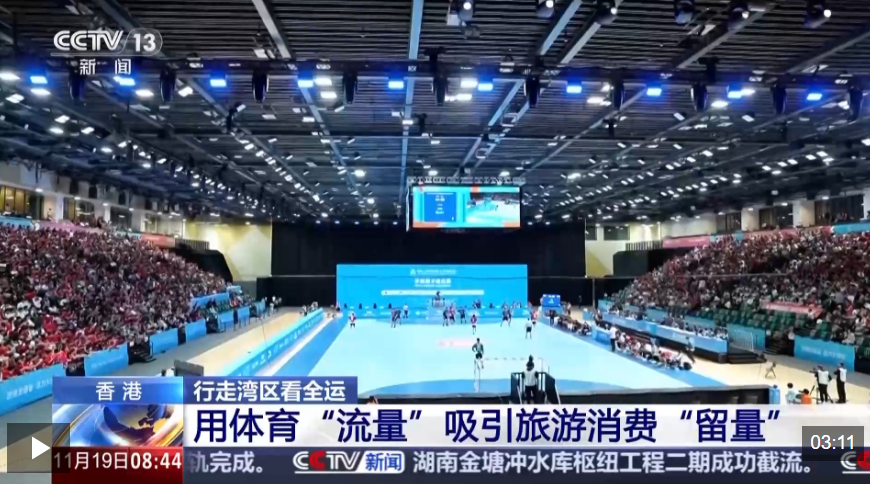
行走湾区看全运丨接住这波体育“流量” 香港的“留客”密码藏在街头巷尾
Yang Shi Xin Wen· 2025-11-20 02:07
Core Viewpoint - The 15th National Games is the first large-scale national comprehensive event jointly held by Guangdong, Hong Kong, and Macau, showcasing the collaboration and shared glory of these regions [1] Group 1: Event Overview - The Hong Kong Sports Park, the main venue for the National Games in Hong Kong, was completed in March after six years of construction, making it the largest and newest sports facility in the region [3] - The design of the sports park emphasizes extreme space utilization, featuring a three-layered wall that changes color with light and a versatile floor that can switch between sports and performance modes [3] Group 2: Economic Impact - The event aims to attract tourism and consumption, with ticket prices starting as low as 50 HKD, allowing visitors to enjoy half a day of exciting competitions [4] - The concept of "event economy" has been promoted in Hong Kong, leveraging international sports events and cultural exhibitions to boost tourism and consumption [4] - The West Kowloon High-Speed Rail Station has seen a peak in daily inbound travelers, exceeding 50,000, with direct high-speed rail access from 96 mainland stations [4] Group 3: Community Engagement - The National Games has sparked a significant sports enthusiasm in Hong Kong, with many major events selling out in advance and the largest-ever delegation participating [6] - Hong Kong residents actively engage in various sports, utilizing both natural parks and urban spaces for recreational activities [7][8] Group 4: Talent Exchange - There has been an increase in sports talent exchange between Hong Kong and mainland China, with numerous coaches from the mainland assisting Hong Kong athletes [9] - The ongoing collaboration has led to the development of previously less popular sports, enhancing overall interest and participation [9] Group 5: Regional Integration - The event exemplifies the deep integration of the Greater Bay Area, with over 6,000 participants expected to travel from the mainland to Hong Kong for the games [12] - The implementation of convenient cross-border measures has facilitated smooth travel for participants, enhancing regional cooperation [12] Group 6: Economic Development - Over 300 mainland enterprises established regional headquarters in Hong Kong last year, contributing to the local economy [13] - Hong Kong continues to strengthen its position as a global economic hub, with new initiatives supporting its integration into national development [14]

以创新驱动发展 香港竞逐多极世界新赛道
Xin Hua She· 2025-11-19 01:03
Group 1 - Hong Kong is positioned to leverage its unique advantages of being backed by the mainland while connecting with the world, enhancing its status as an international hub under the "One Country, Two Systems" principle [1][2] - The development of the Northern Metropolis area in collaboration with Shenzhen is seen as a key opportunity to create a super cooperation zone that integrates technology innovation, high-end manufacturing, and modern services [1] - The construction of an international innovation and technology center in Hong Kong is essential for attracting high-end talent and fostering regional cooperation within the Guangdong-Hong Kong-Macao Greater Bay Area [1][3] Group 2 - Joseph Stiglitz emphasized Hong Kong's autonomy, which provides it with adaptability and flexibility, making it a vital financial center rooted in common law and English proficiency [2] - The concept of "innovation" is highlighted as the core strategy for Hong Kong to expand its new economic landscape, encompassing institutional, mechanism, and technological innovations [2] - The establishment of a regulatory sandbox for low-altitude economy development by the Hong Kong Civil Aviation Department is noted as a significant advantage for attracting businesses to conduct trials [2] Group 3 - The financial sector in Hong Kong is entering a strategic opportunity period over the next five to ten years, with the "14th Five-Year Plan" emphasizing the need to consolidate and enhance Hong Kong's status as an international financial center [3]
数码竞争力跃升全球第四,香港做对了什么?
Ren Min Ri Bao· 2025-11-18 22:50
Core Insights - Hong Kong has risen to the fourth position in the IMD's 2025 World Digital Competitiveness Ranking, moving up three places from last year and six places over two years, reflecting the success of its efforts to establish itself as an international innovation and technology hub [1][2] Group 1: Digital Competitiveness Ranking - Hong Kong's performance in the IMD ranking is highlighted by its strong positions in the core factors of "Technology," "Knowledge," and "Future Readiness," with rankings of third, fifth, and tenth respectively [2] - The city ranks first globally in the sub-indicators of "Technical Framework" and "Adaptive Attitude," and is in the top five for "Talent" and "Training and Education" [2] Group 2: Government Initiatives and Support - The Hong Kong government, with strong support from the central government, prioritizes innovation and technology development, aiming to create a conducive environment for growth and showcase its innovative capabilities [1][3] - A series of measures announced by the Chief Executive in the 2025 policy address includes the establishment of research institutes and funding initiatives to address the demand for computing power [4] Group 3: Ecosystem and Collaboration - The collaboration between government, industry, academia, and research institutions is emphasized as essential for enhancing Hong Kong's global competitiveness and fostering new productive forces [4][5] - The Hong Kong Science Park and Cyberport are actively supporting startups through various nurturing programs, contributing to a vibrant innovation atmosphere [5]
营商观察|零租金,全赋能!深圳龙岗这个空间让初创梦想“轻装起飞”
Sou Hu Cai Jing· 2025-11-18 16:05
Core Insights - The "Zero Rent Space" initiative in Longgang, Shenzhen, aims to alleviate the financial burden on startups by providing up to two years of rent-free space, fostering a supportive environment for innovation and entrepreneurship [3][5][9] Group 1: Policy and Support - The Longgang District's "Zero Rent Space" policy has successfully attracted 28 startups, saving them over 4.5 million yuan in space costs, showcasing the effectiveness of government and market collaboration [5][11] - The initiative is designed to create a comprehensive innovation ecosystem, offering full-chain support from laboratory to commercialization for young talents from universities [7][11] - The policy emphasizes a "demand-first" approach, ensuring that high-quality projects from universities are matched with appropriate resources and support [7] Group 2: Entrepreneurial Environment - The "Zero Rent Space" initiative allows entrepreneurs to focus on core technology development and market expansion by eliminating heavy space costs, thus transforming the entrepreneurial landscape [9][11] - The initiative has led to the establishment of a "gravity-free" incubation model, where support is provided through AI platforms and digital applications, enhancing flexibility for startups [9] - The Longgang area is positioning the "Zero Rent Space" as a "golden business card" for the regional business environment, actively promoting successful cases to lower the entry barriers for high-growth tech projects [11]
霍震寰:南沙与香港合作是优势互补的天作之合
Nan Fang Du Shi Bao· 2025-11-18 10:19
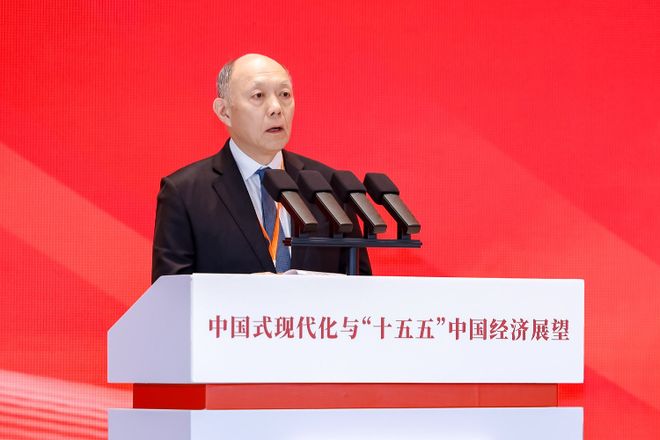
Core Insights - The 20th China Economic Forum held in Nansha, Guangzhou, focused on "Chinese-style modernization and the 14th Five-Year Plan" with prominent figures discussing new opportunities for China's economic development [2] Group 1: Strategic Collaboration - The collaboration between Nansha and Hong Kong is seen as a complementary partnership, aiming to create a comprehensive service platform for mainland enterprises going global [2] - The development of Nansha from a barren land to a national-level new area and a free trade pilot zone is attributed to the foresight of the Ho Ying Tung Group, which initiated key infrastructure projects [2] Group 2: Innovation and Talent Development - The focus on innovation industries and strengthening multi-field cooperation between Guangdong and Hong Kong is emphasized, with support for institutions like Hong Kong University of Science and Technology and the Ho Ying Tung Research Institute [3] - Plans to cultivate young technology talents and enhance international scientific research cooperation in the Greater Bay Area are highlighted [3] Group 3: Regulatory Alignment and Business Environment - The need for regulatory alignment to facilitate the integration of Chinese enterprises into the global market is stressed, with suggestions to establish a recognition zone for professional qualifications in Nansha [3] - Initiatives to explore cross-border financial innovations and enhance the international business environment are proposed, including the implementation of yacht free travel and the transformation of the half-hour Bay Area traffic circle into an international business circle [3]
西城区出台政策,真金白银鼓励动漫、电竞等产业发展
Xin Jing Bao· 2025-11-18 08:43
Group 1 - The core viewpoint of the article is that Xicheng District in Beijing is implementing substantial financial support policies for various industries, including finance, data, animation, and esports, to promote high-quality industrial development [1][2][3] Group 2 - Xicheng District will provide annual financial support of up to 10 million yuan for the construction of the national financial management center [1] - For building a technology innovation ecosystem, the maximum financial support per project will be 25 million yuan [1] - In enhancing the data industry chain, the maximum financial support per project will be 50 million yuan [1] - Support for "cultural+" integration innovation will also receive up to 10 million yuan per project [1] Group 3 - The district supports the renovation of commercial and office spaces with a maximum funding of 10 million yuan, and offers up to 30 million yuan for purchasing new office projects [2] - Xicheng District encourages the creation of culturally rich media products and provides up to 1 million yuan in one-time rewards for projects recognized at the national or municipal level [2] - For animation and esports, the district will support projects with funding up to 1 million yuan for national key projects and 500,000 yuan for esports venues meeting specific criteria [2]
解封32个账户释放2.26亿元资金,北京法院提速科创企业破产挽救
Bei Jing Shang Bao· 2025-11-18 05:59
Core Viewpoint - The Beijing First Intermediate People's Court is implementing measures to facilitate distressed companies in entering bankruptcy protection quickly, streamlining processes and adjusting acceptance standards to enhance efficiency and save time for corporate rescue [1] Group 1: Court Measures - The court has simplified procedures and legally relaxed acceptance review standards to expedite the bankruptcy protection process for struggling enterprises [1] - A dual mechanism of "rapid initiation + comprehensive unfreezing" has been established to enhance efficiency and capture the time window for corporate rescue [1] Group 2: Support for Specific Enterprises - The court presumes that specialized and innovative enterprises, particularly those in cutting-edge technology sectors, possess restructuring value and potential, thereby preventing delays in asset disposal or loss of competitiveness [1] - A specific company utilized the pre-restructuring process, achieving a timeline of just 35 days from acceptance of restructuring to approval of the plan [1] Group 3: Financial Impact - From January to October this year, the court has unblocked 32 bank accounts of technology innovation enterprises through a comprehensive unfreezing mechanism, lifting 1,252 instances of enforced freezing and releasing 226 million yuan in funds, effectively maintaining the operational value of restructured companies [1]
《国际科技创新中心指数2025》发布 中国多地领先
Zhong Guo Jing Ji Wang· 2025-11-17 14:38
Core Insights - The "Global Innovation Hub Index 2025" (GIHI2025) was released, highlighting the continuous enhancement of China's innovation cities in the global innovation landscape [1] - Beijing, the Guangdong-Hong Kong-Macao Greater Bay Area, and Shanghai remain in the top 10 global innovation centers, leading the innovation development [1] Global Innovation Rankings - San Francisco-San Jose ranks first in the index for the sixth consecutive year, driven by its AI innovation capabilities [1] - New York holds the second position with a score of 87.10 [1] - Beijing scores 85.19, maintaining its third position for four consecutive years, placing it in the first tier [1] - The Guangdong-Hong Kong-Macao Greater Bay Area rises two spots to fourth, leading the second tier with the most significant improvement among the top 10 cities [1] - Shanghai ranks 10th, placing it in the third tier [1] Asian Cities Performance - Asia shows a strong collective rise, with seven cities (urban areas) including Beijing, Guangdong-Hong Kong-Macao Greater Bay Area, Tokyo, Shanghai, Seoul, Singapore, and Kyoto-Osaka-Kobe making it to the global top 25 [1] - A total of 20 cities (urban areas) in Asia improved their rankings, significantly surpassing North America's 11 and Europe's 10 [1]