
服务贸易

Search documents
我国社会消费品零售总额今年有望突破五十万亿元——超大规模市场体量更大
Xin Hua Wang· 2025-08-12 06:35
Group 1: Consumption Market Growth - The retail sales of consumer goods are expected to grow at an average annual rate of 5.5% from 2020 to 2024, increasing from 39.1 trillion yuan in 2020 to 48.3 trillion yuan in 2024, with a forecast to exceed 50 trillion yuan this year [2] - The penetration rate of new energy vehicles is over 50% in the first half of this year, with the number of new energy vehicles expected to increase by 5.4 times by 2024 compared to 2020 [2] - Service consumption expenditure is projected to grow at an average annual rate of 9.6% from 2020 to 2024, outpacing goods consumption [2] Group 2: Wholesale and Retail Industry Development - The added value of the wholesale and retail industry is expected to reach 13.8 trillion yuan in 2024, a 40% increase from the end of the 13th Five-Year Plan, employing 135 million people [3] - In rural areas, over 15,500 commercial outlets have been upgraded, with more than 95% of administrative villages receiving direct express delivery services [3] - The cold chain logistics sector has seen significant growth, with a total cold storage capacity of 25.3 million cubic meters and 495,000 refrigerated vehicles, representing increases of 42.9% and 80% respectively since the end of the 13th Five-Year Plan [3] Group 3: Foreign Investment and Trade - By mid-2023, actual foreign investment reached $708.73 billion, surpassing the target of $700 billion set for the 14th Five-Year Plan six months ahead of schedule [5] - The number of newly established foreign-funded enterprises reached 229,000, an increase of 25,000 compared to the 13th Five-Year Plan [5] - The share of high-tech industries in foreign investment is expected to reach 34.6% in 2024, up 6 percentage points from 2020 [5] Group 4: International Trade and Belt and Road Initiative - The scale of goods trade has maintained its position as the world's largest for eight consecutive years, with a projected growth of 32.4% from 2020 to 2024 [7] - Trade with countries involved in the Belt and Road Initiative is expected to grow from $2.7 trillion in 2021 to $3.1 trillion in 2024, with an annual growth rate of 4.7% [8] - The number of foreign trade enterprises is nearing 700,000, with the share of private enterprises in exports increasing from 56% at the end of the 13th Five-Year Plan to 64.8% last year [7] Group 5: New Consumption Trends - There is a notable shift towards quality consumption, with consumers increasingly prioritizing the quality of goods over mere availability [9] - New consumption trends include the integration of traditional industries with innovative formats, such as cultural and creative products gaining popularity both domestically and internationally [9] - The potential for consumption remains strong, with ongoing policy support expected to enhance the supply of quality goods and stimulate consumer demand [9]
今年上半年我国服务贸易收入同比增长13%
Xin Hua Wang· 2025-08-12 06:24
7月22日,国务院新闻办公室举行新闻发布会,介绍2025年上半年外汇收支数据情况,并答记者问。国 家外汇管理局国际收支司司长贾宁表示,近年来,我国服务贸易收入稳步扩大,今年上半年,服务贸易 收入同比增长13%。 新华社音视频部制作 【纠错】 【责任编辑:王頔】 ...
释放制度创新红利 上海自贸区77条试点措施复制推广
Xin Hua Wang· 2025-08-12 05:45
Core Viewpoint - The State Council of China has issued a notification to enhance the integration of the Shanghai Free Trade Zone with international high-standard economic and trade rules, promoting a high-level institutional opening-up through 77 pilot measures across seven areas [1][2]. Group 1: Pilot Measures - The notification outlines 34 measures to be replicated and promoted in other free trade zones, including innovations in digital RMB application scenarios, optimization of cross-border capital management for multinational companies, and the establishment of a negative list for data export [1]. - Additionally, 43 measures are to be promoted nationwide, focusing on cross-border electronic payment applications, encouraging the acceptance of commercial password testing results, and enhancing the digitalization of government procurement platforms [1][2]. Group 2: Focus Areas - Key areas of focus include accelerating the opening-up of sensitive service trade sectors such as finance and telecommunications, improving the liberalization and facilitation of goods trade, and implementing high-standard digital trade rules [2]. - Strengthening intellectual property protection, advancing government procurement reforms, and deepening state-owned enterprise reforms are also highlighted as essential for creating a fair competitive environment for domestic and foreign entities [2]. Group 3: Implementation and Risk Management - The notification emphasizes the need for local regions to tailor the replication and promotion of measures based on their specific circumstances, focusing on demand and problem orientation [2]. - It also stresses the importance of balancing openness and security, enhancing risk assessment and prevention mechanisms, and establishing a transparent and efficient regulatory system [2][3].
全岛封关后,还会采取哪些举措 支持海南自贸港进一步扩大对外开放?
Sou Hu Cai Jing· 2025-08-12 01:52
Group 1 - The core viewpoint is that the full island closure marks a new starting point for the construction of Hainan Free Trade Port, with plans to further expand its openness to the outside world [2] - Hainan will enhance its policy system in line with high-level free trade port standards, focusing on both goal-oriented and problem-oriented approaches to accelerate external opening [2] Group 2 - The first initiative is to accelerate the establishment of a trade management system that allows free entry and exit, expanding the range of "zero tariff" goods and promoting the growth of goods trade [2] - The second initiative focuses on creating a transparent and predictable investment environment by relaxing foreign investment access and implementing new market entry measures [2] - The third initiative aims to gradually establish financial policies that align with open development, enhancing the multi-functional free trade account system and expanding financial sector openness [2] Group 3 - The fourth initiative involves implementing more convenient entry and exit management policies, including relaxed restrictions on personnel movement and improved work visa policies [3] - The fifth initiative is to establish a more open shipping system, enhancing the construction of "China Yangpu Port" and optimizing ship inspection management policies [4] - The sixth initiative focuses on building an efficient and secure mechanism for cross-border data flow, promoting the expansion of communication resources and adjusting data exit management [5]

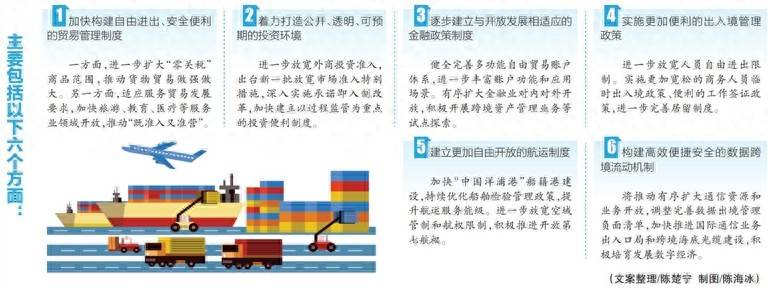
全岛封关后,还会采取哪些举措支持海南自贸港进一步扩大对外开放?
Hai Nan Ri Bao· 2025-08-12 01:11
Core Viewpoint - The full island closure marks a new starting point for the construction of Hainan Free Trade Port, with plans to further enhance its openness to the outside world [1] Group 1: Trade Management - Accelerate the establishment of a free, safe, and convenient trade management system, expanding the range of "zero tariff" goods and promoting the growth of goods trade [2] - Adapt to the service trade development requirements by accelerating the opening of sectors such as tourism, education, and healthcare, promoting both access and operation [2] Group 2: Investment Environment - Focus on creating an open, transparent, and predictable investment environment by further relaxing foreign investment access and implementing new measures to ease market entry [3] - Deepen the implementation of the commitment-based entry system reform and accelerate the establishment of an investment facilitation system focused on process regulation [3] Group 3: Financial Policies - Gradually establish financial policy systems that align with open development, improving the multi-functional free trade account system and expanding financial sector openness [4] - Actively explore pilot projects for cross-border asset management [4] Group 4: Immigration Policies - Implement more convenient entry and exit management policies by further relaxing restrictions on personnel movement and enhancing temporary entry policies for business personnel [5] - Improve work visa policies and residency systems [5] Group 5: Shipping System - Establish a more open shipping system by accelerating the construction of "China Yangpu Port" as a ship registration port and optimizing ship inspection management policies [6] - Further relax airspace control and air rights restrictions, actively promoting the opening of the seventh freedom of the air [6] Group 6: Data Flow Mechanism - Construct an efficient, convenient, and secure mechanism for cross-border data flow by expanding communication resources and business openings [7] - Adjust and improve the negative list for data exit management and accelerate the construction of international communication business entry and exit bureaus and cross-border submarine cable [7]
2025年服贸会将突出科技赋能特色
Ke Ji Ri Bao· 2025-08-12 00:53
杨华森介绍,本届服贸会充分应用大数据、人工智能(AI)等各种科技手段,提升服务品质。例 如,电瓶车管理系统可根据园区人流变化进行电瓶车预约、线上调度管理,实现智能报站;首次推出场 馆人流数据监测,实现场馆人流精细化管理;引入AI智能翻译,优化字幕展示形式,可提供跨语种实 时交流服务;数字平台上线智能助手"小福",为用户提供定制化逛展服务。 北辰集团党委副书记、新闻发言人杨华森介绍,截至目前,本届服贸会主题展和专题展的招展工作 已基本完成。主宾省安徽将展示量子通信的尖端成果、新能源汽车产业蓬勃发展案例、服务贸易创新发 展实践成果、文化出口特色亮点等。同时,本届服贸会的9大专题展已有800余家企业意向线下参展,包 括330余家世界500强和行业龙头企业。"各参展商聚焦年度主题,运用科技化、智能化手段,重点展示 新技术应用场景、解决方案和产品背后的服务内容。"杨华森说。 科技日报北京8月11日电 (记者吴叶凡)记者从11日举行的2025年中国国际服务贸易交易会(以下 简称"服贸会")媒体吹风会上获悉,2025年服贸会将于9月10日—14日在北京首钢园区举办。本届服贸 会聚焦"数智领航,服贸焕新"年度主题,突出科技赋 ...
40余项特色消费活动“上新”2025年服贸会
Bei Jing Shang Bao· 2025-08-11 16:39
Core Viewpoint - The 2025 Service Trade Fair (STF) is set to showcase significant advancements in technology and service integration, with participation from over 800 companies and nearly 70 countries, highlighting the event's international appeal and diverse offerings [1][3][4]. Group 1: Event Overview - The 2025 STF will feature participation from over 800 companies, including more than 330 Fortune 500 and industry-leading firms, with an overall internationalization rate exceeding 20% [3][4]. - The event will take place at Shougang Park, which has undergone significant renovations to accommodate various functions, including a conference center and media hub [7][8]. Group 2: Key Features - The STF will emphasize six key characteristics: technology empowerment, Beijing services, interactive experiences, cultural creativity, town exhibitions, and technology-driven exhibitions [3]. - Australia will be the guest country, showcasing its strengths in green economy, education, tourism, food, consumer goods, and health, with a record exhibition space of 360 square meters [4]. Group 3: Supporting Activities - Over 40 supporting activities are planned across the city, including cultural tourism experiences, consumer markets, sports events, and networking receptions [1][9]. - The event will also feature a series of forums and promotional activities, with over 170 sessions confirmed [4]. Group 4: Service Enhancements - Shougang Park will implement a "technology + service" approach to enhance event logistics, including real-time traffic monitoring and increased accommodation options [6]. - A total of 27 hotels will provide 4,653 rooms and 6,826 beds, with personalized services to ensure a comfortable experience for attendees [6]. Group 5: Marketing and Branding - The "Beijing Services" brand will be prominently featured, with over 280 cases collected across various sectors, including fintech and smart healthcare [5]. - The STF aims to create a brand effect that positions it as the go-to event for discovering Beijing's service offerings [5].
服贸会开幕倒计时一个月 近70个国家和国际组织意向设展办会
Yang Shi Xin Wen· 2025-08-11 09:15
Group 1 - The 2025 China International Service Trade Fair will be held from September 10 to 14 in Shijingshan District, Beijing, focusing on the theme "Digital Intelligence Leading, Service Trade Renewing" [1] - The fair will feature a series of activities including global service trade summits, exhibitions, forums, negotiations, and result releases, promoting the concept of "Global Services, Mutual Benefits" [1] - Nearly 70 countries and international organizations have expressed intent to participate, with Australia and Anhui province organizing the largest exhibition groups to date, focusing on finance, tourism, and consumption [1] Group 2 - The Service Trade Fair serves as a national-level, international, and comprehensive platform for service trade, reflecting China's commitment to expanding openness, deepening cooperation, and leading innovation [3] - Since its inception in 2012, the fair has been held eleven times, becoming the largest comprehensive exhibition for global service trade, attracting nearly 1.19 million exhibitors from 198 countries and regions [3]

“一会一址”新篇章!2025服贸会锁定首钢园 SoReal科幻乐园成活动新地标
Bei Jing Qing Nian Bao· 2025-08-11 07:32
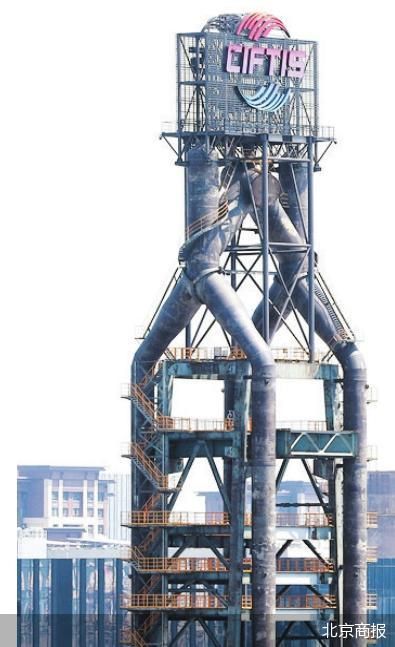
Core Points - The 2025 China International Fair for Trade in Services (CIFTIS) is scheduled to take place from September 10 to 14, 2025, at the Shougang Park in Shijingshan [1] - The event will adopt a "one fair, one venue" model, permanently establishing Shougang Park as its location [1] - The SoReal Science Fiction Park, a significant outcome of the Shougang sci-fi industry development, will feature immersive experiences combining technology, culture, and consumption [1] Summary by Categories Event Details - The CIFTIS will be held at Shougang Park, marking a new chapter in the event's history [1] - The event will take place over five days, focusing on service trade [1] Venue and Features - Shougang Park will serve as the permanent venue for the CIFTIS, enhancing its significance in the service trade sector [1] - The SoReal Science Fiction Park will include unique attractions such as the Furnace Top Galaxy Garden, 33MetaClub eSports Hall, and Galaxy Art Museum [1] Activities and Themes - The event will host various specialized activities, including the National Cultural and Tourism Promotion Conference and the Technology Innovation Competition [1] - The integration of "technology + culture + consumption" will be a key theme, providing an immersive experience for attendees [1]
一图读懂|北京顺义区首都机场临空经济示范区SY00-2402等街区控制性详细规划(街区层面)(2021年—2035年)
Bei Jing Ri Bao Ke Hu Duan· 2025-08-11 00:35
Core Viewpoint - The Tianzhu Comprehensive Bonded Zone is positioned as a significant area for promoting the integration of port, industry, and city development, serving the capital's "four centers" and "two zones" construction [3][6]. Group 1: Planning Overview - The planning scope includes one main construction block and one ecological composite block, covering a total land area of 936.89 hectares [3][6]. - The area aims to transform from traditional export processing and trade logistics to service trade, consumer services, and bonded research and development [6][9]. Group 2: Spatial Structure and Industry System - The spatial structure will adopt a "one core, five areas, multiple corridors" model to enhance the interaction between functions inside and outside the bonded zone [7][9]. - A "3+1" industry system will be established, focusing on high-end services in healthcare, cultural trade, upgraded consumption, and bonded supply chain services [9][10]. Group 3: Quality and Infrastructure Enhancement - The planning emphasizes enhancing the airport's landscape experience and creating a "capital portal, international style" aesthetic [11][12]. - Various service facilities will be developed, including a community service center and multiple industry reception areas, to support employment and provide comprehensive services [14]. Group 4: Implementation and Process Guidance - The project will involve land resource organization and ecological restoration, with a focus on timely project implementation and the development of new industrial land [16][18].
