港口航运

Search documents
奋斗正当时!新年首日,感受山东发展脉动
Feng Huang Wang Cai Jing· 2026-01-02 00:02
Group 1: International Logistics - The first TIR truck from Shandong Linyi International Logistics Company, driven by Peng Hanzhu, departed for Moscow on January 1, marking the start of the new year for international logistics [5] - In 2025, the company plans to increase its fleet by 20-50 vehicles, aiming to enhance the international transport channel from Linyi [6] Group 2: Tourism - A group of South Korean tourists, led by Park Jinsang, arrived in Qingdao on January 1, expressing excitement about their New Year trip [8] - Qingdao's cultural and tourism bureau has implemented measures to improve the experience for international visitors, including bilingual guides and streamlined access to attractions [9] Group 3: Urban Transportation - The first subway train of the year in Jinan, operated by 00s driver Li Ziyue, departed on time, symbolizing a positive start to the new year [11] - Li Ziyue, a recent graduate, emphasized the importance of safety and punctuality in her role as a subway driver [12] Group 4: Port Technology - The first day of the year saw the successful operation of China's first vacuum automatic mooring system at Qingdao Port, which can secure a 366-meter-long vessel in just 30 seconds [14] - This system, developed by a team led by Liu Fangchao, significantly improves efficiency and safety in mooring operations, with an expected annual increase in operational capacity of over 10 additional vessels per berth [15]


“无废码头” 通过嘉兴市级现场验收
Xin Lang Cai Jing· 2026-01-01 23:53
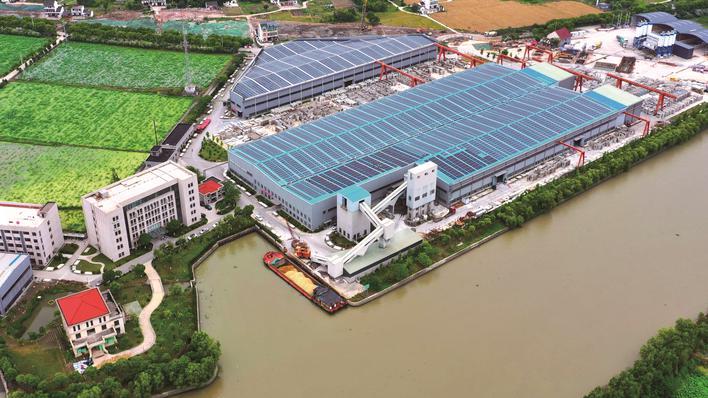
(来源:南湖晚报) 转自:南湖晚报 据了解,自"无废码头"创建工作启动以来,月松建材码头以"源头减量、过程管控、末端闭环"为核心, 系统推进设备技术改造与管理升级,一方面,通过铺设气力管廊输送系统,加配布袋除尘设备,从源头 遏制粉尘扩散,另一方面落地船舶智能生活污水接收设备、垃圾自主分类设施及绿色智慧岸电,同步接 入监管服务信息系统,形成绿色治污的全链条闭环管理。经评审组现场核查显示,其固废回收台账、污 染防治制度等35项指标均达创建标准。 此次评审是多部门协同治废的生动实践。创建期间,交通部门强化技术指导,生态环境部门严把环保标 准,形成"企业主建、部门联动、标准引领"工作格局。三年间,平湖市累计打造"无废码头"3家,带动 内河船舶污染物接收率、生活垃圾无害化处置率均提升至100%,为嘉兴市"无废城市"建设提供坚实支 撑。 下一步,平湖市港航管理服务中心将以无废码头创建行动作为水运绿色转型的关键抓手,推广此次无废 码头创建过程中的"设施升级+制度护航"经验,持续擦亮"五彩嘉兴·绿色港航"生态名片,为航运浙江绿 色转型注入强劲动能。 N通讯员 姜舜君 彭一宁 照片由平湖市港航管理服务中心提供 近日,平湖市港航 ...
1.73亿吨!2025年三峡枢纽年通过量创新高
Xin Lang Cai Jing· 2026-01-01 11:33
Core Insights - The Three Gorges Hub is expected to operate 14,415 lock (chamber) times in 2025, with an annual throughput of 173 million tons, representing an 8.66% year-on-year increase [1] - The Three Gorges ship lock will handle 170 million tons, while the Three Gorges ship lift will accommodate 632,000 passengers, both achieving historical highs [1] - The hub has ensured the safe and convenient passage of 46.1448 million tons of livelihood materials, providing efficient, economical, and green logistics channels for industries along the Yangtze River [1] Industry Developments - The Three Gorges Bureau has focused on enhancing responsibility and modernizing navigation, launching integrated command trials at the Gezhouba Hub and improving resource management [1] - The completion of the fifth planned maintenance of the Three Gorges ship lift has strengthened the application of new equipment and processes [1] - The introduction of advanced technologies such as AI models, digital twins, and IoT for safety supervision and equipment maintenance has improved the hub's operational safety and efficiency [1] Environmental Impact - By the end of 2025, the cumulative shore power usage in the Three Gorges shore power experimental zone is expected to exceed 50 million kilowatt-hours, with an annual usage of 11.3 million kilowatt-hours [2] - The 50 million kilowatt-hours of clean electricity is equivalent to replacing approximately 12,000 tons of fuel oil and reducing various pollutant emissions by about 37,000 tons [2] - The shutdown of diesel generators and the adoption of shore power have become standard practice for vessels waiting to pass through the locks at the Three Gorges [2]

河南周口港:通江达海 新年首航
Xin Lang Cai Jing· 2026-01-01 11:31
Core Insights - The Zhoukou Port in Henan Province has successfully opened 24 domestic container shipping routes and 19 foreign trade relay routes, enhancing its operational capacity and connectivity [1][2][3][4] Group 1 - Zhoukou Port is actively facilitating the movement of fully loaded cargo ships in and out of the terminal, indicating efficient port operations [1][2][3][4] - The port's expansion of shipping routes is likely to boost trade activities in the region, providing more options for logistics and transportation [1][2][3][4]
2025年度宁波港航十大新闻公布
Xin Lang Cai Jing· 2025-12-31 13:41
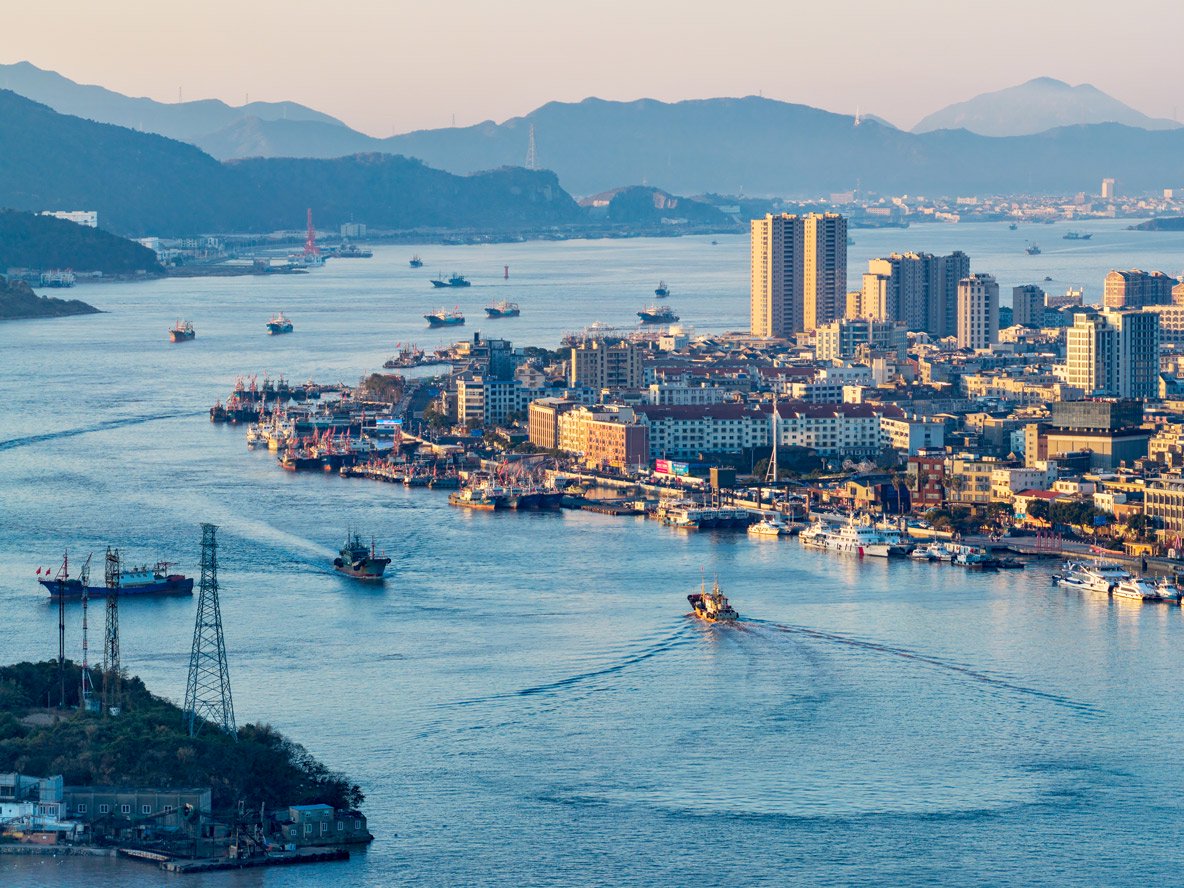
Core Insights - In 2025, Ningbo Port and Shipping achieved significant breakthroughs and milestones, showcasing its capabilities in energy enhancement, green transformation, smart development, and open cooperation [1][4] Group 1: Infrastructure Development - The core area of Ningbo-Zhoushan Port completed the second 300,000-ton deep-water main channel, making it the first core port in China with a "dual-channel" for ultra-large vessels [2][29] - The first 10,000-ton channel in the Shiyu Port area was completed, adding a "golden waterway" to the world's major ports [2][5] - Ningbo Ocean Transportation Co., Ltd. surpassed 1 million deadweight tons in self-owned capacity, becoming the first shipping company in Ningbo to reach this milestone [2][26] Group 2: Green and Smart Transformation - The world's largest and China's first 10,000-ton pure electric container ship was launched, marking the entry of coastal container transport into a zero-emission, fully electric era [2][12] - The first green methanol bunkering business in Zhejiang was established at Ningbo-Zhoushan Port, making it one of the few ports in China capable of providing multiple types of green fuel [2][18] - By 2025, all coastal berths over 1,000 tons and inland berths in Ningbo achieved full shore power coverage, optimizing the green port ecosystem [2][25] Group 3: Open Cooperation and Industry Ecosystem - Mediterranean Shipping Company (MSC) established its important ship management company in Ningbo, accelerating the rise of the "fleet manager" industry cluster [2][9] - The world's first China-Europe Arctic container fast shipping route successfully launched and docked at Ningbo-Zhoushan Port, laying a solid foundation for the "Ice Silk Road" core channel [2][22] Group 4: Safety and Innovation - Ningbo launched six waterway travel integration theme routes, promoting the integration of "transportation + tourism" [2][11] - The port safety responsibility insurance pilot project successfully passed departmental acceptance, forming a replicable "Ningbo experience" in risk prevention and insurance mechanisms [2][19]


证监会:支持司法机关依法适用代表人诉讼程序开展审判工作
Bei Jing Shang Bao· 2025-12-31 12:34
Core Viewpoint - The China Securities Regulatory Commission (CSRC) has taken action against Jinzhou Port for securities fraud, emphasizing the importance of protecting investors' rights and implementing the special representative litigation system as part of the new regulatory framework [1][2] Group 1: Regulatory Actions - The CSRC has imposed administrative penalties on Jinzhou Port for its fraudulent statements and other violations, which have severely disrupted market order and harmed investors' rights [1] - The Shenyang Intermediate People's Court has accepted investor lawsuits and announced the conversion of the case to a special representative litigation process, following the authorization of over 50 investors by the China Securities Investor Service Center [1] Group 2: Future Directions - The CSRC will continue to support the China Securities Investor Service Center in fulfilling its legal public service role in representing investors in civil litigation, aiming to enhance the effectiveness of the representative litigation process [2] - There is a focus on collaborative governance between regulatory bodies and the judiciary to better protect the rights of investors, particularly small and medium-sized investors, and to promote a healthy market environment for high-quality development [2]

证监会:支持中证中小投资者服务中心依法履行好支持、代表投资者民事诉讼维权的法定公益服务职能
Zheng Quan Shi Bao Wang· 2025-12-31 12:17
Core Viewpoint - The China Securities Regulatory Commission (CSRC) emphasizes the importance of protecting investors' rights through the implementation of special representative litigation procedures in response to the securities fraud case involving Jinzhou Port [1] Group 1: Regulatory Actions - The CSRC has imposed administrative penalties on Jinzhou Port for its securities violations, which have severely disrupted market order and harmed investors' rights [1] - The Shenyang Intermediate People's Court has accepted investor lawsuits and announced the conversion of the trial procedure to a special representative litigation on December 19 [1] Group 2: Investor Protection Initiatives - The China Securities Investor Service Center has accepted authorization from over 50 investors to represent them in the lawsuit, demonstrating a commitment to investor protection [1] - The implementation of the special representative litigation system aligns with the new "National Nine Articles" directive aimed at enhancing the application of this legal framework to protect investors [1] Group 3: Future Directions - The CSRC will continue to support the China Securities Investor Service Center in fulfilling its legal public service role in representing investors in civil litigation [1] - There is a focus on judicial collaboration to better safeguard the rights of investors, particularly small and medium-sized investors, and to promote a healthy market ecosystem and high-quality market development [1]
大湾区世界级港口群建设按下“加速键”
Zhong Guo Xin Wen Wang· 2025-12-31 10:24
Core Insights - The Pearl River Waterway Management Bureau announced ten major initiatives for water transport development in the Pearl River area by 2025, emphasizing the acceleration of the construction of a world-class port cluster in the Guangdong-Hong Kong-Macao Greater Bay Area [1] Group 1: Infrastructure Development - The construction of key infrastructure projects is set to accelerate, including the 200,000-ton channel project at Guangzhou Port and the fifth phase of the Nansha Port area [1] - The first phase of the automated container terminal at the Yantian Port area in Shenzhen, featuring three 200,000-ton berths, has completed its main structure [1] Group 2: Shipping Metrics - The Greater Bay Area's international hub, Guangzhou Port, is expected to handle a total cargo throughput of 695 million tons and a container throughput of 27.5 million TEUs in 2025, with a projected sea-rail intermodal volume exceeding 700,000 TEUs [1] - By 2025, the total cargo throughput for all ports in the Pearl River system is expected to reach 2.1 billion tons, with foreign trade cargo throughput at 640 million tons and container throughput at 79.01 million TEUs, reflecting year-on-year growth of 2.8%, 4.5%, and 4.8% respectively [1] Group 3: Safety and Regulation - The Ministry of Transport's Maritime Safety Administration has signed a cooperation arrangement for information sharing and governance with maritime departments in Hong Kong and Macao [2] - Guangdong Maritime Bureau has introduced the first provincial regulations for managing vessel navigation restrictions under adverse weather conditions in inland waterways [2] - The implementation of the "Guangzhou Water Traffic Safety Management Regulations" marks a new level of governance in water traffic safety within the Greater Bay Area [2]

潍坊:以“港”谋城 叩开万亿未来
Da Zhong Ri Bao· 2025-12-31 06:17
Core Insights - The construction of a 50,000-ton channel at Weifang Port marks a significant breakthrough towards achieving the goal of becoming a "billion-ton port" and supports Weifang's ambition to become a trillion-yuan city [1][2] Group 1: Port Development and Economic Impact - Weifang Port is a core strategic resource for the city, with projected growth rates for throughput, container throughput, and foreign trade exports of 10.1%, 7.6%, and 31.1% respectively by 2025, positioning it as an important economic growth driver [1] - The new channel, with a length of 66 kilometers and a design depth of -13.6 meters, is expected to increase annual throughput capacity by over 40 million tons and save local enterprises over 1.5 billion yuan in logistics costs annually [2][3] Group 2: Multi-Modal Transport System - The ambition of Weifang Port extends beyond just deep-water channels; it aims to establish a seamless multi-modal transport system integrating road, rail, sea, and river transport [2] - A new railway connecting the port to the Jiaozhou-Jinan railway line is planned, enhancing the port's role as a strategic hub linking inland areas with global markets [2] Group 3: Supply Chain and Innovation - The port's development is attracting businesses to consolidate key supply chain activities near the port, exemplified by the establishment of a marine equipment manufacturing base [3] - Innovative projects, such as the integration of wave barriers with offshore wind farms, are expected to reduce maintenance costs significantly and create additional revenue streams for the port [3]
北部湾港:数据变化标注区域开放发展新刻度
Xin Hua Wang· 2025-12-31 04:30
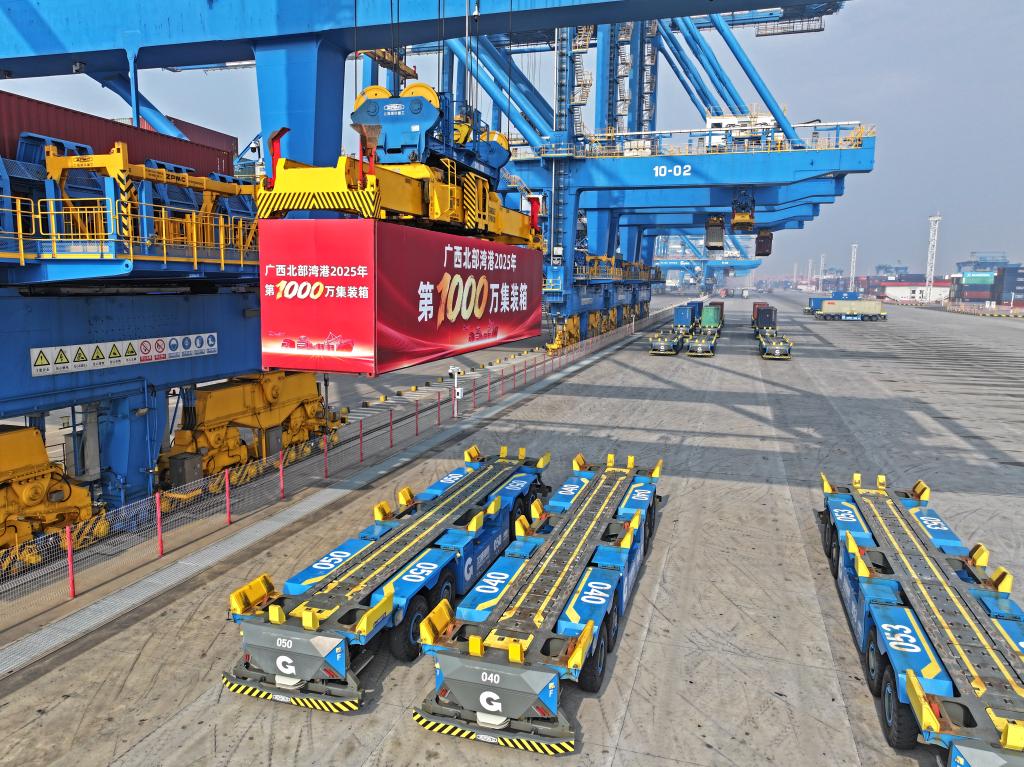
Core Viewpoint - The North Bay Port is experiencing significant growth in container throughput, with projections to exceed 10 million TEUs by 2025, reflecting the increasing efficiency and connectivity of the new logistics corridor [1][6]. Group 1: Container Throughput and Infrastructure - The North Bay Port has achieved a milestone of handling its 10 millionth container this year, with a total of 100 container shipping routes currently operational [3][6]. - Container throughput has surged from 2.28 million TEUs in 2017 to over 10 million TEUs, representing an annual growth rate exceeding 20% [6]. Group 2: Economic Impact and Trade Facilitation - The new logistics corridor has facilitated the export of over 1,300 types of goods to 18 provinces, enhancing trade connections with Central Asia and Europe [3][4]. - Long-term partnerships have been established, such as Longan Automobile utilizing the new corridor to reduce transportation costs by nearly 10% when exporting vehicles to the UAE [3][4]. Group 3: Industry Development and Efficiency - Companies like Tyre New Materials and COFCO Oils are leveraging the port's capabilities to enhance operational efficiency, with COFCO reporting a 43% improvement in overall efficiency [4]. - The port's infrastructure improvements are attracting foreign investments and increasing the speed and reliability of goods transportation, particularly for perishable items like durians from Southeast Asia [4][6]. Group 4: Future Developments - Ongoing construction at the port aims to expand its capacity to accommodate 200,000-ton container vessels, with significant progress on related inland canal projects expected to be completed by 2026 [6].