
汽车运输服务

Search documents
Proficient Auto Logistics, Inc.(PAL) - 2025 Q4 - Earnings Call Transcript
2026-02-09 22:32
Financial Data and Key Metrics Changes - Total operating revenue for the full year 2025 was $430.4 million, an increase of 10.7% compared to 2024 [11] - Operating revenue for the fourth quarter of 2025 was $105.4 million, an increase of 11.5% over the fourth quarter of 2024 [11] - Adjusted EBITDA for the full year 2025 was $40.2 million, unchanged from 2024, while fourth quarter adjusted EBITDA was $9.2 million, a 32% increase year-over-year [11][12] - The adjusted operating ratio for the fourth quarter improved modestly compared to the prior year [7] Business Line Data and Key Metrics Changes - Total units delivered in 2025 exceeded 2.3 million, representing a 16.2% increase from 2024, although revenue per unit decreased by about 6% [12] - The company experienced growth primarily from market share gains and an acquisition, with the automotive market not growing significantly [13] Market Data and Key Metrics Changes - The automotive market peaked in March and April 2025, followed by a weaker performance for the remainder of the year [5] - January 2026 saw lower-than-expected sales, attributed to severe winter weather affecting dealership operations [8] Company Strategy and Development Direction - The company aims for continued margin expansion and market share gains, focusing on sustainable profitability and disciplined business retention [9][10] - The company is positioned to improve performance in a down market and generate strong cash flow [9] Management's Comments on Operating Environment and Future Outlook - Management noted that while the automotive market faces cost pressures, there is underlying demand due to an aging vehicle fleet and lower interest rates [9] - The company expects modest improvement in adjusted operating ratio due to restructuring initiatives and a normalization of claims performance [16] - Management expressed confidence in achieving year-over-year revenue growth for 2026, despite a challenging market environment [14] Other Important Information - A non-cash goodwill impairment charge of $27.8 million was recorded, reflecting changes in market conditions [8] - The company’s net debt to trailing 12-month adjusted EBITDA improved from 2.2x to 1.5x over the past year, enhancing flexibility for future capital decisions [12] Q&A Session Summary Question: Expectations for Q1 revenue and operating ratio - Management expects sequential revenue to be down but modest improvement in operating ratio [21] Question: Impact of non-domiciled CDLs on auto hauling market - Management noted that while there is some insulation from non-domiciled issues, it is impacting the recruiting of new drivers [24] Question: Stability of revenue per unit in 2026 - Management anticipates stability in revenue per unit, following significant volatility in the past year [29] Question: Capital allocation priorities - The company will prioritize debt paydown, with flexibility for M&A opportunities if they arise [31] Question: Revenue mix and competitive pricing environment - Management indicated that a healthier demand environment is needed for recovery in the spot market, with current pricing pressures affecting carrier bids [36][40] Question: Updates on M&A pipeline - The company is actively engaged in developing a pipeline and expects to pursue 1-2 acquisitions per year [54]
大连边检助力汽车码头外贸商品车吞吐量再创新高
Xin Lang Cai Jing· 2026-01-08 23:07
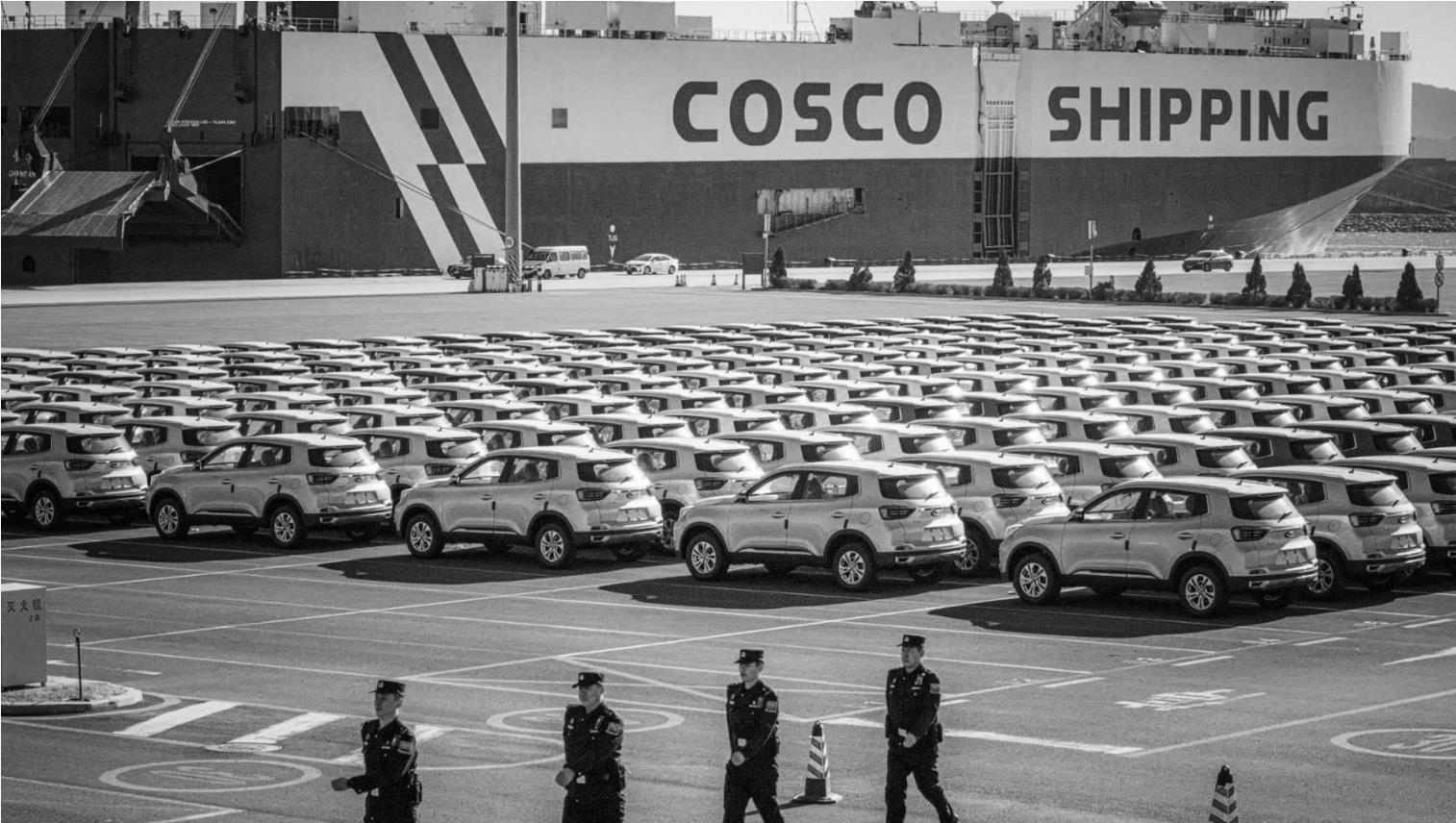
Core Insights - The Dalian Automobile Terminal has successfully completed the export of 57,000 vehicles in 2025, marking an 18.1% increase year-on-year, while imports reached 19,000 vehicles, up 10.87% [1] - The terminal's efficient operations are supported by the Dalian Border Inspection Station, which has implemented innovative service measures to enhance customs clearance efficiency and optimize the business environment [1][2] - A collaborative mechanism between the border inspection authority and the terminal has been established to ensure high-quality development of foreign trade while maintaining national security [1][3] Group 1 - In 2026, the Dalian Automobile Terminal's first foreign trade vessel, "Chang'an Kou," docked, carrying 460 domestic vehicles to South Africa [1] - The terminal has seen a continuous rise in foreign trade business, necessitating higher demands for customs clearance speed, operational safety, and management standards [1] - The Dalian Border Inspection Station has adopted a proactive approach, implementing precise strategies and establishing regular communication with terminal enterprises [1][3] Group 2 - The terminal has implemented a closed management system for foreign trade vessel operations, ensuring compliance with border inspection requirements and enhancing operational efficiency [2] - A combination of online and offline management practices has been adopted, including real-time reporting mechanisms for personnel boarding and vehicle dispatch [2] - Future plans include leveraging big data and IoT technologies to develop a "smart port" ecosystem, providing more efficient and secure one-stop customs services for domestic and international automotive companies [3]

北部湾港:数据变化标注区域开放发展新刻度
Xin Hua Wang· 2025-12-31 04:30
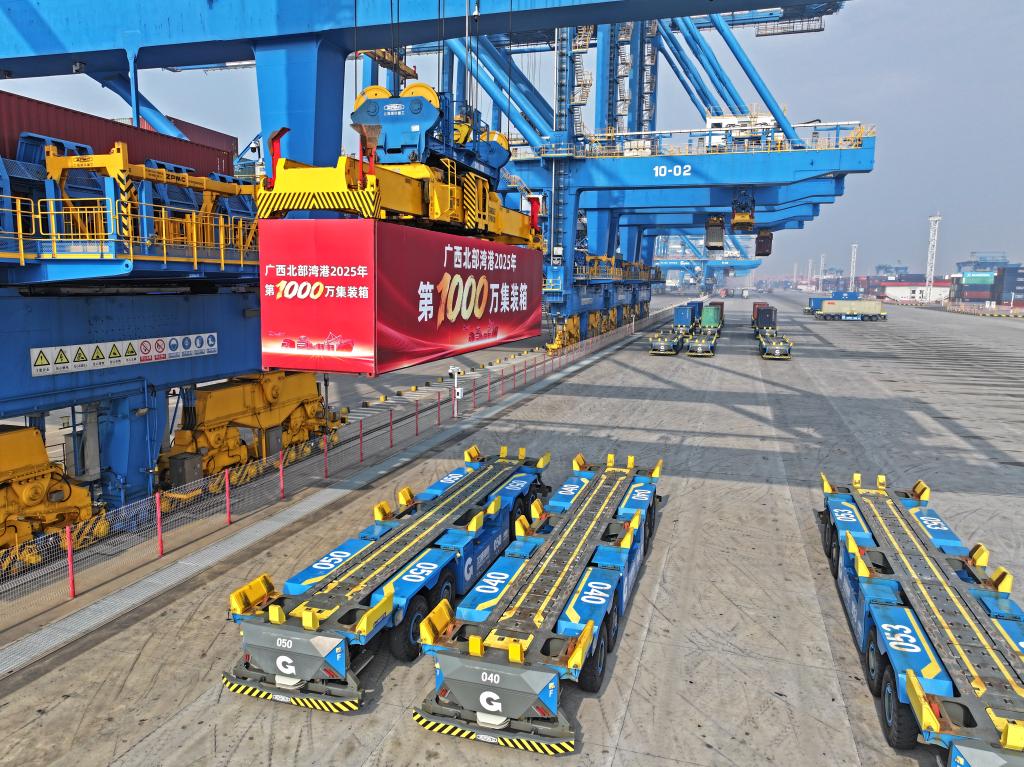
Core Viewpoint - The North Bay Port is experiencing significant growth in container throughput, with projections to exceed 10 million TEUs by 2025, reflecting the increasing efficiency and connectivity of the new logistics corridor [1][6]. Group 1: Container Throughput and Infrastructure - The North Bay Port has achieved a milestone of handling its 10 millionth container this year, with a total of 100 container shipping routes currently operational [3][6]. - Container throughput has surged from 2.28 million TEUs in 2017 to over 10 million TEUs, representing an annual growth rate exceeding 20% [6]. Group 2: Economic Impact and Trade Facilitation - The new logistics corridor has facilitated the export of over 1,300 types of goods to 18 provinces, enhancing trade connections with Central Asia and Europe [3][4]. - Long-term partnerships have been established, such as Longan Automobile utilizing the new corridor to reduce transportation costs by nearly 10% when exporting vehicles to the UAE [3][4]. Group 3: Industry Development and Efficiency - Companies like Tyre New Materials and COFCO Oils are leveraging the port's capabilities to enhance operational efficiency, with COFCO reporting a 43% improvement in overall efficiency [4]. - The port's infrastructure improvements are attracting foreign investments and increasing the speed and reliability of goods transportation, particularly for perishable items like durians from Southeast Asia [4][6]. Group 4: Future Developments - Ongoing construction at the port aims to expand its capacity to accommodate 200,000-ton container vessels, with significant progress on related inland canal projects expected to be completed by 2026 [6].

全球汽车运输船企业摸索“脱美”
日经中文网· 2025-12-02 02:56
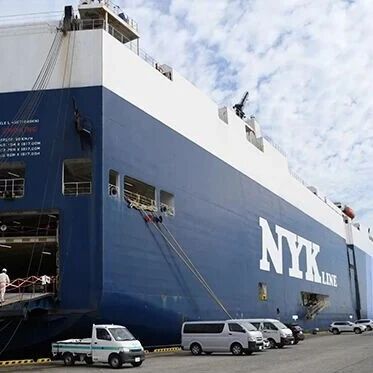
Core Viewpoint - The article discusses the impact of the U.S. government's new automobile tariffs on the shipping industry, particularly Japanese shipping companies, and highlights a shift towards China as a potential market due to uncertainties in U.S. port fees and trade policies [2][5]. Group 1: U.S. Tariff Impact - The U.S. began imposing a port fee of $46 per ton on foreign-made automobile transport ships starting October 14, which significantly affects Japanese shipping companies operating many such vessels [5]. - Following a U.S.-China summit on October 30, the U.S. decided to suspend the collection of this port fee for one year, but the risk of its future reinstatement remains [2][5]. Group 2: Japanese Shipping Industry Response - Japanese shipping companies, including Nippon Yusen and Mitsui O.S.K. Lines, operate 127 automobile transport ships, accounting for over 40% of the global fleet, with this segment contributing 20-50% to their consolidated sales [5]. - Due to the uncertainty surrounding U.S. policies, the shipping industry is exploring opportunities in China, which is seeing a rise in automobile exports, particularly in electric and hybrid vehicles [6]. Group 3: Market Trends and Future Outlook - According to the China Association of Automobile Manufacturers (CAAM), China's automobile exports are projected to reach 5.85 million units in 2024, a 19% year-on-year increase, driven by the growth of new energy vehicles [6]. - While some Japanese shipping companies are cautious and focus on existing contracts, they are also looking to capture new market demands, such as exports from India to Africa and the Middle East [6].
ZIM Integrated Shipping Services .(ZIM) - 2025 Q3 - Earnings Call Transcript
2025-11-20 14:02
Financial Data and Key Metrics Changes - In Q3 2025, the company generated revenue of $1.8 billion, a decrease of 36% year-over-year, primarily due to lower freight rates and volume [4][13] - Net income for Q3 was $123 million, down from $1.1 billion in the same quarter last year [20] - Adjusted EBITDA was $593 million with a margin of 33%, and adjusted EBIT was $260 million with a margin of 15%, compared to 55% and 45% respectively in Q3 2024 [19][20] - Total liquidity remained at $3 billion as of September 30, 2025 [4] Business Line Data and Key Metrics Changes - The average freight rate per TEU in Q3 was $1,602, down from $2,480 in Q3 2024 [14] - Carried volume in Q3 was 926,000 TEUs, a 4.5% decline year-over-year, but a 3.5% increase sequentially [20] - Revenues from non-containerized cargo totaled $78 million, down from $145 million in Q3 2024, attributed to lower volume and rates [14] Market Data and Key Metrics Changes - Trans-Pacific volume decreased by 1.5% year-over-year but increased by 17% sequentially [21] - Latin America trade volumes grew by 2.4% year-over-year [21] - The company noted ongoing geopolitical and trade tensions affecting the shipping industry [4] Company Strategy and Development Direction - The company is focusing on diversifying its network, particularly in Southeast Asia and Latin America, to capture new trade opportunities as global trade patterns evolve [7][8] - A significant charter agreement for 10 LNG dual-fuel vessels is expected to enhance operational flexibility and sustainability [9][10] - The company aims to maintain a modern fleet, with approximately 60% of its capacity being new builds and 40% LNG-powered [10] Management's Comments on Operating Environment and Future Outlook - Management expressed caution regarding the fourth quarter, expecting weaker performance than initially projected [5][6] - The reopening of the Suez Canal is anticipated to improve fleet efficiency but may also increase supply pressure on freight rates [12][25] - The company remains confident in its strategy and competitive position despite ongoing market volatility [10][11] Other Important Information - The board declared a dividend of $0.31 per share, totaling approximately $37 million, representing 30% of Q3 net income [5] - Total dividends distributed since the IPO amount to approximately $5.7 billion, reflecting a strong commitment to returning capital to shareholders [5][48] Q&A Session Summary Question: Management buyout discussions - Management stated that there are no comments on the potential management buyout, and the board will decide on any related matters [28][30] Question: Return to the Red Sea - Management confirmed plans to return to the Red Sea and Suez Canal as soon as insurance approvals are obtained [32][44] Question: Dividend policy during negative net income - Management reiterated the dividend policy of distributing 30% of net profit quarterly, with the possibility of special dividends at the board's discretion [39][42] Question: Cost expectations for 2026 - Management indicated that costs would likely remain under pressure due to the current market dynamics and the need to redeliver older vessels [34][35] Question: Route profitability and capacity adjustments - Management noted that profitability varies by route and emphasized the importance of reliability in service as they expand into new markets [66][68]

ZIM Integrated Shipping Services .(ZIM) - 2025 Q3 - Earnings Call Transcript
2025-11-20 14:00
Financial Data and Key Metrics Changes - In Q3 2025, the company generated revenue of $1.8 billion, a decrease of 36% year-over-year, primarily due to lower freight rates and volumes [12][13] - Net income for Q3 was $123 million, down from $1.1 billion in the same quarter last year [18] - Adjusted EBITDA was $593 million with a margin of 33%, and adjusted EBIT was $260 million with a margin of 15%, compared to 55% and 45% respectively in Q3 2024 [18] - Total liquidity remained strong at $3 billion as of September 30, 2025 [4] Business Line Data and Key Metrics Changes - The company carried 926,000 TEUs in Q3, a 4.5% decline year-over-year, but a 3.5% increase sequentially [18] - Average freight rate per TEU in Q3 was $1,602, down from $2,480 in Q3 2024 [13] - Revenues from non-containerized cargo totaled $78 million, down from $145 million in Q3 2024, attributed to lower volumes and rates [13] Market Data and Key Metrics Changes - Trans-Pacific volume decreased by 1.5% year-over-year but increased by 17% sequentially [19] - Latin America trade volumes grew by 2.4% year-over-year, indicating ongoing opportunities in that region [19] Company Strategy and Development Direction - The company is focusing on diversifying its network, particularly in Southeast Asia and Latin America, to capture new trade opportunities as global trade patterns evolve [7][8] - A strategic emphasis is placed on maintaining a modern fleet, with approximately 60% of capacity being new builds and 40% LNG-powered vessels [10] - The company is preparing for a potential return to the Suez Canal, which could improve fleet efficiency but also increase supply pressure on freight rates [12] Management's Comments on Operating Environment and Future Outlook - Management acknowledged ongoing geopolitical and trade tensions impacting the shipping industry, emphasizing the need for agility [4] - The fourth quarter is expected to trend weaker than originally projected, but the company has refined its full-year guidance based on year-to-date performance [6][20] - The outlook for container shipping remains cautious, with supply growth expected to outpace demand in the near future [22] Other Important Information - The Board of Directors declared a dividend of $0.31 per share, totaling approximately $37 million, consistent with the company's dividend policy [5] - The company has distributed a total of approximately $1.1 billion in dividends throughout 2024 and 2025 [5] Q&A Session Summary Question: Management buyout discussions and board changes - The board is managing the process of board member changes, with two resignations and two new appointments [25] Question: Return to the Red Sea and market share opportunities - The company is awaiting insurance approval to return to the Red Sea and Suez Canal, viewing it as an opportunity to capture market share [26] Question: Dividend policy in light of potential negative net income - The company maintains a policy of distributing 30% of net profit quarterly, with the potential for special dividends [30] Question: Cost expectations for 2026 - The company anticipates continued redelivery of vessels due to elevated charter market costs and a downward trend in operated tonnage [27] Question: Route profitability and capacity adjustments - The company is diversifying routes but profitability varies based on market conditions, with a focus on maintaining reliable service [43][45] Question: Future rate recovery and supply-demand dynamics - The company expects pressure on rates due to new capacities entering the market, with potential stabilization linked to vessel retirements [46][47]
连续四年超百万辆 外高桥码头汽车出口“提速”
Xin Lang Cai Jing· 2025-10-15 05:43
Core Insights - The Shanghai Waigaoqiao Port's Haitong International Automobile Terminal is the largest roll-on/roll-off terminal for automobile imports and exports globally [1] - The terminal has a total area of 1.1 million square meters and can accommodate up to 35,000 vehicles, with an annual throughput capacity exceeding 1 million vehicles [1] - In 2024, the terminal is projected to export 1.298 million vehicles, having already surpassed 1 million vehicles in exports within the first three quarters of this year, marking four consecutive years of exports exceeding 1 million vehicles [1]

探访长江沿线最大外贸港口:前8个月51.3万辆汽车在此“出海”
Zhong Guo Xin Wen Wang· 2025-09-16 09:26
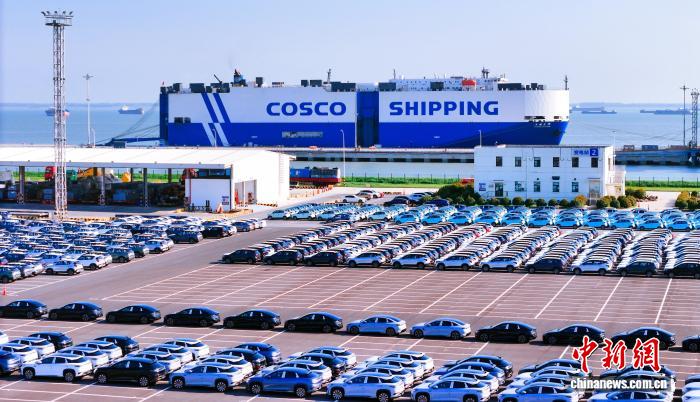
Core Insights - In 2024, Taicang Port achieved a cargo throughput of nearly 300 million tons and a container throughput of over 8 million TEUs, establishing itself as the largest foreign trade port along the Yangtze River [1] Group 1: Port Performance - Taicang Port exported 484,400 vehicles in 2024, marking an 18.9% year-on-year increase, with exports reaching 513,000 vehicles from January to August, a 64.3% increase compared to the previous year [2] - The port has completed a container throughput of 5.8 million TEUs in the first eight months of the year, reflecting a 2.2% year-on-year growth, and a total cargo throughput of 199 million tons, which is a 7.9% increase [4] Group 2: Infrastructure and Technology - Taicang Port features 18 constructed terminals and 99 various berths, with five major operational areas including container, general cargo, dry bulk, liquid chemicals, and equipment manufacturing [4] - The port's automated terminal, the first of its kind in the inland and Yangtze River basin, has a total investment of 4.2 billion yuan and a container throughput capacity of 2 million TEUs annually [7] - The terminal utilizes 28 automated cranes and incorporates AR and AI technologies to enhance operational efficiency by 20% while reducing the need for operational personnel by approximately 70% [7] Group 3: Strategic Development - The port aims to strengthen communication with shipping companies, automotive manufacturers, and other ports to explore new shipping routes and partnerships, positioning itself as a key hub for the export of Chinese self-owned brand new energy vehicles [2] - Taicang Port has established a comprehensive shipping network covering over 120 ports across Northeast Asia, Southeast Asia, the Middle East, the Mediterranean, Eastern Europe, North Africa, and South America [7]
涉俄LNG运输船遭欧盟制裁后 商船三井向日本政府求助
Zhi Tong Cai Jing· 2025-05-27 08:55
Group 1 - Mitsui O.S.K. Lines is seeking assistance from the Japanese government after the EU unexpectedly sanctioned three of its LNG carriers involved in Russian projects [1] - The three vessels, "North Moon," "North Light," and "North Ocean," were included in the EU's latest sanctions list as part of efforts to promote peace between Russia and Ukraine [1] - The CEO expressed dissatisfaction with the sanctions, noting that the vessels had recently transported cargo from the Yamal LNG project, which was previously considered unsanctioned [1] Group 2 - The company experienced a surge in demand for transporting various goods, including automobiles, prior to the tariffs imposed by former President Donald Trump, followed by a decline in April, but demand has been strong since May due to easing trade tensions [1] - The CEO anticipates continued strong demand in May and June, but expects a gradual decline in Japan's automotive exports to North America in the medium to long term, suggesting a shift towards local production in the U.S. [2] - The company recognizes the need to change its business distribution model away from being Japan-centric [2]