职业教育

Search documents
中公教育股价涨5.51%,南方基金旗下1只基金位居十大流通股东,持有7196.06万股浮盈赚取1079.41万元
Xin Lang Cai Jing· 2025-12-19 03:59
Group 1 - The core point of the article highlights the recent performance of Zhonggong Education, which saw a 5.51% increase in stock price, reaching 2.87 yuan per share, with a trading volume of 475 million yuan and a turnover rate of 3.40%, resulting in a total market capitalization of 17.7 billion yuan [1] - Zhonggong Education, established on August 25, 1999, and listed on August 10, 2011, operates in three main business segments: recruitment exam training, educational advancement, and vocational skills training, offering over 100 types of comprehensive employment training services [1] - The revenue composition of Zhonggong Education is as follows: civil servant recruitment training accounts for 50.85%, comprehensive training 25.75%, public institution recruitment training 13.32%, teacher recruitment and qualification training 7.56%, and others 2.51% [1] Group 2 - From the perspective of major circulating shareholders, data shows that a fund under Southern Fund is among the top shareholders of Zhonggong Education. The Southern CSI 500 ETF (510500) reduced its holdings by 1.6906 million shares in the third quarter, now holding 71.9606 million shares, which represents 1.42% of the circulating shares [2] - The estimated floating profit for the Southern CSI 500 ETF today is approximately 10.7941 million yuan [2] - The Southern CSI 500 ETF, established on February 6, 2013, has a current scale of 140.098 billion yuan, with a year-to-date return of 26.11%, ranking 1696 out of 4197 in its category, and a one-year return of 22.64%, ranking 1908 out of 4147 [2]

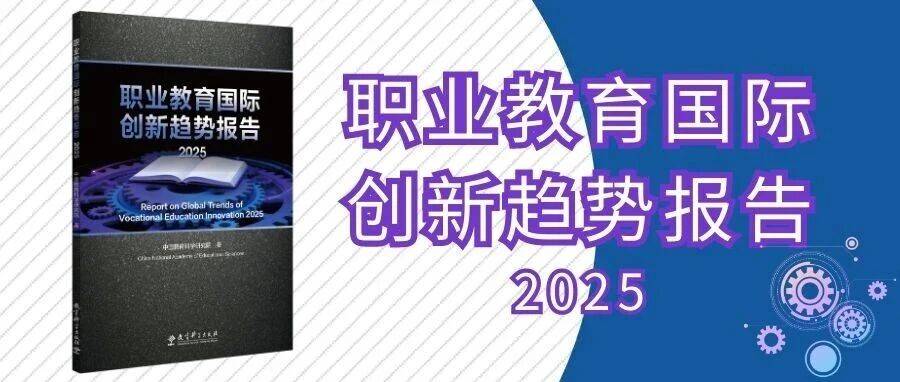
新书速递 | 职业教育国际创新趋势报告2025
Sou Hu Cai Jing· 2025-12-18 08:17
本报告基于对8931篇国际国内核心期刊论文、157份国际组织研究报告、242项国际会议成果以及116件各国政策法规等文献资料(研究资料覆盖145个国家 和地区)的系统分析,从功能地位、育人目标、办学模式、转型方向、组织形态、师资队伍、治理体系、国际协作等维度揭示了职业教育国际创新趋势的 八个方面,勾勒出全球职业教育创新发展的宏观图景和发展轮廓。 本报告致力于为国内外教育行政人员、职业教育研究者、职业学校管理者、行企从业人员、社会职业技能培训提供者以及对职业教育创新、技术进步和技 能提升感兴趣的人群,呈现出全球职业教育发展新态势、新趋势,为携手推动全球职业教育高质量发展、构建人类命运共同体提供有价值的参考。 精彩试读 当今世界,科技革命催动全球产业重塑,社会变革加速。世界各国越来越把职业教育视为迎接科技革命和产业变革、应对国际竞争、参与国际合作、解决 社会问题、推动可持续发展的重要战略支撑。中国国家主席习近平在致首届世界职业技术教育发展大会的贺信中指出,职业教育与经济社会发展紧密相 连,对促进就业创业、助力经济社会发展、增进人民福祉具有重要意义。中国积极推动职业教育高质量发展,支持中外职业教育交流合作。对此,我 ...

见知教育上涨7.25%,报1.48美元/股,总市值2015.54万美元
Jin Rong Jie· 2025-12-17 15:21
经过多年努力,见知教育现已获得多项荣誉认定,包括:国家高新技术企业、软件企业认定、中关村高新技 术企业、国家十二五重点出版物规划项目、中国教育装备行业协会会员单位等。已拥有41项软件著作 权,并获得ISO9001质量管理体系、ISO27001信息安全管理体系、ISO2000信息技术服务管理体系和ICP 证书等系列资质认定。 本文源自:市场资讯 作者:行情君 据交易所数据显示,12月17日,见知教育(JZ)开盘上涨7.25%,截至22:30,报1.48美元/股,成交1247.0 美元,总市值2015.54万美元。 财务数据显示,截至2024年12月31日,见知教育收入总额2.49亿人民币,同比减少43.52%;归母净利 润-3351.35万人民币,同比增长91.03%。 资料显示,见知教育科技集团有限公司以推动职业教育改革创新为宗旨,以培养应用型人才为目标,不断 开拓创新,将政策指引与企业战略有效结合,以就业、创业理论体系为底层的职业素养培训,在互联网的基 础上,通过原生IP在线平台开展校内教学,帮助学生实现职业素养与专业技能的双升级. 通过视频、试题等 多种资源形式,引导学生"教""学"合一的就业教育,创业教 ...

低空经济等产业发展驶入快车道,57个新专业加速高素质技能人才培养
Bei Jing Shang Bao· 2025-12-17 11:12
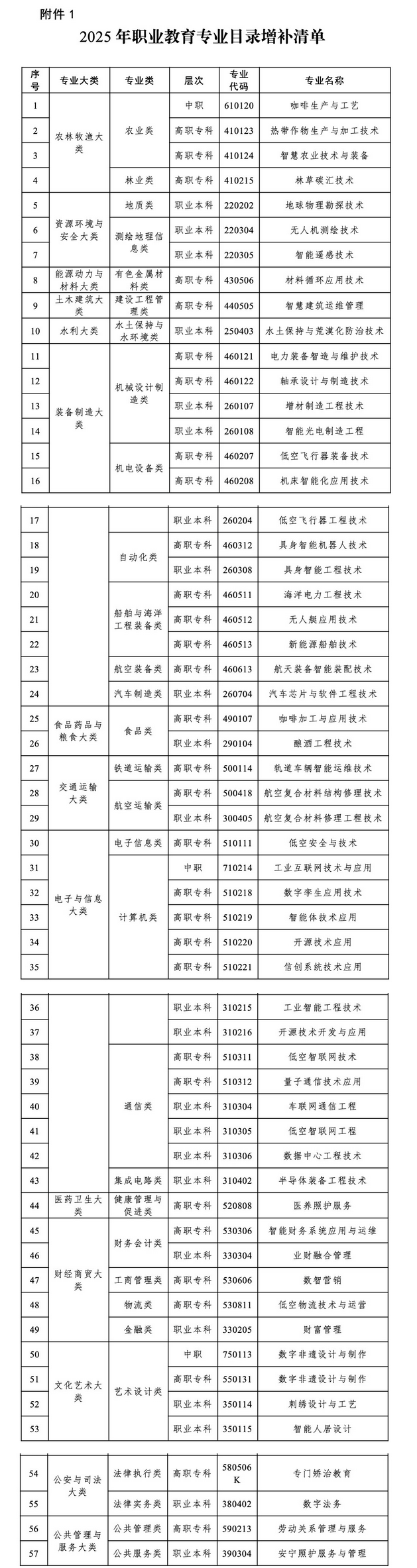
此外,装备制造、电子与信息是此次增补数量较多的专业大类,包含具身智能机器人技术、具身智能工程技术、航天装备智能装配技术、数字孪生应用技 术、智能体技术应用等专业。相关研究机构此前曾预测,具身智能市场规模有望在2035年突破万亿元,赋能交通物流、工业制造、商业服务等多个领域。猎 聘近日发布的《2025三季度人才供需洞察报告》显示,今年三季度,具身智能领域新发职位同比增长72.86%,平均招聘年薪达33.34万元,薪资更具竞争 力。 随着低空经济、具身智能等产业空前发展以及新消费市场不断扩围,高素质技术人才的培养和市场化需求愈发迫切。近日,教育部对2026年职业教育拟招生 专业设置管理工作进行安排,并公布《2025年职业教育专业目录增补清单》,共包含57个职业教育专业。其中,中职专业3个、高职专科专业31个、职业本 科专业23个,体现了职业教育向高层次、应用型人才培养的倾斜。 新增专业紧密对接当前科技前沿和产业升级需求,聚焦国家重大战略、区域重点产业以及民生紧缺领域对高素质技能人才新需求,覆盖低空经济、具身智能 等前沿领域。 据国家发改委数据,2025年低空经济领域人才缺口高达100万人。其中,无人机操控员的缺口 ...

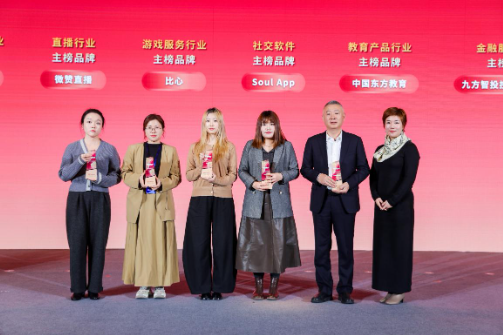
中国东方教育荣膺“2025好品牌100”:以产教融合引领职业教育高质量发展
Xin Lang Cai Jing· 2025-12-17 08:59
Core Viewpoint - China Oriental Education Group has been recognized as one of the "2025 Good Brands 100" due to its continuous efforts and innovative practices in the vocational education sector [1][6]. Group 1: Award Recognition - The "2025 Good Brands 100" award ceremony was held in Shanghai, organized by Shanghai Media Group and Zhitong Finance [1][6]. - The selection process involved 100 industry experts voting across 100 dynamic sectors, highlighting brands with significant achievements and innovative capabilities [3][8]. Group 2: Company Strategy and Vision - Mao Chaosheng, Secretary of the Board of China Oriental Education, emphasized the company's commitment to deep integration of industry and education, ensuring that students' learning aligns with market needs [3][8]. - The company plans to focus on innovation as a core driver, exploring deeper integration in cutting-edge fields such as artificial intelligence and new energy [3][8]. - China Oriental Education aims to build vocational education industrial parks nationwide to contribute to the high-quality development of the Chinese economy [3][8]. Group 3: Industry Impact - The "Good Brands 100" project, now in its seventh year, has become a credible and influential annual event in the field of brand evaluation in China [5][10]. - This year's evaluation particularly focused on sustainable innovation, social value creation, and industry leadership, showcasing brands that are making steady progress amid transformation [5][10]. - The recognition of China Oriental Education not only highlights its leading position in the vocational education sector but also serves as a model for industry-education integration and support for the real economy [6][10].
AI投融资热潮下的人才培育观察:八斗学院的实践路径与优势解析
Jin Tou Wang· 2025-12-17 08:26
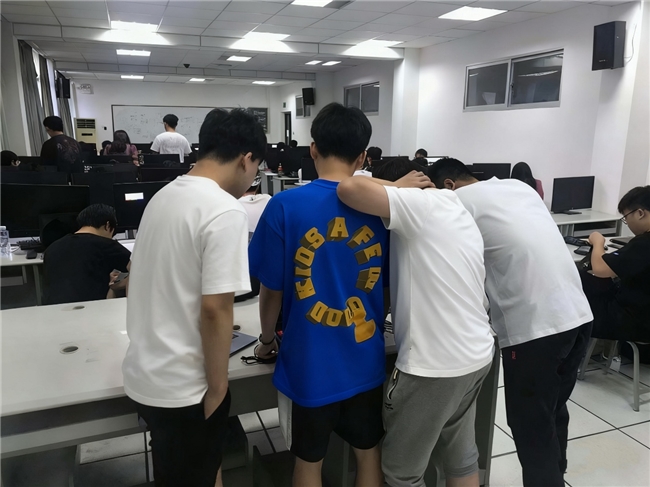
Core Insights - The artificial intelligence (AI) sector is becoming a central focus for global capital investment, with 957 financing events recorded in China by September 17, 2025, surpassing the total for the previous year, and the investment amount reaching 77.869 billion yuan [1] - The growth in AI is driven by policy support, technological breakthroughs, and capital infusion, while a shortage of skilled professionals poses a significant bottleneck for industry implementation [1] - Baidou Academy, under Beijing Caigao Education Technology Co., Ltd., has developed a unique advantage in AI talent education through a training model that aligns closely with industry needs [1] Company Development - Baidou Academy's core competitiveness stems from compliant operations and long-term accumulation of industry resources, having been established in December 2018, with roots tracing back to corporate training services initiated in 2014 [3] - The academy's initial focus on corporate demand has allowed it to develop a precise understanding of industry talent needs, laying a foundation for its transformation into a market-oriented educational institution [3] - Baidou Academy combines "enterprise-level service experience" with "market-oriented educational capability," ensuring its teaching system remains relevant to industry requirements from the outset [3] Curriculum Design - The curriculum is precisely targeted at big data and AI, avoiding the pitfall of being overly broad, and covers high-demand areas such as computer vision (CV), natural language processing (NLP), large models, multimodal applications, and intelligent agents [3] - A dynamic course update mechanism is in place to keep pace with AI technology iterations, addressing the common issue of disconnection between learning and application in vocational education [3] Teaching Delivery - Baidou Academy employs a "hybrid online and offline" model to cater to diverse learning needs, with offline courses lasting approximately two and a half months and online courses extending to nearly five months [4] - The offline courses utilize small class sizes and interactive teaching methods, while online courses leverage recorded resources and online interaction to overcome geographical and time constraints [4] Location Advantage - The academy is located in the "AI Acceleration Center" in Changping District, Beijing, a key technology incubation platform that hosts over 30 leading tech companies and research institutions [5] - This geographical positioning allows students to engage with industry dynamics and expand their professional networks, enhancing their learning experience [5] Faculty Quality - All instructors at Baidou Academy come from leading companies in the big data and AI sectors, bringing practical project experience to the classroom [5] - The teaching approach focuses on breaking down complex technologies into understandable and actionable content, aligning with the industry's demand for practical talent [5] Teaching Characteristics - The academy emphasizes a "hands-on and project-driven" teaching philosophy, dedicating over 80% of class time to practical exercises and project simulations [6] - All projects are based on real-world cases, allowing students to gain resume-worthy experience during their studies, which enhances their employability [6] Comprehensive Support System - Baidou Academy offers extensive support during and after the learning phase, including online Q&A services and personalized resume and interview guidance for job placement [6] - A direct channel for talent delivery to top companies is established for outstanding students, improving the efficiency of talent transfer [6] Long-term Value Service - The academy has created a long-term value service system, allowing students to enjoy lifetime Q&A rights and access to updated course content even after course completion [7] - This "one-time payment, continuous benefit" model helps students keep pace with technological advancements and maintain their professional competitiveness [7]
职业教育发力!57 个新专业聚焦工业智能、数字孪生等领域
Xin Jing Bao· 2025-12-17 03:31
Core Insights - The Ministry of Education has arranged the management of vocational education enrollment for 2026 and released the "2025 Vocational Education Professional Directory Supplement List," which includes a total of 57 vocational education programs [1] Group 1: Professional Directory Management - The new directory includes 3 middle vocational programs, 31 higher vocational programs, and 23 vocational undergraduate programs [1] - Provincial education administrative departments are required to strengthen the overall management of professional settings and improve the adjustment mechanism to quickly respond to talent demands [1] Group 2: Implementation and Adjustments - Schools are expected to implement a high-skilled talent cluster training plan based on the development needs of key and characteristic industries in their regions [1] - Each vocational school is to conduct enrollment management work according to the professional setting management methods and the 2025 professional directory supplement list [1] Group 3: Professional Directory Revision - The professional directory for vocational colleges is to be revised approximately every five years, allowing schools to flexibly set up programs based on the directory and adjust them annually [1] - The Ministry of Education's vocational education department aims to align professional settings with regional industrial layouts and new demands for high-quality development [1]
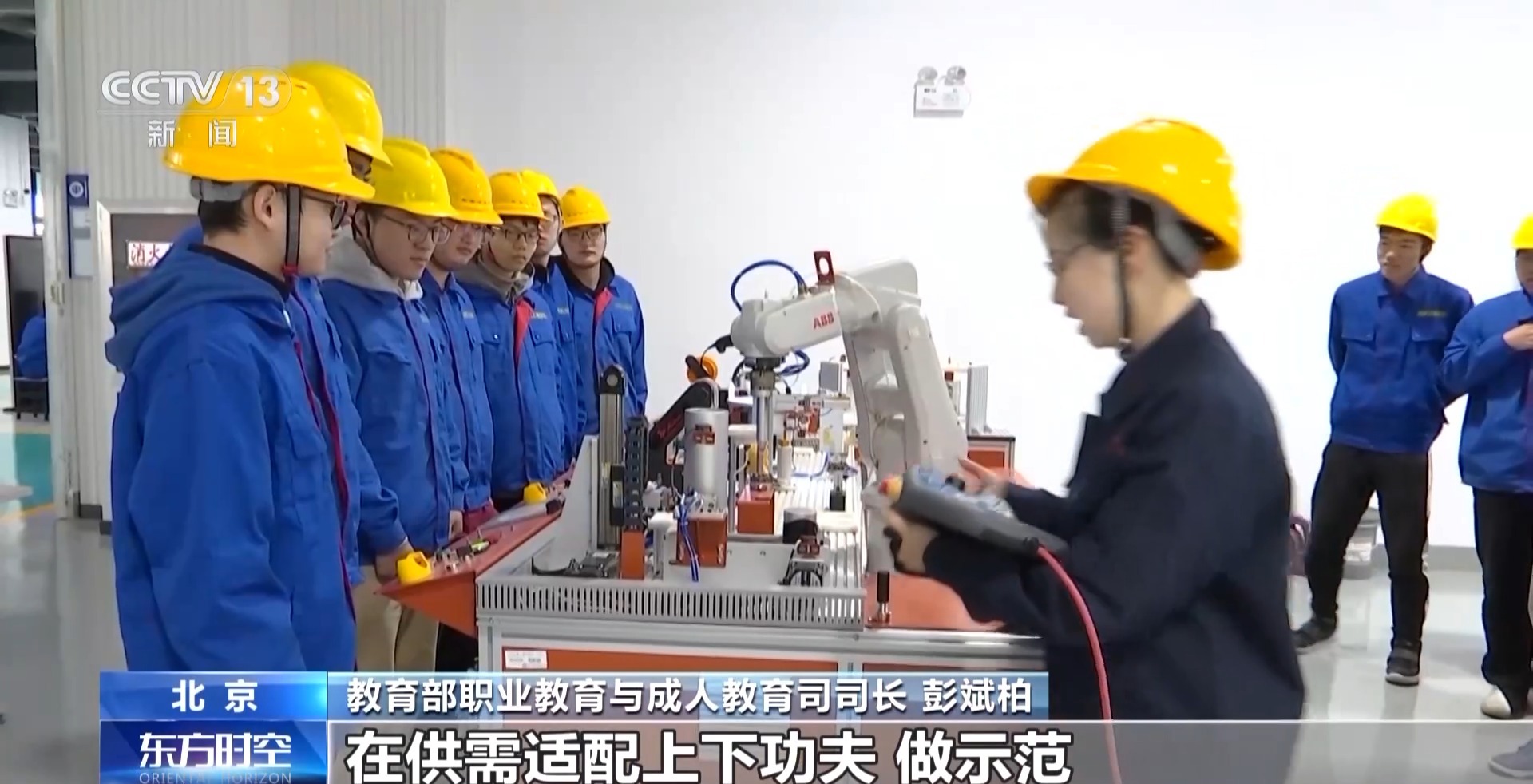
“新双高”来了!职业教育再升级
Yang Shi Xin Wen· 2025-12-16 16:09
Core Viewpoint - The Ministry of Education is advancing the second phase of the "Double High Construction Plan" to enhance vocational education, focusing on cultivating high-level skilled talents to support the transformation of the manufacturing industry. Group 1: Overview of the "Double High Construction Plan" - The second phase of the "Double High Construction Plan" includes 220 schools, with 60 high-level vocational schools and 160 high-level professional groups, aimed at transforming vocational education to better serve and support industry needs [1][5] - The professional groups are aligned with national strategic emerging industries and advanced manufacturing, with 77.9% of them addressing these sectors [1] Group 2: Key Elements of Talent Development - The plan emphasizes the need for a talent supply mechanism that quickly matches industry demands, focusing on five key elements: professional courses, teaching materials, teachers, and practical training [3][7] - A new evaluation system for vocational schools will assess their educational quality, service capabilities, and contributions to society [5] Group 3: Case Studies of Successful Implementation - Jiangsu Agricultural and Forestry Vocational Technical College has reformed its curriculum to align with industry needs, resulting in a significant increase in student enrollment in agricultural machinery programs [8][10] - The college's graduates are now highly sought after, with many securing jobs in leading agricultural machinery companies, earning starting salaries around 6,000 yuan [18] Group 4: Innovative Teaching Methods - Chengdu Aviation Vocational Technical College has introduced digital textbooks that simulate real-world aircraft assembly processes, enhancing students' learning experiences [20][24] - The college has developed 3,570 new forms of teaching materials, including interactive and digital formats, to facilitate better learning outcomes [26] Group 5: Industry Collaboration and Impact - Wenzhou Vocational Technical College has actively engaged in industry collaboration, providing over 1,500 technical services to local businesses, resulting in efficiency gains exceeding 4.6 billion yuan [31] - Shaanxi Railway Engineering Vocational Technical College has integrated real-world engineering projects into its curriculum, partnering with over 400 leading companies to create specialized training programs [39][41]
中公教育今日涨停 市场关注的“学豆听考”小程序上线
Zhong Guo Ji Jin Bao· 2025-12-16 13:24
Core Viewpoint - The stock price of leading vocational education company Zhonggong Education surged to the daily limit, likely driven by the launch of its AI learning headset "AI Primary Bean" and the accompanying content platform "Learning Bean Listening Exam" mini-program, indicating heightened investor expectations for the company's smart transformation [1] Group 1: Product Launch and Market Response - The AI learning headset has been validated in a small-scale trial, demonstrating market demand with its lightweight design and fragmented learning approach [2] - The introduction of the mini-program enhances the content ecosystem supporting the hardware, transforming the headset into a "personal mobile learning center" with features like step-by-step listening plans for exams [2] Group 2: Strategic Transformation and Market Recognition - The stock surge reflects market recognition of Zhonggong Education's strategic shift from being a course provider to an operator of "learning + employment solutions" [3] - By lowering learning barriers with affordable hardware and retaining users through content in the mini-program, the company aims to enhance user engagement and potentially expand into subscription services [3] - The long-term effectiveness of the hardware and content synergy remains to be validated, with market focus shifting to user activity, headset repurchase rates, and actual conversion rates following the stock surge [3]
中公教育今日涨停 市场关注的“学豆听考”小程序上线
中国基金报· 2025-12-16 13:22
Core Viewpoint - The strong stock price surge of Zhonggong Education (002607.SZ) is closely linked to the launch of its AI learning headset "AI Primary School Bean" and the accompanying content platform "Learning Bean Listening Exam" mini-program, indicating heightened investor expectations for the company's smart transformation [1][5]. Group 1: Product and Market Strategy - The AI learning headset has been validated in a small-scale trial, demonstrating market demand with its lightweight design and fragmented learning approach [3]. - The launch of the mini-program enhances the content ecosystem supporting the hardware, transforming the headset into a "personal mobile learning center" with features like step-by-step listening plans for exams [3]. - The combination of hardware and content could allow Zhonggong to tap into broader lightweight learning needs and potentially explore subscription service models [3]. Group 2: Strategic Transformation - The stock price increase reflects market recognition of Zhonggong Education's strategic shift from being a "course provider" to a "learning + employment solution operator" [5]. - By offering affordable hardware to lower learning barriers and using the mini-program for user retention and data accumulation, the company aims to enhance user engagement and possibly expand into other exam categories [5]. - Industry experts caution that the synergy between hardware and content needs long-term validation, with market focus shifting to user activity, headset repurchase rates, and actual conversion rates post-surge [5]. Group 3: Market Trends - The recent surge in Zhonggong's stock price signifies a revaluation of new business models in vocational education, with the potential to unlock the fragmented learning market [5]. - The strategic exploration of "integrated hardware and software" aligns with the industry's trends towards intelligence and personalization, garnering early attention from the capital market [5].