新一代信息技术

Search documents
策略解读:抢占科技发展制高点
Guoxin Securities· 2025-10-23 13:39
Core Insights - The report emphasizes the importance of "seizing the high ground in technological development" as a core strategy for driving national modernization during the 14th Five-Year Plan period [4][10] - It outlines a strategic path that includes accelerating high-level technological self-reliance and innovation, integrating education, technology, and talent development to enhance the overall effectiveness of the national innovation system [4][10] - The ultimate goal is to build a modern industrial system centered on advanced manufacturing, with a focus on intelligent, green, and integrated development [4][10] Industry and Policy Direction - The report highlights a clear progression in China's industrial policy from the 12th to the 14th Five-Year Plans, with an increasing emphasis on strategic emerging industries [6][10] - During the 12th Five-Year Plan, the focus was on nurturing strategic emerging industries, while the 13th Five-Year Plan shifted towards implementing intelligent manufacturing projects [5][6] - The 14th Five-Year Plan identifies emerging industries as the core driving force for future development, with a broad range of sectors including information technology, biotechnology, and new energy [5][9] Investment Opportunities - The report identifies the "8+9" new industries as key investment directions during the 14th Five-Year Plan, characterized by innovation and technological intensity [10] - The total market capitalization of strategic emerging industries in the A-share market has reached 36 trillion yuan, accounting for about 40% of the total number of listed companies [10] - Key sectors with the highest number of listed companies include pharmaceuticals, electronics, and machinery, which are closely related to new productive forces [10] Economic Growth and Structural Changes - The report notes that the transition to new productive forces is essential for economic growth, with a focus on the "engineer dividend" as a critical factor for long-term success in the technology sector [12] - It highlights that China is currently positioned in the "champion zone" of the engineer dividend, indicating a strong potential for technological advancement and market leadership [12] - The report anticipates that the technology-driven market in A-shares will continue to thrive, with significant growth expected through 2026 and beyond [12]
创新引领、减亏增收 科创成长层公司跑出加速度
Xin Hua Cai Jing· 2025-10-23 13:33
Core Insights - The launch of the "1+6" reform on June 18 has established the Sci-Tech Innovation Board's growth tier, allowing 32 unprofitable listed companies to enter this tier, leading to increased revenue and reduced losses, with a total market value exceeding 1 trillion yuan [1][2]. Group 1: Growth Tier Companies - Recent IPOs include He Yuan Bio, Xi'an Yicai, and Bibete, which will directly enter the growth tier, contributing to a total of 54 unprofitable companies listed since the board's inception, with 22 achieving profitability post-listing [2]. - The growth tier companies are primarily in strategic emerging industries, including new-generation information technology (15 companies), biomedicine (14 companies), new energy (2 companies), and high-end equipment manufacturing (1 company) [3]. - The growth tier companies have collectively raised 105.2 billion yuan through IPOs, facilitating increased R&D investment and capacity building [3]. Group 2: Financial Performance - In 2024, the 32 growth tier companies achieved a total revenue of 67.6 billion yuan, with 29 companies surpassing 100 million yuan in revenue [5]. - The average annual compound growth rate of revenue for these companies is 27.87%, outperforming the overall board's growth rate by nearly 4 percentage points [5]. - By the first half of 2025, the growth tier companies experienced a year-on-year revenue increase of 37.79%, indicating a strong growth trend [5]. Group 3: Loss Reduction - In 2024, 19 growth tier companies reduced their losses year-on-year, with 16 companies reducing losses by over 20% [6]. - By the first half of 2025, the overall loss reduction amounted to 7.12 billion yuan, with 21 companies reducing losses, and 13 of them by over 20% [6]. - Notable examples include Baijie Shenzhou, which transitioned from a loss of 13.6 billion yuan in 2022 to a profit of 450 million yuan in 2025, and Hanwujing, which achieved profitability for four consecutive quarters starting from Q4 2024 [6]. Group 4: R&D Investment - The 32 growth tier companies invested a total of 30.6 billion yuan in R&D in 2024, with a median R&D investment to revenue ratio of 65.4%, leading the Sci-Tech Innovation Board [8]. - The board's support has enabled these companies to achieve significant R&D milestones, including the launch of 20 new drugs with global innovation attributes [8]. - For instance, Baijie Shenzhou's fundraising efforts have led to the successful development of Zebutini, which became the first domestic drug to exceed 1 billion USD in sales [8]. Group 5: Institutional Support - The "1+6" reform and related policies have provided tailored support for growth tier companies, facilitating their financing and development [10]. - Eight growth tier companies have completed refinancing, raising a total of 13.2 billion yuan, with over 30% of the funds allocated to R&D [10]. - The merger and acquisition framework has also been enhanced, with six disclosed transactions since the introduction of the "Sci-Tech Board Eight Articles," focusing on acquiring quality unprofitable companies [11].

创新引领增收减亏 科创成长层公司跑出加速度
Zheng Quan Ri Bao Wang· 2025-10-23 13:08
Core Insights - The launch of the "1+6" reform on June 18 has established the Sci-Tech Innovation Board's growth tier, allowing 32 unprofitable listed companies to enter this tier, which has led to significant innovation and a total market value exceeding 1 trillion yuan [1][2]. Group 1: Growth Tier Companies - The 32 companies in the growth tier are primarily from strategic emerging industries, including new generation information technology (15 companies), biomedicine (14 companies), new energy (2 companies), and high-end equipment manufacturing (1 company) [3]. - These companies have collectively raised 105.2 billion yuan through IPOs, facilitating increased R&D investment and capacity building [3]. - The total market value of growth tier companies has reached 1.09 trillion yuan, with 19 companies valued over 10 billion yuan, indicating growing market recognition of their investment value [3]. Group 2: Revenue and Profitability Trends - In 2024, the 32 growth tier companies achieved a total revenue of 67.575 billion yuan, with 29 companies surpassing 100 million yuan in revenue [5]. - The average annual compound growth rate of revenue for these companies since 2019 is 27.87%, outpacing the overall board's growth rate by nearly 4 percentage points [5]. - By the first half of 2025, these companies demonstrated a significant reduction in losses, with 21 companies reducing losses year-on-year, and 13 companies reducing losses by over 20% [6]. Group 3: R&D Investment and Innovation - The 32 growth tier companies invested a total of 30.6 billion yuan in R&D in 2024, with a median R&D investment to revenue ratio of 65.4%, leading the Sci-Tech Innovation Board [7]. - These companies have launched 20 new drugs with "global new" attributes and achieved breakthrough therapy designations for 10 drugs, contributing to the "Healthy China" initiative [7]. - Notable companies like BeiGene have transitioned from significant losses to profitability, with expectations of achieving full-year profitability in 2025 [6][7]. Group 4: Institutional Support and M&A Activity - The "1+6" reform and related policies have provided tailored support for growth tier companies, including relaxed refinancing standards for R&D investments [10]. - The M&A framework has facilitated strategic acquisitions of unprofitable companies, with several successful transactions enhancing production capacity and market competitiveness [11]. - The ongoing reforms and institutional support are expected to foster sustainable growth for companies in the Sci-Tech Innovation Board, despite inherent uncertainties in technology innovation [11].
聚焦科创成长层丨减亏增收,看科创成长层存量公司的进阶之路
证券时报· 2025-10-23 12:12
Core Viewpoint - The article discusses the upcoming listing of new companies on the Sci-Tech Innovation Board, highlighting the establishment of the Sci-Tech Growth Layer and its implications for technology enterprises and innovative production capabilities [1][9]. Group 1: Overview of the Sci-Tech Growth Layer - The Sci-Tech Growth Layer will include three new companies: He Yuan Bio, Xi'an Yicai, and Bibet, joining 32 existing companies that have not yet turned a profit [1]. - The total market capitalization of the existing 32 companies exceeds 1 trillion yuan [2]. - These companies are primarily distributed across strategic emerging industries, including new-generation information technology (15 companies), biomedicine (14 companies), new energy (2 companies), and high-end equipment manufacturing (1 company) [3]. Group 2: Financial Performance and Growth - The 32 existing companies have collectively raised 105.2 billion yuan through IPOs, which has catalyzed their research and development investments, capacity building, and commercialization efforts [3]. - In 2024, these companies are projected to achieve a total revenue of 67.6 billion yuan, with 29 companies surpassing 100 million yuan in revenue [5]. - The average annual compound growth rate of revenue for these companies since 2019 is 27.87%, outpacing the overall growth rate of the Sci-Tech Innovation Board by nearly 4 percentage points [5]. Group 3: Trends in Profitability - Among the 54 unprofitable companies listed on the Sci-Tech Board, 22 have achieved profitability and "delisted" from the unprofitable category, averaging 4 companies per year [5]. - In 2024, 19 companies are expected to reduce their losses year-on-year, with 16 of them reducing losses by over 20% [6]. - In the first half of 2025, the existing companies in the Sci-Tech Growth Layer significantly reduced losses by 7.1 billion yuan, with 21 companies reducing losses, and 13 of them achieving a reduction of over 20% [6]. Group 4: Research and Development Investment - The total R&D investment of the 32 companies is expected to reach 30.6 billion yuan in 2024, with a median R&D investment-to-revenue ratio of 65.4%, leading the Sci-Tech Innovation Board [8]. - The innovative drug sector has entered a "harvest period," with these companies launching 20 new drugs classified as "global new" and achieving breakthrough therapy designations for 10 drugs [8]. Group 5: Institutional Support and Future Prospects - Recent reforms, including the "1+6" reform, have provided tailored support for companies at different stages, facilitating their growth and development [10]. - The new financing standards allow companies to exceed refinancing limits for R&D projects, with some companies allocating over 30% of raised funds to R&D [10]. - The growth trajectory of the Sci-Tech Growth Layer companies is becoming clearer, with new companies expected to join the layer, further enriching the sector [10].



广州市“领头羊”产融对接活动新一代信息技术行业专场路演成功举办
Zheng Quan Shi Bao Wang· 2025-10-23 11:24
Group 1 - The event aimed to enhance the quality and efficiency of financial services for the real economy, focusing on the financing functions of the Guangzhou capital market [1] - The 34th special roadshow for the new generation information technology industry attracted over 130 participants, including representatives from various tech companies and financial institutions [1][2] - Five projects from Guangzhou's new generation information technology sector were presented, covering areas such as AI products, global marketing big data platforms, and automated testing for satellite navigation [1] Group 2 - Experts from Shenzhen Innovation Investment Group and GF Securities provided professional advice during the roadshow, facilitating in-depth discussions on industry background, market size, and competitive landscape [2] - Guangzhou is accelerating the construction of a modern industrial system, with "software and internet" identified as one of the six emerging pillar industries [2] - The Guangdong Equity Exchange Center plans to continue its role in capital market financing, aiming to optimize financial services and stimulate the vitality of private enterprises [2]
科技赋能新发展 聚才兴产创未来
Shan Xi Ri Bao· 2025-10-23 00:22
Group 1 - The event "Intelligent Dialogue Salon" in Xi'an focuses on activating innovation-driven development through a technology talent ecosystem [1] - The fourth Shaanxi Provincial Association for Science and Technology Annual Conference and the "Talent Prosperity Xi'an" conference aim to enhance local economic and social development through talent and technology [1][2] - The conference includes various activities such as main events, special activities, and academic weeks, emphasizing the integration of education, technology, and talent reform [1] Group 2 - The Shaanxi Provincial Association for Science and Technology organized a research initiative involving nearly 70 academicians and experts to assess the development needs of key industries in Xi'an [2] - Specific recommendations were made for the food industry, including the establishment of the Xi'an Future Food Industry Research Center to support local industry growth [2] - The conference serves as a platform for collaboration between local enterprises and academicians, aiming for breakthroughs in technology, talent cultivation, and industrial upgrades [2][3] Group 3 - The annual conference attracted numerous scientists, investors, and engineers, highlighting the importance of talent in regional development [3] - Strategic cooperation agreements were signed to bring high-end intellectual support to local development [3] - Various competitions and forums were held to promote technology transfer and innovation in key sectors [3]
无锡连云港专精特新产业园高标准厂房竣工 打造区域产业协同新标杆
Yang Zi Wan Bao Wang· 2025-10-22 11:32
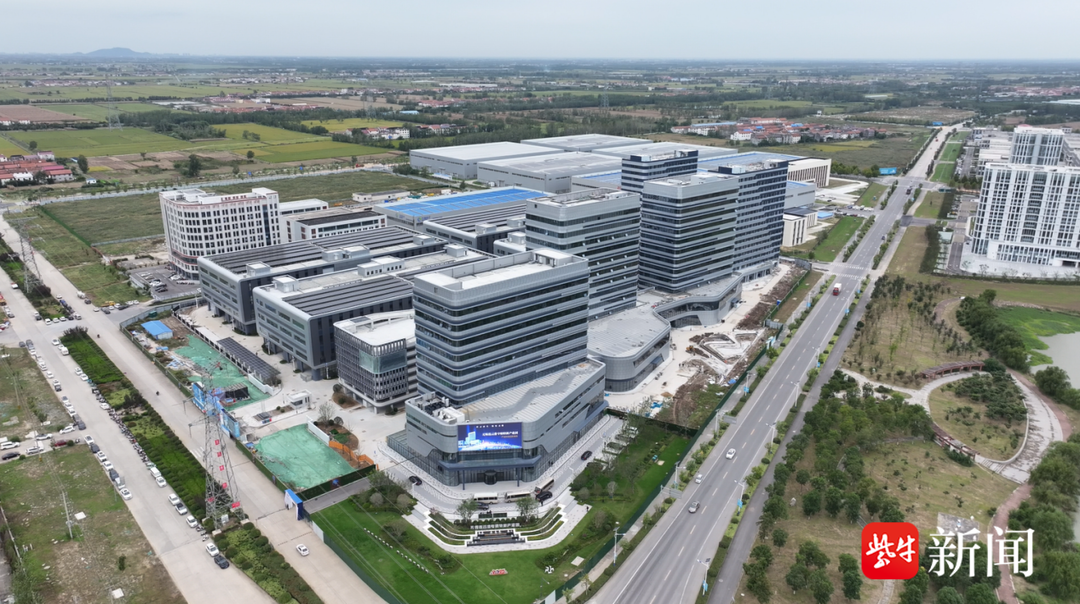
Core Viewpoint - The completion of the high-standard factory buildings in the Wuxi Lianyungang Specialized, Refined, Characteristic, and Innovative Industry Park marks a significant milestone in regional coordinated development and the exploration of new productive forces in the area [1][3]. Group 1: Project Overview - The Wuxi Lianyungang Specialized, Refined, Characteristic, and Innovative Industry Park is the first industrial park project developed by Jiangsu Xilian Industrial Park Investment Development Co., Ltd. in the Wuxi Lianyungang Industrial Park, aiming for high-quality development from the outset [3]. - The project has set multiple records in Lianyungang, including being the first new industrial land project, the first high-rise industrial building project, and the first ground parking building project [3]. - The first phase of the project covers an area of 59,000 square meters, achieving a total construction area of 162,000 square meters with a high plot ratio of 2.7, optimizing land resource utilization and activating new momentum for regional industrial development [3]. Group 2: Quality Management and Construction - To ensure high-standard construction, the project has implemented a comprehensive quality and safety management system, conducting daily inspections with the general contractor and supervision units, and employing a third-party quality inspection agency [3]. - Strict management protocols for material sampling and quality control have been established to guarantee top-notch construction quality and aesthetic appeal [3]. Group 3: Economic Impact and Future Plans - The completed 60,000 square meters of high-standard factory buildings have already shown positive results in attracting tenants, with projects in high-end equipment manufacturing, new-generation information technology, and new energy signed for occupancy [5]. - The park aims to break traditional industrial space limitations by providing a diverse range of spaces for technology research and development, business offices, and commercial finance, creating a "one-stop" industrial service ecosystem [5]. - The park will focus on specialized, refined, characteristic, and innovative industries, enhancing project attraction efforts and optimizing service support to contribute to high-quality economic development in the Haizhou District [6]. - The park has adopted a multi-dimensional investment attraction system, achieving over 50% occupancy rate for signed projects and attracting approximately 3.72 billion yuan in investments, filling regional industrial gaps with key projects [6].

突破四万亿!上海GDP增长5.5%!
天天基金网· 2025-10-22 10:41
Core Viewpoint - Shanghai's GDP growth for the first three quarters of 2025 reached 5.5%, indicating a positive economic trend and industrial growth, particularly in key sectors like manufacturing and emerging industries [4][5]. Economic Performance - Shanghai's GDP for the first three quarters was 40,721.17 billion, with a year-on-year growth of 5.5%, an increase of 0.4 percentage points from the first half of the year [4]. - Industrial production showed a growth of 5.2% year-on-year, with leading manufacturing sectors such as artificial intelligence, integrated circuits, and biomedicine growing by 12.8%, 11.3%, and 3.6% respectively [4]. - The total retail sales of consumer goods reached 12,302.77 billion, growing by 4.3% year-on-year, with a significant increase in the sales of trade-in products [4]. Financial Market Activity - The financial sector's added value was 6,965.27 billion, growing by 9.8%. Major financial markets in Shanghai saw a year-on-year increase in trading volume, with the Shanghai Stock Exchange's securities trading volume up by 38.4% [5]. - The overall trading volume in the two markets was approximately 16,679 billion, a decrease of over 2,000 billion compared to the previous day [10]. Stock Market Insights - Goldman Sachs predicts a 30% upside potential for the MSCI China Index over the next two years, suggesting a shift in investor strategy from "selling high" to "buying low" as a bull market develops [6]. - The market experienced a notable decline in trading volume, with a drop from 25,000 billion to 20,000 billion since the National Day holiday, indicating caution among investors at the current index level of 3,900 [16][17]. Sector Performance - In the stock market, sectors such as oil and petrochemicals, banking, and household appliances showed positive performance, while sectors like non-ferrous metals, electric power equipment, and agriculture faced declines [13]. - The overall market sentiment reflects a rotation of funds, with a focus on low-position stocks and technology stocks that are due for a rebound [17][18].


万润科技:公司新一代信息技术行业营业收入占营业收入总额的32.96%
Zheng Quan Ri Bao· 2025-10-22 07:41
Group 1 - The core viewpoint of the article highlights the financial performance of Wanrun Technology in the new generation information technology sector, indicating a significant contribution to the overall revenue [2] - The company's revenue from the new generation information technology industry amounts to 839,800,835.79 yuan, representing 32.96% of the total revenue [2] - Within this sector, the semiconductor memory segment generated revenue of 414,809,348.32 yuan, accounting for 16.28% of the total revenue [2]

六大重点领域大规模集群式培养高技能人才 职教学子迎来全新数字教材
Yang Shi Wang· 2025-10-22 06:59
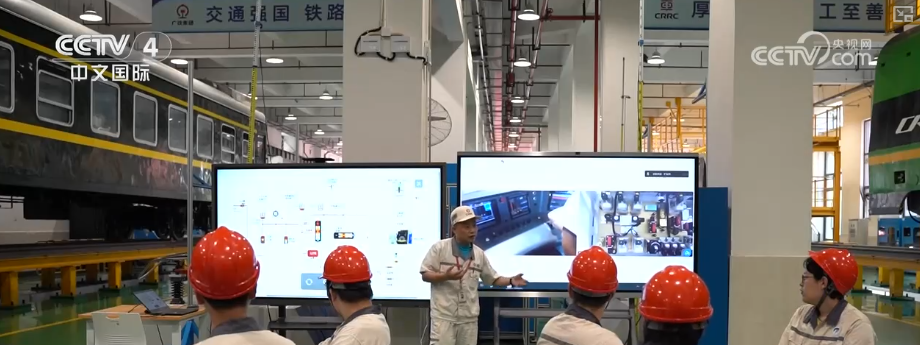
Core Points - The "High-Skilled Talent Cluster Training Program" is being implemented in six key advanced manufacturing sectors, including new energy vehicles and aerospace equipment, as part of the comprehensive reform pilot for building an education powerhouse [1][10] - The program involves over 150 leading enterprises, 67 high-level schools, and 15 national industry organizations, with participation from more than 1,500 skilled craftsmen, technical backbones, professional teachers, and industry experts [6] Group 1 - The program aims to reform five key elements of vocational education: profession, curriculum, teaching materials, teachers, and internship training, shifting the focus from traditional knowledge transfer to comprehensive ability enhancement [6] - The initial focus is on six critical high-skill labor shortage areas within national production lines to explore and break through existing challenges [10] Group 2 - A new digital textbook initiative has been launched, covering 28 majors and benefiting over 1,100 vocational schools and more than 1.5 million students [11][15] - Over 500 industry and enterprise technology standards, job specifications, and production processes have been opened up to ensure that textbook development aligns with industry advancements [17] - The textbook "Integration and Application of Intelligent Workshops" features a virtual smart workshop, addressing challenges faced by students in traditional internship settings [17]